11 Best AI Search Tools in 2026 to Track Brand Mentions, Citations and Visibility

By Esteve Castells




Table of contents
- What is an AI Search visibility tool?
- What to look for in an AI Search visibility tool
- Quick comparison: best AI visibility tools
- 1. LLM Pulse: best overall AI Search visibility tool
- 2. SE Ranking / SE Visible, best all-in-one SEO + AI visibility
- 3. Scrunch AI, best enterprise solution
- 4. Profound, best for large enterprise teams
- 5. AIclicks, best for prompt-level audits
- 6. Otterly AI, best affordable entry
- 7. AthenaHQ, best for data-driven teams
- 8. Similarweb AI Visibility, best for market-level intelligence
- 9. Rankscale AI, best budget multi-model tracker
- 10. Promptmonitor, best for publisher insights
- 11. HubSpot AI Search Grader, best free AI visibility check
- AI visibility tools by use case
- Summary
- Frequently asked questions
What is an AI Search visibility tool?
An AI visibility tool is software that tracks how your brand appears in AI-generated search results across platforms like ChatGPT, Perplexity, Gemini, Google AI Mode, and AI Overviews.

Traditional SEO tools were built for a world of ten blue links. They track rankings, backlinks, and keyword positions on Google’s classic results page. But the search environment has changed fundamentally. Millions of users now get their answers directly from AI models, and those AI-generated responses don’t follow the same rules as organic search results.
When someone asks ChatGPT “What’s the best project management tool?” or Perplexity “Which CRM should I use for a startup?”, the AI model generates a response that may or may not mention your brand. Traditional SEO metrics do not capture these interactions directly, although several SEO platforms now offer separate AI visibility products.
AI visibility tools fill that gap. They systematically query AI models with the prompts your potential customers are using, then analyze the responses to answer critical questions:
- Track brand mentions: Is your brand being recommended by AI models? How often, and in what context?
- Citation monitoring: Are AI models linking back to your website? Which pages are being cited?
- Sentiment analysis: When AI models mention your brand, is the sentiment positive, neutral, or negative?
- Share of voice: How does your AI visibility compare to your competitors?
- Competitive benchmarking: Which competitors are getting recommended instead of you, and why?
As AI-powered search continues to grow, with AI assistants and Google’s AI search features becoming established discovery surfaces, tracking your brand’s AI visibility is no longer optional. It’s a critical part of any modern marketing strategy.
What to look for in an AI Search visibility tool
Not all AI visibility tools are created equal. Here are the key factors to evaluate before choosing one:
AI model coverage
The more AI platforms a tool tracks, the more complete your visibility picture. At minimum, look for coverage of ChatGPT, Perplexity, and Gemini. Bonus points for Google AI Mode, AI Overviews, Copilot, Claude, and Meta AI.
Metrics depth
Basic tools only tell you whether you were mentioned. The best tools go further with citation tracking, sentiment analysis, share of voice calculations, and competitive benchmarking. Deeper metrics mean more actionable insights.
Refresh frequency
How often does the tool re-query AI models? Weekly refreshes are standard, but some tools offer daily or even on-demand execution. More frequent refreshes help you spot trends and react faster.
Pricing transparency
Many tools in this space hide their pricing behind “book a demo” walls. Transparent pricing lets you evaluate the tool’s value before committing your time to a sales call.
Free trial availability
AI visibility is a new category. A free trial lets you validate the tool against your specific use case before committing budget.
Reporting and export options
Can you export data via API or CSV? Does the tool integrate with your existing reporting stack (Data Studio, Power BI, Google Sheets)? Strong export capabilities make the data actionable across your organization.
Team and agency features
If you’re an agency or a larger team, look for unlimited seats, white-label reporting, and multi-project management. These features can make or break the tool’s utility at scale.
Quick comparison: best AI visibility tools
| Tool | AI Models Tracked | Key Metric | Refresh | Starting Price | Free Trial |
|---|---|---|---|---|---|
| LLM Pulse | 5 standard + 11 self-serve paid add-ons, more through Talk to sales | Share of Voice + Sentiment | Weekly by default, daily available, monthly on request | €49/mo (USD/GBP) | See pricing |
| SE Ranking / SE Visible | 5 on SE Visible (no Perplexity) | AI Keyword Tracking | Daily | SE Visible from €80/mo | 10 days for SE Visible; 14 days for SE Ranking |
| Scrunch AI | 4 on Core; up to 9 on Enterprise | Enterprise Analytics | Daily | $250/mo | 7 days |
| Profound | 3 on the trial; up to 9 on Enterprise | Enterprise Analytics | Daily on the trial | No public price | 7 days |
| AIclicks | 3 on Starter, chosen by you | Prompt-Level Audit | Daily | $59/mo | 3 days (card required) |
| Otterly AI | 4 | Mention Tracking | Daily | $29/mo | 7 days |
| AthenaHQ | 5 on Essential; 11 on Starter | Data Analytics | Daily | Free Essential; Starter $295/mo | Free Essential plan |
| Similarweb AI Visibility | Not listed | Market Intelligence | - | $99/mo billed yearly ($129 monthly) | Free trial |
| Rankscale AI | 17+ | Multi-Model Tracking | Hourly to monthly | €17/mo (Essentials, billed yearly) | Free trial on Pro |
| Promptmonitor | 3 on Starter | Publisher Insights | Twice weekly or daily | $39/mo | 7 days |
| HubSpot AI Search Grader | 3 | Free AI Audit | On-demand | Free | N/A (free) |
1. LLM Pulse: best overall AI Search visibility tool
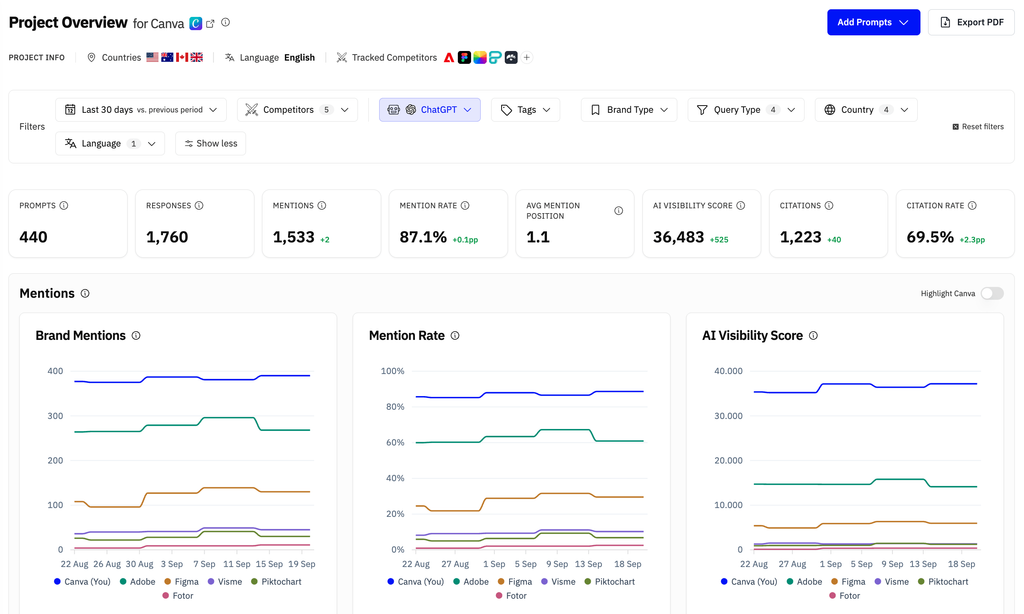
LLM Pulse is purpose-built for AI visibility analytics. It monitors how your brand appears across ChatGPT, Perplexity, Gemini, Google AI Mode, and AI Overviews. Claude, Copilot, Grok, DeepSeek, Meta AI, Qwen, Doubao, Alexa for Shopping, Naver AI Briefing, Naver AI Tab and Baidu AI are available as self-serve paid add-ons. MiniMax, Mistral, Walmart Sparky and Brave AI are available through Talk to sales. Unlike many tools in this space that started as SEO platforms and bolted on AI tracking, LLM Pulse was designed from the ground up to solve the AI visibility problem.
Why it stands out
LLM Pulse delivers the most comprehensive AI visibility analytics for startups, growing brands, and agencies alike. It combines mention tracking, citation monitoring, share of voice, competitive benchmarking, and sentiment analysis in one dashboard. The platform tracks your brand and competitors across multiple AI models simultaneously, giving you a true picture of your AI search landscape.
What truly sets LLM Pulse apart is its depth of insight. Rather than simply telling you “you were mentioned,” it breaks down the context, sentiment, and competitive positioning of every mention. The share of voice metric lets you see exactly how you stack up against competitors in AI-generated responses, while sentiment analysis reveals whether AI models are recommending your brand positively or with caveats.
Key features
- 5 standard AI models: ChatGPT, Perplexity, Gemini, Google AI Mode, and AI Overviews. Self-serve paid add-ons include Claude, Copilot, Grok, DeepSeek, Meta AI, Qwen, Doubao, Alexa for Shopping, Naver AI Briefing, Naver AI Tab and Baidu AI. MiniMax, Mistral, Walmart Sparky and Brave AI are available through Talk to sales.
- Brand sentiment analysis: sentiment scoring shows whether tracked responses describe the brand positively, neutrally, or negatively
- Citation tracking: See exactly which of your URLs are being cited by AI models, and how citation patterns change over time
- Competitive benchmarking: Track competitors and compare share of voice, mention frequency, and sentiment across every model
- Share of voice: A clear, quantified metric showing your brand’s visibility relative to competitors across all tracked AI models
- Unlimited seats: Unlimited team members with granular permission roles, so you never pay per seat
- White-label and embed: run branded white-label portals on your own domain, or embed live dashboards inside your own app for clients via secure iframe
- Data Studio integration: blend AI visibility data with existing marketing dashboards using a ready-made template
- API, webhooks, and connectors: pull data through the REST API, or push events to Zapier, Make, and n8n via signed webhooks
- Automated prompt execution: Prompts run across all tracked AI models, with results parsed and aggregated automatically
- Multilingual support: Track prompts in multiple languages and locales to understand your AI visibility across different markets
- Shopping products and entities: see which products ChatGPT and other shopping-capable models list in their shopping answers, and which brands, products and organizations ChatGPT names in each answer
- Reputation monitoring: track how AI models describe your brand over time
- Agent Analytics: see aggregate AI crawler traffic from your own server or CDN logs. Per-page drilldowns are also available with a supported log connection.
- GEO Writer & Recommendations: create content briefs, new drafts, and updates based on visibility data
- Models Comparison: side-by-side view of how your brand is framed across ChatGPT, Gemini, Perplexity, and Google AI
- Web analytics & Google Search Console: connect GA4, Matomo, Plausible, Piano, PostHog, or Adobe Analytics, and link your Search Console property to import real search queries and measure AI-driven traffic
- Chrome Extension (Query Detector): captures web-search queries exposed in ChatGPT responses
- MCP server & CLI: query your data from AI assistants over MCP, or script it with the CLI
- Annotations & tags: mark launches/campaigns on the timeline and keep prompt sets organised
Watch-outs
- Prompts can run daily or weekly
- It is a dedicated AI search platform (GEO/AEO), not a traditional SEO suite, so if you also need classic keyword rank tracking you’ll want a separate tool for that
Pricing
LLM Pulse starts at €49/mo for the Starter plan, which includes 5 AI models, 1 project, and 10 competitors. The Growth plan at €99/mo includes 2 projects and 15 competitors, and the Scale plan at €299/mo includes 450 prompts, 5 projects, and 20 competitors. Enterprise plans with custom prompt volumes and dedicated support are available on request, while Claude, Copilot, Grok, DeepSeek, Meta AI, Qwen, Doubao, Alexa for Shopping, Naver AI Briefing, Naver AI Tab and Baidu AI are available as self-serve paid add-ons. MiniMax, Mistral, Walmart Sparky and Brave AI are available through Talk to sales. Unlimited seats are included.
2. SE Ranking / SE Visible, best all-in-one SEO + AI visibility
Why it stands out
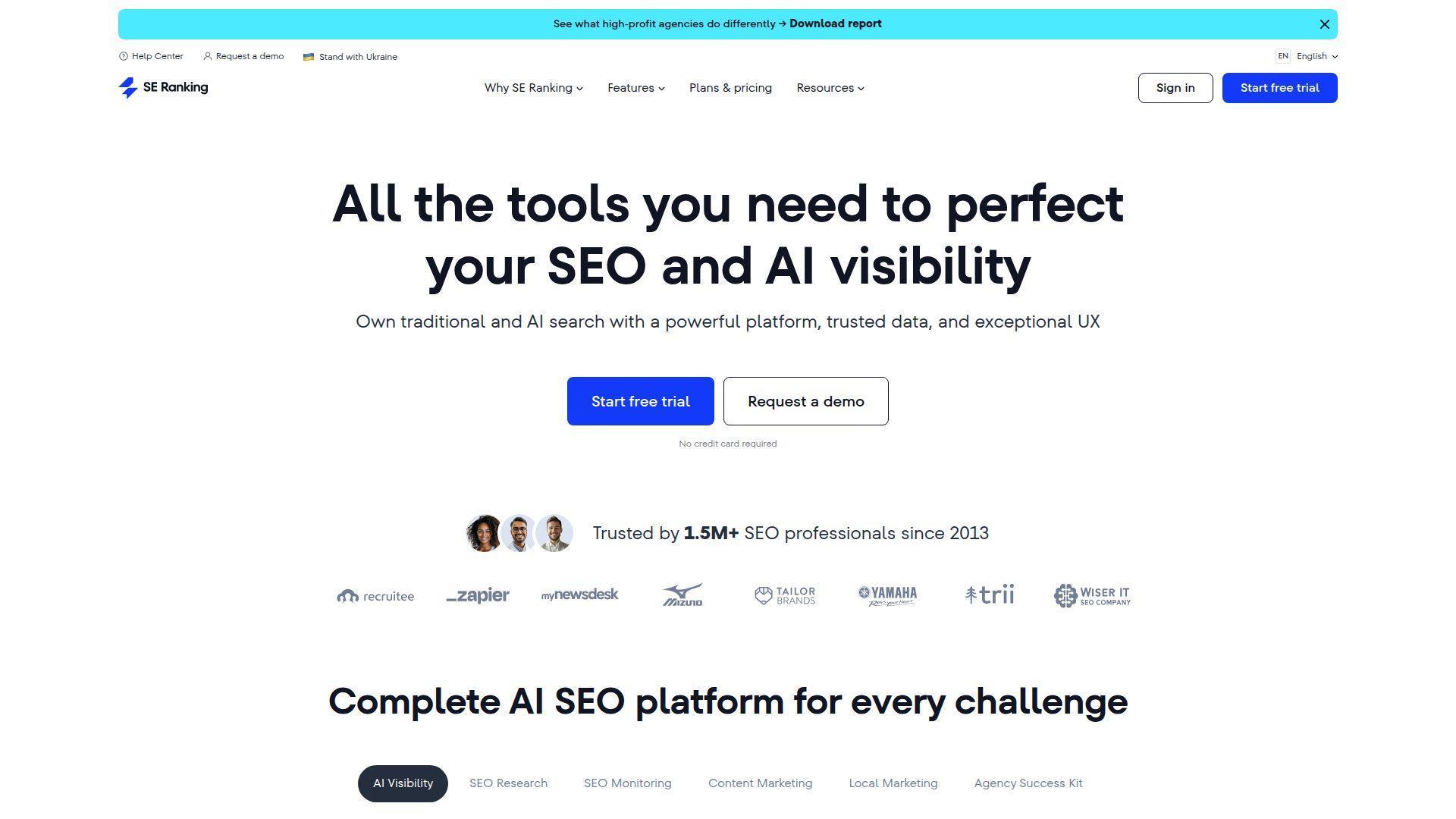
SE Ranking is a well-established SEO platform that has expanded into AI visibility through its SE Visible integration. If you’re already using SE Ranking for keyword tracking, backlink monitoring, and site audits, adding AI visibility tracking to your existing workflow is straightforward. The combined platform gives you a single pane of glass for both traditional and AI-powered search.
Key features
- Integrated AI keyword tracking alongside traditional SERP monitoring
- SE Visible tracks ChatGPT, Google AI Overviews, Google AI Mode, Gemini, and Copilot, with Claude listed as coming soon
- Competitive analysis that blends organic rankings with AI visibility data
- Comprehensive SEO toolkit including rank tracking, site audit, and backlink checker
- White-label reporting for agencies
Watch-outs
- AI visibility features are relatively new and less mature than dedicated AI visibility platforms
- The bundled approach means you’re paying for SEO tools even if you only need AI tracking
- SE Visible does not cover Perplexity
Pricing
SE Visible starts at €80/mo (Basic, 75 prompts); Core is €169/mo for 200 prompts and Agency €355/mo for 1,000 prompts. A 10-day trial is listed. SE Ranking’s own Core (€109/mo) and Growth (€235/mo) plans each include 25 daily prompts across five LLMs.
3. Scrunch AI, best enterprise solution
Why it stands out
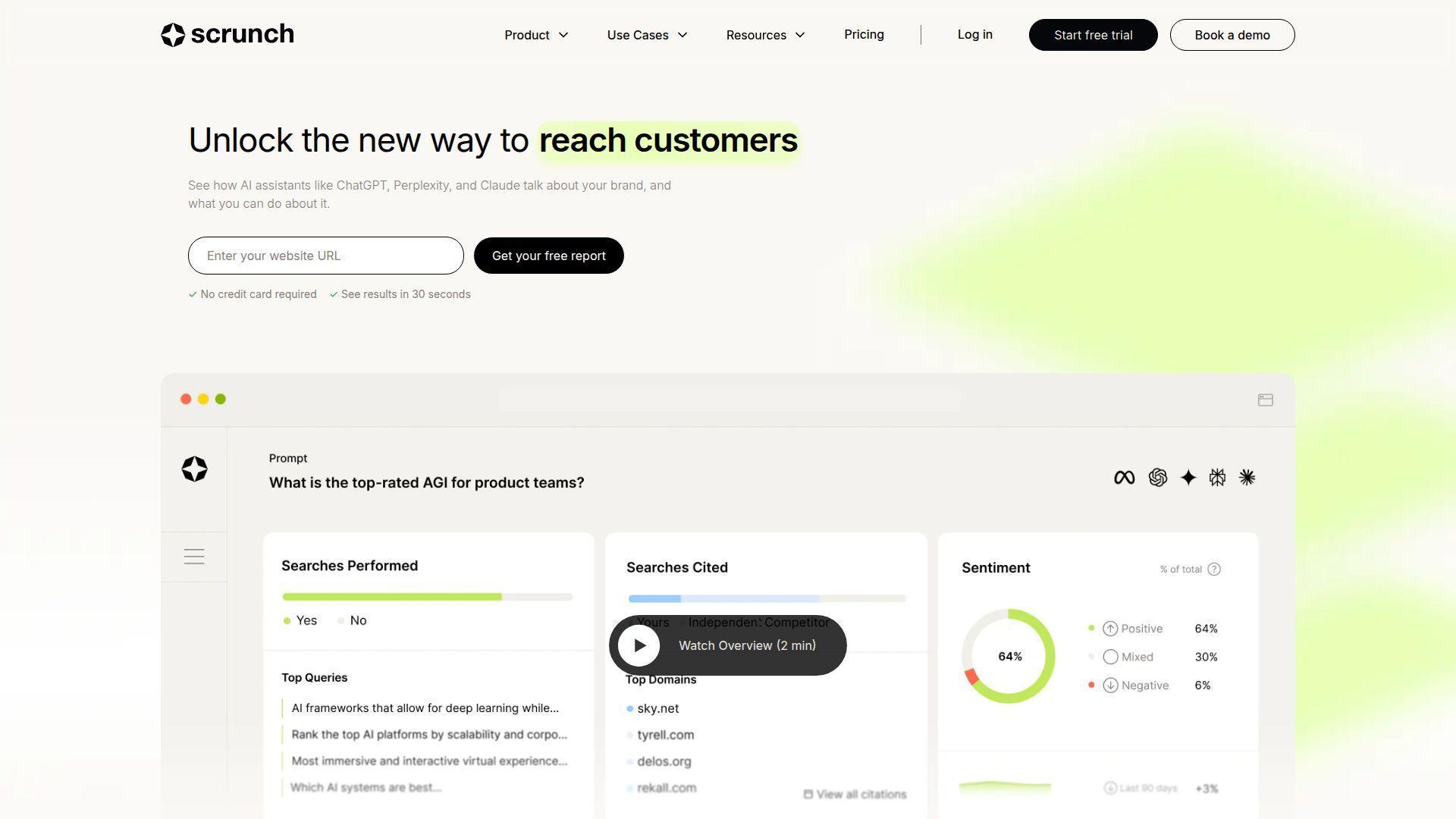
Scrunch AI combines AI visibility monitoring, page audits, citations, agent traffic monitoring, and its Agent Experience Platform (AXP). Core covers four LLMs; Enterprise adds AXP, the API, SSO, custom scale and up to nine LLMs.
Key features
- SOC 2 compliant, suitable for enterprise security requirements
- Core covers ChatGPT, Perplexity, Google AI Overviews, and Microsoft Copilot; Enterprise covers up to nine LLMs
- Advanced analytics dashboards with enterprise-grade reporting
- Enterprise Data API for custom integrations
- Dedicated account management and onboarding
Watch-outs
- Core is $250/month for 125 prompts, 5,000 responses a month and four LLMs; Gemini, Claude, Google AI Mode, Meta AI and Grok need Enterprise
- 7-day trial on the Core plan
- Enterprise focus means the platform may feel over-engineered for simpler use cases
Pricing
Core is $250/month for 125 prompts and four LLMs, with a 7-day trial. Enterprise pricing is custom, with up to nine LLMs.
4. Profound, best for large enterprise teams
Why it stands out
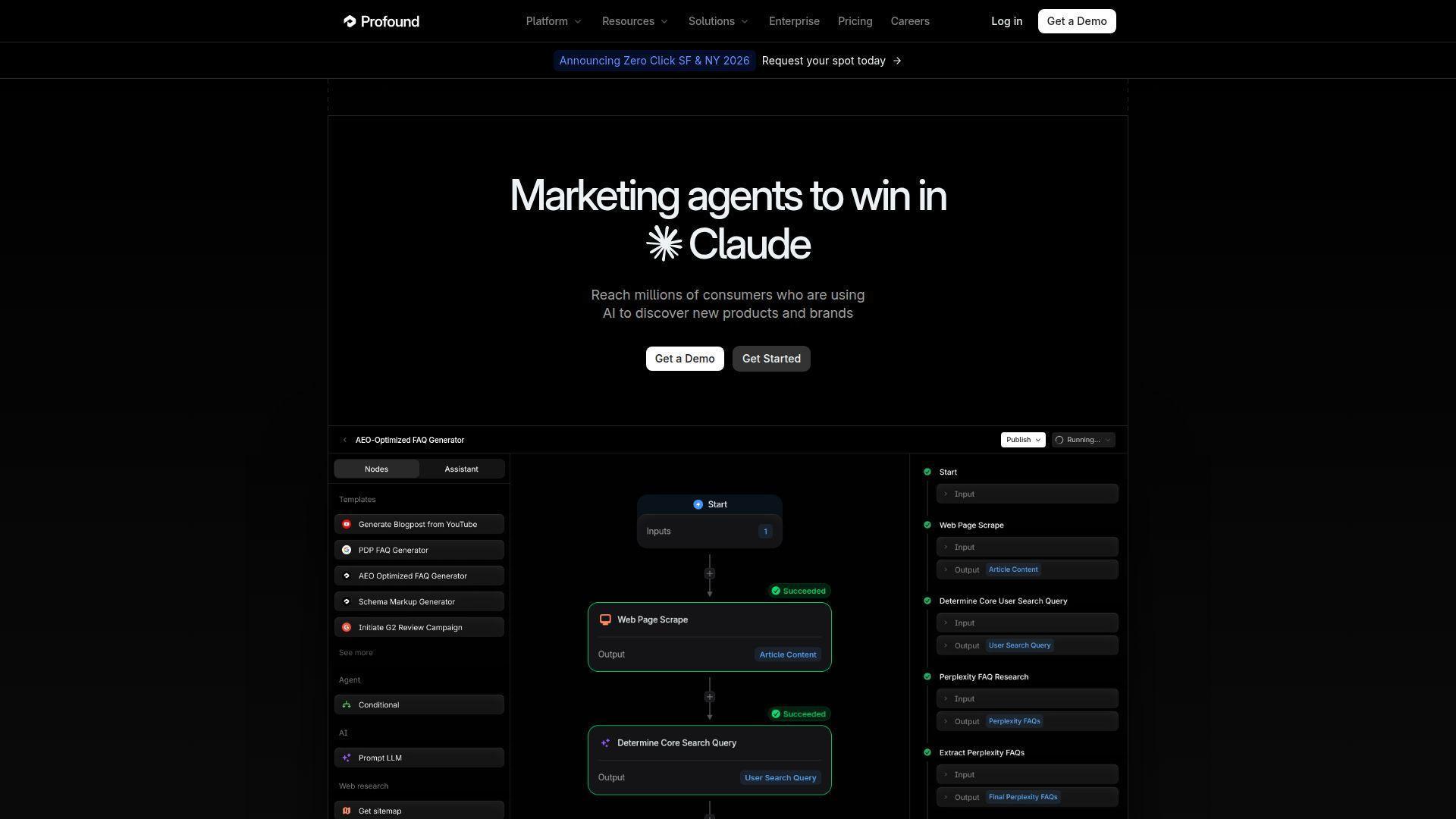
Profound is one of the best-known names in the category and targets large brands. On Enterprise it covers up to nine answer engines, including ChatGPT, Perplexity, Gemini, Claude, DeepSeek and Google’s AI surfaces, with citation analytics, AI agents that consume credits, SOC 2 and SSO/SAML.
Key features
- Visibility and citation tracking across the main AI engines
- AI marketing agents that run on credits
- SOC 2 and SSO/SAML on Enterprise
- Separate offers for brands and agencies
Watch-outs
- Profound no longer publishes prices, so you need to talk to sales
- The free trial is limited to 50 prompts a day for seven days on ChatGPT, Gemini and Google AI Overviews, in one language and one region
Pricing
A free seven-day trial is available. Enterprise pricing is custom.
5. AIclicks, best for prompt-level audits
Why it stands out
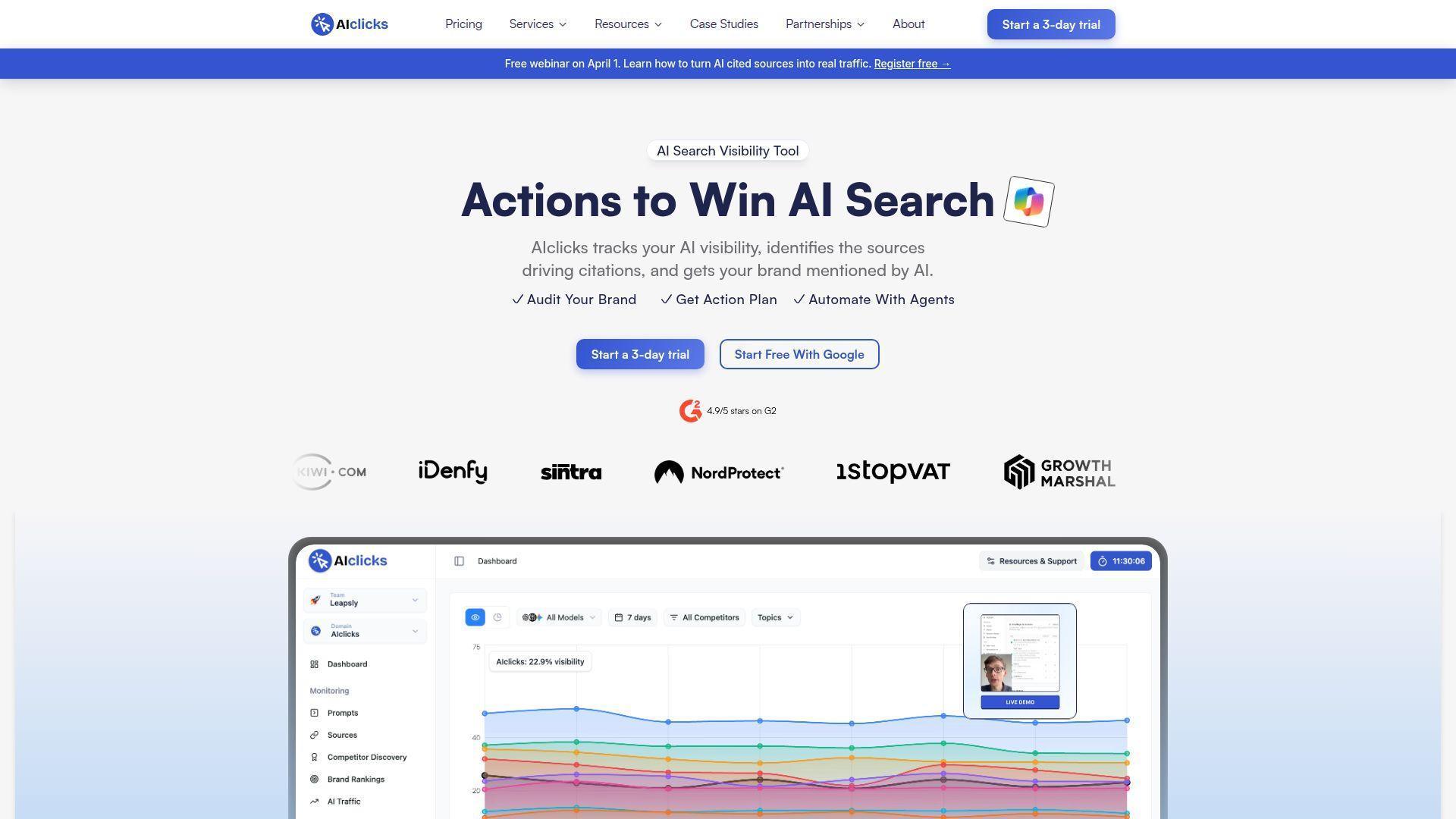
AIclicks takes a unique approach by focusing on prompt-level analysis. Rather than just tracking whether your brand is mentioned, it lets you audit exactly which prompts trigger (or fail to trigger) your brand’s appearance in AI responses. This granular, prompt-by-prompt approach is valuable for teams that want to understand the mechanics behind their AI visibility.
Key features
- Detailed prompt-level audit reports
- Tracks the AI models you choose (3 on Starter) with prompt-specific breakdowns
- Competitive prompt analysis, see which prompts favor competitors
- Recommendation engine for improving AI visibility per prompt
- Daily prompt runs on every plan
Watch-outs
- Starter is limited to 30 prompts and 3 models
- The trial lasts 3 days and needs a card
- The prompt-audit focus may lack the broader analytics (sentiment, SoV) that some teams need
- Smaller team and community compared to more established players
Pricing
Starter is $59/mo (30 prompts, 3 models), Pro $189/mo and Business $499/mo. There is no free plan.
6. Otterly AI, best affordable entry
Why it stands out
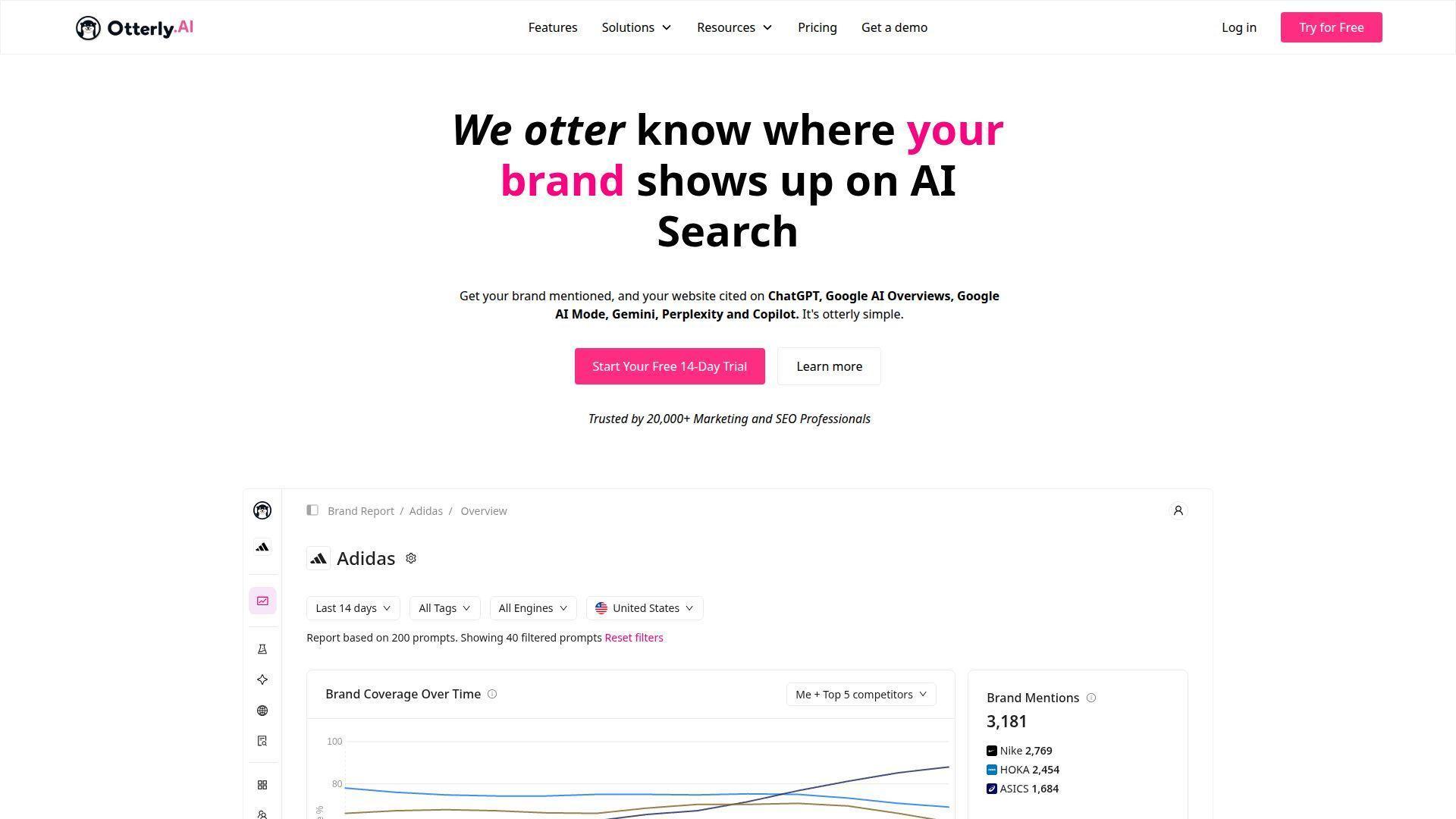
Otterly AI offers one of the lowest entry points in the AI visibility space with paid plans starting at $29/mo. It’s a solid choice for startups, freelancers, and small businesses that want to start tracking AI visibility without a significant budget commitment.
Key features
- Daily monitoring on paid plans
- Tracks 4 base AI models (ChatGPT, Perplexity, Microsoft Copilot, and Google AI Overviews)
- Simple, intuitive dashboard designed for non-technical users
- Weekly mention tracking with email alerts
- Basic competitive comparison
Watch-outs
- Limited depth of analytics compared to more comprehensive tools
- Paid plans start at $29/mo
- Google AI Mode, Gemini, and Claude are paid add-ons
Pricing
Paid plans start at $29/mo for 15 search prompts (Lite); Standard is $189/mo for 100 prompts and Premium $489/mo for 400.
7. AthenaHQ, best for data-driven teams
Why it stands out
AthenaHQ is built for teams that want raw data and deep analytics rather than simplified dashboards. The platform offers advanced data visualization, custom metric creation, and flexible API access that appeals to data analysts and growth teams who want to build their own AI visibility workflows.
If you’re looking for a more plug-and-play approach, or want to compare different capabilities, pricing models, and levels of abstraction, you can explore this curated guide to AthenaHQ alternatives.
Key features
- Advanced data analytics with custom metric creation
- Free Essential tracks 5 models; Starter tracks 11, including Google AI Mode, Claude, Grok, DeepSeek, Meta AI, and Mistral
- Daily refresh cadence for time-sensitive tracking
- Flexible API for building custom integrations and dashboards
- Team collaboration features with shared workspaces
Watch-outs
- Steeper learning curve, designed for data-savvy users
- Starter pricing at $295/mo is on the higher end, although Essential is free with 300 credits
- Usage is credit-based: one credit is one AI response, so a prompt run on four models uses four credits
Pricing
Essential is free with 300 credits. Starter is $295/mo with 3,600 credits, and Enterprise is custom.
8. Similarweb AI Visibility, best for market-level intelligence
Why it stands out
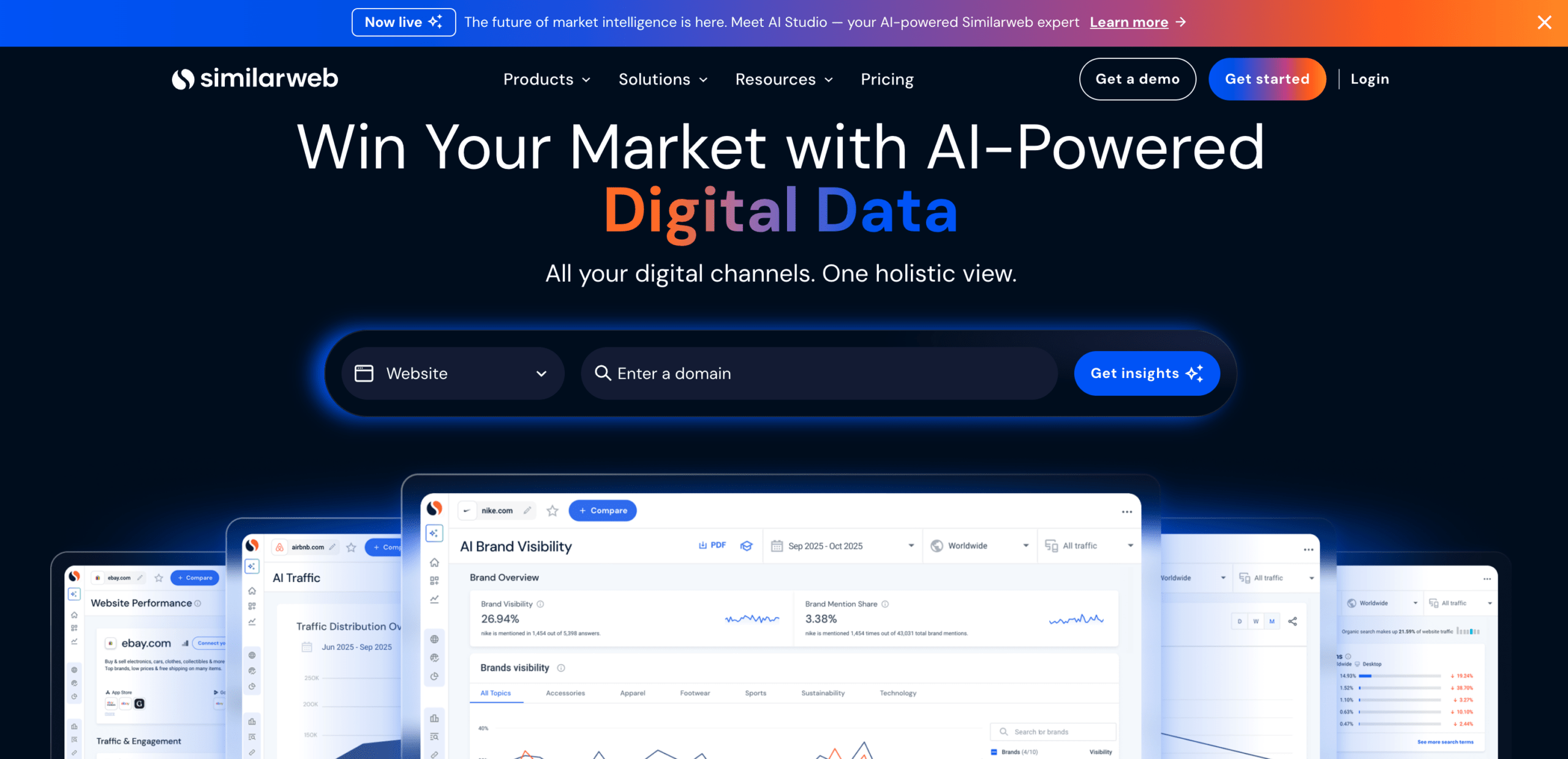
Similarweb brings its market intelligence expertise to AI Search visibility. Rather than focusing solely on your brand’s mentions, it provides market-level insights into how AI search is reshaping entire industries. This bird’s-eye view is invaluable for strategists and executives who need to understand macro trends alongside brand-specific data.
Key features
- Market-level AI search intelligence across industries
- Tracks AI-driven traffic shifts and their impact on web traffic
- Integration with Similarweb’s digital intelligence platform
- Competitive benchmarking at the industry level
- Enterprise-grade reporting and data export
Watch-outs
- The published plans include 150 prompts
- The pricing page does not list which AI engines the brand visibility tracking covers
- Less granular on individual prompt-level tracking
Pricing
The AI search package is $99/mo billed yearly or $129 billed monthly, with 150 prompts, sentiment, and citations. Bundles with Similarweb’s other intelligence products cost $333 and $542 a month billed yearly ($399 and $649 monthly). A free trial is available.
9. Rankscale AI, best budget multi-model tracker
Why it stands out
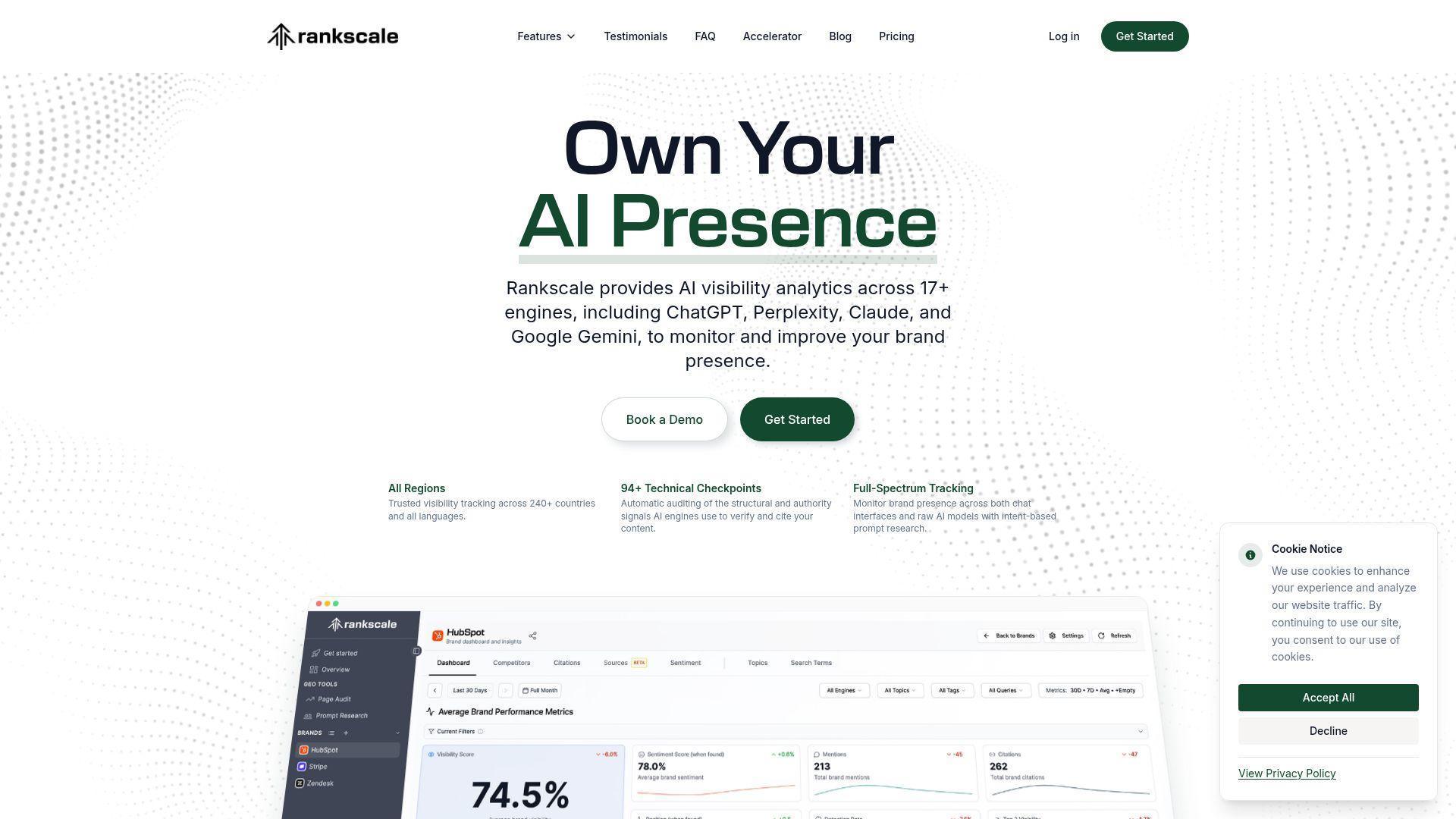
Rankscale AI offers multi-model AI visibility tracking from €17/mo (billed yearly), making it one of the most budget-friendly options for teams that want to track across multiple AI platforms without a significant investment. The platform covers 17+ engines and provides the essential metrics needed to get started with AI visibility.
Key features
- Plans start at €17/mo (billed yearly) with credit-based usage
- Covers 17+ AI engines including ChatGPT, Perplexity, and Gemini
- Mention tracking with basic competitive comparison
- Simple setup with minimal configuration required
- Schedules from hourly to monthly
Watch-outs
- Usage is credit-based, so compare execution volume by plan
- Essentials is billed yearly only and excludes sentiment analysis
- Analytics depth is less comprehensive than premium tools
- Newer platform with a developing feature set
Pricing
Essentials is €17/mo, billed yearly only. Monthly billing starts at Pro, €99/mo (€84 a month billed yearly), which has a free trial.
10. Promptmonitor, best for publisher insights
Why it stands out
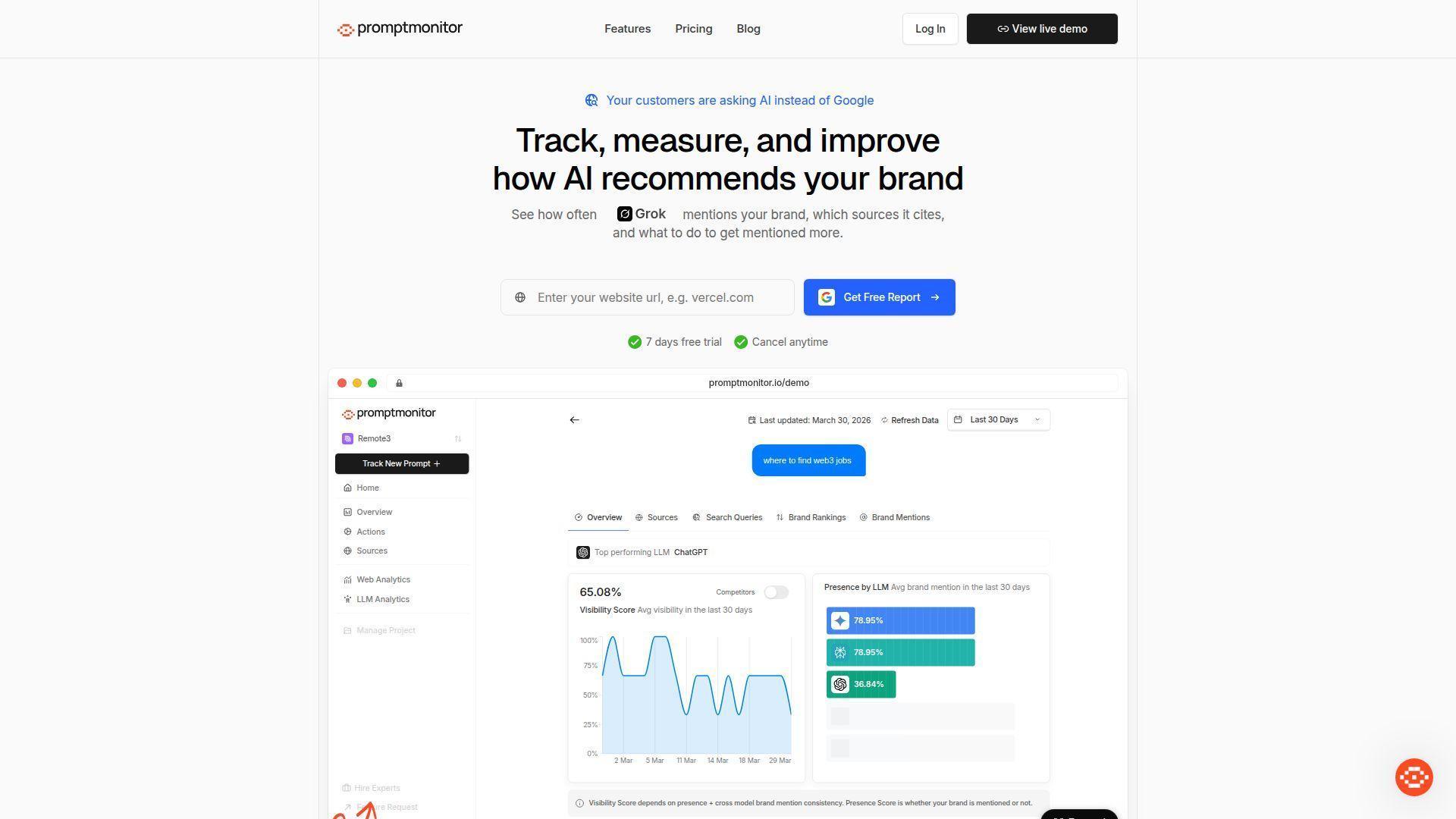
Promptmonitor is specifically designed for publishers and content creators who want to understand how their content appears in AI-generated responses. Rather than focusing on brand mentions, it tracks how AI models use and cite published content, making it uniquely valuable for media companies, bloggers, and content-driven businesses.
Key features
- Publisher-focused AI visibility tracking
- Content citation analysis across 3+ AI models
- Tracks which articles and pages are being referenced by AI
- Content performance metrics for AI search
- Seven-day trial for initial evaluation
Watch-outs
- Publisher focus may not suit brand-centric use cases
- Smaller model coverage compared to broader tools
- Limited competitive benchmarking features
Pricing
Starter is $39/mo for 25 prompts on ChatGPT, Gemini, and Perplexity, refreshed twice a week; Growth is $79/mo for 50 prompts with daily tracking. A seven-day trial is available.
11. HubSpot AI Search Grader, best free AI visibility check
Why it stands out
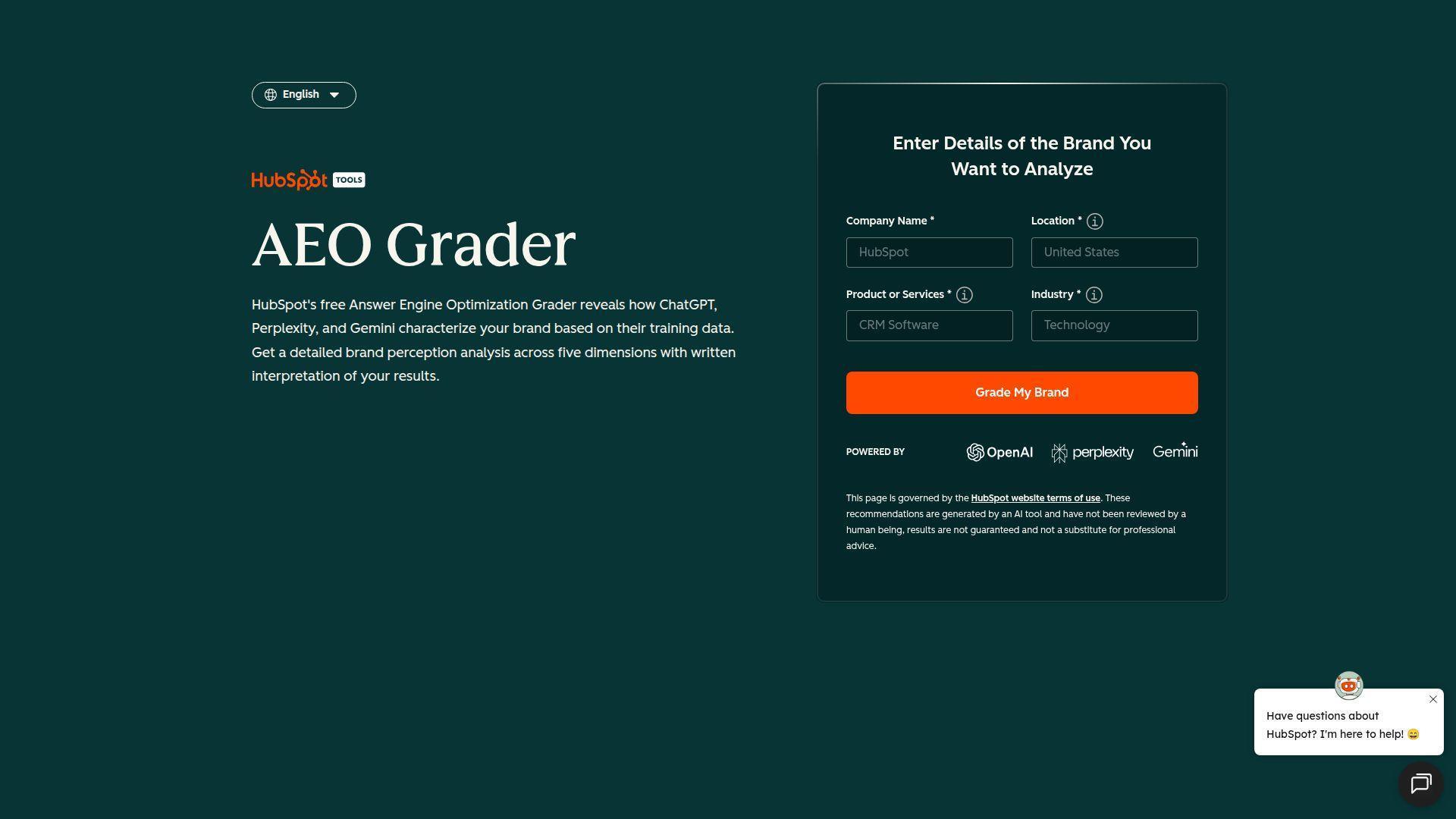
HubSpot’s AI Search Grader (formerly the AEO Grader) is a free tool that gives you an instant snapshot of how your brand performs in AI-generated answers. It’s not a full monitoring platform, but it’s an excellent starting point for brands that are just beginning to explore AI visibility and want a quick, zero-cost assessment.
Key features
- Completely free, no trial period
- Instant AI visibility audit for your brand or website
- Actionable recommendations for improving AI visibility
- Backed by HubSpot’s trusted brand and ecosystem
- Great entry point for educating stakeholders on AI visibility
Watch-outs
- Not a monitoring tool, provides a one-time snapshot, not ongoing tracking
- Covers three AI models (ChatGPT, Perplexity, and Gemini) and relies on what they know from training data, not live web search
- Sentiment and competitor share of voice come as a one-time snapshot, with no ongoing tracking or historical data
- Designed as a lead generation tool for HubSpot’s paid products
Pricing
Free. No paid plans, it’s a standalone free tool.
AI visibility tools by use case
Choosing the right tool depends on your specific situation. Here’s a breakdown by use case:
For startups and SMBs
- LLM Pulse: Best value with unlimited seats and plans starting at €49/mo. Gives you enterprise-grade analytics without enterprise pricing.
- Promptmonitor: Paid plans start at $39/mo with a seven-day trial.
- HubSpot AI Search Grader: Perfect for a quick, free initial assessment before investing in a paid tool.
For agencies
- LLM Pulse: White-label portals, embeddable dashboards, unlimited seats, API access, and Data Studio integration make it ideal for agencies managing multiple client brands.
- SE Ranking: If you’re already using SE Ranking for client SEO, adding AI visibility keeps everything in one platform.
For enterprise
- Scrunch AI: broad AI platform coverage, agent traffic monitoring, page audits, and an Enterprise Data API.
- Profound: Up to nine answer engines, SOC 2 and SSO/SAML on Enterprise.
- Similarweb: Market-level intelligence for executives and strategists who need the big picture.
For SEO teams
- SE Ranking / SE Visible: Easy integration of AI visibility into your existing SEO workflow.
Summary
AI visibility is no longer a nice-to-have. As AI-powered search continues to grow across ChatGPT, Perplexity, Gemini, Google AI Mode, and AI Overviews, brands that don’t track their presence in AI-generated responses are flying blind.
The tools on this list range from free entry points like HubSpot’s AI Search Grader to enterprise-grade platforms like Profound and Scrunch AI. For most teams, LLM Pulse offers the best balance of comprehensive analytics, broad AI model coverage, and accessible pricing.
Whatever tool you choose, the important thing is to start tracking. AI search is reshaping how customers discover brands, and the brands that understand and optimize for AI visibility today will have a significant competitive advantage tomorrow.
Frequently asked questions
What is AI Search visibility?
AI Search visibility refers to how often and how favorably your brand appears in AI-generated search results. When users ask ChatGPT, Perplexity, Gemini, or other AI models questions related to your industry, AI visibility measures whether your brand is mentioned, how it’s described, and whether your website is cited as a source.
Do I need an AI visibility tool if I already use an SEO tool?
Yes. Traditional SEO metrics track organic rankings and links. Several SEO platforms now add AI visibility modules, while dedicated tools focus on model responses, mentions, and citations. AI visibility and traditional SEO are complementary. You need both to understand your full search presence.
How do AI visibility tools collect their data?
AI visibility tools systematically send prompts to AI models (like ChatGPT, Perplexity, and Gemini) that match the questions your potential customers are asking. They then parse the AI-generated responses to identify brand mentions, extract citations, analyze sentiment, and calculate share of voice metrics.
How often should I check my AI visibility?
Most AI visibility tools refresh data weekly, which is sufficient for tracking trends and identifying changes. For fast-moving industries or during PR events, daily refresh (available on some platforms) can be valuable. At minimum, review your AI visibility data monthly as part of your marketing reporting cycle.
Can I improve my brand’s AI visibility?
Yes. While the exact ranking factors for AI models are not fully transparent, proven strategies include: creating authoritative, well-structured content; building brand mentions across reputable sources; maintaining accurate information on official channels; earning citations from trusted publications; and ensuring your website provides clear, factual information that AI models can reference.
What’s the difference between AI visibility and AEO (Answer Engine Optimization)?
AI visibility is the measurement, how visible your brand is in AI-generated responses. AEO is the practice of optimizing your content and online presence to improve that visibility. AI visibility tools track the metric; AEO is the strategy you use to improve it.
Are AI visibility tools worth the investment?
If your target audience uses AI-powered search tools (and increasingly, most audiences do), then yes. AI search already impacts your brand’s discoverability. AI visibility tools give you the data to understand that impact and the insights to improve your position. Many tools offer free tiers or trials so you can evaluate the value before committing.
How is share of voice calculated in AI visibility?
Share of voice (SoV) in AI visibility measures your brand’s mention frequency relative to competitors across AI-generated responses. For example, if AI models mention your brand in 30 out of 100 relevant prompts, and your top competitor is mentioned in 25, your SoV is higher. Most tools calculate this across all tracked AI models and prompts, giving you a percentage-based competitive benchmark.






Discover your brand's visibility in AI search effortlessly
Esteve Castells
Co-Founder of LLM Pulse and AI search expert. With extensive experience working as an SEO for global brands and large enterprises, he's the subject matter expert building the product to deliver value to our users.
- US Data Center Moratoriums and Blocked Projects, Tracked (2026)
- Big Tech AI Data Centers: Every US Campus From Meta, Microsoft, Amazon, Google, xAI and Anthropic
- Every AI Data Center Under Construction in the US, Mapped (2026)
- ChatGPT Business Hub doesn't count your brand mentions. Here's what it counts instead
- The future of AI search data: why ChatGPT's console won't bring keywords back