Best LLM Monitoring Tools in 2026 (Brand Visibility, Not Observability)

By Daniel Peris




Table of contents
- What LLM brand monitoring actually captures
- How to choose an LLM monitoring tool
- The eleven tools at a glance
- 1. LLM Pulse
- 2. Ahrefs Brand Radar
- 3. Profound
- 4. Otterly.AI
- 5. SE Ranking and SE Visible
- 6. Scrunch AI
- 7. Searchable
- 8. Rankability
- 9. Siftly
- 10. SISTRIX
- 11. LLMrefs
- If you meant the other kind of LLM monitoring
- Picking one in practice
- Frequently asked questions
Search for LLM monitoring tools and you get two product categories in one page. One set watches what large language models say about your brand: which prompts mention you, which pages they cite, which competitor appears instead. The other watches your own LLM application in production: token spend, latency, failed tool calls, eval scores. Nothing says which one a vendor sells, so a marketing lead and a platform engineer both land here and both leave annoyed.
This post is about the first kind. If you came for the second, skip to the short section near the end.
What LLM brand monitoring actually captures
You give the tool prompts, it sends them on a schedule to ChatGPT, Perplexity, Gemini, Google AI Mode, AI Overviews and whatever else it supports, and it parses the answers it stores.
- Mentions. Whether the answer named your brand and where, since fourth in a list is not the recommendation: see tracking brand mentions.
- Citations and sources. The URLs behind the answer, and the field showing which sites the models read: see tracking which sources AI cites.
- Share of voice and competitors. Your mentions as a share of voice across all tracked brands on one prompt set, with the same metrics for rivals you nominate. Comparable inside a tool, never across two.
- Sentiment. Catches the model that recommends you while calling you expensive.
- The answer text. Underrated: most of the insight comes from reading twenty responses.
What it cannot tell you
There is no rank. An AI answer is a paragraph, not a list of ten links. A “position” is the order brands appear in prose, a proxy and nothing more: see AI rank tracking myths.
There is no impression count. No assistant publishes how many people asked a question, so the estimated impressions some tools show are modelled from search volume. Google is the partial exception: Search Console’s Generative AI performance report counts how often your links appeared in AI Overviews and AI Mode, with no clicks, CTR or position.
Answers vary between runs. Ask the same model the same question twice and the brands and sources can change, which is why volume matters more than dashboard design.
People ask me which LLM monitoring tool is the best one. Honestly? The one whose numbers you can explain to your boss. If a dashboard gives you a score and you can’t open the answers behind it, you’re buying a number, not an insight.
 Daniel Peris Co-founder, LLM Pulse
How to choose an LLM monitoring tool
Eight things decide the fit; our piece on choosing an AI visibility tool goes deeper.
- Model coverage at the price you will pay. Nine engines in the marketing often means four on the entry plan.
- Cadence. Daily costs more and earns it during a launch; weekly gives cleaner trend lines.
- Citations as a first-class data type you can group, filter and export.
- Locales and languages. Several self-serve products cap you at one of each.
- Competitor benchmarking on the same prompts, and whether changing the list resets history.
- Exports and API. Ask whether the API is included or an add-on.
- Seat model. One seat on an entry plan breaks any team that shares reporting.
- Price per tracked answer, not per prompt. This one reorders the market.
The arithmetic: a weekly prompt yields about 4.33 answers per model per month, a daily prompt about 30. So 100 weekly prompts on three engines is roughly 1,300 answers a month, while 50 daily prompts on one engine is about 1,500. Divide price by answers before comparing quotes. The GEO metrics guide covers what to do with them.
The eleven tools at a glance
| Tool | Entry price | Prompts at entry | Engines at entry | Notable |
|---|---|---|---|---|
| LLM Pulse | EUR 49/mo | 50/week | 5 | Citations, API, MCP, white label |
| Ahrefs Brand Radar | EUR 119/mo (Lite) | 5 daily on 1 platform | 7 available | Bundled with Ahrefs plans |
| Profound | Custom | 50 on the free trial | 3 on the trial | Enterprise sales; SOC 2 |
| Otterly.AI | USD 29/mo | 15 | 4 | Cheapest paid entry; daily |
| SE Ranking / SE Visible | EUR 80/mo (SE Visible) | 75 | 5 | 25 daily prompts in SE Ranking plans |
| Scrunch AI | USD 250/mo | 125 | 4 | Site audits included |
| Searchable | USD 125/mo | 100 per model | 3 | Unlimited regions and seats |
| Rankability | USD 97/mo | 100 | 11 | API and MCP on every plan |
| Siftly | Free / USD 79/mo | 10 free, 50 paid | 2 free, 3 paid | Free tier, weekly refresh |
| SISTRIX | EUR 119/mo | 100 | 4 | Inside an SEO suite, beta |
| LLMrefs | USD 79/mo | 500 generated | All | Unlimited projects and seats |
Figures are as published when we checked in October 2026, in the currency each vendor’s page showed us, and several vendors reprice often.
1. LLM Pulse
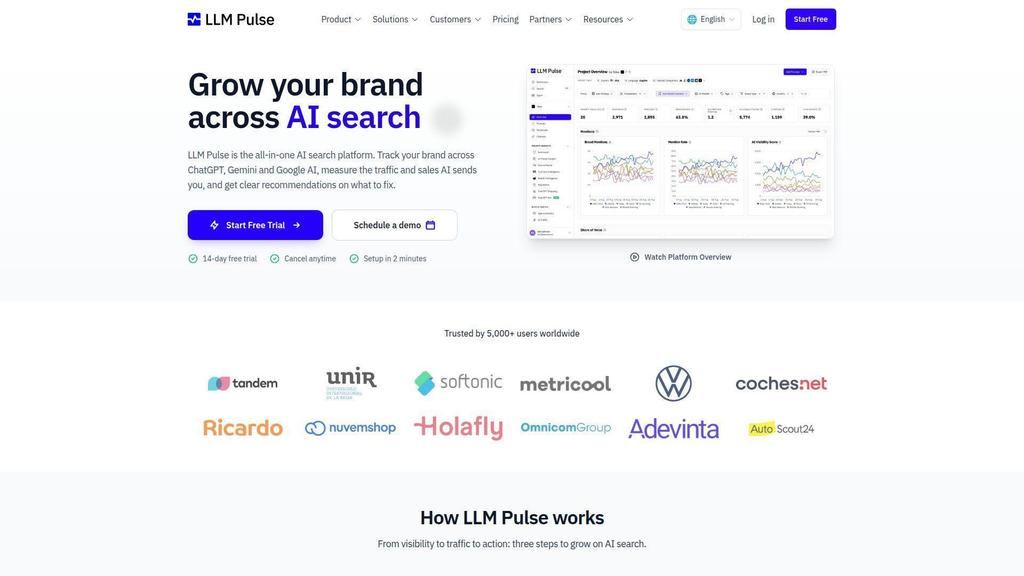
This is our tool, so read the watch-outs with that in mind. It tracks ChatGPT, Perplexity, Google Gemini, Google AI Mode and Google AI Overviews on every plan. DeepSeek, Grok, Claude, Microsoft Copilot, Meta AI, Naver AI Briefing, Naver AI Tab, Baidu AI, Qwen, Doubao and Alexa for Shopping (formerly Amazon Rufus) are paid add-on models. MiniMax, Mistral, Walmart Sparky and Brave AI are available through Talk to sales, and the team sets them up for approved paid accounts.
It treats citations as a real object: which domains the models cite in your category, which of your pages appear, and the page content behind each cited URL. Around the core metrics sit prompt research with query fan-out, AI Model Insights, GEO Writer, GEO Testing, reputation monitoring, ChatGPT Ads tracking and Reddit Intelligence.
The data gets out cleanly too: REST API, CLI, MCP server, signed webhooks with Zapier, Make and n8n connectors, a Data Studio (formerly Looker Studio) connector, a Power BI connector in private beta, CSV output that Tableau can read through its own REST connector, CSV exports and PDF reports. Search Console connects as a property so real queries feed prompt generation, AI Traffic analytics reports human visits from AI assistants, and Agent Analytics reads your logs for bot hits. Team members are unlimited, with white label and iframe embed for agencies.
When we built the citation views, I expected teams to care most about their own pages getting cited. The part they end up using is the list of other domains: the review sites, forums and comparison pages the models keep reading in their category. That list is usually a better outreach plan than anything an SEO audit hands you.
 Esteve Castells Co-founder, LLM Pulse
Two watch-outs. Weekly is the default cadence (daily is available on every plan at a higher price, monthly on request), and the allowance counts per week, per model, so a plan buys fewer individual answers than a tool running the same prompt count daily. Line the plans up on answers when you compare. Second, the surface area is large, and if you want one score on a dashboard each month, a smaller tool will feel lighter.
Pricing is Starter EUR 49/mo for 50 prompts, Growth EUR 99/mo for 150, Scale EUR 299/mo for 450, Scale+ EUR 599/mo for 1,200, Scale++ EUR 1,199/mo for 2,400, Enterprise custom, annual at ten times the monthly price. Per prompt that is EUR 0.98 on Starter down to EUR 0.50 on Scale+ and Scale++, and 50 prompts across five models is over 1,000 AI answers a month. Full pricing is on the site, along with how the API works. The trial requires a card.
Want to see what AI answers say about your brand?
Track your prompts across five AI models and read every answer and citation behind the numbers.
2. Ahrefs Brand Radar
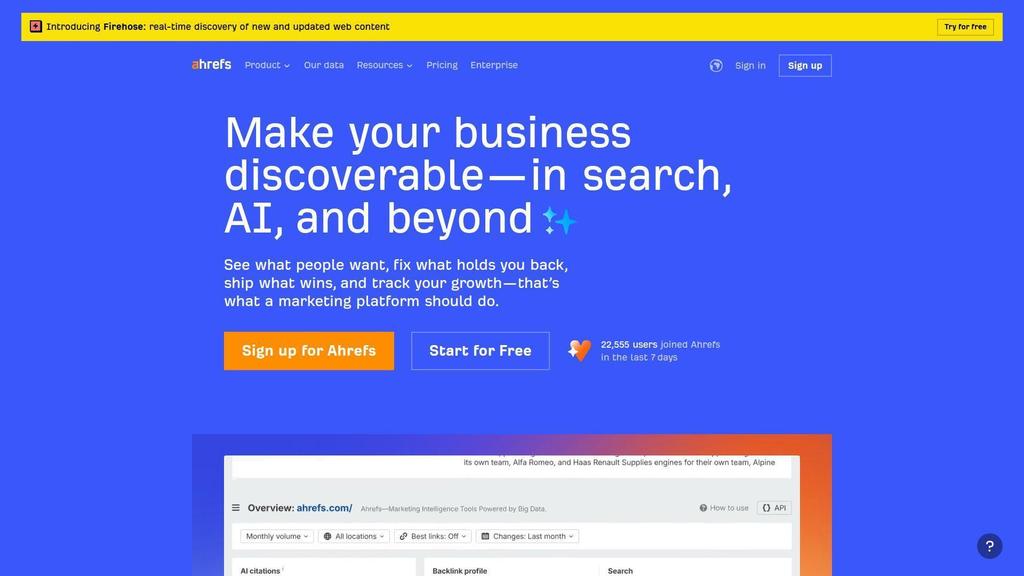
A small allowance of tracked prompts comes with paid Ahrefs plans, so existing Ahrefs customers already have some of this data. It covers AI Overviews, AI Mode, ChatGPT, Perplexity, Gemini, Copilot and Claude, reporting mentions, citations, share of voice and estimated impressions, with custom prompts checked daily.
Then you read the allowance, which Ahrefs meters in checks: one prompt, on one platform, once. Lite at EUR 119/mo includes 150 checks a month, Standard at EUR 229 includes 300 and Advanced at EUR 419 includes 600, which is 5, 10 or 20 prompts checked daily on a single platform. Spread them across several platforms and the prompt count shrinks, and Claude uses eight checks per update. Five prompts is a spot check. Scaling means the AI Visibility Index tier at EUR 179/mo or custom prompt packages from about EUR 47/mo.
3. Profound
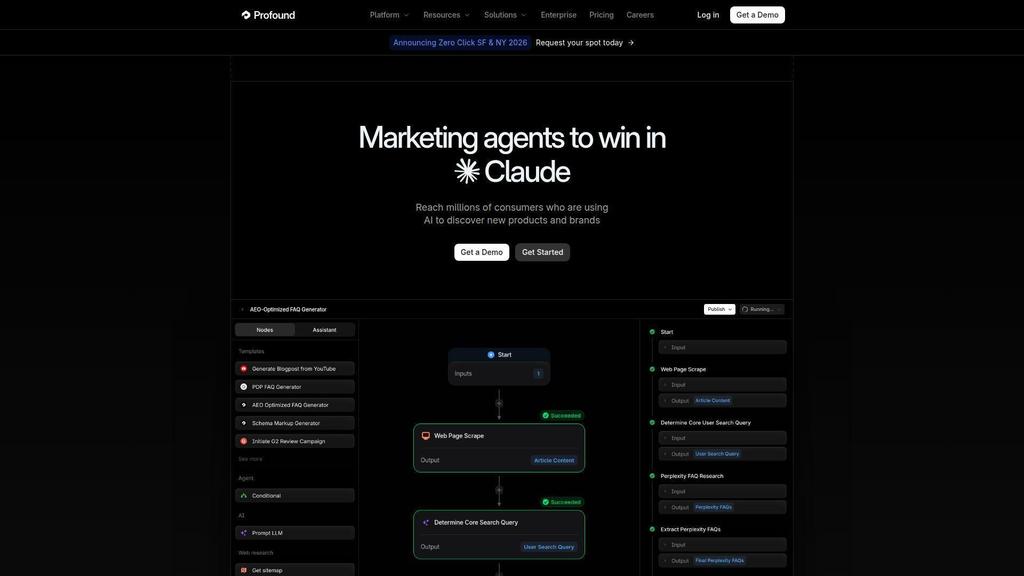
Profound sells to enterprises, and a smooth security review is the honest reason to shortlist it: SOC 2 compliance and SSO/SAML come on its Enterprise plan. It no longer publishes a self-serve price. The pricing page offers a free seven-day trial with 50 prompts run daily across ChatGPT, Gemini and Google AI Overviews; everything else is Enterprise, quoted in a sales conversation, with up to nine answer engines and API access.
The trial is limited to one language and one region, with no history, exports or API, so it shows you the interface more than it tests the data. Budget for a sales cycle before you see a price.
4. Otterly.AI
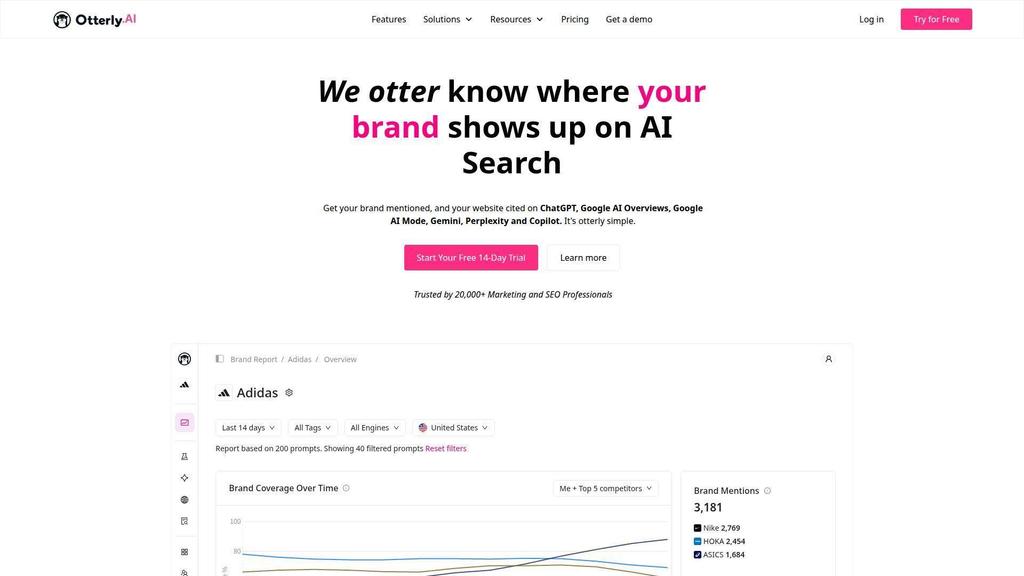
Otterly has the lowest paid entry here: Lite at USD 29/mo for 15 prompts, Standard USD 189/mo for 100, Premium USD 489/mo for 400, Enterprise custom from 1,000. Cadence is daily, so 15 prompts produce roughly 450 answers per engine per month.
Base plans cover ChatGPT, AI Overviews, Perplexity and Copilot, while Google AI Mode, Gemini and Claude are paid add-ons, so two fast-growing Google surfaces sit outside the base price. The top self-serve plan stops at 400 prompts, so a large brand outgrows the ladder.
5. SE Ranking and SE Visible
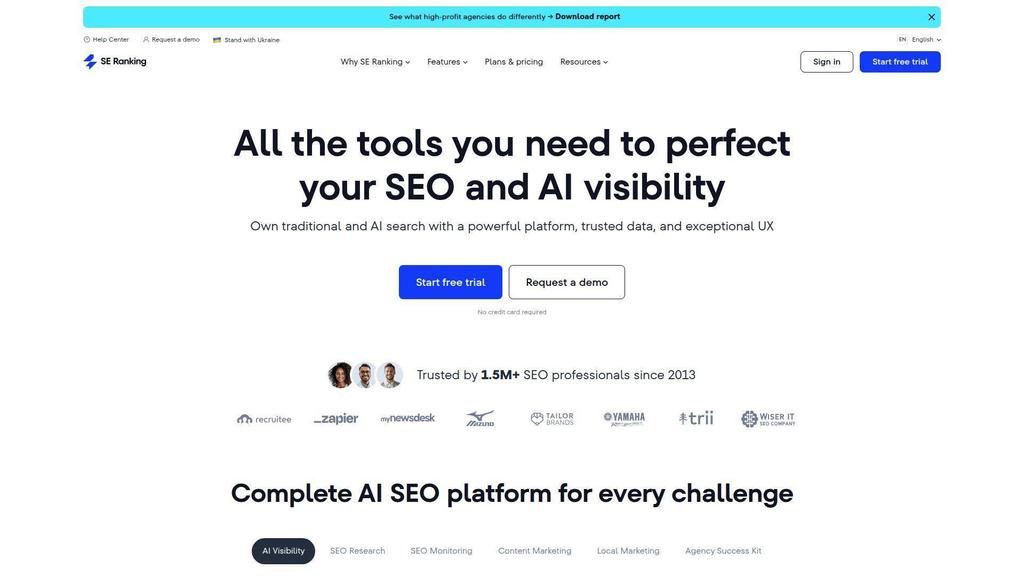
SE Ranking sells AI search tracking two ways: inside its SEO platform, or as SE Visible standalone. SE Visible is EUR 80/mo for 75 prompts (Basic), EUR 169 for 200 (Core) and EUR 355 for 1,000 (Agency), billed monthly across five engines, with a 10-day trial. The Agency tier is one of the lowest per-prompt prices of any self-serve tool here.
Inside the main platform, Core at EUR 109/mo and Growth at EUR 235/mo each include 25 daily prompts across five LLMs, with more through an AI visibility add-on. Be clear internally about which product a quote refers to, and check the cadence: SE Visible runs daily, and the Agency tier can also run weekly.
6. Scrunch AI
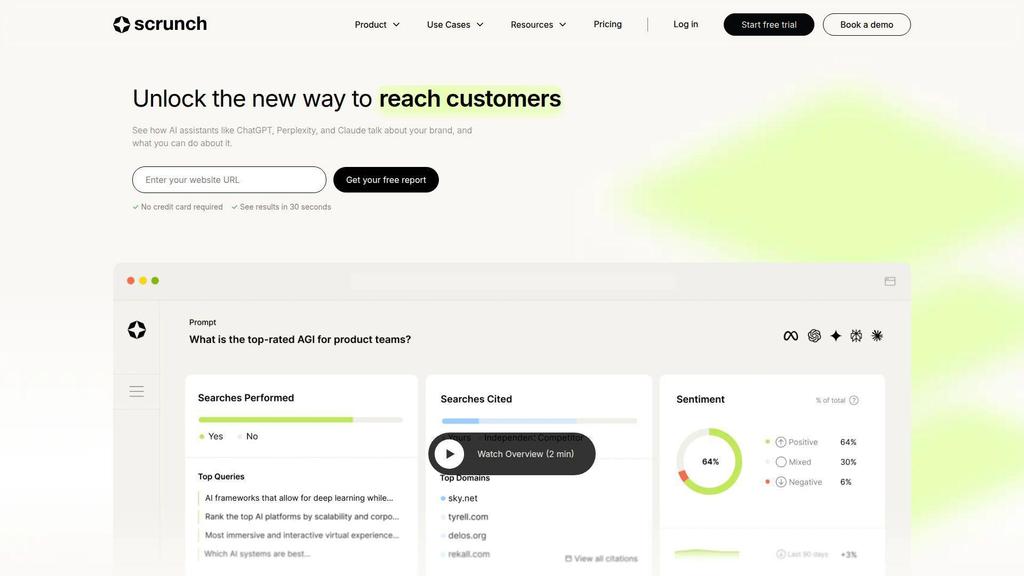
Scrunch bundles site auditing with answer tracking, which suits teams whose next question is what to change on the site. Core is USD 250/mo for 125 unique prompts, 5,000 responses a month, five site audits and one brand workspace, with a seven-day trial.
Core covers ChatGPT, Perplexity, AI Overviews and Copilot; the nine-engine coverage in the marketing is an Enterprise capability, so confirm where Gemini and AI Mode land before signing. One brand workspace also pushes a house of brands towards Enterprise quickly.
7. Searchable
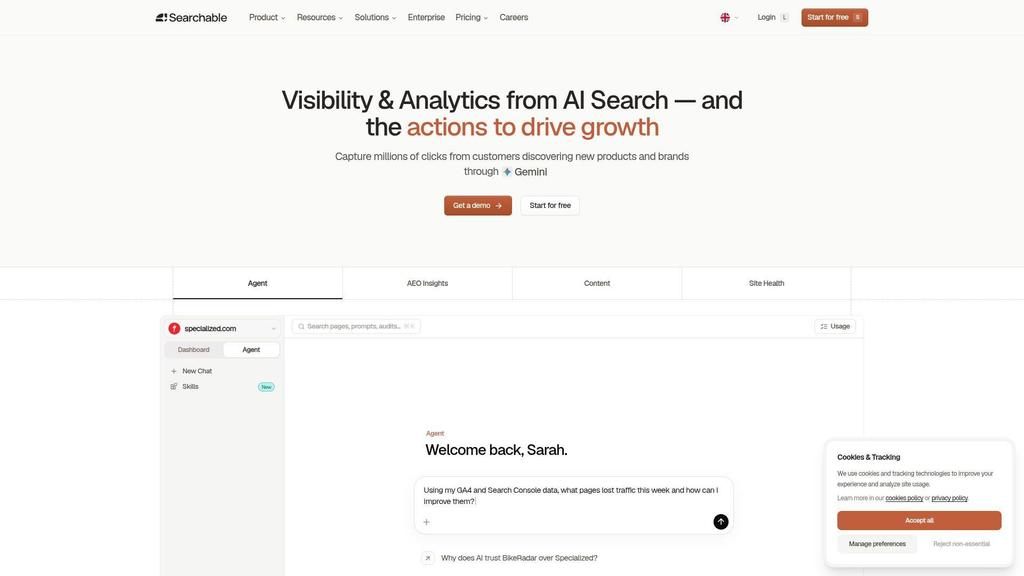
Regions and seats are unlimited on every tier, which is the reason to look at it. Pro is USD 125/mo for 100 prompts per model and one project, Scale USD 400/mo for 500 and ten projects, and Enterprise USD 999/mo for 1,250 with unlimited projects, with a 14-day trial. Agencies get separate plans.
Base plans track three engines (ChatGPT, Google AI Overviews and Perplexity) and the rest are paid add-ons. A three-engine view of a five-engine market will mislead you about share of voice.
8. Rankability
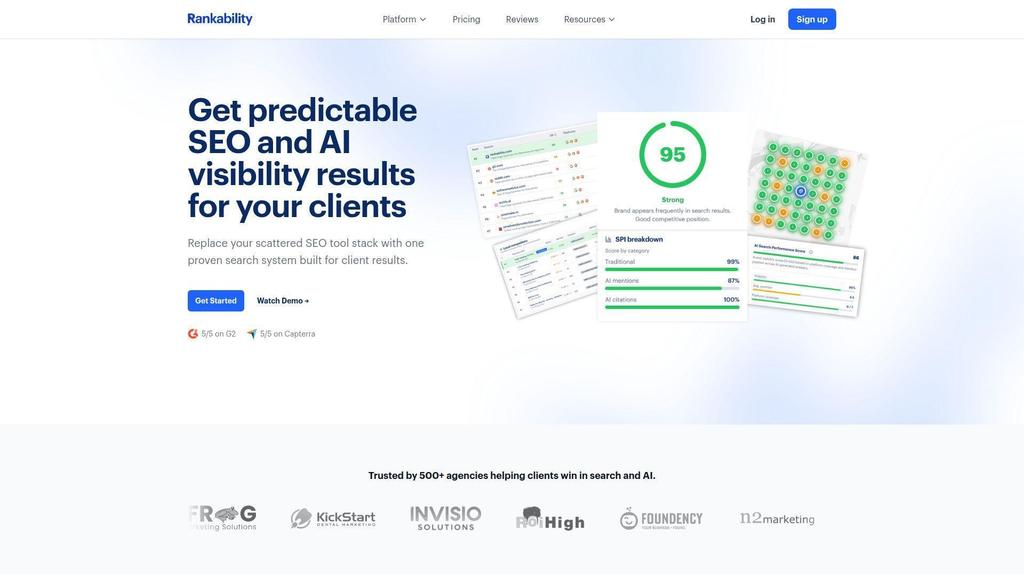
Rankability sells to agencies, and AI tracking comes bundled with content production. Every plan includes 11 AI platforms checked daily, API and MCP access, unlimited client workspaces and unlimited team members. Starter is USD 97/mo for 100 tracked AI queries, Agency USD 297/mo for 300 and Agency Pro USD 497/mo for 500, with a seven-day trial that needs a card.
The volume ceiling arrives early at 500 queries, and much of the price pays for content projects, audits and keyword tracking. If you only want AI visibility data, you are buying a lot you will not use.
9. Siftly
Siftly has a free tier with 10 prompts on two engines, refreshed weekly, the cheapest way to see this data for your brand. Paid plans refresh daily: Starter USD 79/mo for 50 prompts on three engines, Growth USD 249/mo for 100 on five and Scale USD 599/mo for 150 on eight.
Engine count climbs faster than prompt count, so at USD 599 for 150 prompts the price per tracked prompt is high next to several tools above.
10. SISTRIX
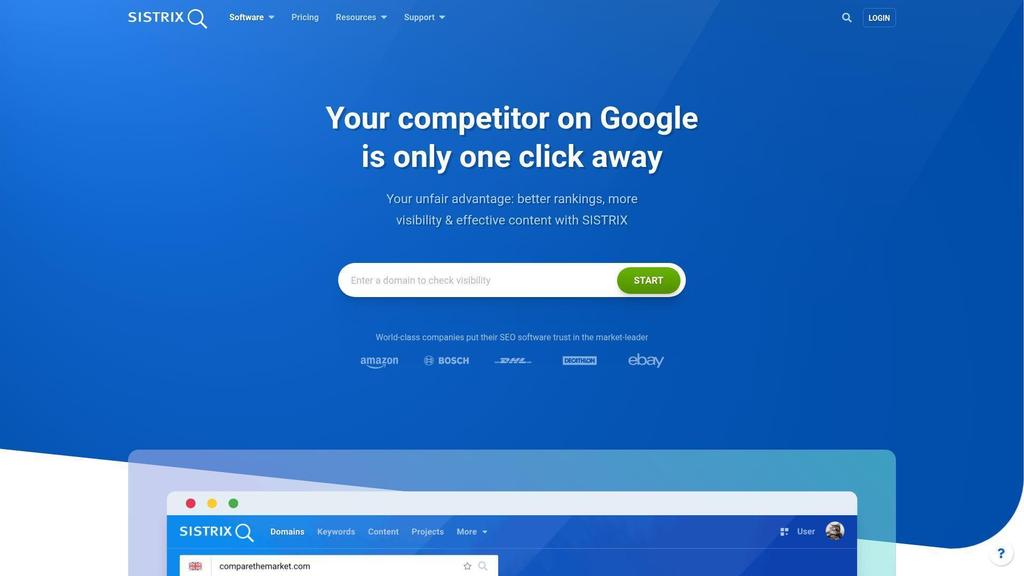
SISTRIX is an established European SEO platform, and its prompt tracking is a module inside it, still in beta and included at no extra cost in every package. It covers ChatGPT, Perplexity, Google AI Overviews and Google AI Mode, with 100, 300, 600 and 1,500 prompts by plan from EUR 119/mo. For a team already on SISTRIX, one login can beat a slightly better standalone tool.
Gemini is missing from the tracked platforms, and a beta module inside an SEO suite moves at the suite’s pace. Check how often your prompts update on your package before relying on it for a launch.
11. LLMrefs
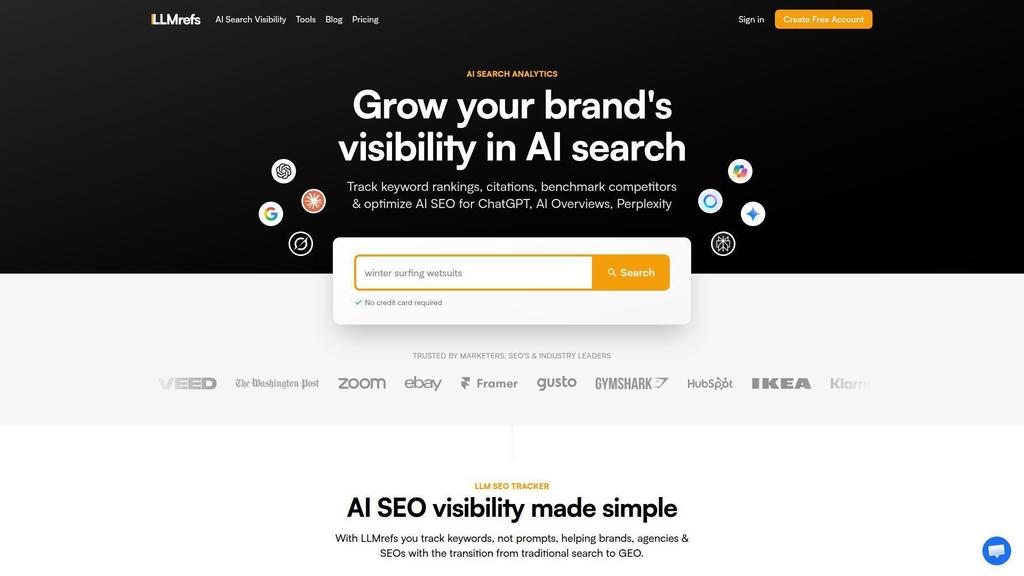
LLMrefs is one plan at 79 a month (USD, or EUR in Europe) for 500 tracked prompts across all the engines it supports, with weekly reports, API access, CSV export and unlimited projects and seats. On paper that is the most prompts for the money here, and unlimited projects suit consultants tracking several brands.
You track keywords, and the tool generates the prompts from them. That works for coverage and is weaker when you know the twelve questions that decide deals in your category.
If you meant the other kind of LLM monitoring
If you run an LLM in production and need to know what it costs, how slow it got and whether last week’s prompt change made outputs worse, nothing above helps. That category is LLM observability, a different search term.
Those platforms typically offer tracing across chains, agents and tool calls; eval suites scoring outputs against golden datasets as CI regression tests; dashboards for token spend, latency and error rates per model; guardrails screening for PII and prompt injection; and prompt versioning with side-by-side comparison.
We do not build any of that and have not benchmarked the vendors who do, so we will not rank them. Search for LLM observability or LLM evals, and check OpenTelemetry support early: the platforms that speak it are the ones you can leave later.
Picking one in practice
An in-house marketing team at one brand. Cover five engines, get citations you can act on, and pick a price that survives a budget review. Run weekly, and spend the first month reading answers before you trust the trend line.
An agency. The seat and project model decides this. Per-domain pricing multiplies painfully across a roster, so look for unlimited projects and seats and, if you report under your own brand, white label or an embeddable portal.
An enterprise. Procurement first: SOC 2, data residency, SSO, and whether the contract covers several regions and languages, which many self-serve products do not. Then integration, so the data lands beside organic and paid. Expect the prompt set itself to need real work: 2,000 careless prompts produce a very confident wrong answer.
Frequently asked questions
Is LLM monitoring the same as AI visibility tracking?
In the marketing sense, yes. LLM monitoring, AI visibility tracking, GEO tracking and answer engine monitoring all describe sending prompts to AI assistants on a schedule and measuring how your brand appears. In the engineering sense, LLM monitoring means observability for your own LLM application.
How often should tracking run?
Weekly suits most brands. Answers vary from run to run, so a larger prompt set across several engines each week tells you more than daily checks on a handful of prompts. Go daily when you have a reason, such as a launch.
Can I do this manually?
For the first week you probably should, because reading twenty real answers teaches you more than any dashboard. It stops scaling right after: twenty prompts across five models every week is 100 sessions to log, each with its mentions and cited URLs.
What does LLM monitoring cost?
Paid entry plans run from about 29 to 250 a month, and Siftly and Profound offer free ways in. Compare cost per tracked answer: price divided by prompts times runs per month times engines. A 99 a month plan with 25 daily prompts on four engines yields about 3,000 answers a month; one with 5 weekly prompts on one engine yields around 20.
Do these tools tell me my ranking in ChatGPT?
No, and be wary of tools that imply otherwise: there is no ranked list to hold a position in. You can measure how often you are mentioned, where you appear relative to other brands and which sources built the answer.
Do I need a separate tool for each AI engine?
No. A good tool runs one prompt set across several engines, which is the only way share of voice holds up. Check which engines are included at the price you pay, because paid add-on engines are common.
What is the difference between LLM monitoring and LLM observability?
Brand monitoring tracks what AI assistants say about your company. Observability tracks your own LLM application in production: traces, evals, token spend, latency and errors. The tools in this post do the first job only.
Are these prices current?
We checked each vendor's live pricing page in October 2026, but pricing in this category changes often and some vendors show prices in your local currency. Confirm each figure with the vendor before you budget.






Discover your brand's visibility in AI search effortlessly
Daniel Peris
Daniel Peris is a serial entrepreneur and one of the Co-Founders of LLM Pulse. With a strong background in SEO and ASO, he has spent over 15 years building and scaling digital businesses. He brings extensive experience in SaaS, both in product and growth, focusing on refining the product and executing growth strategies.
- The Legend of Zelda: Ocarina of Time Remake: Who AI Cites (Pre-Launch Study)
- Best LLM Monitoring Tools in 2026 (Brand Visibility, Not Observability)
- Video GEO: why AI search cites YouTube so much (and how to get your videos cited)
- How to Measure AI Visibility for an Ecommerce Brand
- How to Track ChatGPT and AI Search Traffic in GA4