Protect your brand reputation in AI answers
Buyers now ask AI about brands before they buy. Know what every model says about yours, catch wrong or outdated claims fast, and prove the fixes stuck.
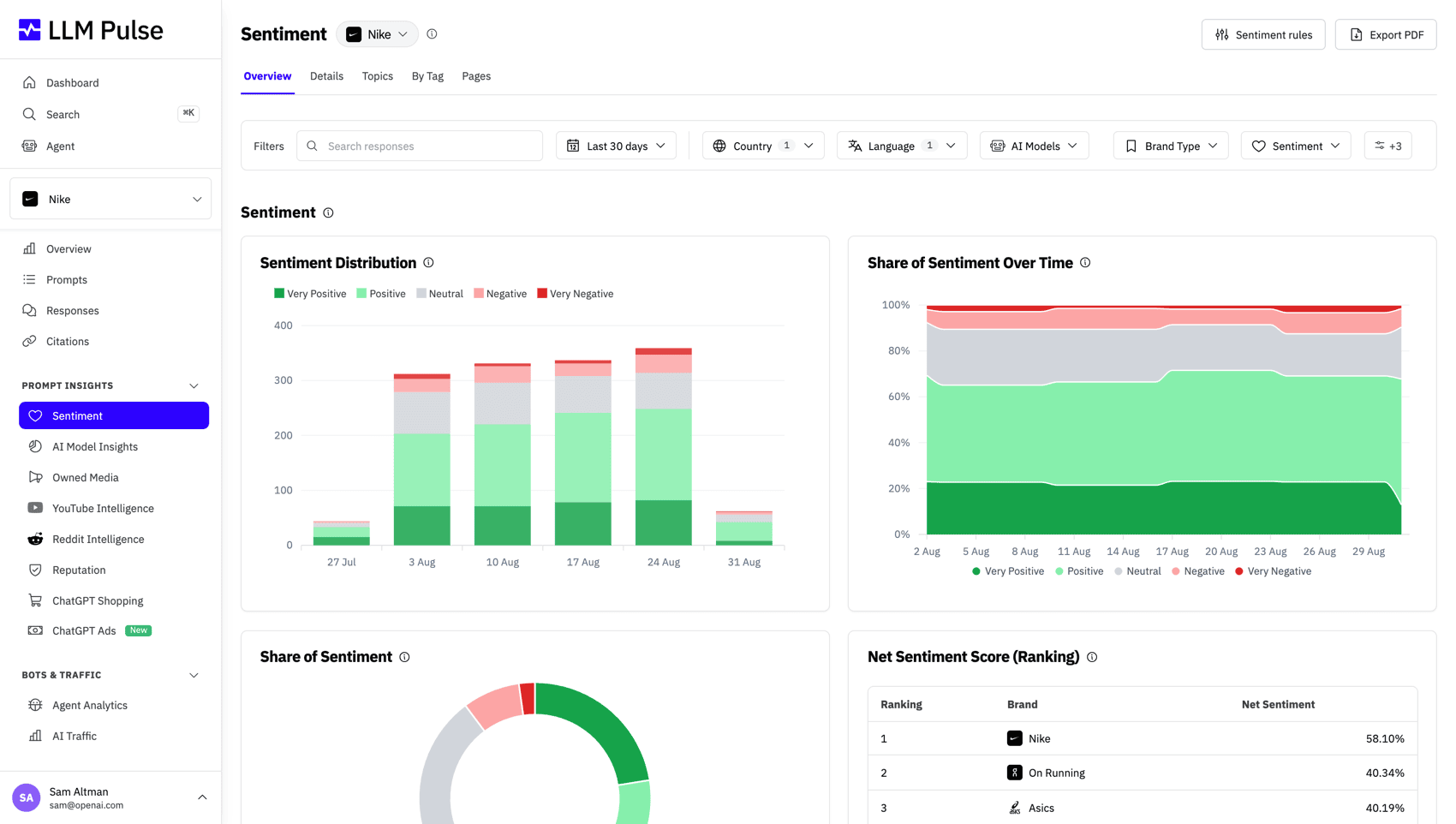
When AI repeats the wrong story, bring receipts
For comms teams answering to legal and leadership, every claim comes with the model, the date, and the full answer attached.
Reputation Analysis
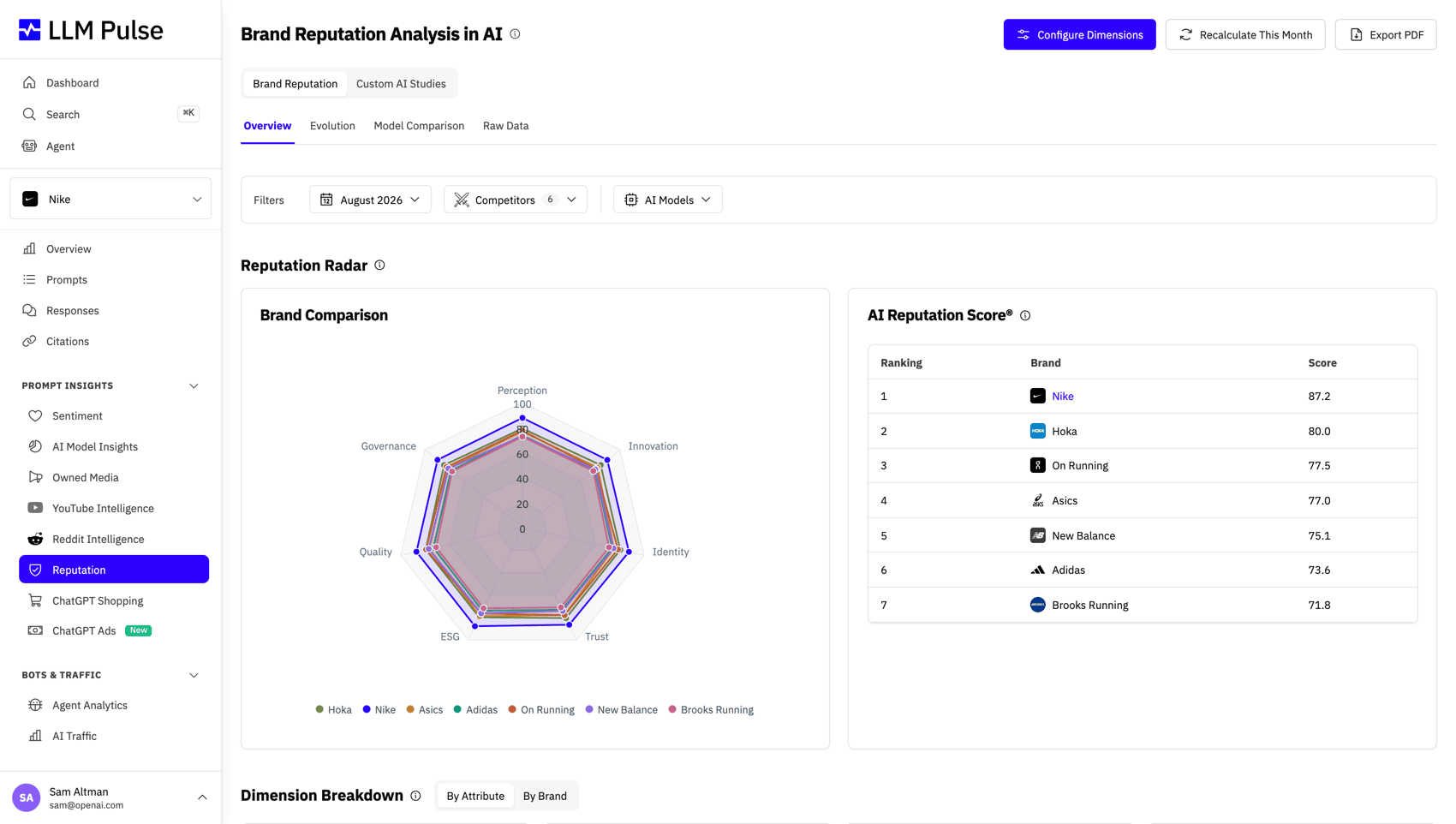
Find the facet dragging your score down
An old controversy can sink one dimension of how AI describes you while product quality scores fine. Reputation breaks into scored dimensions set against your competitors, so comms works the specific weakness instead of a vague average, and sees where a rival is exposed too.
- Isolate the dimension pulling the average down
- See where a competitor is weaker than you
- Track each dimension through a correction
Evidence Archive
Evidence legal can actually use
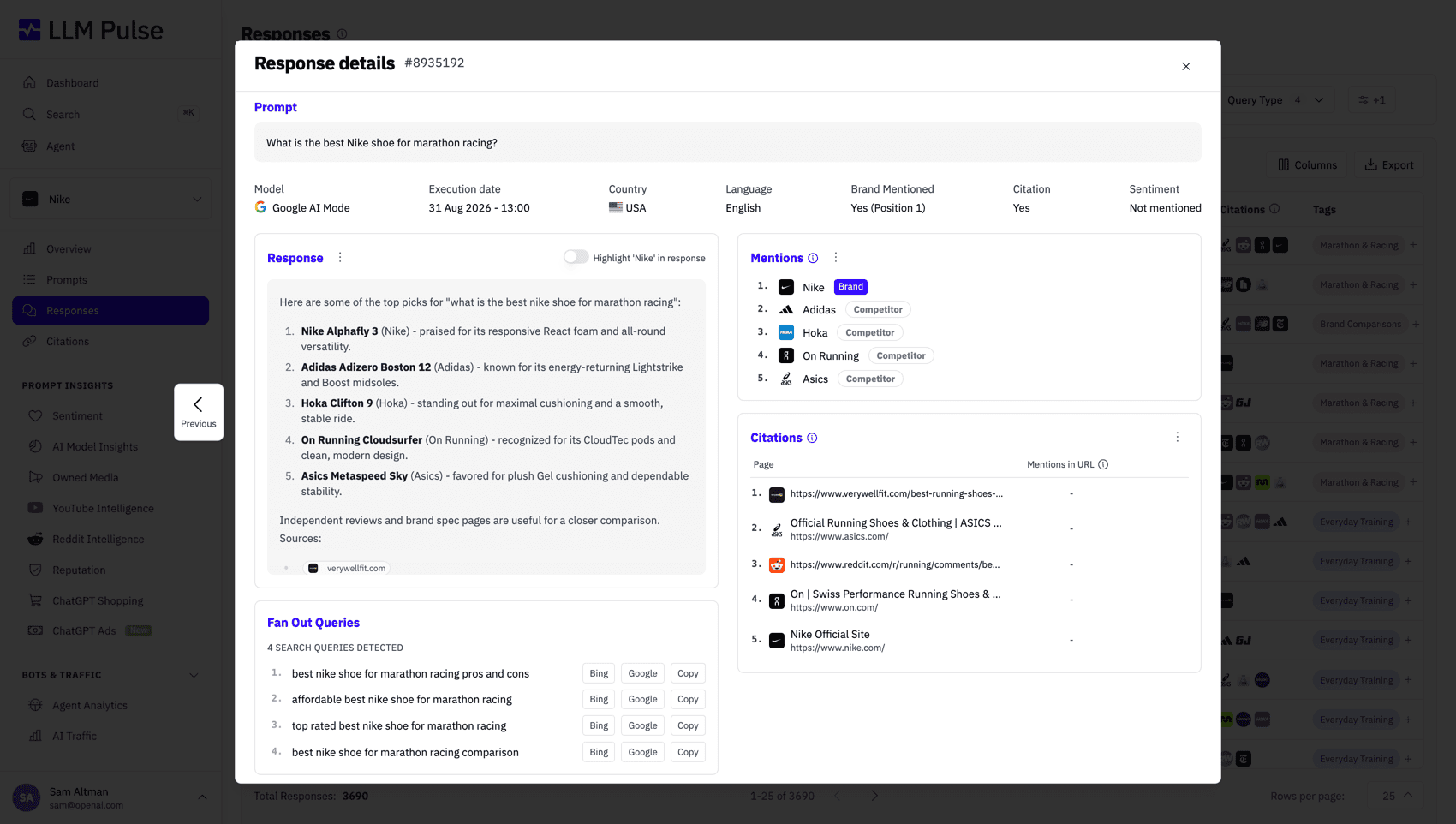
A customer's screenshot of a bad AI answer proves little. The archived response, with the model, the date, and your brand highlighted inside the claim, is a record comms and legal can act on when they correct the sources behind it.
- The full answer, dated and attributed to a model
- Claims documented before they spread
- Hand the record to legal as it stands
Annotations
Prove the correction stuck
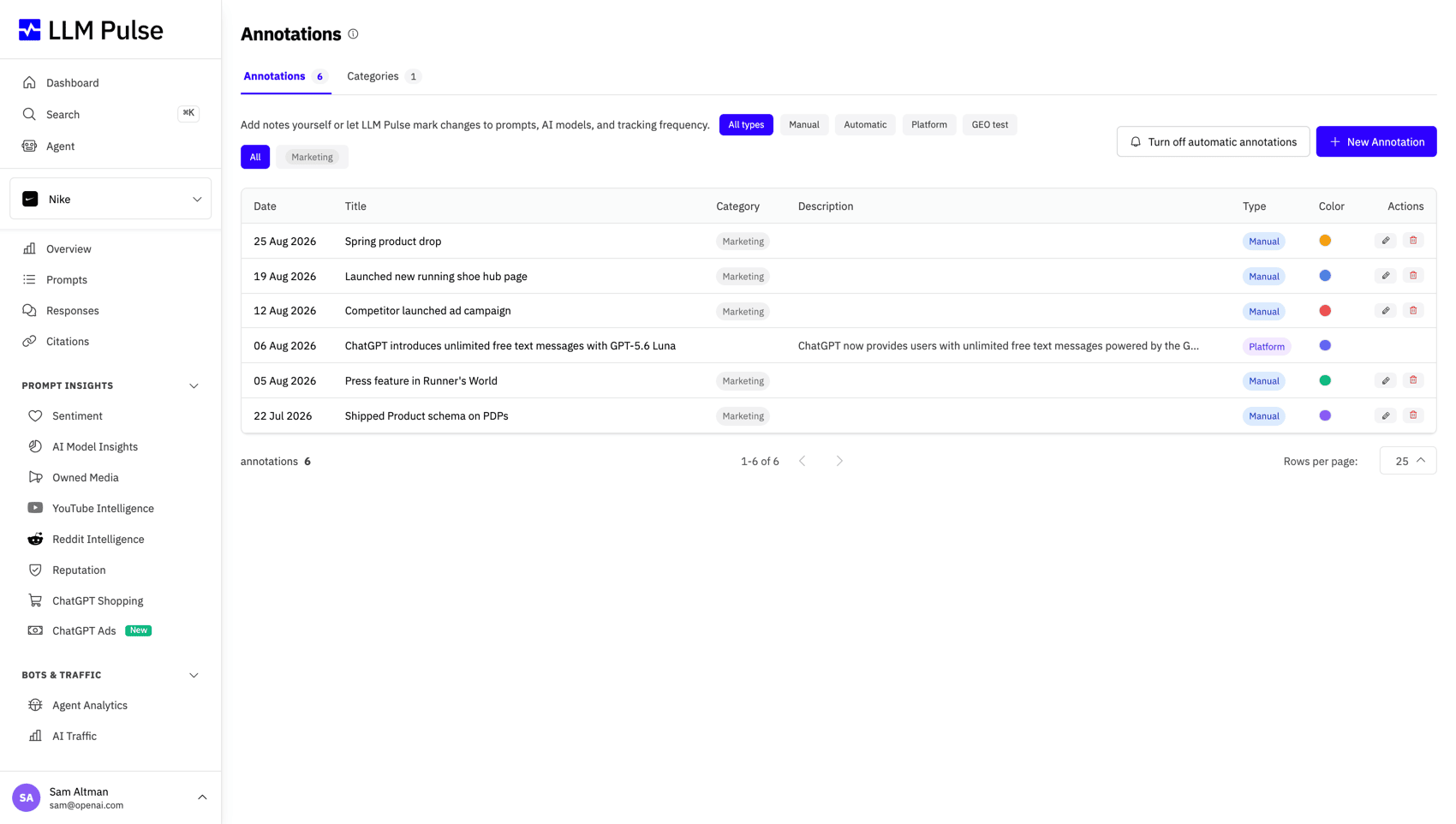
You fixed the page, briefed the cited sources, and shipped the statement in March. A dated marker on the sentiment chart ties that work to the recovery that followed, which is the one slide a skeptical stakeholder accepts.
- Mark the date each correction shipped
- Tie the sentiment turn to your fix
- Turn recoveries into a stakeholder slide
Why Comms Teams Watch AI with LLM Pulse
Sentiment, claims, and evidence for every AI answer that mentions your brand.
Score Every Mention
Each brand mention gets a sentiment score, so you can trend how positively AI talks about you over time.
Compare Sentiment by Model
One model can repeat an old story the others dropped. Per-model sentiment shows exactly which assistant hurts you.
Catch Wrong and Outdated Claims
Reputation analysis flags negative, wrong, or stale statements AI makes about your brand, with the answer as evidence.
Keep the Receipts
Every answer is archived in full, so comms and legal can see the exact wording, model, and date of any claim.
Prove Corrections Stuck
After you publish corrections, weekly runs show whether each model picked them up or kept repeating the old line.
See Problems While Small
Weekly sentiment trends surface a turn in tone before it spreads across models and into buyer conversations.
How AI Reputation Protection Works
Four steps from first sentiment read to verified corrections.
-
1
Track the Brand Conversation
Your prompts run weekly across the models, and every mention of your brand gets a sentiment score.
-
2
Review Flagged Claims
Reputation analysis surfaces the negative, wrong, or outdated statements worth your attention, with the full answer attached.
-
3
Correct at the Source
Fix your own pages and work the third-party sources the models cite when they repeat the claim.
-
4
Verify Week After Week
Watch each model's answers and sentiment respond, and keep the archive as proof for stakeholders.
How Comms Teams Use It
Reputation jobs, from quiet quarters to active incidents.
Audit Before the Board Asks
Keep a standing sentiment report ready for the question leadership will eventually ask.
Handle an Active Incident
During an incident, track which models repeat the story and which have already moved on.
Arm Legal and Comms
Export archived answers as evidence when a model repeats a false claim about your products.
Show the Recovery
Chart sentiment after a fix and attach the annotation that marks when you shipped it.
"LLM Pulse has allowed us to better organize our work and prioritize the actions that matter most. It gives us much greater clarity when implementing new ideas, and it makes reporting far easier, with metrics that were previously complex and difficult to obtain. Today it is part of how we plan and measure our visibility in AI search."

Frequently Asked Questions
Common questions about managing your brand's reputation in AI answers.
Explore the features behind this solution
Go deeper on AI reputation
Sentiment tracking
How mentions are scored and rolled into per-model sentiment trends.
Read moreReputation analysis
Finding the wrong, outdated, and negative claims AI makes about brands.
Read moreFree AI Visibility Report
A quick outside-in look at how AI models currently present your brand.
Read moreReady to know what AI says about you?
Get your first sentiment read across five AI models this week, with a 14-day free trial.
Trusted by 5,000+ users worldwide