Best Tools to Track Competitors in AI Search (2026)

By Esteve Castells




Table of contents
- Why AI competitor tracking is different from SEO competitor research
- What competitor signals matter in AI search
- What to look for in a competitor tracking tool
- Comparison table
- 1. LLM Pulse: best for AI competitor benchmarking
- 2. Ahrefs Brand Radar
- 3. Profound
- 4. Siftly
- 5. Trakkr
- 6. Otterly.AI
- 7. Brandwatch
- 8. Rankability
- How to build a competitor tracking strategy from scratch
- Summary
- Frequently asked questions
Ask ChatGPT for “the best CRM for small teams” and you get three or four named recommendations. Ask Perplexity for “top accounting software in the UK” and you get a ranked list with citations. Brands now compete to get onto that short list.
Traditional SEO competitor research told you who outranked you on a page of ten blue links. AI search collapses that page into a handful of recommendations, so the question changes from “where do I rank?” to “am I in the recommended set, and if not, who is?”. This guide covers what to track, what to look for in a tool, and how eight platforms compare in 2026.
Why AI competitor tracking is different from SEO competitor research
SEO competitor research was positional. You ran a tool, saw a SERP and noted who ranked above you for a keyword. Even a tenth-place result was on the page, and a determined user could scroll.
AI search works by recommendation. Models compress the answer to two, three or four named entities, and anyone outside that set is invisible to the user however well optimised their site is. That changes competitor analysis in three ways.
Visibility is binary per query. You are named in the answer or you are not, and there is no page two to climb out of. If a competitor appears in 60 percent of relevant prompts and you appear in 20 percent, they get roughly three times your exposure at the moment of choice, even if your SEO metrics look similar.
Position carries more weight. When a model lists three tools, the first one gets the most attention. Tracking competitors only at the “mentioned anywhere” level hides who is winning, so position-weighted scoring (a first mention worth more than a third) is the better benchmark.
The sources behind the answer matter as much as the answer. Models cite sources, and a rival who dominates the pages cited for your category tends to keep showing up in answers. Citation overlap is part of competitor tracking now. Our GEO vs SEO playbook covers the wider shift.
The first competitor report for a new project often has a name nobody on the team listed. Sometimes it is a smaller rival, sometimes a marketplace the models keep recommending. Teams build their competitor list from sales calls, and the models build theirs from what they read, so I always tell people to look at both.
 Esteve Castells Co-founder, LLM Pulse
What competitor signals matter in AI search
Five signals are worth tracking per competitor, and a serious tool should expose all of them.
Mentions. How often a competitor’s name appears in answers for your prompt set, as a share of answers (mention rate) or as a count. Useful for trend lines, easy to misread on its own.
Position. Where the competitor appears in the answer. Position-weighted scores compress this into one number: position 1 counts 100 percent, position 2 counts 50 percent, position 3 counts 33 percent, and so on.
Share of voice. Each brand’s mentions divided by all mentions across your tracked set, which shows how the pie is split. If your share drops while one rival gains, something has changed in what the models say about your category. The share of voice glossary entry covers the calculation.
Sentiment. When a competitor is mentioned, is the tone positive, neutral or negative? A rival with a high mention rate and mostly negative sentiment is losing trust, and a smaller competitor described consistently well is often the bigger threat.
Citations. Which sources the model cites when it mentions each competitor. Pages that cite two brands side by side show where the comparison happens, and that is usually where new content or outreach pays off first.
What to look for in a competitor tracking tool
Tools that hold up in a real evaluation tend to do the following.
Enough competitor slots per project. Three or five competitors is too few for a fragmented market. Ten is a sensible floor.
Share of voice that shows the long tail. A chart with only your top three rivals hides everyone else. Grouping the rest as “Others” forces an honest read of the market.
Sentiment per competitor. If sentiment is computed only for your own brand, you cannot see when a rival is gaining goodwill or losing it.
Source gaps. The ability to see which cited pages mention your competitors and not you.
Alerts on competitor activity. If a rival starts appearing in answers where it was absent, you want to know within days, not at the end of the quarter.
Coverage across the AI surfaces your buyers use. Competitors rank differently in each model. ChatGPT, Perplexity, Gemini, Google AI Mode and Google AI Overviews are a reasonable baseline.
Pricing that fits the competitor count you need. Some tools meter on tracked brands, so the bill climbs every time you add a rival. Check whether the base plan includes competitors.
Comparison table
Entry prices as published when we checked in October 2026, in the currency each vendor’s page showed us.
| Tool | Best for | Entry price | AI engines | Competitor views |
|---|---|---|---|---|
| LLM Pulse | Competitor benchmarking with share of voice, sentiment and source gaps | EUR 49/mo | 5 included, more as add-ons | Share of voice, competitor suggestions, source gaps, competitor sentiment |
| Ahrefs Brand Radar | Teams already on Ahrefs | EUR 119/mo (Lite, 150 checks) | 7 | Mentions, citations, AI share of voice, sentiment |
| Profound | Enterprise procurement | Custom (free 7-day trial) | Up to 9 on Enterprise | Competitor citations, sentiment, visibility score |
| Siftly | Tracking plus content drafting | USD 79/mo (free tier) | 2 to 8 by plan | Benchmarking, share of voice, citations |
| Trakkr | Competitor rankings across eight models | USD 100/mo | 8 | Competitor rankings, share of voice, citations |
| Otterly.AI | Low-cost daily monitoring | USD 29/mo | 4 base, more as add-ons | Brand mentions and share of voice |
| Brandwatch | Teams already using Brandwatch for social listening | Not published | Not fully listed | Competitor citations, sentiment, trusted sources |
| Rankability | Agencies bundling content and tracking | USD 97/mo | 11 | Competitive AI search rankings |
Prices change often, so confirm current plans with each vendor.
1. LLM Pulse: best for AI competitor benchmarking
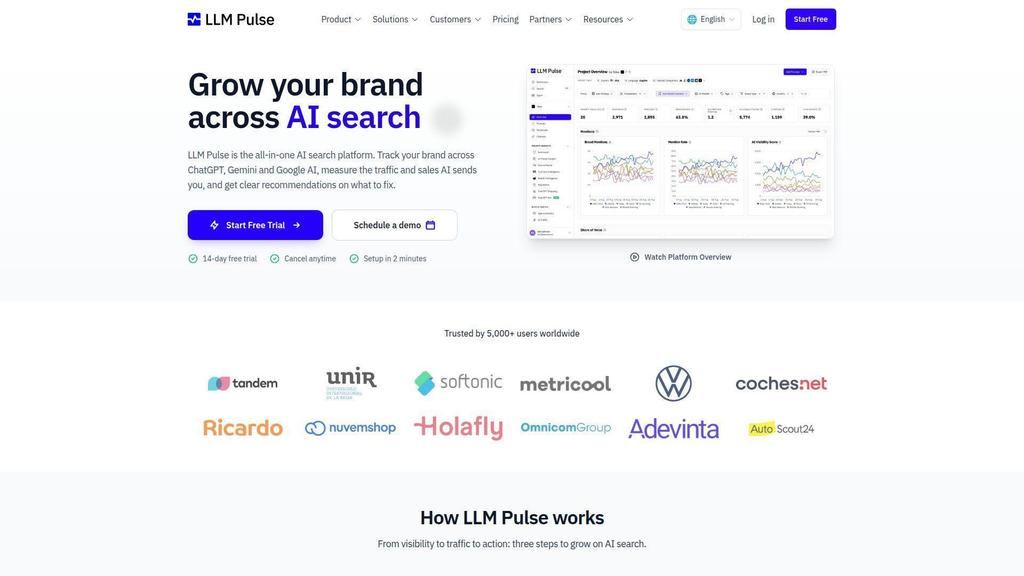
We build LLM Pulse, so read this section as the interested party’s pitch and check the numbers. It is a standalone platform built around prompt-level answer data, and competitor tracking is part of every plan.
Why it stands out
Competitors are tracked in the same data as your own brand. You add rivals up to your plan’s per-project limit, and adding one reprocesses your existing history automatically, so its mentions, citations and metrics show up in past answers too. From there you compare your visibility against each competitor, see which prompts favour them and read the answer text behind every data point.
When we built competitor suggestions, the hard part was deciding what to leave out. The most cited domains in a category are often publishers and review sites, and if you add those as competitors your share of voice stops meaning anything. So the brands we think compete with you and the domains the models cite most are two separate lists.
Esteve Castells Co-founder, LLM PulseKey features
- Competitor benchmarking: compare your visibility against competitors, see which prompts favour them, edit each competitor’s matching names and save competitor presets (for example one per product line or market) to apply in one click from the competitors filter
- Share of voice: your brand’s mention share against competitors, broken down by AI model on the Overview dashboard, with a share of voice over time chart
- Tag and country leadership: one stacked bar per tag or country splitting the AI Visibility Score between your brand, your five strongest competitors and Others
- Competitor suggestions: a brand discovery view that reuses the website, business and market research from onboarding and leaves out publishers, review sites and other non-competing sources, plus a separate view of frequently cited domains
- Source gaps: a filter on cited pages for “Mentions a competitor, but not your brand”, based on the crawled content of each page, which lists the pages AI trusts where rivals appear and you do not
- Citation tracking with share of citations between your domain, your tracked competitors and every other site
- Sentiment for your brand and for each tracked competitor
- AI Model Insights: a matrix comparing your brand and competitors across AI models, including average mention position
- Webhook events for new competitor mentions, citations and negative sentiment, plus a weekly visibility summary email
- REST API, MCP server and a Data Studio connector, plus CSV and Excel exports
- Unlimited team members with permission roles, and white label and iframe embed for agencies
Watch-outs
Every plan tracks ChatGPT, Perplexity, Gemini, Google AI Mode and Google AI Overviews. DeepSeek, Grok, Claude, Copilot, Meta AI, Naver AI Briefing, Naver AI Tab, Baidu AI, Qwen, Doubao and Alexa for Shopping (formerly Amazon Rufus) are paid add-ons. MiniMax, Mistral, Walmart Sparky and Brave AI are available through Talk to sales, and the team sets them up for approved paid accounts. Prompts run weekly by default, with daily and monthly also available, so compare plans on answers as well as prompts. The free trial needs a card.
Pricing
| Plan | Price | Prompts | Projects | Competitors per project |
|---|---|---|---|---|
| Starter | EUR 49/mo | 50 | 1 | 10 |
| Growth | EUR 99/mo | 150 | 2 | 15 |
| Scale | EUR 299/mo | 450 | 5 | 20 |
| Scale+ | EUR 599/mo | 1,200 | 10 | 20 |
| Scale++ | EUR 1,199/mo | 2,400 | 15 | 25 |
| Enterprise | Custom | Custom | Custom | Unlimited |
Annual billing is ten times the monthly price.
Who is taking your place in AI answers?
Track your competitors’ mentions, share of voice, sentiment and cited sources across five AI models.
2. Ahrefs Brand Radar
Why it stands out
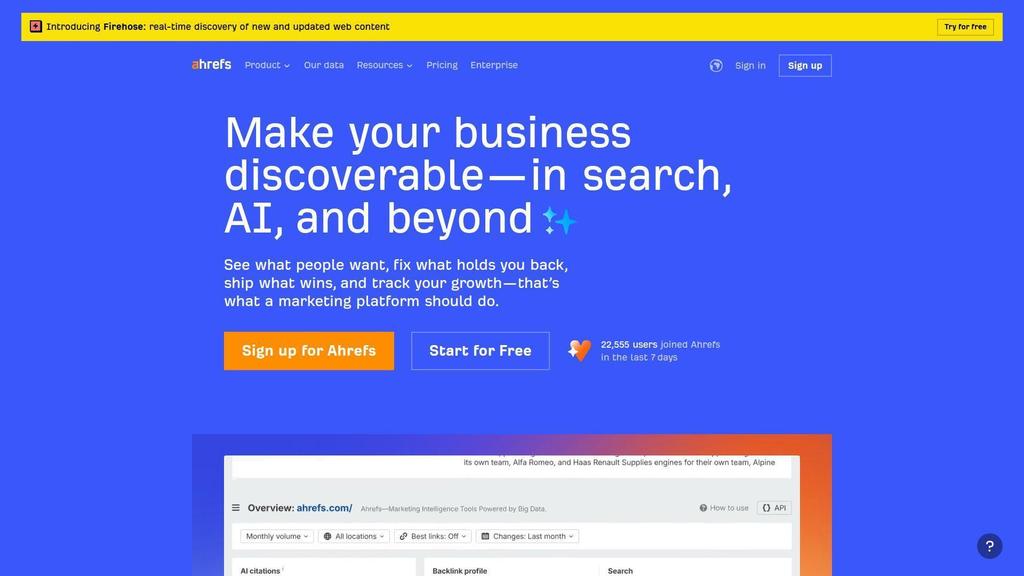
Brand Radar puts AI visibility next to the backlink and keyword data many SEO teams already pay for. Coverage is broad: AI Overviews, AI Mode, ChatGPT, Perplexity, Gemini, Copilot and Claude. It reports mentions, citations, AI share of voice and sentiment.
Key features
- Seven AI platforms
- Mentions, citations, AI share of voice and sentiment
- Custom prompts checked daily
- Sits inside the wider Ahrefs suite, and is also sold standalone
Watch-outs
The main plans meter tracked prompts in checks: one prompt, on one platform, in one location, once. Lite includes 150 checks a month, Standard 300 and Advanced 600, which is 5, 10 or 20 prompts checked daily on a single platform. That is thin for benchmarking a full competitor set across several engines.
Pricing
Lite EUR 119, Standard EUR 229 and Advanced EUR 419 per month. The standalone AI Visibility Index tier is EUR 179 per month for 2,500 checks, and custom prompt packages start at about EUR 47 per month.
3. Profound
Why it stands out
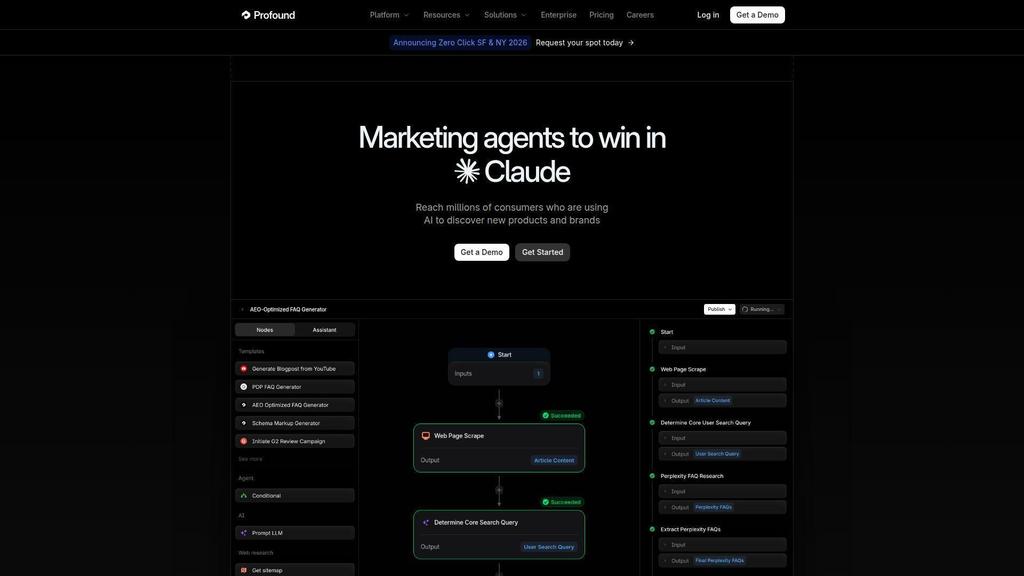
Profound is the enterprise-leaning option, with SOC 2 compliance and SSO/SAML on its Enterprise plan. Its homepage shows prompts where competitors are cited and you are not, sentiment in answer engines and a visibility score by platform.
Key features
- Citation analytics, including competitor citations per prompt
- Sentiment tracking in answer engines
- Visibility score by platform
- Up to nine answer engines, API access and custom prompt sets on Enterprise
Watch-outs
There is no published self-serve price. The free trial is limited to 50 prompts, one language and one region, with no history, exports or API, which is not much room to benchmark competitors over time.
Pricing
A free seven-day trial with 50 prompts run daily across ChatGPT, Gemini and Google AI Overviews, then Enterprise at a custom price.
4. Siftly
Why it stands out
Siftly combines tracking with content. Its competitor benchmarking shows which brands win an answer and why, share of voice comes with a leaderboard, and citation tracking lists the pages engines cite instead of yours. An agent workspace lets you ask questions about your data in plain language.
Key features
- Competitor benchmarking and share of voice leaderboard
- Citation tracking and sentiment
- Agent workspace for questions about your visibility and citations
- Blog posts drafted from citation data on paid plans
Watch-outs
Prompt allowances are small: 10 on the free tier and 150 on Scale. Engine counts rise from two on Free to eight on Scale, so the cheaper plans cover only part of the market.
Pricing
Free with 10 prompts checked weekly, then Starter USD 79 for 50 prompts, Growth USD 249 for 100 and Scale USD 599 for 150. Enterprise is custom.
5. Trakkr
Why it stands out
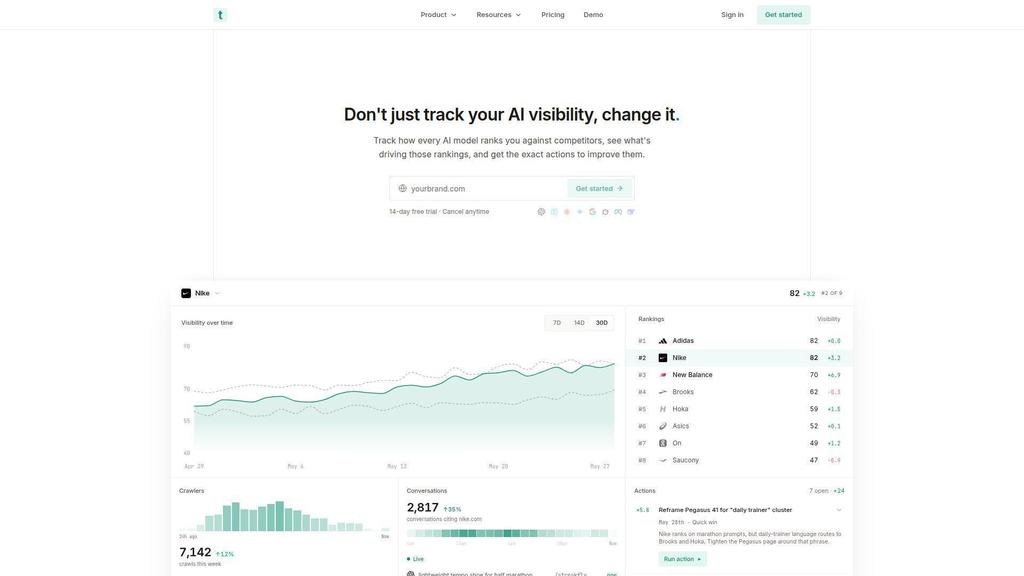
Trakkr ranks rival brands against yours daily across eight models and shows who is gaining, on which questions and the source behind the change. Its competitors view has visibility and share of voice tabs, and its citation view shows which brands each cited page names.
Key features
- Competitor rankings and share of voice across ChatGPT, Claude, Gemini, Perplexity, Grok, Meta AI, DeepSeek and Google AI Overviews
- Citation analysis by page and brand
- Perception scoring of how each model describes your brand
- AI crawler tracking through Cloudflare, Vercel and Netlify
Watch-outs
Prompts are 50 per brand on both self-serve plans, with extra packs sold separately. Growth includes three seats and no client portals, so agencies need Scale. The 14-day trial starts on Growth and needs a card.
Pricing
Growth USD 100 a month for one brand, Scale USD 500 for ten brands, with extra brands at USD 50 a month each. Enterprise is custom.
6. Otterly.AI
Why it stands out
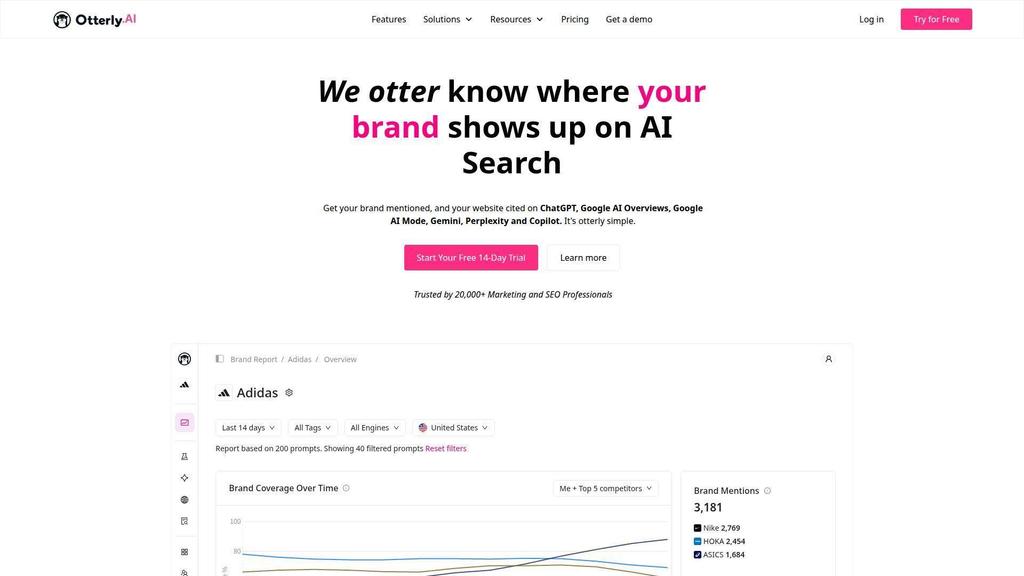
Otterly.AI is the cheapest established entry point, with prompts running daily. It suits small teams and freelancers who want a regular check on a few rivals without a larger commitment.
Key features
- Daily monitoring across ChatGPT, Google AI Overviews, Perplexity and Copilot
- Brand mentions and share of voice
- Quick setup and a low entry price
Watch-outs
Google AI Mode, Gemini and Claude are paid add-ons, so covering the main Google surfaces costs more than the sticker. The top self-serve plan stops at 400 prompts.
Pricing
Lite USD 29 for 15 prompts, Standard USD 189 for 100 and Premium USD 489 for 400. Enterprise is custom.
7. Brandwatch
Why it stands out
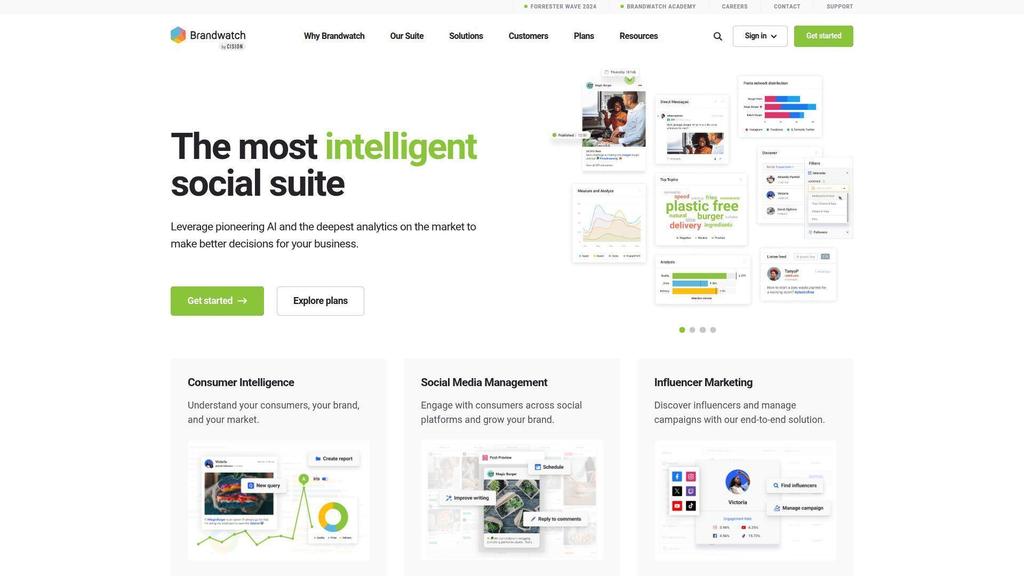
Brandwatch is a social listening and consumer intelligence platform. Its Search Intelligence product, listed as “Search Intelligence and GenAI Monitoring”, tracks how leading LLMs cite your brand and competitors across prompts, flags sentiment shifts and highlights the media domains and pages LLMs trust. For teams already on Brandwatch, it puts AI answers next to social and search data.
Key features
- Competitor citations across LLM prompts
- Sentiment shifts and reputational risk flags
- Domains and pages LLMs trust
- Social listening and consumer research in the same suite
Watch-outs
The product page names ChatGPT but does not list which other AI engines it covers, and it does not mention share of voice. AI monitoring is one part of a broader suite, so if AI competitor tracking is your main need, check coverage in a demo before you commit.
Pricing
Not published. Brandwatch lists standard and enterprise plans and sells through demos.
8. Rankability
Why it stands out
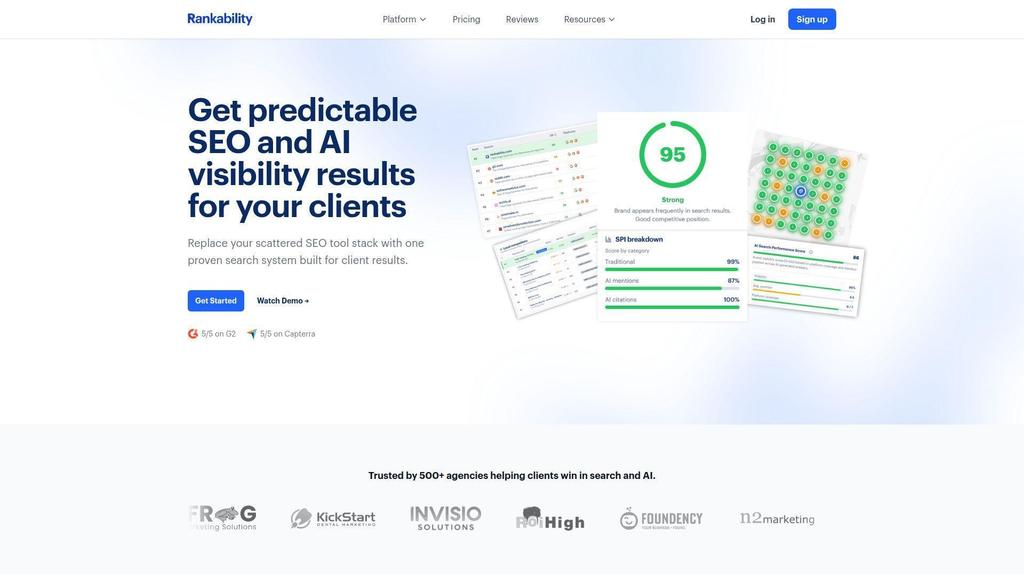
Rankability sells to agencies and bundles AI tracking with content production. Every plan includes 11 AI platforms checked daily, API and MCP access, unlimited client workspaces and unlimited team members. Its homepage shows competitive AI search rankings and visibility changes over time.
Key features
- 11 AI platforms checked daily
- Competitive AI search rankings
- API and MCP on every plan
- Content projects, audits and keyword tracking alongside AI tracking
Watch-outs
The homepage does not describe share of voice or sentiment, so competitor depth is narrower than in dedicated tools. Public plans stop at 500 tracked AI queries, and much of the price pays for content work.
Pricing
Starter USD 97 for 100 tracked AI queries, Agency USD 297 for 300 and Agency Pro USD 497 for 500, with a seven-day trial that needs a card.
How to build a competitor tracking strategy from scratch
Starting from zero, the steps below get you from no data to a usable competitor brief in a few weeks.
Step 1: list your real competitors. Ask sales which names come up in deals, ask customer success which alternatives prospects mention, and check which brands keep beating you in reviews. Aim for 8 to 15 rivals, direct competitors first.
Step 2: build the prompt set. Around 50 prompts across four buckets is a good start: brand prompts (“what is your-brand”), comparison prompts (“your-brand vs competitor”), category prompts (“best CRM for small teams”) and use-case prompts (“how do I track AI visibility”). Category and use-case prompts are where competitor tracking gets interesting, since prompts that name a brand tend to favour it.
Step 3: load competitors and run a baseline. Add every competitor as a tracked brand and run your first answers across the five main AI surfaces. Wait for at least three weeks of data before acting, so you can tell signal from noise.
Step 4: read share of voice honestly. Look at the split per AI model. Are you in the top group? Are you ahead of the rivals you thought you were ahead of? Is someone winning whom you had dismissed? Write down the three biggest surprises.
Step 5: open the source gaps. For your top three rivals, find the cited pages that mention them and not you. Those are your content and outreach targets, and getting your brand onto them is the most direct way to change future answers. Our guide to AI citation tracking tools goes deeper on this step.
Step 6: layer on sentiment. For each competitor, look at sentiment over the last month. A rival with a high mention rate and falling sentiment is a near-term opportunity. A rival whose sentiment keeps rising is a longer-term threat.
Step 7: set up a review routine. LLM Pulse webhooks cover events such as new mentions, competitor mentions, citations and negative sentiment. There is no dedicated alert for a share of voice shift, so review those changes in the dashboard or a scheduled report.
The glossary entry on competitive benchmarking in AI defines the terms used throughout.
Summary
When models compress recommendations into two or three named brands, sitting outside that set is a structural disadvantage that traditional SEO alone will not fix. The tools above range from USD 29 a month for daily monitoring to enterprise contracts at custom prices. The right choice depends on how many competitors you need to track, which AI surfaces matter to your buyers, and whether you need share of voice, sentiment and source gaps or only basic mention tracking. For a wider view of the category, see our roundup of AI visibility tools.
For a dedicated competitor tracking platform with clear plan limits, competitor sentiment, source gaps and the answer text behind every number, LLM Pulse is our recommendation. Run a baseline against your real competitor list before you commit.
Frequently asked questions
What is AI competitor tracking?
It is monitoring how often, in what position and with what sentiment your competitors appear in answers from ChatGPT, Perplexity, Gemini and Google's AI surfaces, and which sources the models cite when they name them. It is the AI search version of SEO competitor research, adjusted for answers that name a handful of brands instead of showing ten links.
Which metrics matter most when benchmarking competitors in AI answers?
Mention rate, position, share of voice, sentiment and citations. Mentions alone are easy to misread, so pair them with position-weighted scoring and the sources behind each answer.
How many competitors should I track?
Start with the 8 to 15 names that come up in sales deals and reviews, direct competitors first. Then check which brands the AI models actually recommend, because that list often includes names your team did not expect.
What is a source gap?
A cited page that mentions one or more of your competitors but not your brand. These pages already shape AI answers in your category, so getting your brand onto them is one of the most direct ways to change future answers.
How long before competitor data is reliable?
Give it at least three weeks of baseline data. AI answers vary from run to run, so a single week can show swings that turn out to be noise.
Do I need to track every AI model?
Start with the surfaces your buyers use. ChatGPT, Perplexity, Gemini, Google AI Mode and Google AI Overviews are a reasonable baseline, and competitors often rank differently in each one.
Should I include branded prompts in competitor benchmarking?
Keep them separate. A prompt that names a brand tends to favour that brand, so share of voice comparisons are fairer on generic category and use-case prompts.
Are the prices in this comparison current?
We checked each vendor's live pages in October 2026, and pricing in this category changes often. Some vendors, such as Profound and Brandwatch, do not publish prices, so confirm every figure with the vendor before you budget.






Discover your brand's visibility in AI search effortlessly
Esteve Castells
Co-Founder of LLM Pulse and AI search expert. With extensive experience working as an SEO for global brands and large enterprises, he's the subject matter expert building the product to deliver value to our users.
- Best Tools to Track Competitors in AI Search (2026)
- How to Set Up Alerts for AI Brand Mentions
- Prompt Tracking Explained: How to Choose the Prompts You Track
- Claude Rarely Gives the Same Answer Twice: We Asked It 400 Buying Questions 18 Times
- How Reddit shapes what AI says about your brand (and what to do about it)