



Your listening suite can tell you how often the brand was mentioned last month, which outlet drove the spike and whether the tone moved. Then someone asks what ChatGPT says when a buyer wants the best option in your category, and the dashboard has nothing. The tool is not broken. That sentence was never published anywhere, so there was nothing to index.
This comes up with most PR and comms teams already paying for Brand24, Meltwater, Talkwalker, Sprinklr or Mention. The categories measure different things, plenty of teams run both, and the useful question is what to buy second.
Table of Contents
One tool reads an archive, the other runs an experiment
Social listening is retrieval. Crawlers and licensed feeds collect text people published: posts, news, review sites, forum threads, podcast transcripts. Your boolean query runs against that archive. The text existed before you asked, and if a source sits outside the index, no query tuning surfaces it.
AI visibility tracking has no archive to read, because the data does not exist until the tool creates it. You define the prompts your buyers type, the platform sends them to ChatGPT, Perplexity, Google Gemini, Google AI Mode and Google AI Overviews on a schedule, and it records which brands the answer names, in what order, in what tone, and which URLs it cites. Run the same prompt next week and the answer differs, which is why the measurement is a schedule rather than a screenshot.
Your listening tool can tell you a Reddit thread mentioned you. It cannot tell you whether ChatGPT puts you on a shortlist, because that shortlist is generated at the moment of asking.
Our side has its own sampling problem. We do not see your buyers’ private conversations. Some vendors publish aggregated prompt-volume datasets, but that is not a transcript of who asked what about your brand. We measure answers to questions you chose, repeated until the pattern is more useful than any single run. One screenshot of ChatGPT naming a competitor is an anecdote. A few hundred scheduled answers is a measurement. Longer version in our guide to tracking brand mentions in LLMs.
Where each one wins
| What you need | Listening suite | AI visibility tracker |
|---|---|---|
| Crisis detection within minutes | Yes, the core job | No, daily at best |
| Volume of human conversation | Yes | No |
| Reviews, influencers, press clippings | Yes | No |
| Whether an assistant names you when asked for a recommendation | No | Yes, the core job |
| Which pages and domains the assistant cites | No | Yes |
| Competitor shortlists and the order brands appear in | No | Yes |
| Sentiment | Yes, on published text | Yes, inside the answer |
| Share of voice | Yes, of published mentions | Yes, of AI answers |
Those last two rows are the trap. Both numbers carry the same name, both are a percentage, and they are computed on unrelated populations. Putting them on one slide unlabelled is how a comms team ends up explaining a contradiction to a CFO. Our AI definition is on the share of voice page.
Why the suites are adding AI modules, and what to ask
Every listening vendor is being asked the ChatGPT question by its own customers, so every vendor is shipping something. Meltwater names a GenAI Lens LLM tracking capability. Brand24 lists an AI Visibility module on its Enterprise tier. Buying from a vendor you already have a contract and a security review with is a real advantage. The modules vary, and we will not guess at anyone’s prompt counts or engines, so ask them:
- How many prompts? Ten is a demo. Category coverage starts around fifty.
- Which engines, included or add-on? Ask by name about Perplexity, Gemini, AI Mode and AI Overviews.
- What cadence? Weekly suits trend work. Daily costs more and matters during a launch.
- Mentions only, or citations too? The biggest gap between a shallow module and a useful one. A cited comparison post on a site you can pitch is the half you can act on.
- Is it priced on top of a seat-based contract? A module bolted onto per-seat pricing can cost more than a standalone tool with far more prompts.
- History if you leave? Custom-prompt tracking often starts when you set it up, while some vendors sell separate historical AI-answer datasets. Ask exactly what history belongs to your workspace and what you can export.
7 alternatives worth comparing
1.- LLM Pulse
We build this, so treat it as the interested party’s pitch.
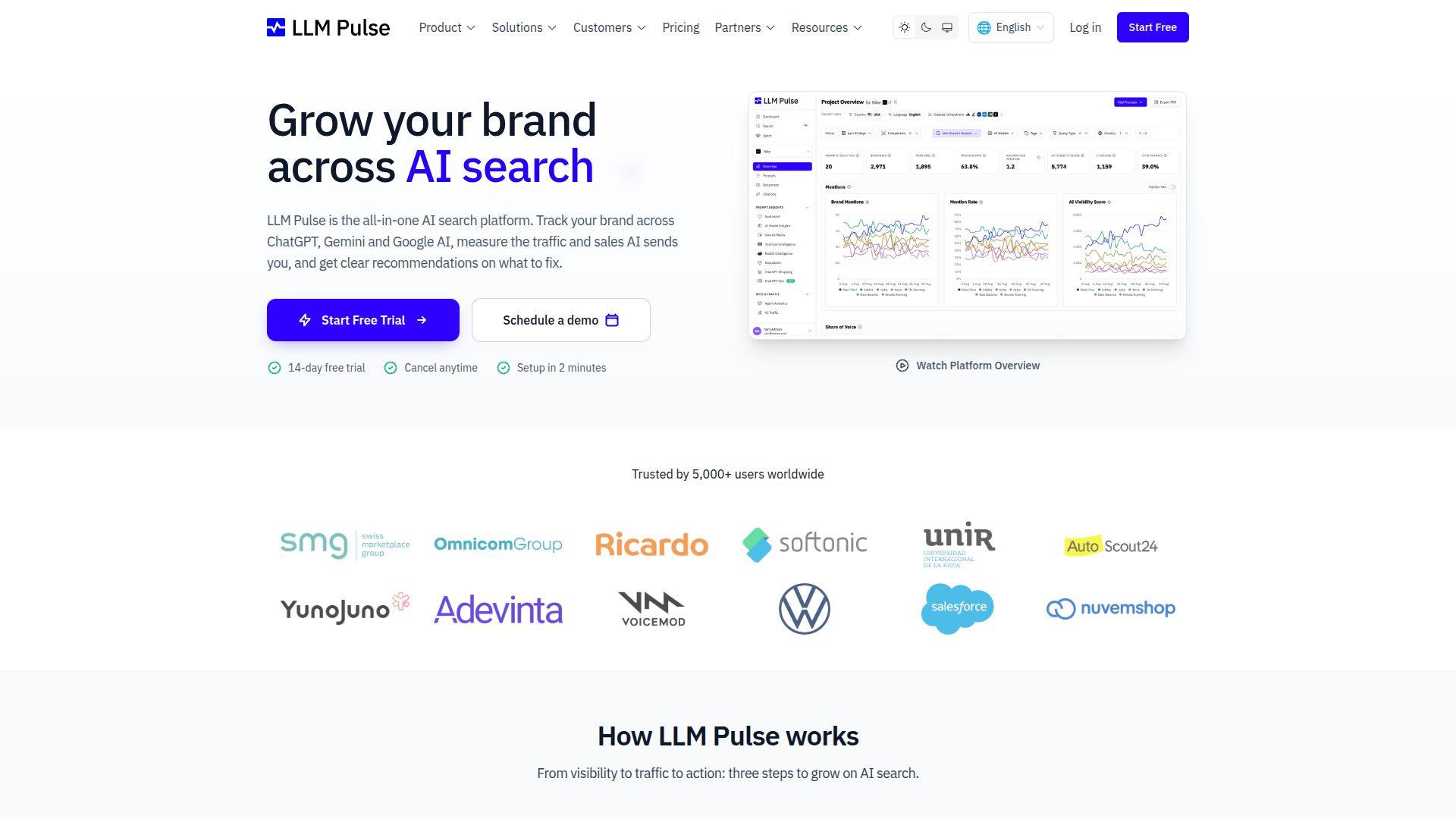
The standard model set is ChatGPT, Perplexity, Google Gemini, Google AI Mode and Google AI Overviews. Paid accounts can add Claude, Microsoft Copilot, Grok, DeepSeek, Naver AI Briefing, Baidu AI and Meta AI themselves. Alexa for Shopping (formerly Amazon Rufus), Qwen, MiniMax, Mistral, Walmart Sparky and Brave AI are available through Talk to sales.
What comms teams use most: brand mention tracking, citation and source tracking, share of voice, competitor benchmarking, sentiment on the answer text, and reputation monitoring. Annotations mark a launch or crisis date on the timeline, and Reddit Intelligence and owned media cover the sources assistants lean on. Prompt research and the Google Search Console integration build the prompt set from real queries by impressions. Data leaves through CSV and Excel exports, PDF and custom reports, a REST API, an MCP server, webhooks, Looker Studio, Power BI and Tableau. White label and iframe embed cover agencies.
| Plan | Price | Prompts |
|---|---|---|
| Starter | EUR 49/mo | 50 |
| Growth | EUR 99/mo | 150 |
| Scale | EUR 299/mo | 450 |
| Scale+ | EUR 599/mo | 1,200 |
| Scale++ | EUR 1,199/mo | 2,400 |
| Enterprise | Custom | Custom |
Prompts are per week, per model. Daily and monthly cadences are available, annual billing is ten times monthly, and team members are unlimited on every plan.
Watch-outs. This is not a media monitoring tool: no press clippings, no broadcast, no influencer discovery, no boolean alerting. Swap your listening contract for us and you lose things you need. The trial requires a card. We are bootstrapped and launched publicly in July 2025, so if procurement wants decades of vendor history, raise it early.
2.- Profound
Enterprise-leaning, with SOC 2 Type II and HIPAA. Starter is USD 99/mo for 50 prompts, ChatGPT only, 1,500 responses. Growth is USD 399/mo for 100 prompts across ChatGPT, Perplexity and AI Overviews, 9,000 responses. Both billed yearly, Enterprise custom.
Watch-outs. Self-serve is capped at one language and one region with no API. International brands and warehouse users end up in a sales call.
3.- Otterly.AI
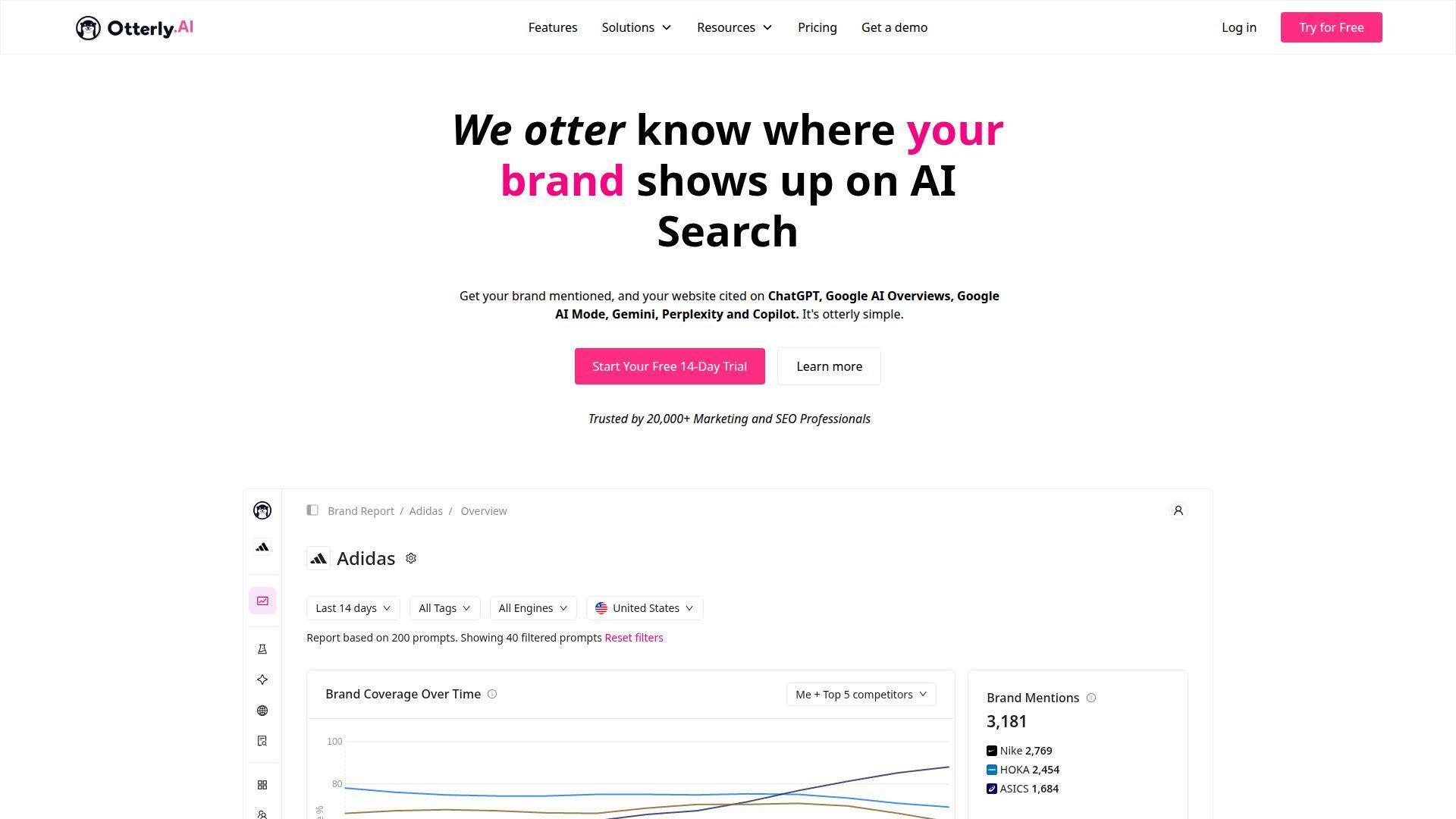
The cheapest realistic entry point. Lite USD 29/mo for 15 prompts, Standard USD 189/mo for 100, Premium USD 489/mo for 400. Four base engines, daily: ChatGPT, AI Overviews, Perplexity and Copilot.
Watch-outs. Google AI Mode, Gemini and Claude are paid add-ons, so sticker and loaded price diverge. Fifteen prompts is a pilot, and with no 1,000-prompt tier, big brands outgrow self-serve.
4.- Scrunch AI
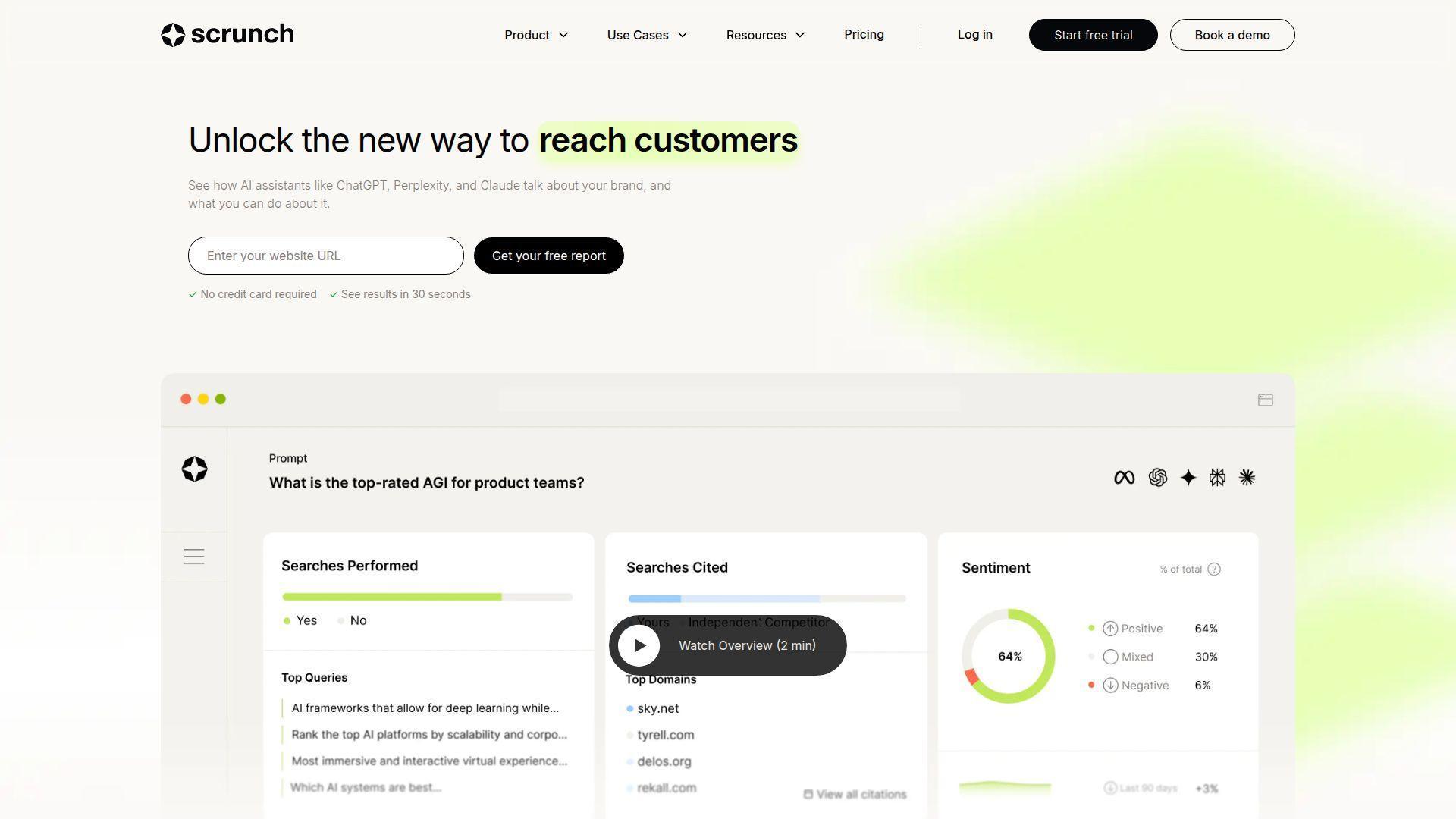
Starter costs USD 250 per month billed annually or USD 300 month to month for 350 custom prompts, seven AI platforms, and three users. Growth raises the limits to 700 prompts and five users.
Watch-outs. Starter and Growth cover seven AI platforms, but agencies should confirm workspace allowances and the final configured price.
5.- Semrush SEO + AI Search
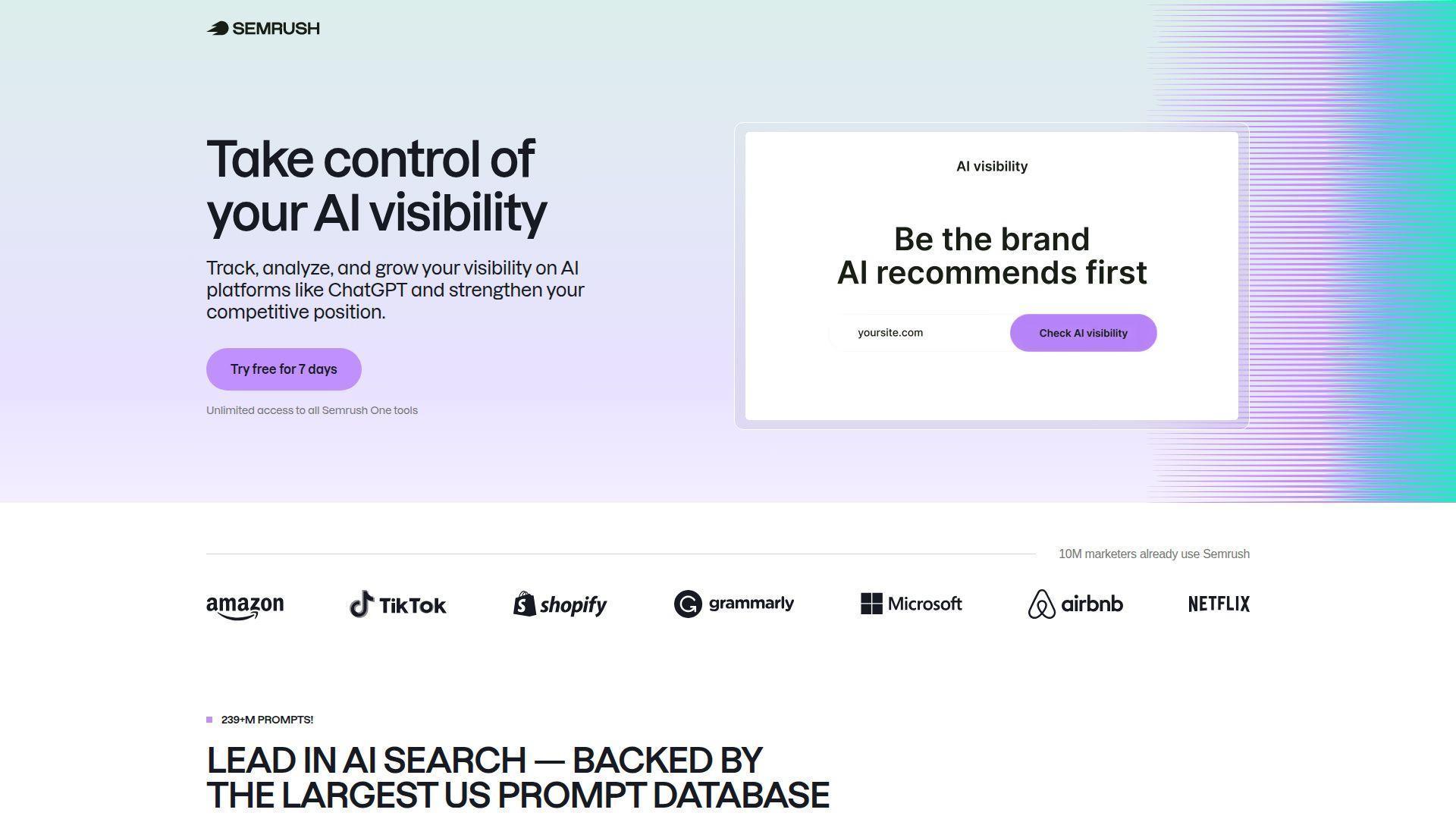
Semrush includes AI visibility in its SEO + AI Search plans. SEO starts at USD 139 monthly, while Starter costs USD 199 monthly and runs 50 prompts daily across ChatGPT, Google AI, Gemini, and Perplexity.
Watch-outs. AI visibility is bundled with the broader SEO product, so communications teams should compare the full plan scope with a dedicated tracker.
6.- Searchable
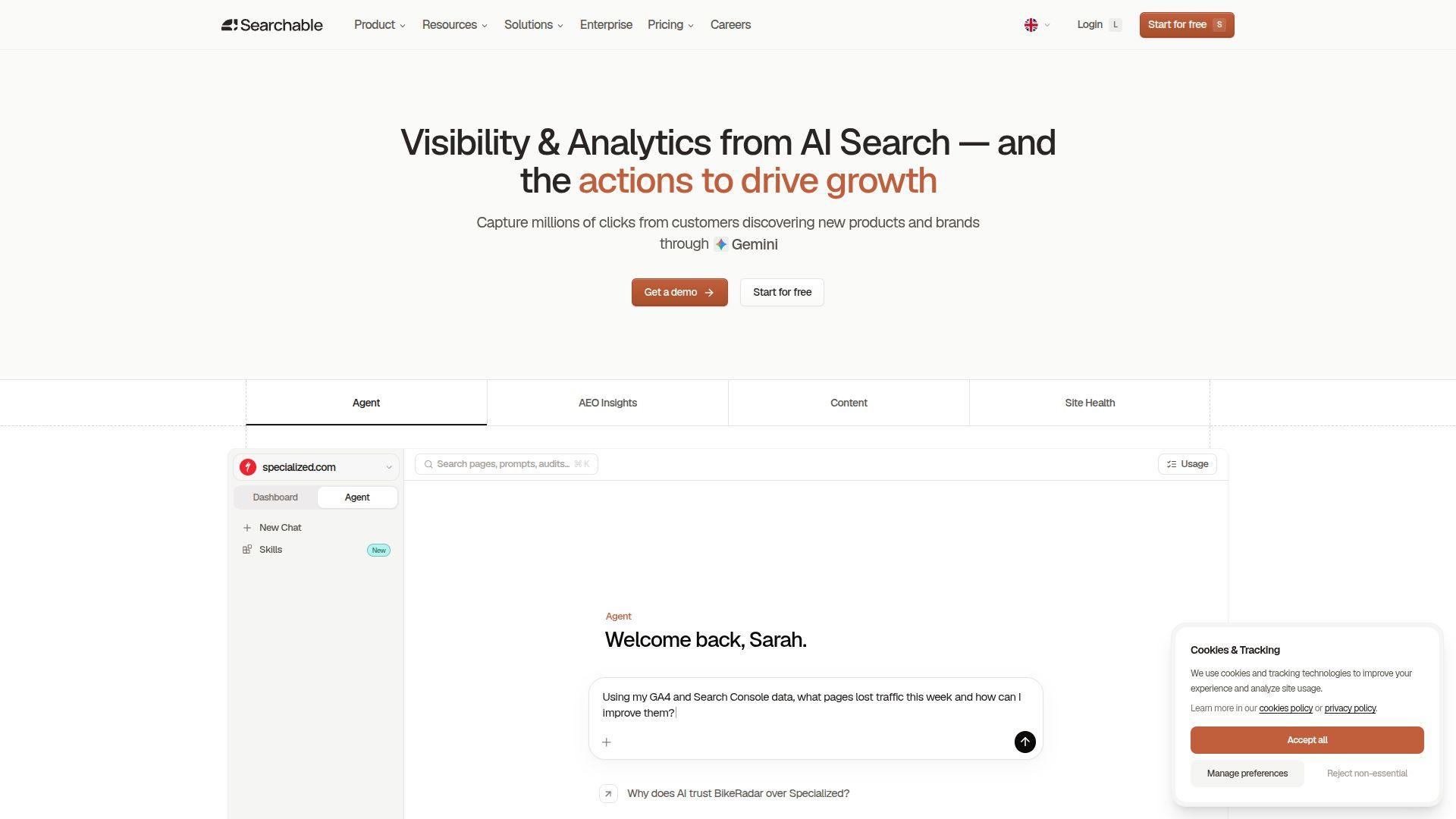
Pro USD 125/mo for 100 prompts, Scale USD 400/mo for 500, Enterprise USD 999/mo for 1,250. Projects, regions and seats are unlimited on every tier, which helps agencies and multi-market brands.
Watch-outs. Base plans track three engines and the rest are paid add-ons. Build the loaded quote before you compare it to anything.
7.- Rankability
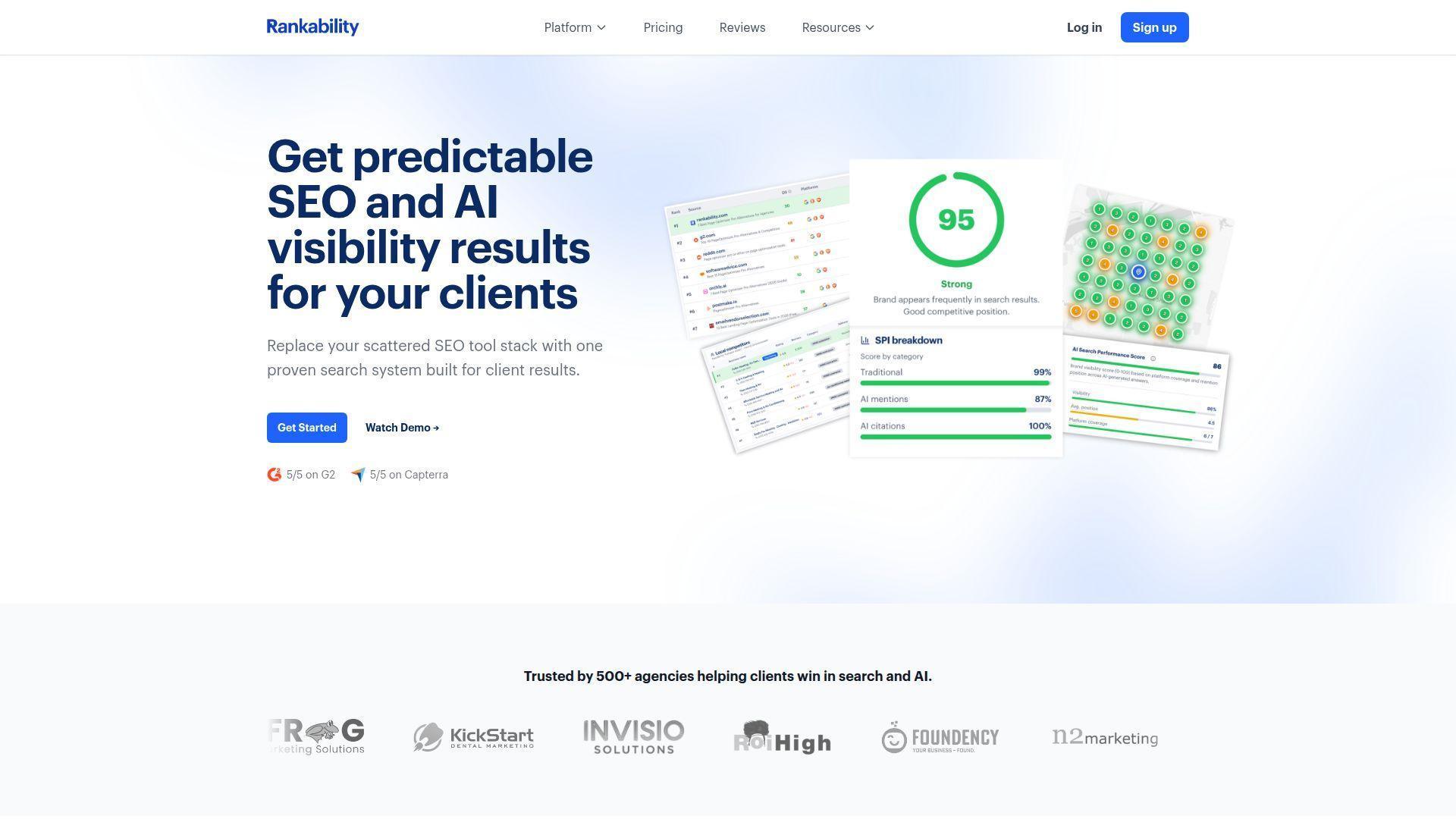
Rankability’s pricing URL now redirects to demo booking, and its current About page says plans and terms are discussed by demo. Current prices, prompt allowances, seats, API access, and MCP access are not public.
Watch-outs. Rankability does not currently publish measurement cadence or engine coverage. Confirm both during the demo before comparing allowances.
See also our roundup of the best AI visibility tools.
Keeping your listening tool and adding AI visibility next to it
The realistic 2026 setup is both, with the AI tool feeding reporting you already produce. CSV and Excel for the monthly deck, PDF for the board version, and most teams are done.
Webhooks are the step up. A new brand mention, a competitor mention, a new citation, a completed prompt execution or a negative sentiment detection can fire into Slack through Zapier, Make or n8n, HMAC signed. Negative sentiment earns its keep: an assistant has started describing the brand unfavourably to someone asking for advice. For the warehouse, the REST API and MCP server hand you rows, then Looker Studio, Power BI or Tableau joins them to your listening exports.
Attribution needs care. GA4 has an AI Assistant default channel group, defined by Google as “the channel by which users arrive at your site from sources like ChatGPT, Gemini, Deepseek, Copilot, or Grok”, matched on a medium of exactly ai-assistant or a known AI assistant referrer. In the same documentation, AI Overviews and AI Mode sit inside Organic Search, so those clicks never reach that bucket. ChatGPT appends utm_source=chatgpt.com to its links and GA4 derives session source from it. Other assistants may arrive through a recognized referrer or campaign tag, but attribution depends on the link and browser context. Check your own traffic-source data before treating the AI Assistant channel as complete.
Keep two things apart. AI Traffic analytics connects GA4, Plausible, Piano, PostHog, Adobe Analytics or Adobe CJA and reports human visits from AI assistants. Agent Analytics reads your server or CDN logs for bot and crawler hits. Conflating them produces numbers that fail scrutiny.
What it costs: published price versus quote
The categories price differently, so there is no single number to compare. Brand24 and Mention publish prices, while Meltwater, Talkwalker and Sprinklr use quotes. Mention says its Company plan starts at USD 599 per month on an annual contract.
| Tool | Pricing model | Entry point |
|---|---|---|
| Brand24 | Published | USD 249/mo, 3 keywords, 1 user |
| Meltwater | Quote | Starter, Pro, Enterprise, Agency tiers |
| Talkwalker | Quote | No public pricing |
| Sprinklr | Quote | No public pricing |
| Mention | Published | USD 599/mo on an annual contract |
| LLM Pulse | Published | EUR 49/mo, 50 prompts |
Brand24’s ladder runs Individual USD 249/mo, Team USD 349 (7 keywords, 10K mentions), Pro USD 499 (12 keywords, 40K), Business USD 699 (25 keywords, 100K), then Enterprise on a quote. Annually that is USD 199, 299, 399 and 599. The AI Visibility module sits on Enterprise, above that whole ladder.
On the AI side the comparable unit is cost per prompt. Ours is EUR 0.98 on Starter, EUR 0.66 on Growth and Scale, EUR 0.50 on Scale+ and Scale++. A weekly prompt produces about 4.33 scheduled answers per model per month, so 50 prompts across five models is over a thousand answers a month. Run that on any quote, ours included; ours is on the pricing page.
Which one you need
A PR team with a listening contract already signed
Keep the contract. Add a standalone AI visibility tool at the smallest tier covering your category, for most brands 50 to 150 prompts, and give it a quarter. Ask your incumbent what their module costs that same week, and compare loaded prices, not demos. If it lands close, single-vendor convenience is worth real money.
Aim the first deliverable at one slide in the monthly report: visibility across assistants, the competitor shortlist, and the domains cited in answers about your category. That last one is a media list, since cited sites are pitchable. Our guide to tracking sources and citations covers it.
A brand team with no listening tooling at all
Start from the question you are being asked. If leadership wants to know what assistants say when buyers ask for a recommendation, buy AI visibility: it answers that directly, at a fraction of an enterprise listening seat. If they want to know what people are saying about a recall, you need listening. Buying both at once usually means neither gets used.
An agency serving both kinds of client
Seats and workspaces decide this more than features do. Several tools here cap you at one brand workspace or a few seats at the tier you can afford, a hard stop with fifteen clients. Look for unlimited projects and seats, per-client reporting under your own brand, and an API so reports are generated rather than hand-assembled. Ours is on the agencies page.
FAQ
Can my social listening tool track what ChatGPT says about my brand?
Not through its normal index. Listening tools match keywords against publicly published text, and a ChatGPT answer is generated in a private session, so there is nothing to crawl. Some suites add AI modules that run prompts themselves. Ask how many prompts and which engines.
Do I have to cancel my listening contract to add AI visibility tracking?
No, and most teams should not. Crisis detection, review monitoring, influencer discovery and press coverage stay with the listening suite. What you gain is answer-level visibility: whether assistants name you, in what order, with what tone, and which pages they cite. AI tools sit well below enterprise listening pricing, so the budget case is easier than it sounds.
How many prompts do we actually need?
It depends on how wide your category is and how many markets you sell into. A single-market brand with a focused product line gets a usable read from 50 prompts. Several product lines, or four languages, needs a few hundred, since each needs its own set.
Can any tool show me what real people asked ChatGPT about us?
No tool can show you a transcript of private conversations about your brand. Some vendors offer aggregated prompt-volume data, which can help with topic discovery, but it does not identify individual conversations. Build your tracked set from evidence you can inspect, such as Search Console queries, site search, sales calls and support tickets, and describe it as a proxy.
How often should the prompts run?
Weekly suits most brands. Answers move enough between runs that daily data is noisier than it looks, and a weekly series reads cleanly against a campaign calendar. Daily earns its cost during a launch, when you want to see how fast assistants absorb new information, and during a reputation problem.
Who should own AI visibility internally, PR or SEO?
Both, with one of them holding the tool. The data is SEO-shaped, since citations are URLs and the fix for a weak citation profile is content and technical work. The interpretation is comms-shaped: the output is what an authoritative-sounding system tells a buyer. Teams that fight over ownership produce two contradictory decks.