



Last updated: August 10, 2026
If you run an agency, your clients want to know how their brand shows up in ChatGPT, Perplexity, and Google’s AI answers. You can measure that today, but the reporting has to carry your brand, not a vendor’s. That is where white-label AI visibility tools come in, and where they differ more than the marketing pages suggest. Some let you drop a logo on a PDF. A few let you host a live client dashboard on your own domain with zero trace of the underlying platform. This page walks through what white-label reporting really means for GEO tools, what to check before you commit, and which platforms actually deliver it.
Table of Contents
What white-label AI visibility reporting is and why agencies want it
AI visibility (also called GEO, Generative Engine Optimization, or AEO) tracks how often a brand is mentioned or cited when people ask AI assistants questions. A GEO monitoring tool runs prompts against models like ChatGPT and Gemini, then reports mention rate, share of voice, citations, and sentiment over time.
White-label reporting means that output ships under your agency’s name. At its lightest, that is your logo and colors on an exported report. At its fullest, it is a client-facing portal on your own domain, with your brand name, your colors, and emails sent from your address, so the client never sees the platform you actually use.
Agencies want this for three plain reasons. It protects the relationship, because clients cannot bypass you and buy the tool directly. It keeps your brand front and center on every deliverable a client sees. And it lets you package AI visibility as your own service line rather than reselling someone else’s dashboard.
What to look for in a white-label AI visibility tool
White-label is a spectrum, and the label gets stretched. Here is what separates a real agency setup from a logo on a PDF.
- Real white-label vs a branded PDF. A branded PDF or a third-party data-studio connector is the common floor. It is fine for a monthly recap, but it is static and it still often leaks the vendor’s name somewhere. A true white-label experience removes the platform entirely across the report, the domain, and the emails.
- Live embedding. A branded dashboard your client can open and interact with, embedded inside your own portal, is far more useful than a snapshot. Few tools offer it, so it is worth asking about directly.
- Unlimited seats. Agencies add and remove people constantly. Per-seat pricing punishes that. Look for unlimited team members with role-based access so you can bring analysts and clients in without a bill for each login.
- Model coverage. Clients ask about specific assistants. Make sure the tool tracks the models that matter: ChatGPT, Perplexity, Google Gemini, Google AI Mode, and Google AI Overviews, not just one of them.
- Multi-client management. You should be able to run every client as a separate project from one account, with clean data separation and per-client access, rather than juggling logins.
If you also handle traditional SEO deliverables, the broader category of white-label AI SEO software covers tools that rebrand rank tracking and audits too. This page stays focused on AI visibility and GEO monitoring.
Quick comparison
| Tool | White-label depth | AI models tracked | Best for |
|---|---|---|---|
| LLM Pulse | Full: custom domain, branded emails, plus live embeddable dashboard | ChatGPT, Perplexity, Gemini, Google AI Mode, AI Overviews | Agencies wanting a client portal under their own brand |
| Scrunch AI | Agency reporting, branded exports | Multiple assistants | Enterprise brand monitoring teams |
| Trakkr | Branded reports for agencies | Major assistants | Smaller agencies starting with GEO |
| Rankscale | Branded reporting options | Multiple assistants | SEO teams adding AI visibility |
| SE Ranking | White-label across an SEO suite | Adding AI search tracking | Agencies wanting SEO plus AI in one place |
| Nightwatch | White-label reports and dashboards | Rank tracking with AI features | Rank-tracking-first agencies |
| Semrush (enterprise) | White-label at higher tiers | Broad SEO plus AI features | Large agencies already on the suite |
The tools
1. LLM Pulse
LLM Pulse is built for agencies that want to deliver AI visibility as their own service. It tracks brand mentions, citations, share of voice, and sentiment across ChatGPT, Perplexity, Google Gemini, Google AI Mode, and Google AI Overviews, with recurring prompt tracking. That gives clients a consistent read on where they stand in AI answers, model by model.
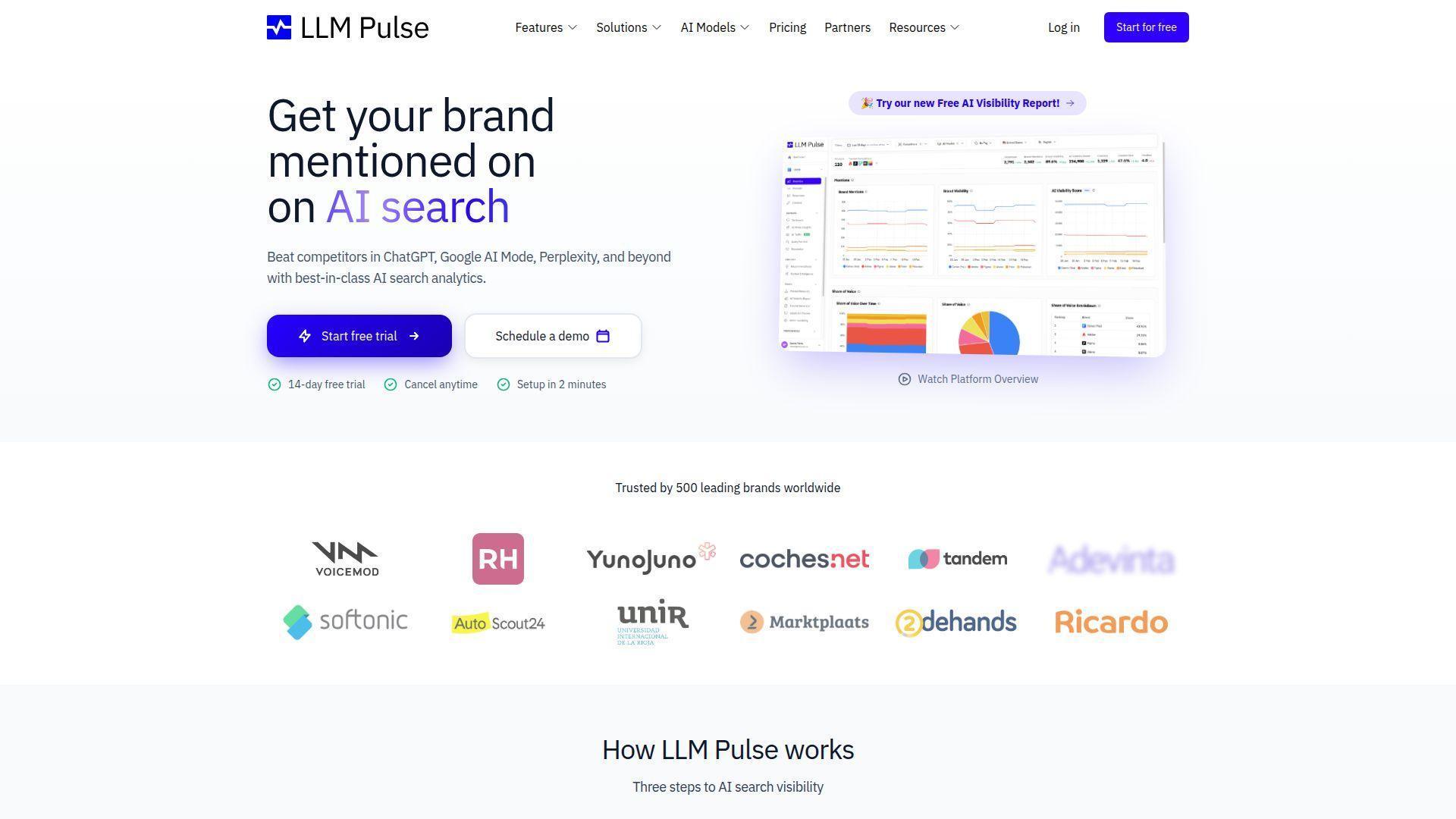
The white-label story is the reason it leads this list. There are three modes. A branded subdomain gives you a quick, cleanly branded space. Full white-label puts the whole platform on your own custom domain, with your logo, brand name, colors, and emails sent from your own domain, so there is zero LLM Pulse branding anywhere a client looks. And the live embeddable branded client dashboard drops an interactive, always-current dashboard straight into your existing portal through an iframe. Most rivals stop at a static branded PDF or a third-party data-studio connector, so a live embedded branded dashboard is a real differentiator.
White-label and embed are set up as an agency or enterprise arrangement, so you talk to sales rather than flipping a self-serve toggle. Underneath, the multi-client model is straightforward: manage every client as a separate project from one account, with role-based access and unlimited team members, so adding analysts or clients never costs you a seat. Custom Reports add a shareable link with optional password protection plus scheduled branded PDFs. CSV and Excel exports, a REST API, and Looker Studio access are available. GEO Writer, recommendations, competitor share of voice, and a free AI Visibility Report round out the platform.
Pricing starts at 49 euros per month. See current LLM Pulse pricing. The positioning is simple: enterprise features without enterprise-only pricing. If a client-facing portal under your own brand is the goal, start with the white-label overview.
2. Scrunch AI
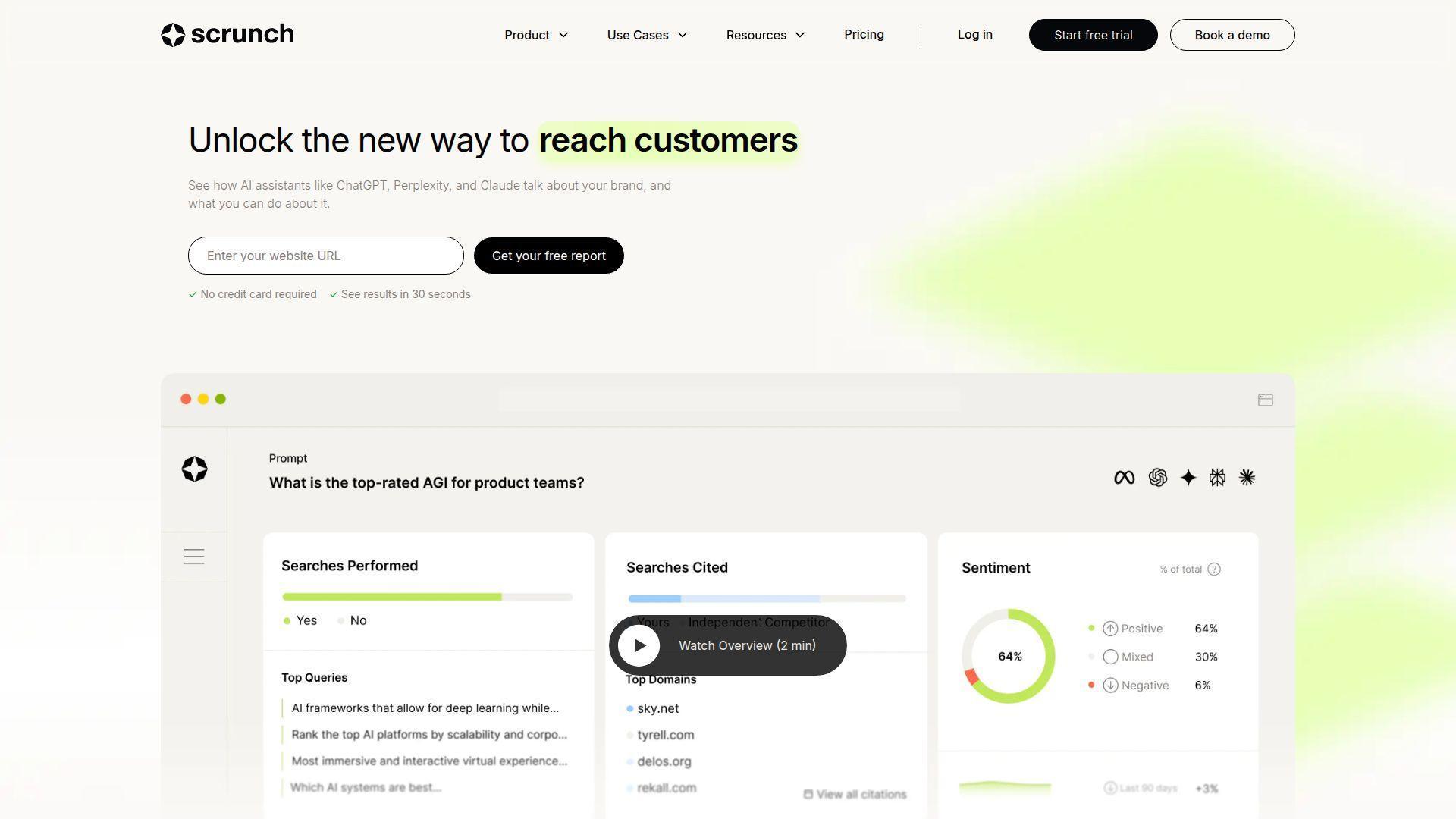
What stands out: aimed at brand and enterprise monitoring of AI answers, with agency-oriented reporting and branded exports. Watch-outs: geared toward larger brand teams, so confirm the reporting depth and rebranding fit your client-service model before you commit.
3. Trakkr
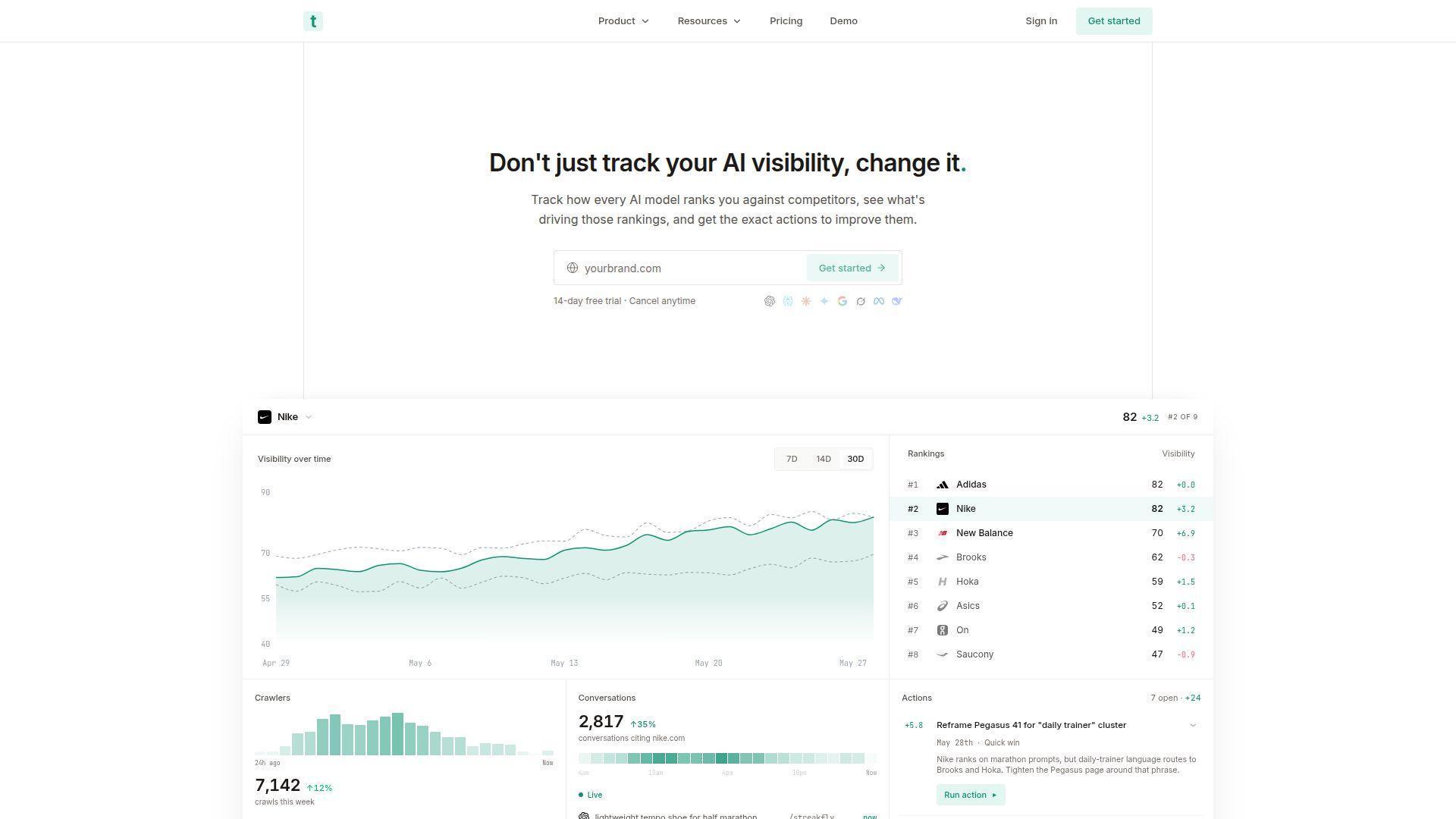
What stands out: a lighter GEO tracker with branded reports, which suits smaller agencies getting started with AI visibility. Watch-outs: check how deep the rebranding goes and whether model coverage matches the assistants your clients care about.
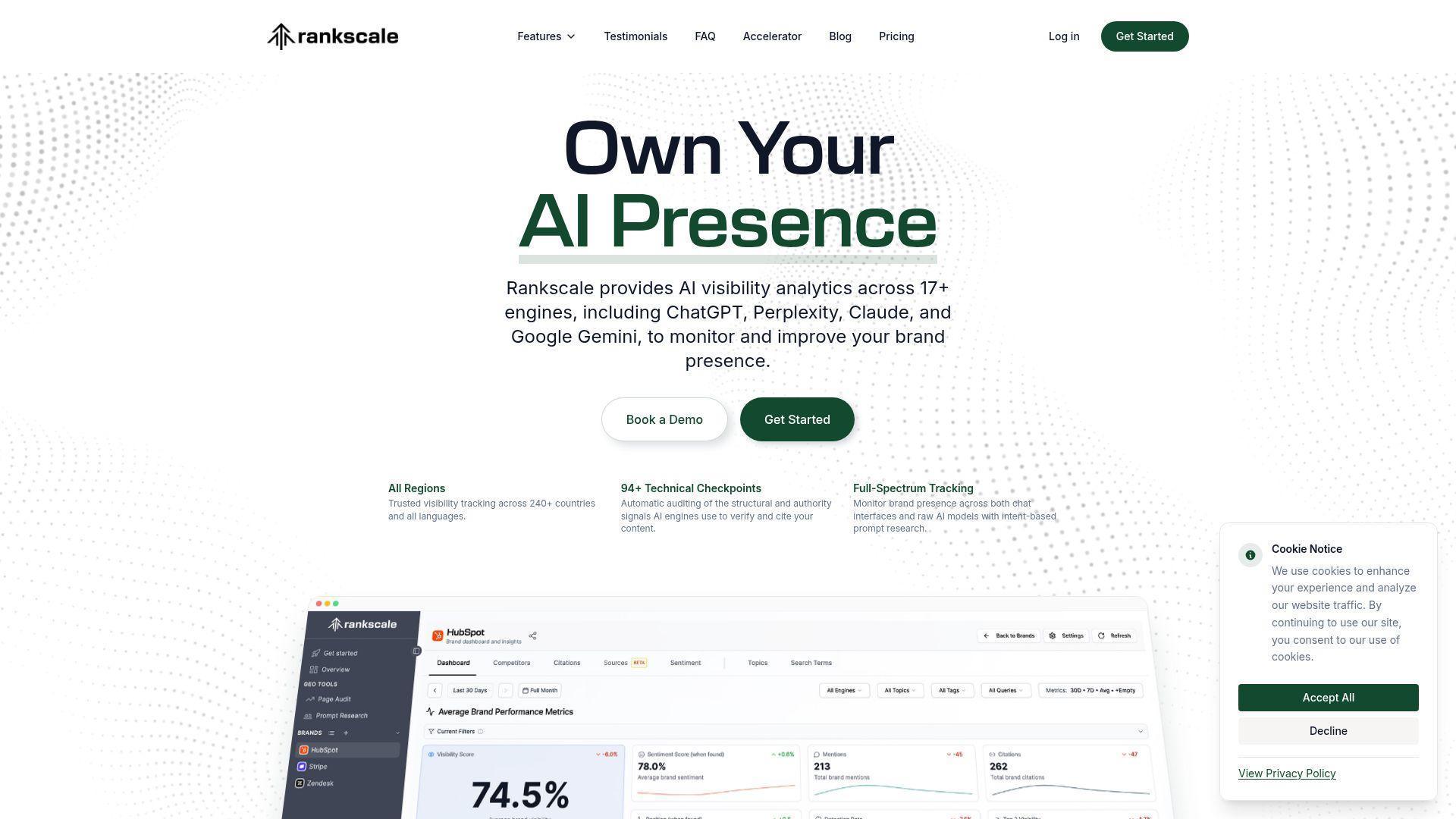
4. Rankscale
What stands out: AI visibility tracking with branded reporting options, a fit for SEO teams folding AI answers into existing work. Watch-outs: confirm whether white-label extends beyond exports to a client-facing portal, and how many models are covered.
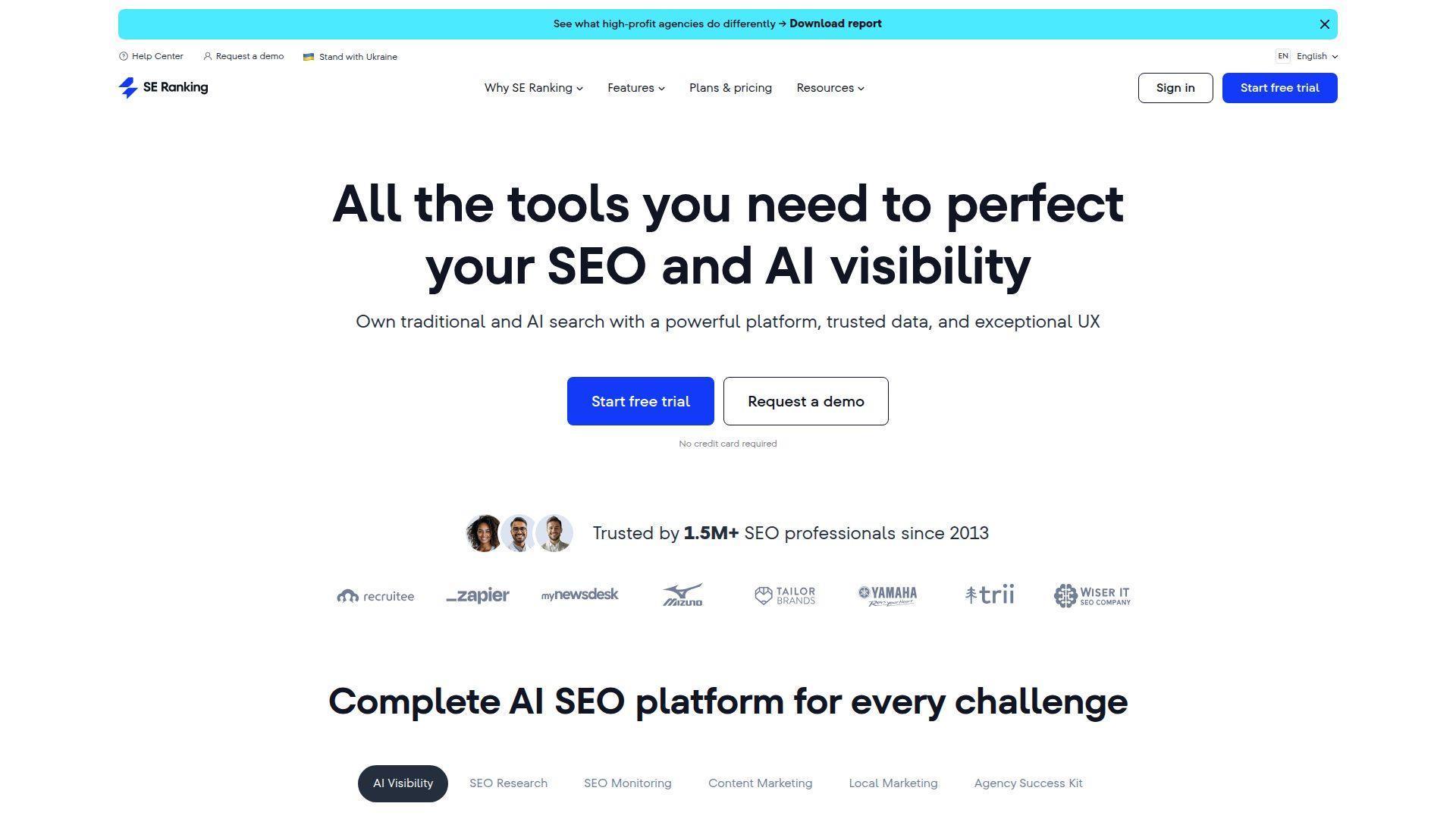
5. SE Ranking
What stands out: a full SEO suite with established white-label reporting, now adding AI search tracking, so you can keep SEO and AI deliverables in one branded place. Watch-outs: the AI visibility piece is newer than the core rank tracking, so verify how detailed the AI answer data is for your clients.
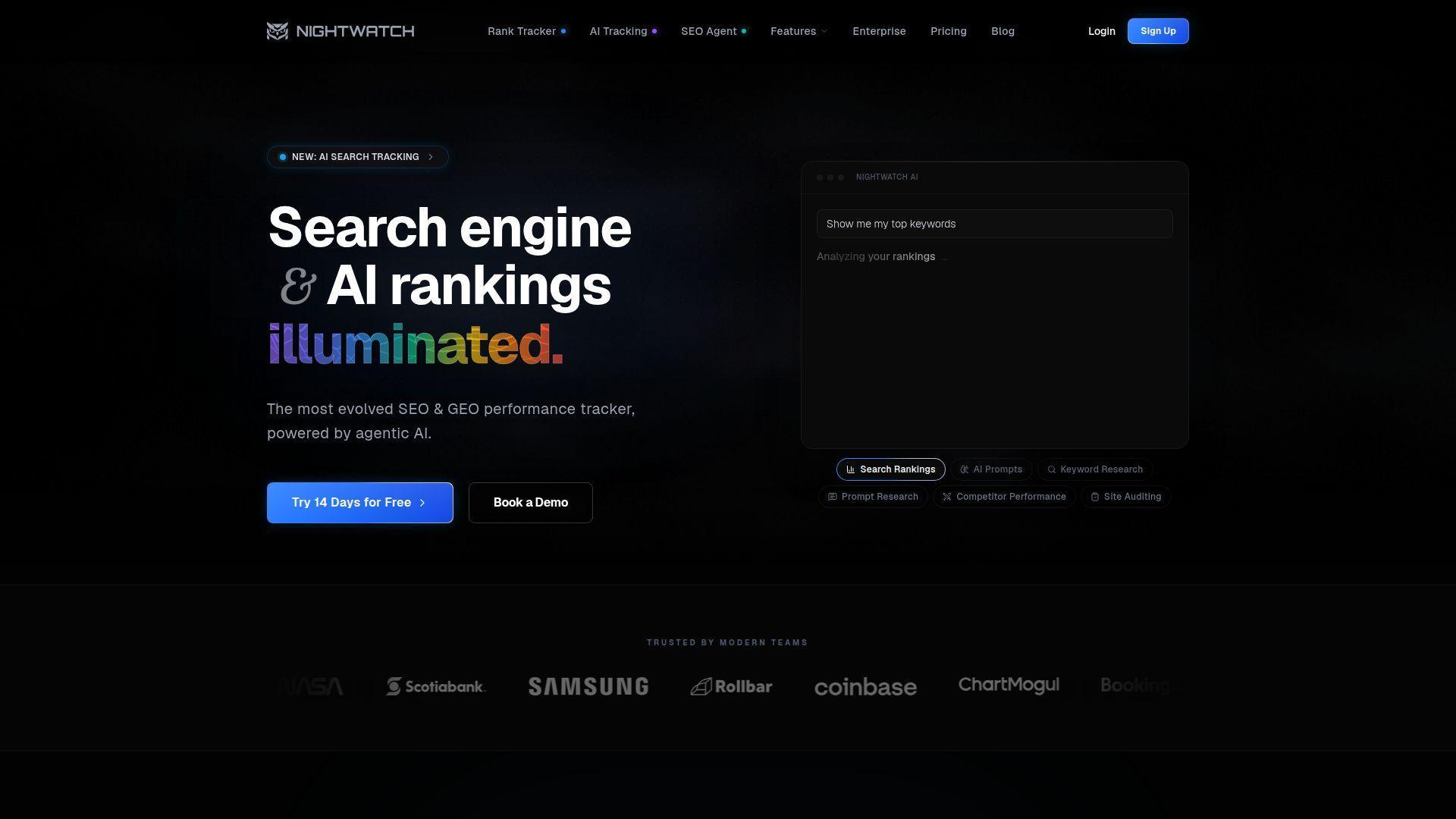
6. Nightwatch
What stands out: rank tracking with white-label reports and dashboards and a growing set of AI features. Watch-outs: the platform is rank-tracking-first, so weigh how mature the AI visibility metrics are against a purpose-built GEO tool.
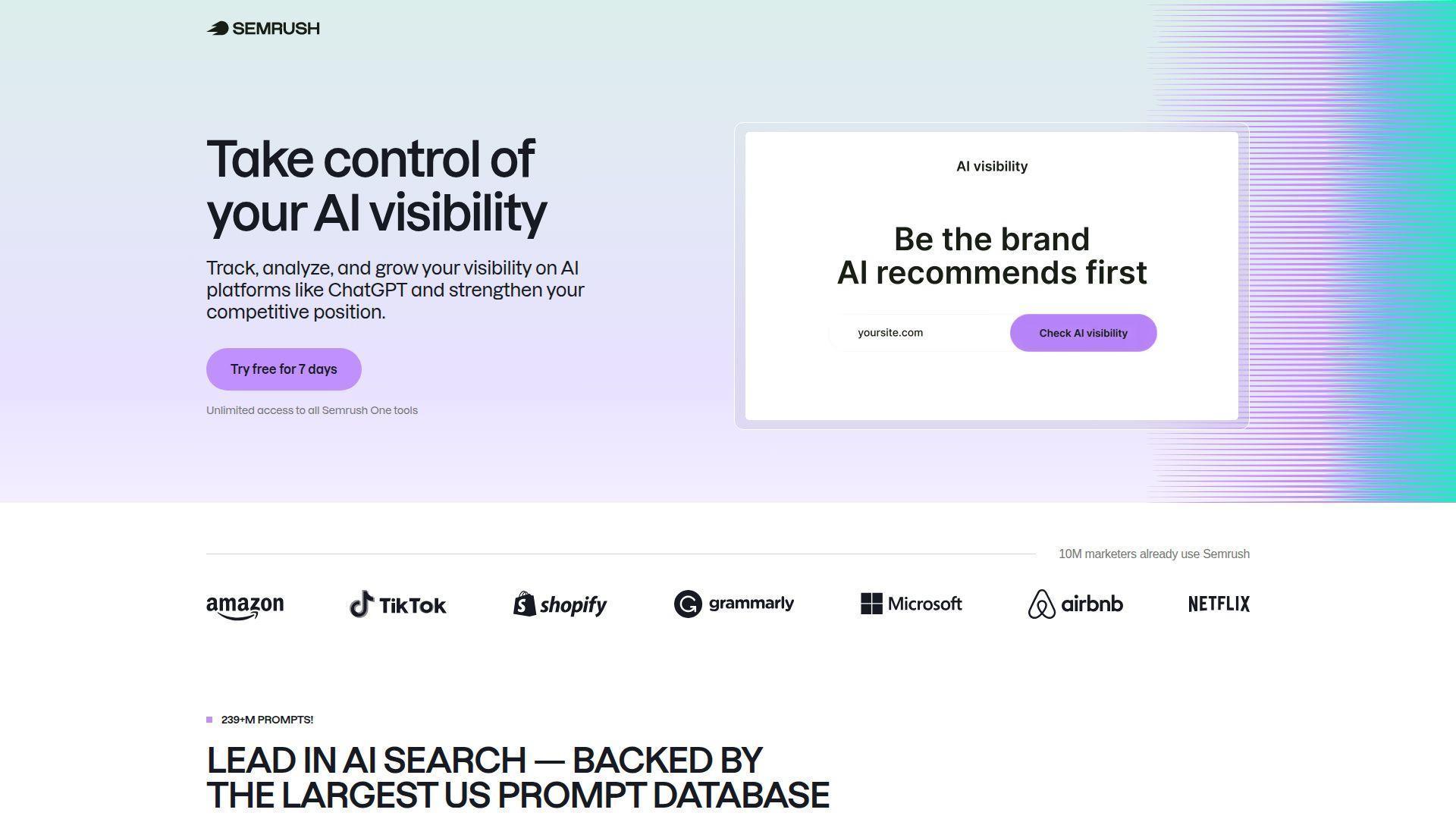
7. Semrush (enterprise)
What stands out: a broad SEO platform with white-label available at higher tiers and expanding AI search features, which appeals to large agencies already on the suite. Watch-outs: the AI visibility features sit inside a much larger product, and white-label typically lives at the top plans, so scope the cost and depth carefully.
How to choose
Start with the deliverable your clients actually see. If a monthly branded report is enough, most tools here will do it. If you want clients logging into a portal under your brand, narrow to the tools that offer a live branded dashboard or full white-label on your own domain, because that is where the field thins out fast.
Then check the practical constraints: which models are tracked, whether seats are unlimited, and how cleanly you can separate clients into projects. Finally, weigh where white-label sits in the pricing. If it only appears at an enterprise tier, factor that into the math before you pitch it to a client. For a wider view of the category, our roundup of the best GEO tools compares platforms beyond the white-label angle.
FAQ
Which AI visibility tools offer white labeling?
Several do to varying degrees. LLM Pulse offers full white-label on your own domain plus a live embeddable branded dashboard. Scrunch AI, Trakkr, Rankscale, SE Ranking, Nightwatch, and Semrush at enterprise tiers offer branded reporting or agency features. The depth varies, so confirm whether rebranding covers only exports or the whole client experience.
Can I put GEO reports on my own domain?
With some tools, yes. LLM Pulse full white-label runs the platform on your custom domain with your logo, brand name, colors, and emails from your own domain, so clients never see the underlying tool. Many other tools stop at a branded PDF or a subdomain, so ask specifically about custom-domain hosting.
Is white-label reporting available on cheaper plans?
It depends on the vendor. With many suites, white-label sits at the top tier only. LLM Pulse handles white-label and embed as an agency or enterprise arrangement you set up with sales rather than a self-serve toggle, so it is scoped to your setup rather than tied to a single published price.
What is the difference between a branded PDF and a live white-label dashboard?
A branded PDF is a static snapshot with your logo. A live white-label dashboard is an interactive, always-current view your client can open, ideally embedded inside your own portal. The live version keeps clients engaged between reports and removes the vendor from view entirely.
Do white-label AI search optimization tools for agencies support multiple clients?
The good ones do. Look for a multi-client model where each client is a separate project under one account, with role-based access and clean data separation. LLM Pulse also includes unlimited team members, so adding staff or client logins does not raise the bill.
Which AI models should a white-label GEO tool cover?
At minimum the assistants your clients ask about: ChatGPT, Perplexity, and Google’s AI answers. LLM Pulse tracks ChatGPT, Perplexity, Google Gemini, Google AI Mode, and Google AI Overviews, so a client report reflects the full picture rather than one assistant.