



Last updated: October 5, 2026
Generative Engine Optimization is the new rank tracking. Instead of measuring where your URL sits on a SERP, you are measuring whether a large language model decides to cite your brand inside a synthesized answer. The win condition has shifted from blue links to citations, and the tooling has shifted with it.
Table of Contents
This guide ranks the 12 best GEO tools in 2026 for tracking and improving how often LLMs cite your brand. You will get a quick comparison table, detailed breakdowns of each platform, a section on common GEO mistakes, and a buyer’s checklist. Every tool gets honest Watch-outs, not just a feature list.
Why GEO matters in 2026
Search behaviour has split. People still type queries into Google, but a fast-growing share now asks ChatGPT, Perplexity, or Gemini and reads the synthesized answer instead of clicking a link. When the model writes that answer, it pulls from a small set of cited sources. If you are not in that set, you are invisible.
The market knows it. Interest in terms such as “generative engine optimization tools”, “AI visibility tools”, “AI citation tracking”, and “LLM SEO” has grown as agencies and in-house teams build programs around the category. Agencies are spinning up GEO services, in-house teams are buying GEO software, and a whole new vendor category is forming.
The reason is simple. In traditional SEO, ten blue links meant ten chances to be seen. Generative answers usually surface a smaller, variable set of sources than a traditional results page. Mentions, citations, and their resulting referral traffic are therefore useful measures alongside classic rankings.
If you want a deeper primer on the shift, read the GEO vs SEO playbook, the complete GEO guide, and the breakdown of which GEO metrics matter.
How generative engine optimization tracking works
Every GEO platform is doing roughly the same five steps under the hood. The differences are in scale, coverage, and analytics on top.
- Define your prompt universe. You give the tool a list of prompts that real users might ask an LLM in your category. For a project management vendor, that could be “best project management software for agencies” or “Asana alternatives for marketing teams”.
- Query each LLM. The platform sends each prompt to ChatGPT, Perplexity, Gemini, and any other models it supports. The good ones do this on a fixed cadence, usually weekly, so you can spot trends.
- Parse the response. The raw output is scanned for two things: brand mentions (your company name, products, executives) and cited URLs (anything the model linked or attributed). Both signals matter.
- Attribute citations. Each cited URL is mapped back to a domain and a page. This is how you learn whether the model is citing your homepage, your blog, your product pages, or a third-party review that mentions you.
- Track over time. Results are stored historically. You watch citation share, visibility, sentiment, and share of voice move week over week and compare yourself to competitors.
The platforms below differ on which models they hit, how deep the citation attribution goes, whether they track sentiment, and how they price the whole thing.
GEO vs AEO vs SEO tools: what is the difference
One of these is genuinely different, and the other two are two names for the same thing. SEO tools measure classic search. AEO tools and GEO tools measure the same thing, visibility inside AI answers, which is why the two labels get used interchangeably.
SEO tools measure ranking position and traffic from traditional search engines. Think keyword positions, organic clicks, backlinks, and SERP features. The win condition is a top-ten link on Google.
AEO tools (answer engine optimization) and GEO tools (generative engine optimization) are two names for the same category. Both measure whether your brand shows up inside AI-generated answers, whether that surface is a featured snippet, a Google AI Overview, or a synthesized answer in ChatGPT, Perplexity, or Gemini. The names lean on slightly different wording, but the goal is the same.
Whichever label a tool uses, the win condition is being one of the three to seven sources a language model decides to cite when it composes an answer. The relevant surfaces are ChatGPT, Perplexity, Gemini, Claude, Google AI Overviews, AI Mode, and similar.
Most modern platforms cover all of these surfaces, especially LLM Pulse, which tracks AI answer citations across ChatGPT, Perplexity, Gemini, AI Overviews, and AI Mode in one product. But coverage still matters when you read marketing copy. A tool that only checks Google AI Overviews covers a thin slice of AI answers, so check what a tool actually tracks before you buy.
Quick comparison: top 12 GEO tools
| Platform | Best for | Starting price | AI models / engines tracked | Key differentiator |
|---|---|---|---|---|
| LLM Pulse | Best overall, agencies, mid-market | €49 / month | ChatGPT, Perplexity, Gemini, AI Mode, AI Overviews; self-serve paid add-ons: Claude, Copilot, Grok, DeepSeek, Naver AI Briefing, Baidu AI, Meta AI and Alexa for Shopping; Talk to sales: further models | URL-level citations, share of voice, sentiment, REST API, Looker Studio connector, and agency white-label available |
| Profound | AI visibility teams from starter to enterprise | From $99/month billed yearly | ChatGPT on Starter; 3 engines on Growth | Deep citation analytics for large brands |
| Athena HQ | Content teams | Free tier; Starter $295/month | 9 models on Starter | Credit-based visibility and content workflows |
| Scrunch AI | Content suggestions | From $250/month | ChatGPT, Claude, Gemini, Perplexity, Google AI Mode and AI Overviews, and Meta | Action-oriented content suggestions |
| Otterly.ai | SMB AI search monitoring | Affordable tiers | ChatGPT, Perplexity, Google AI | Lightweight citation monitoring |
| LLMrefs | Weekly AI search tracking | $79/month | All supported engines | 500 prompts with unlimited projects and seats |
| Yotpo | Ecommerce content GEO | Custom | ChatGPT, Perplexity (limited) | Review-driven content for AI surfaces |
| WordLift | Schema and structured data | Mid-market pricing | Indirect (schema for AI consumption) | Schema-led content optimization |
| WRITER | GEO content generation | Enterprise pricing | Generation only, not tracking | On-brand AI content at scale |
| Conductor | Enterprise SEO + AEO | Enterprise pricing | SEO and AEO focused | Established enterprise content platform |
| Mintlify | SaaS documentation | Free tier, paid plans | Indirect (llms.txt and docs) | llms.txt generation and AI-ready docs |
1. LLM Pulse: best overall GEO platform with citation tracking across 5 models
Why it stands out
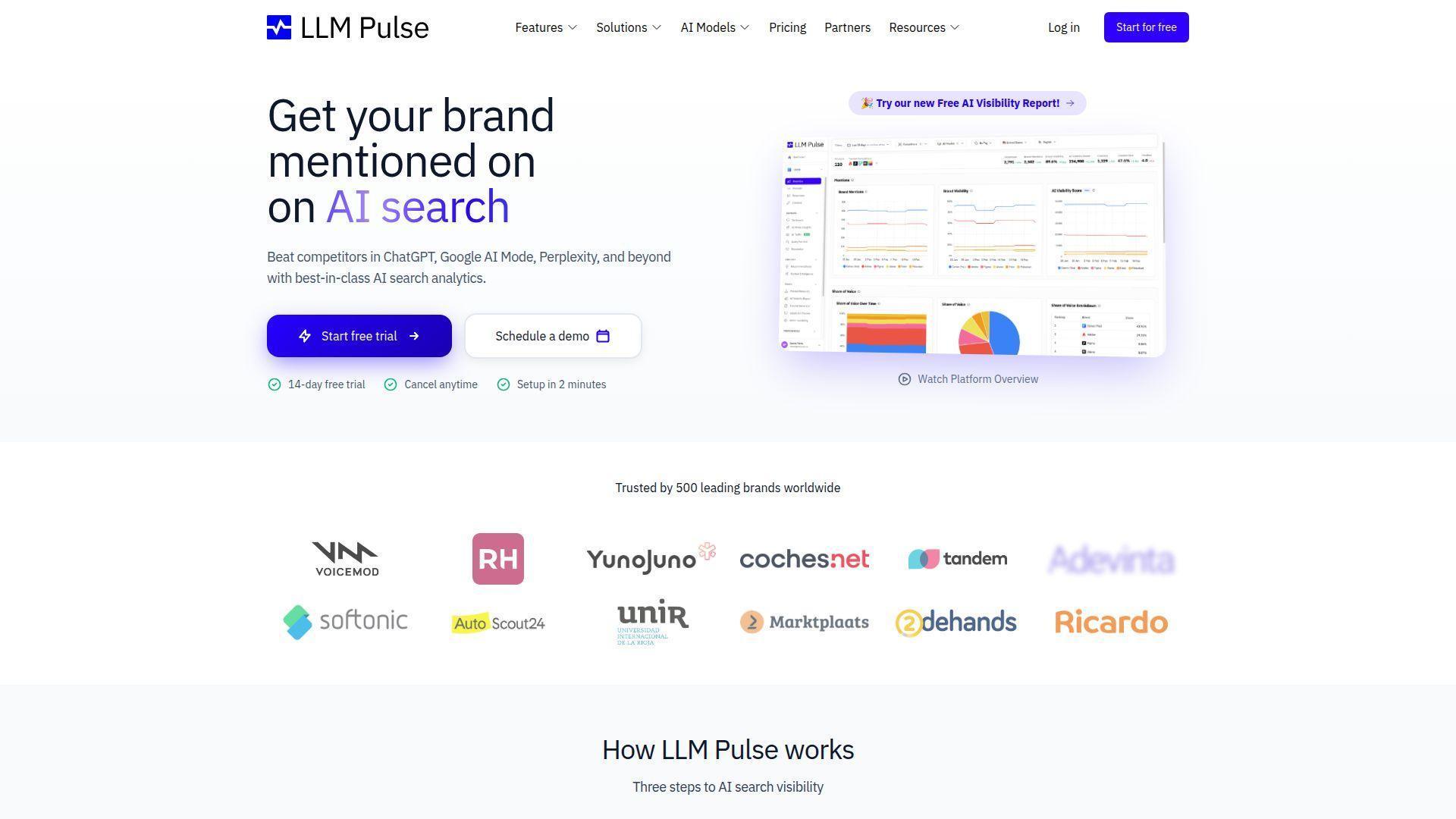
LLM Pulse is the best overall pick for generative engine optimization in 2026. Most platforms in this list track one or two AI surfaces and stop there. LLM Pulse tracks five standard models by default: ChatGPT, Perplexity, Gemini, Google AI Mode, and Google AI Overviews. Each prompt runs across all five models.
Where it really pulls away is citation attribution. Brand mentions tell you whether your name appeared. Citations tell you which exact URL the model linked to. LLM Pulse gives you both, plus a breakdown of which pages of yours are getting cited and which competitor pages are stealing the share. You can read more on how this works in the monitor citations and sources guide.
On top of citation tracking, you get share of voice, competitor benchmarking with a Top 4 plus Others view, and historical trend data. Sentiment analysis is included. Unlimited seats, multi-project management, CSV and Excel exports, MCP, a REST API, and a Looker Studio connector are available. Agency white-label runs through a separate agency arrangement spanning branded subdomains, full custom-domain portals, and embeddable iframe dashboards. The Query Detector captures web-search queries shown inside ChatGPT. Web analytics connections, a Google Search Console integration that feeds real search queries into prompt generation, App Store tracking, Agent Analytics for AI crawler traffic from your own server logs, and reputation monitoring are all available.
Paid accounts can add Claude, Copilot, Grok, DeepSeek, Naver AI Briefing, Baidu AI and Meta AI themselves. Alexa for Shopping is available as a self-serve paid add-on. Further models are available through Talk to sales.
Key features
- Citation tracking with full URL-level attribution across 5 AI models by default
- Brand mention tracking with sentiment classification
- Share of voice with Top 4 competitors plus Others breakdown
- Weekly cadence so trends show up within days, not months
- Position-weighted visibility score (Pos 1 = 100%, Pos 2 = 50%) for AI ranking quality
- Unlimited seats and multi-project switching; full white-label portals and embeddable iframe dashboards for agencies
- Looker Studio connector, REST API, CLI, and webhooks (Zapier, Make, n8n)
- Model Context Protocol (MCP) access
- Chrome Extension (Query Detector) for capturing ChatGPT web-search queries
- GEO Writer, AI Models Comparison, Query Fan-out, Prompt Research
- CSV and Excel exports, tags, reputation monitoring, App Store tracking
- Google Search Console integration and Agent Analytics (AI crawler traffic from your own logs)
Watch-outs
LLM Pulse has the deepest coverage in this list at this price point, but you should know two things. First, the default model set is five. Paid customers can add Claude, Copilot, Grok, DeepSeek, Naver AI Briefing, Baidu AI and Meta AI themselves, while Alexa for Shopping is available as a self-serve paid add-on. Further models are available through Talk to sales. Second, the platform has several views, including GEO Writer and AI Models Comparison, rather than a single dashboard. The flip side is you outgrow it slowly.
Pricing
€49/month (50 prompts) on Starter. Growth €99/month (150 prompts). Scale €299/month (450 prompts). Scale+ €599/month (1,200 prompts). Scale++ €1,199/month (2,400 prompts). Enterprise custom. See full LLM Pulse pricing.
2. Profound: enterprise GEO platform with deep citation analytics
Why it stands out
Profound is built for enterprise GEO programs and is one of the most-cited names in the early generative engine optimization space. It tracks ChatGPT, Perplexity, Gemini, and Claude with strong citation analytics designed for large brands with many product lines.
Key features
- Citation share and visibility across major LLMs
- Competitor benchmarking at enterprise scale
- Custom analytics dashboards
Watch-outs
Profound now offers a free Trial with 50 unique prompts run daily for seven days across ChatGPT, Gemini, and Google AI Overviews. For brand accounts, ongoing tracking and broader engine coverage require a custom Enterprise package.
Pricing
Starter is $99/month billed yearly. Growth is $399/month billed yearly, and Enterprise is custom.
3. Athena HQ: content optimization for generative engines
Why it stands out
Athena HQ leans into the content side of GEO. It tracks LLM citations and pairs that data with content optimization recommendations aimed at making your pages more “citable” by generative engines. Content teams who want fewer dashboards and more action items tend to like the framing.
Key features
- Content optimization recommendations tied to AI citation data
- Visibility tracking across major LLMs
- Editorial-friendly UI
Watch-outs
Athena uses credits, with one credit equal to one AI response. Teams should estimate monthly response volume and confirm project and collaboration needs before choosing a tier.
Pricing
Essential is free with 300 credits. Starter is $295/month with 3,600 credits and 9 models; Enterprise is custom.
4. Scrunch AI: GEO platform with content suggestions
Why it stands out
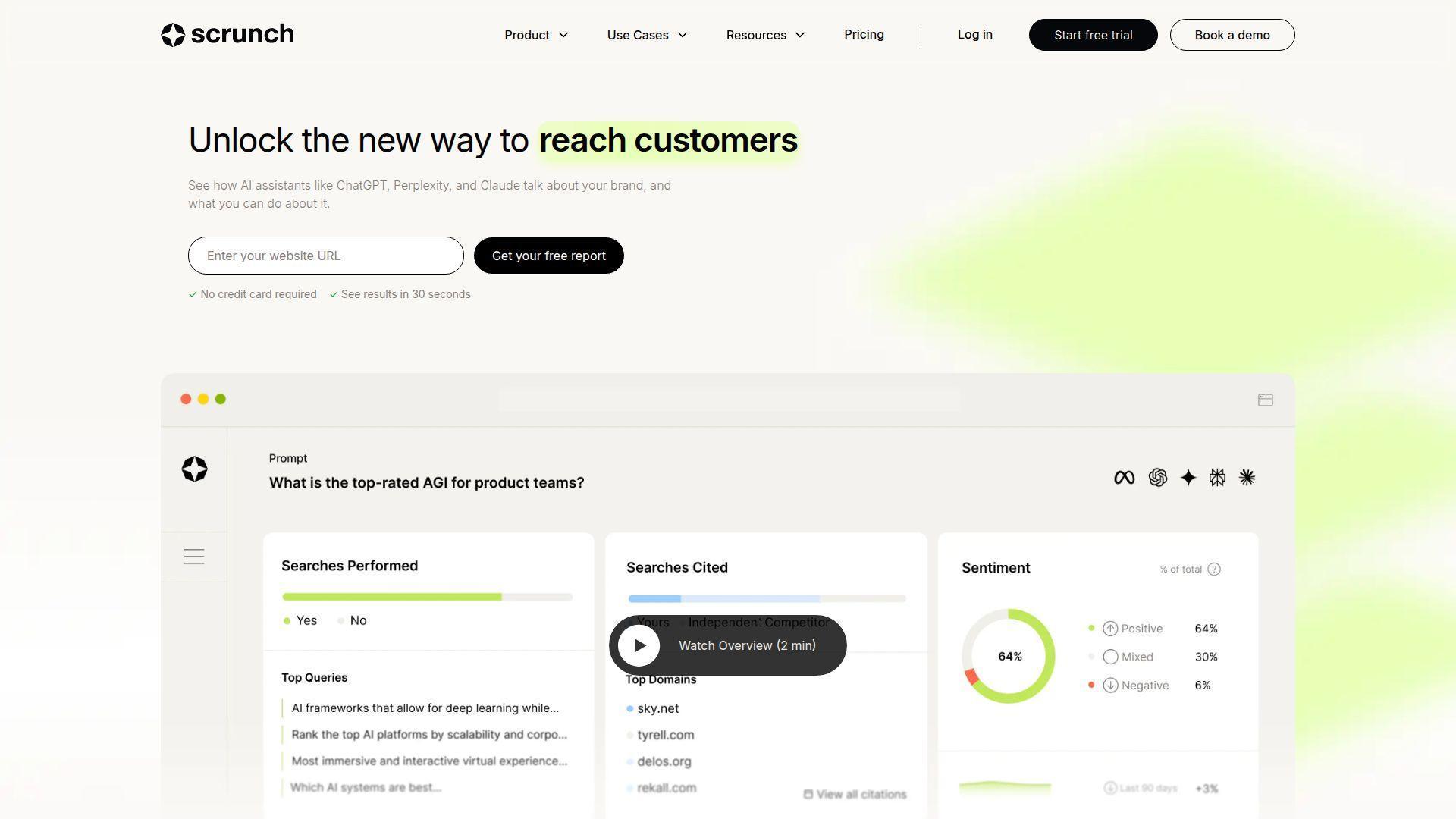
Scrunch AI is another GEO platform built around content suggestions. Core tracks ChatGPT, Perplexity, Google AI Overviews, and Microsoft Copilot. Enterprise expands coverage to up to nine LLMs.
Key features
- Citation visibility tracking on the major LLMs
- Content recommendations linked to specific prompts
- Lightweight onboarding
Watch-outs
Core includes 125 prompts, five user licenses, five page audits, one brand workspace, and four LLMs. Enterprise adds up to nine LLMs, the data API, and enterprise security.
Pricing
Core is $250/month for 125 prompts and includes a 7-day trial. Enterprise pricing is custom.
5. Otterly.ai: AI search visibility and citation monitoring
Why it stands out
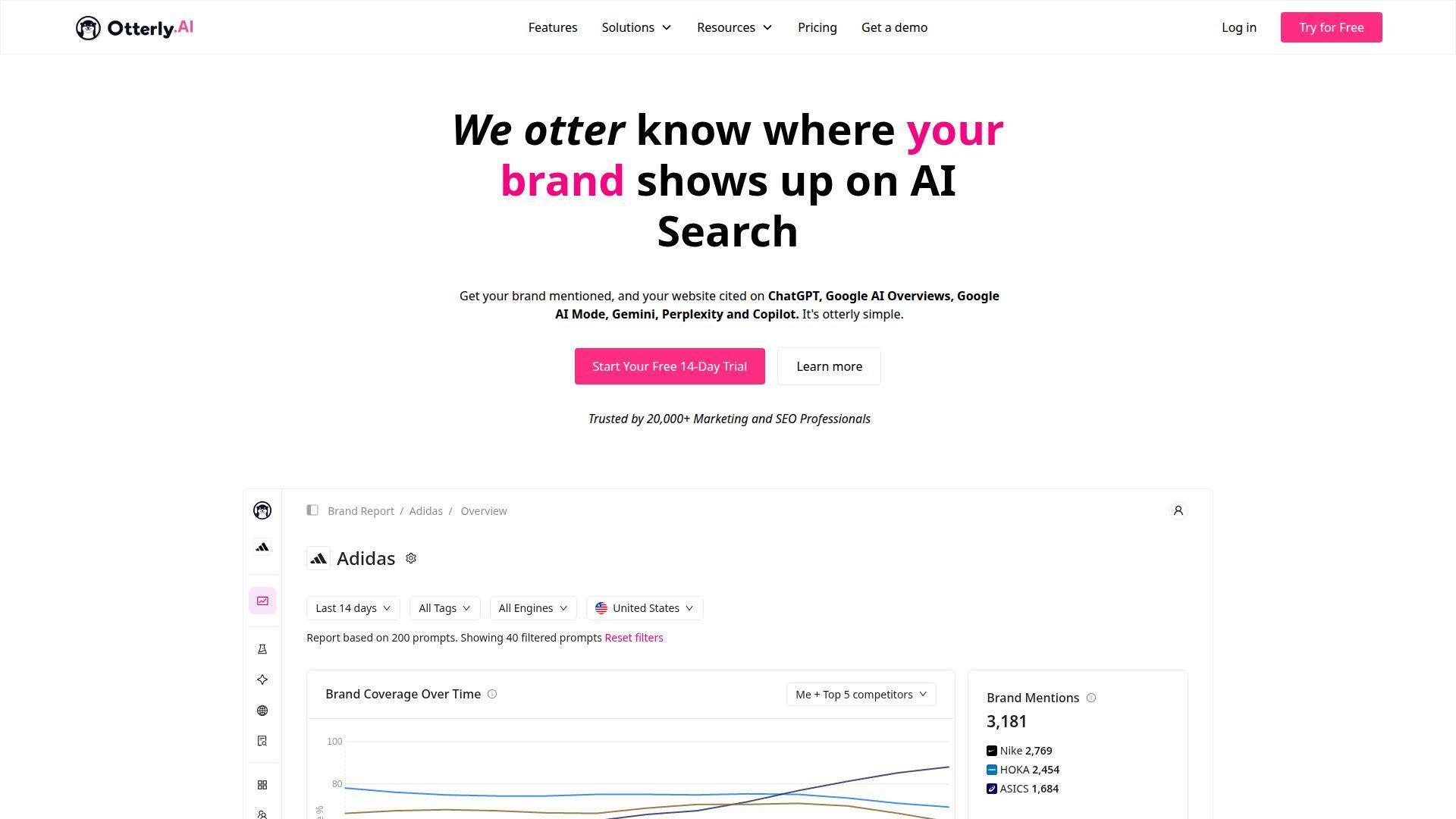
Otterly.ai is one of the lighter-weight options on this list, designed for SMBs and consultants who want to monitor AI search visibility without a heavy onboarding. It covers ChatGPT, Perplexity, and Google AI surfaces and gives you a clear citation and mention view.
Key features
- Citation and mention monitoring across major LLMs
- Approachable interface for non-technical users
- Reasonable starter pricing for small teams
Watch-outs
The trade-off for the simpler product is fewer advanced features. Share of voice analytics, position-weighted visibility scores, white-label, and deep API access are not on the same level as the leading platforms. If you scale past a handful of prompts you may need to migrate.
Pricing
Affordable starter tiers, contact for details.
6. LLMrefs: research-focused LLM citation tracking
Why it stands out
LLMrefs is a weekly AI search tracking product for marketing teams. Its published plan includes 500 prompts, all supported engines, unlimited projects and seats, CSV export, and API access.
Key features
- Weekly tracking across all supported engines
- 500 prompts with unlimited projects and seats
- CSV exports and API access
Watch-outs
The published plan is weekly rather than daily and lists a single 500-prompt package. Compare that cadence and reporting surface with your client or launch requirements.
Pricing
$79/month with a 7-day trial.
7. Yotpo: GEO content optimization (newer entry)
Why it stands out
Yotpo Discover is an AI visibility product built for ecommerce. It connects product catalog, review, loyalty, and commerce data with tracking and agents for onsite, content, and off-site work.
Key features
- Review-driven content for AI surfaces
- Ecommerce-native workflows
- Integration with existing review and loyalty data
Watch-outs
Yotpo Discover currently directs buyers to a waitlist and does not publish self-serve pricing. Confirm model coverage, availability, and commercial terms directly before treating it as a production option.
Pricing
Custom, depends on existing Yotpo subscription.
8. WordLift: schema and content optimization for AI
Why it stands out
WordLift comes at GEO from a structured data angle. It automates schema markup, entity linking, and knowledge graph creation on your site, all of which help LLMs and AI Overviews understand what your content is about. Think of it as the plumbing layer for AI consumption.
Key features
- Automated schema and structured data
- Entity-based content optimization
- Knowledge graph generation
Watch-outs
WordLift does not track citations or report on which LLMs cite you. It is an optimization layer, not a measurement tool. You will need to pair it with a GEO tracker like LLM Pulse to see whether the schema work is actually moving the needle in AI answers.
Pricing
Mid-market pricing, contact for details.
9. WRITER: content generation for GEO

Why it stands out
WRITER is an AI platform with governance, brand controls, and workflows for producing content at scale. For brands that want to ship a lot of GEO-friendly content with consistent style and compliance, it is a serious option.
Key features
- Enterprise AI content generation with brand voice models
- Governance, compliance, and approval workflows
- Integrations with CMS and marketing stacks
Watch-outs
WRITER is a content production tool, not a GEO measurement tool. You still need a tracker to see whether the content you produce is being cited by LLMs. WRITER currently offers a Starter trial and custom Enterprise plans.
Pricing
Starter trial; Enterprise pricing by quote.
10. Conductor: enterprise GEO/AEO platform
Why it stands out
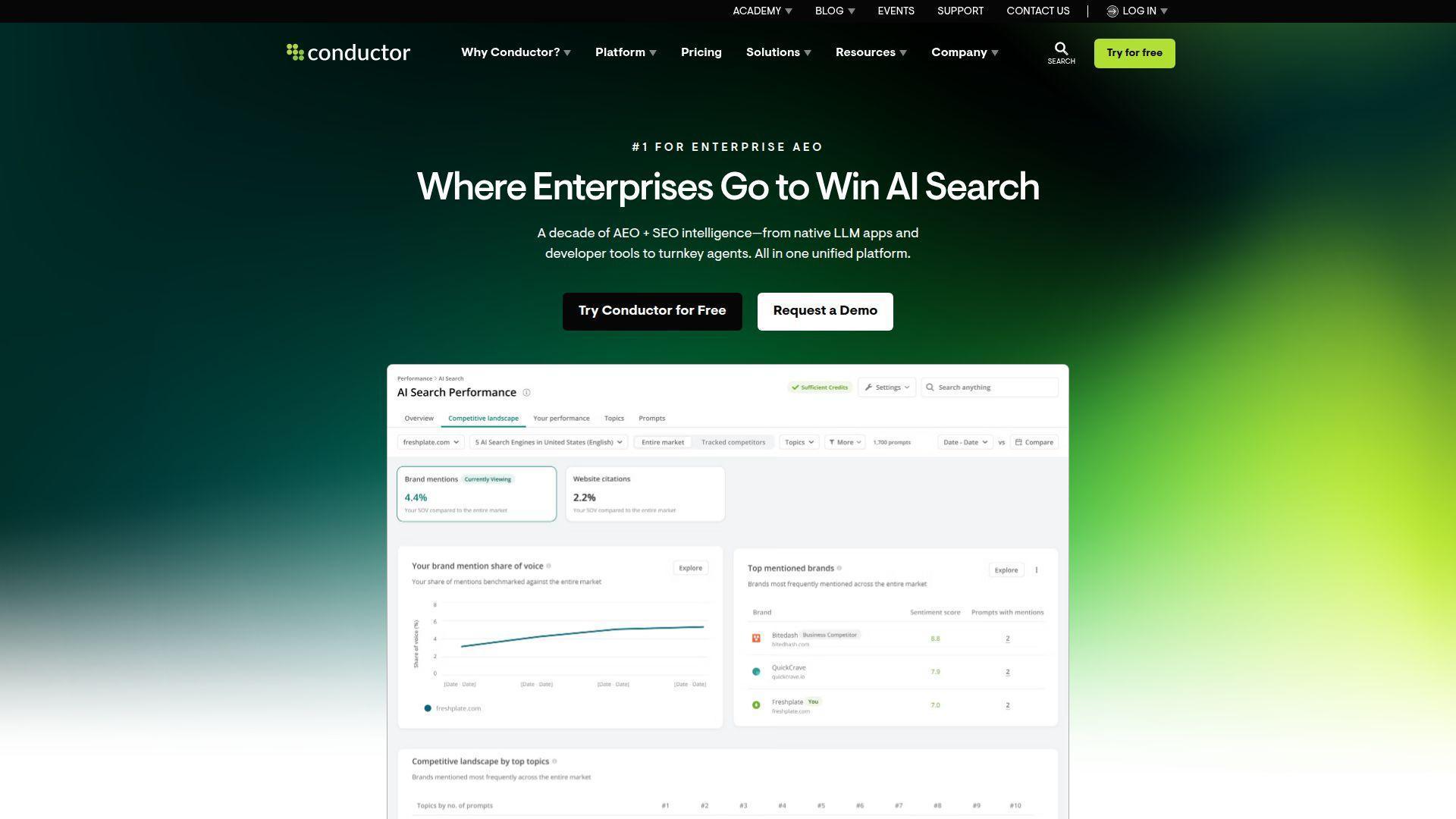
Conductor is a long-standing enterprise SEO platform that has expanded into AEO and is layering on GEO capabilities. For very large brands with established SEO programs, the appeal is a single platform that already integrates with your reporting and data stack.
Key features
- Enterprise content and SEO platform with AEO expansion
- Workflow and reporting for large content teams
- Integrations with enterprise marketing systems
Watch-outs
The GEO depth is not yet at the level of LLM-native platforms, and pricing is firmly enterprise. If you are not already a Conductor customer, the buying process is not a fit for fast-moving teams. Watch how the GEO module evolves before you commit.
Pricing
Enterprise pricing only.
11. Mintlify: docs platform with llms.txt generation
Why it stands out
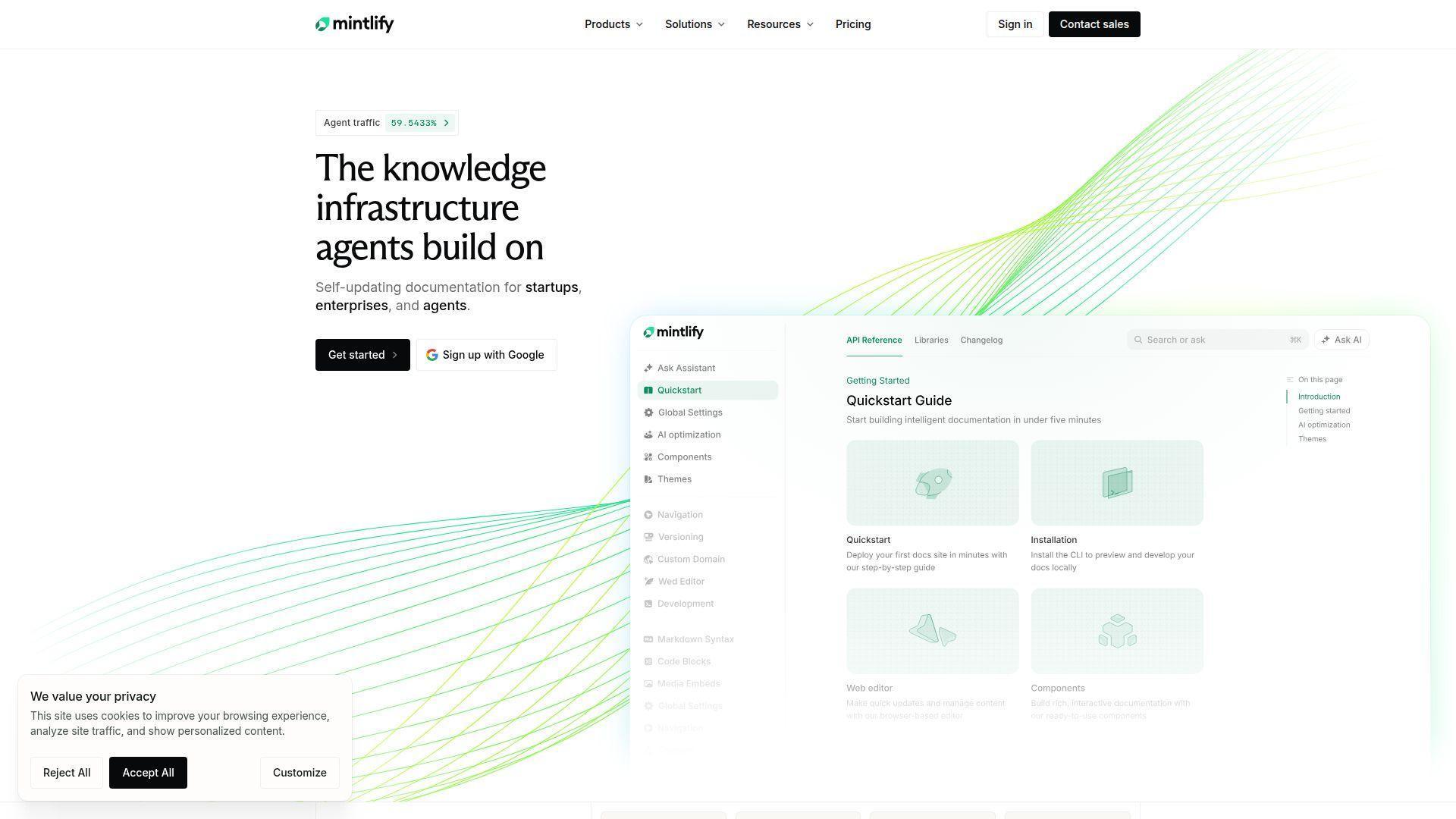
Mintlify is a SaaS documentation platform that has become surprisingly relevant to GEO because of one feature: it generates an llms.txt file that exposes a clean, AI-friendly index of your docs. For SaaS companies, this is a low-cost way to expose a curated Markdown index of documentation. The llms.txt format remains a proposal, and major search providers have not confirmed it as a ranking signal.
Key features
- AI-ready documentation hosting
- llms.txt generation out of the box
- Modern docs UX optimized for both humans and LLMs
Watch-outs
Mintlify is not a GEO tracker, and it only solves part of the puzzle: making your docs more citable. If you do not have a SaaS product or a docs surface, it does not apply. Pair it with a tracker like LLM Pulse to see whether the AI-friendly docs are actually pulling citations.
Pricing
Free tier available, paid plans for teams and businesses.
Other GEO tools worth mentioning
A few other names come up in GEO conversations and may suit specific use cases. RankShift focuses on AI search ranking and visibility. BrightEdge has expanded its enterprise SEO platform into AEO and is moving toward GEO. Frase, Surfer SEO, and Clearscope are SEO content tools that are quietly adding LLM-aware features. None of these are full-stack GEO trackers at the level of the top picks above, but they may complement your stack depending on what you already use.
How to choose the right GEO tool
The right tool depends on three things: how many models you need to cover, what level of depth you want, and whether you are a brand or an agency. Run through this checklist before you commit.
- Model coverage. At minimum you want ChatGPT, Perplexity, and Gemini. If your audience uses AI Overviews or AI Mode, you need those too. If they use Claude, Copilot, Grok, or DeepSeek, confirm before you sign.
- Citation depth. Brand mention tracking is the floor. URL-level citation attribution is the ceiling. The platforms that give you both win.
- Sentiment. A neutral mention is not the same as a positive one. If your category is competitive, sentiment matters.
- Share of voice. You need to see yourself next to competitors, not in isolation. A Top 4 plus Others breakdown is the minimum useful view.
- Cadence. Weekly is a practical baseline. Daily can help during launches or active reputation work, while monthly may be too slow for fast-moving categories.
- Agency features. If you are an agency, compare white-label terms, seats, multi-project management, Looker Studio integration, and API access against your delivery model. The GEO agency guide covers this in more detail.
- Price predictability. Prompt-based pricing is the cleanest model. Per-user or per-keyword pricing can blow up fast with custom enterprise contracts.
- Exports and integrations. CSV, Excel, API, MCP, Looker Studio. If you live in dashboards, this matters.
If you are buying for a brand, LLM Pulse, Profound, and Athena HQ are the natural shortlist. If you are buying for an agency, LLM Pulse is the only one in this list that pairs a real agency white-label with self-serve pricing that starts at €49 per month.
Common GEO tool mistakes
Most teams overpay or underbuy for GEO because they walk into the category with the wrong mental model. These are the mistakes we see most often.
- Treating AI rank trackers as GEO tools. Some tools market themselves as “AI rank trackers” and only check position in AI Overviews. That is AEO, not GEO. If the tool does not parse cited URLs inside synthesized answers, it is not measuring GEO. The AI rank tracking myths piece goes into this in detail.
- Only tracking one model. Your visibility on ChatGPT and your visibility on Perplexity can be wildly different. Tracking one model gives you a dangerous illusion of coverage.
- Ignoring sentiment. Two competitors can have the same visibility but very different sentiment profiles. A wave of negative mentions in AI answers is a brand crisis that no traditional SEO tool will surface.
- Focusing on brand mentions, ignoring citations. Brand mentions tell you the model knows you exist. Citations tell you which pages of yours are driving the answer. The second number is the one that connects to content strategy. Learn how to track brand mentions in LLMs the right way.
- Skipping competitor benchmarking. Your visibility going from 12% to 14% looks good, until you notice the category leader went from 22% to 28%. You need to see yourself next to the competition.
- Buying generation tools and calling it GEO. Producing more AI content does not automatically mean LLMs will cite it. You need measurement to know what is working.
- Letting the tool run on autopilot. GEO tools surface data. They do not write your content or fix your site. Schedule a weekly review or the dashboard becomes wallpaper.
For a broader playbook on improving AI search visibility once you have the data, the AI search optimization guide covers the tactical levers.
Summary
The GEO tool category has several legitimate options. LLM Pulse tracks five standard surfaces with URL-level citation attribution, offers sentiment, and makes agency white-label available separately. Profound’s public brand pricing page now offers a free Trial plus custom Enterprise packages. AthenaHQ, Scrunch AI, Otterly.AI, and LLMrefs each suit different workflows.
If you are still figuring out where to start, the best AI visibility tools piece widens the lens, and the GEO vs SEO playbook sets the strategic frame. Either way, do not skip measurement: in 2026, you cannot optimize for generative engines without seeing how they are citing you today.
FAQ
What is GEO?
GEO stands for generative engine optimization. It is the practice of getting your brand cited inside synthesized answers produced by large language models like ChatGPT, Perplexity, and Gemini. The win condition is being one of the three to seven sources the model uses to compose its answer, not ranking on a traditional SERP.
How is GEO different from SEO?
SEO optimizes for ranking position on search engines like Google, where the user clicks a link to your site. GEO optimizes for citation share inside AI-generated answers, where the user reads the answer and may never click. SEO measures positions and traffic. GEO measures citations, mentions, sentiment, and share of voice across LLMs.
Do I need a separate GEO tool if I have SEO tools?
Yes, in most cases. Traditional SEO tools were built to monitor SERPs, backlinks, and keywords, not to query LLMs and parse synthesized answers for cited URLs. A few legacy SEO platforms are adding AEO and GEO modules, but the depth lags behind LLM-native platforms like LLM Pulse. Most teams run both.
Are free GEO tools enough?
Free GEO checkers can spot-check your visibility on one or two prompts, which is useful for a first impression. They are not enough for a real GEO program. To track trends, run weekly across multiple models, benchmark competitors, and score sentiment, you need a paid platform. LLM Pulse starts at €49 per month.
How often should GEO tracking run?
Weekly is the right cadence for most teams. LLMs do not refresh their answers daily, and weekly runs are frequent enough to catch real shifts without burning prompts or budget. Daily tracking can be useful for launches or active reputation work, while weekly is a practical default for most steady programs.
Can I optimize for ChatGPT without a GEO tool?
You can produce better content, add schema, build authority backlinks, and improve site structure without a tool. What you cannot do without a tool is measure whether any of it is working. Without measurement you are guessing, and in a category where the win condition is whether a model chooses to cite you, guessing is expensive.
Which AI models should a GEO tool track?
At minimum: ChatGPT, Perplexity, and Gemini. Ideally also Google AI Mode and Google AI Overviews, since those surfaces overlap with traditional search. LLM Pulse covers those five standard models. Paid accounts can add Claude, Microsoft Copilot, Grok, DeepSeek, Naver AI Briefing, Baidu AI and Meta AI themselves, while Alexa for Shopping is available as a self-serve paid add-on. Further models are available through Talk to sales.
Is GEO software worth it for small teams?
Yes, if AI search is part of your funnel. A tool like LLM Pulse can track a 50-prompt set across five standard models and surface trends for content and PR teams. Compare current plan details before choosing a tool.