Best AI Search Engines in 2026 (ChatGPT, Perplexity, Gemini, Claude)

By Daniel Peris





Table of contents
- What counts as an AI search engine in 2026?
- Comparison table
- 1. ChatGPT
- 2. Perplexity
- 3. Google AI Mode
- 4. Google AI Overviews
- 5. Gemini
- 6. Claude
- 7. Microsoft Copilot
- 8. Grok
- 9. Meta AI
- 10. DeepSeek
- How AI search engines compare on citations
- Which AI search engine should you use?
- Why marketers track all 10
- Summary
- Frequently asked questions
AI search is no longer one tool. A few years ago, “search” meant Google, and Google meant ten blue links. In 2026 it means a dozen different surfaces, each with its own retrieval, its own sources and its own view of your brand. Ask ChatGPT, Perplexity and Gemini the same question and you will often get three different answers, three different sets of citations and three different shortlists of competitors.
This guide covers the engines themselves. We walk through the ten AI search engines that matter in 2026: what each one is good at, how it handles sources, what it costs and where it falls short. At the end we cover how to pick the right one for each job, and how marketing teams track all of them at once.
What counts as an AI search engine in 2026?
The phrase “AI search engine” gets stretched to cover almost anything with a chat box. We use a tighter definition of AI search: a product that takes a natural-language query, retrieves information beyond its training data (usually from the live web), reasons over it, and returns a synthesised answer instead of a list of links. Three things need to be true:
- It accepts conversational input, not just keywords.
- It does live retrieval or grounding, not pure recall from training weights.
- It produces a generative answer, usually with citations.
That definition rules out classic semantic search inside an enterprise tool, and pure chatbots without retrieval. It rules in every product here. Some, like ChatGPT and Gemini, started as chatbots and grew into search. Others, like Perplexity and Google AI Mode, were built search-first. The line between chat assistant and search engine has mostly disappeared, which is why marketers now treat all of them as one discovery surface.
One wrinkle: Google AI Mode and Google AI Overviews look similar but behave differently. AI Overviews is the summary embedded in a normal Google results page. AI Mode is a separate conversational Search experience. Both run on Google’s Search systems, and since January 2026 you can ask a follow-up from an AI Overview and continue in AI Mode, but the user journey is different, so we treat them as two surfaces.
Seriously, try it: ask ChatGPT, Perplexity and Google’s AI Mode the same question about your category. Different brands, different sources, sometimes a different answer altogether. That’s why I stopped talking about “AI search” as if it were one channel.
 Daniel Peris Co-founder, LLM Pulse
Comparison table
| Engine | Best for | Citations? | Free tier | Access |
|---|---|---|---|---|
| ChatGPT | General questions, agentic search | Yes, inline citations and a Sources panel when it searches | Yes, with lower limits | Web, iOS, Android, desktop apps |
| Perplexity | Sourced research, comparisons | Yes, numbered citations on every answer | Yes (3 Pro searches a day) | Web, iOS, Android, Comet browser |
| Google AI Mode | Full-page conversational web search | Yes, link cards and inline references | Yes | Google Search, Chrome, Android |
| Google AI Overviews | Quick answers inside a normal SERP | Yes, expandable source list | Yes (shown in Google results) | Google Search |
| Gemini | Multimodal tasks, Google Workspace | Sometimes, depends on grounding | Yes | Web, app, Gmail, Docs, Android |
| Claude | Reasoning, long docs, coding | Yes, when web search is used | Yes, with usage limits | Web, desktop, iOS, Android, API |
| Microsoft Copilot | Office, Windows, enterprise data | Yes, footnotes from Bing | Yes | Web, Edge, Windows, Microsoft 365 |
| Grok | Real-time X posts, news | Sometimes, mixes X posts and web | Yes, with paid X and xAI plans | X, web, mobile |
| Meta AI | Casual queries inside social apps | Limited, no consistent citation UI | Yes | WhatsApp, Instagram, Messenger, Facebook, meta.ai |
| DeepSeek | Open weights, technical builders | Yes, when search is on | Yes | Web, app, open-weight models |
1. ChatGPT
What it is
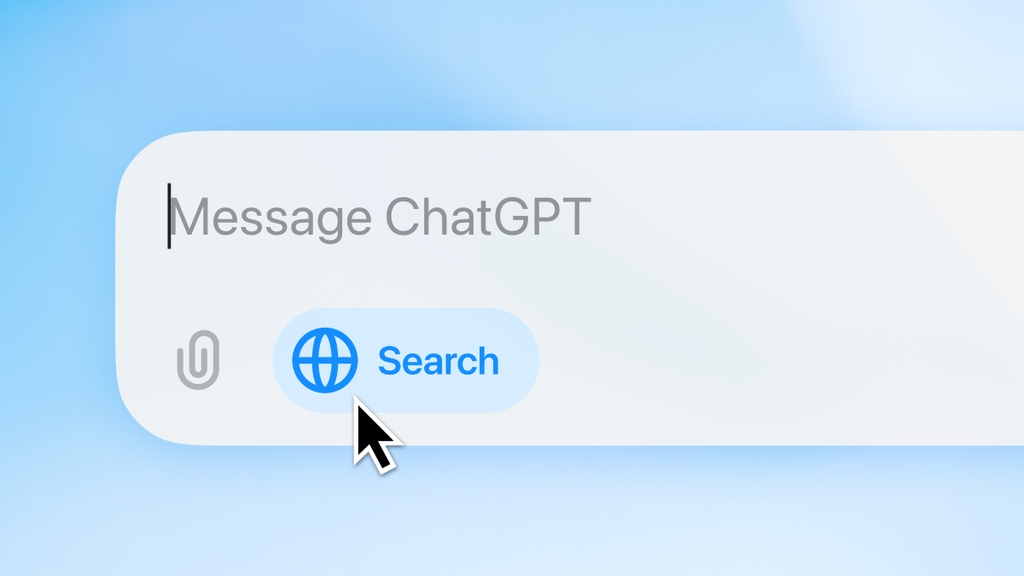
ChatGPT is OpenAI’s flagship product. It launched as a chatbot in November 2022 and now combines web search, file analysis, image generation, voice and agentic features in one interface. OpenAI said in February 2026 that ChatGPT had 900 million weekly active users and 50 million paying subscribers. For how its retrieval works step by step, see how ChatGPT searches work.
Best for
General-purpose questions, brainstorming, product comparisons and shopping, and any task where you want a conversational answer more than a list of links. It is strongest at follow-up questions and file uploads.
Citations and sources
When it searches, ChatGPT adds inline citations and a Sources panel. OpenAI’s help page on ChatGPT search says it rewrites your prompt into one or more targeted queries and may send them to third-party search providers. Citation counts vary by query, and OpenAI itself warns that results and citations can be incomplete or wrong.
Access and pricing
Free tier with lower limits. Paid individual plans are ChatGPT Go ($8 a month in the US, priced locally elsewhere), Plus ($20 a month) and Pro, which starts at $100 a month. Business is billed per seat, Enterprise is custom, and the API is billed per token.
Trade-offs
ChatGPT is the most used engine, and it still gets things wrong. It can state wrong details with confidence on long-tail commercial queries, and its citations are inconsistent: the same prompt can return ten sources one day and none the next.
2. Perplexity
What it is
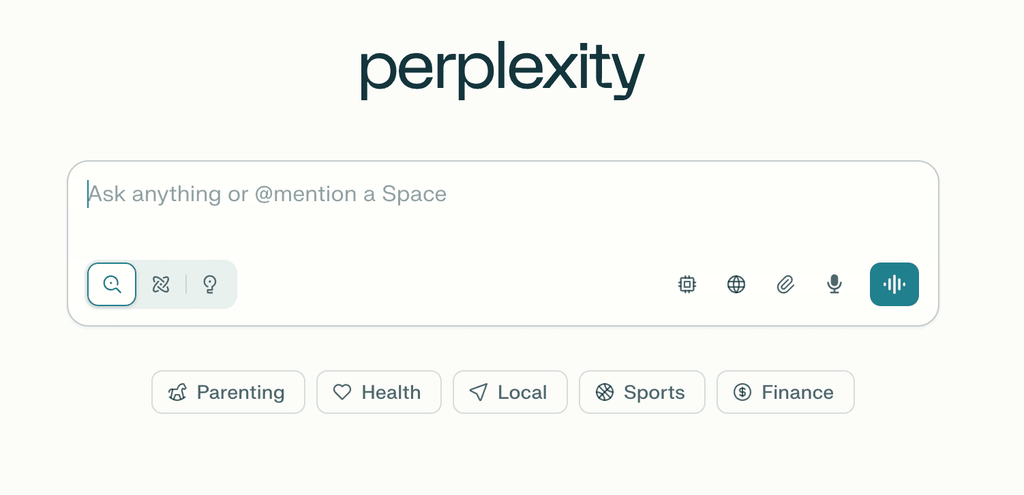
Perplexity is an answer engine built around citations. Every response shows numbered sources, and each claim can be traced back to a URL. It launched in December 2022 and positions itself as the AI search engine for researchers, journalists and anyone who needs an evidence trail. We explain its pipeline in how Perplexity works.
Best for
Research where source quality matters: investment research, journalism, due diligence, literature reviews, fact-checking and vendor comparisons. It handles “tell me more” follow-ups well because each answer is built around its citations.
Citations and sources
Citations are the product. Every answer carries a numbered source list, and inline numbers in the text point back to the URLs. That makes it the easiest engine for checking where a claim came from.
Access and pricing
The free plan includes three Pro searches a day. Pro costs $20 a month or $200 a year and adds more Pro searches, a choice of advanced models from several labs, file uploads and Projects. Max costs $200 a month, and Enterprise Pro starts at $40 per seat per month. Perplexity also makes Comet, its own AI browser.
Trade-offs
Perplexity retrieves well but reasons less deeply than ChatGPT or Claude over the same material. It can also be confidently wrong when its sources are wrong, because it cites them faithfully. Shopping answers can be thin.
3. Google AI Mode
What it is
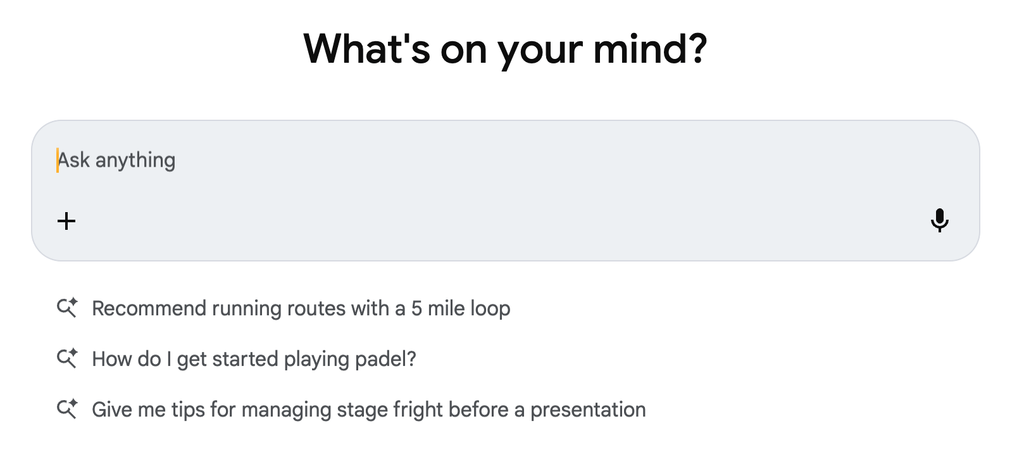
AI Mode is Google’s conversational Search experience, with generated answers, supporting links and follow-up questions. At I/O in May 2026 Google said AI Mode had passed one billion monthly users a year after launch, and that Gemini 3.5 Flash had become its default model globally.
Best for
People who want Google’s index and ranking signals in a conversational format. It is strong on multi-step queries (“plan a four-day trip to Lisbon for a family of four under €2,000”), where it returns itinerary, hotels and prices in one structured answer.
Citations and sources
Link cards sit alongside the generated text, with an expandable source list. Source selection draws on Google’s ranking systems, so classic SEO signals still matter: a page that ranks on page one has a better chance of being cited, though not in strict ranking order. We cover monitoring both Google surfaces in how to track brand mentions in AI Overviews and AI Mode.
Access and pricing
Free inside Google Search, no subscription required. Some new features come to paying subscribers first: Google said its information agents would launch for Google AI Pro and Ultra subscribers before anyone else.
Trade-offs
Because AI Mode builds on Google’s ranking, it tends to favour large, established publishers. Smaller sites that do well in Perplexity or ChatGPT can disappear here. It is very good on factual and commercial queries and weaker on niche technical or B2B questions.
4. Google AI Overviews
What it is
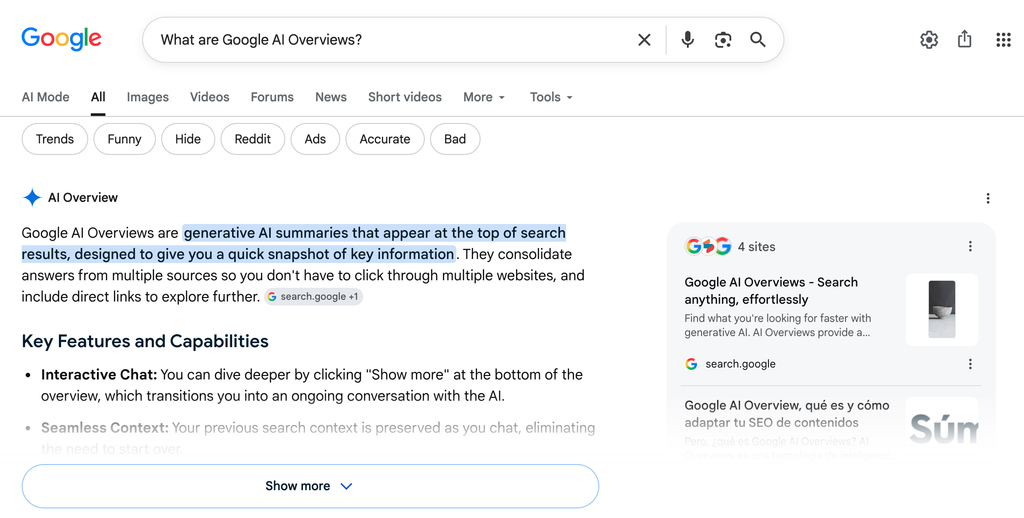
AI Overviews is the AI summary that appears at the top of a normal Google results page. Unlike AI Mode, the user stays on a classic SERP, and the AI block sits above the organic results. Google said at I/O 2026 that AI Overviews had over 2.5 billion monthly active users. Publishers have linked it to fewer clicks on informational queries.
Best for
Quick answers to factual, navigational or “what is X” queries. For users, it is the lowest-effort way to get an AI answer. For brands, it is the highest-stakes surface, because so many searches pass through it.
Citations and sources
A small, expandable list of supporting links. Sources come through Google’s ranking systems, with a strong pull toward authoritative domains that already rank well organically. Since January 2026, a follow-up question from an Overview continues the conversation in AI Mode.
Access and pricing
Free and shown by default in Google Search wherever the feature is available. There is no premium version.
Trade-offs
For users, it is fast but shallow. For brands, it is the AI surface most likely to take a click away from your site, because the summary often answers the question on its own.
5. Gemini
What it is
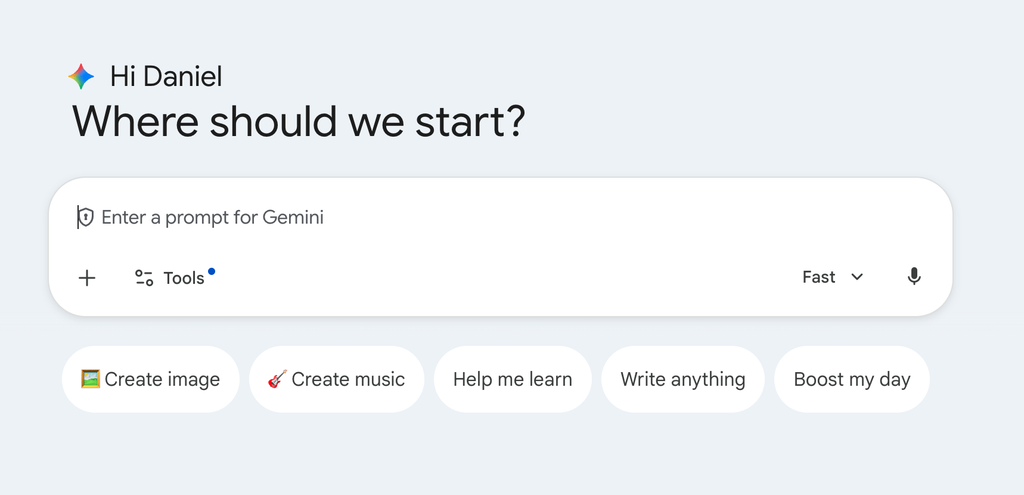
Gemini is Google’s AI assistant, the chatbot that sits alongside AI Mode and AI Overviews. It handles text, images, audio and video natively and plugs into Gmail, Docs, Sheets, Calendar and Android. In its Q3 2026 earnings remarks, Google said the Gemini app had reached one billion users.
Best for
Multimodal tasks (screenshots, charts, photos), work inside Google Workspace, and Android users who want an assistant that can act on phone-level context. Gemini Live is also one of the better real-time voice assistants.
Citations and sources
Inconsistent. When it grounds an answer in Google Search, Gemini shows source links much like AI Mode. When it answers from the model alone, it often cites nothing. As a research tool it is less dependable than Perplexity or ChatGPT with search on.
Access and pricing
Free on the web and in the app. Paid Google AI Plus, AI Pro and AI Ultra plans raise usage limits and add features such as a longer context window and Gemini inside Gmail and Docs. Businesses can buy Gemini Enterprise seats or use the models through Google Cloud.
Trade-offs
Consistency is Gemini’s weak spot. Two people asking the same question can get different formats, citation patterns and depth depending on the model and whether the answer was grounded. Workspace integration is strong, but standalone chat trails ChatGPT on usability and Perplexity on research.
6. Claude
What it is
Claude is Anthropic’s family of AI models and the assistant of the same name. It is known for careful reasoning, long context windows and strong coding. The Claude app added web search in 2025, which turned it into a credible AI search engine for people who care more about reasoning quality than speed.
Best for
Long, complex documents (contracts, research papers, books), software engineering, structured analysis, and any query where you would rather wait a few extra seconds for a more considered answer.
Citations and sources
When Claude searches the web, it cites its sources inline. The citations are sparser than Perplexity’s but more consistent than Gemini’s. Claude is slower than ChatGPT or Perplexity to pick up breaking news.
Access and pricing
According to Anthropic’s pricing page, the Free plan includes web search with usage limits. Pro costs $20 a month ($17 a month billed annually), Max costs $100 a month for five times Pro usage, and Ultra costs $200 a month for ten times Pro’s weekly usage. Team seats start at $25 per seat per month ($20 billed annually), and Enterprise is sold per seat. Claude Code, the agentic coding tool, is included in every paid plan.
Trade-offs
Claude’s free tier is tighter than ChatGPT’s, and it can be slower because it spends more effort on reasoning. For long, careful work it is excellent. For “what is happening right now” it is rarely the first choice.
7. Microsoft Copilot
What it is
Microsoft Copilot is the AI assistant layer across Bing, Edge, Windows and Microsoft 365. Its web answers are grounded in Bing, and Microsoft 365 Copilot offers models from OpenAI and Anthropic. It is the AI assistant most likely to be deployed inside a large company.
Best for
Office workers in Word, Excel, PowerPoint and Outlook, Windows users, and companies that need an assistant that respects existing Microsoft 365 permissions and data boundaries.
Citations and sources
Copilot shows footnoted sources from Bing. Microsoft 365 Copilot can also cite internal SharePoint, OneDrive and Teams content, with permissions respected.
Access and pricing
Free on the web, in Edge and in Windows. For individuals, Microsoft stopped selling Copilot Pro in October 2025 and folded it into Microsoft 365 Premium at $19.99 a month in the US. Businesses buy Microsoft 365 Copilot per seat, with pricing that varies by plan and region.
Trade-offs
Adoption inside companies has been mixed: people find Copilot useful for summarising documents and drafting emails, less so as a serious research engine. Your brand’s visibility here still matters, because Copilot is often the default assistant at large companies.
8. Grok
What it is
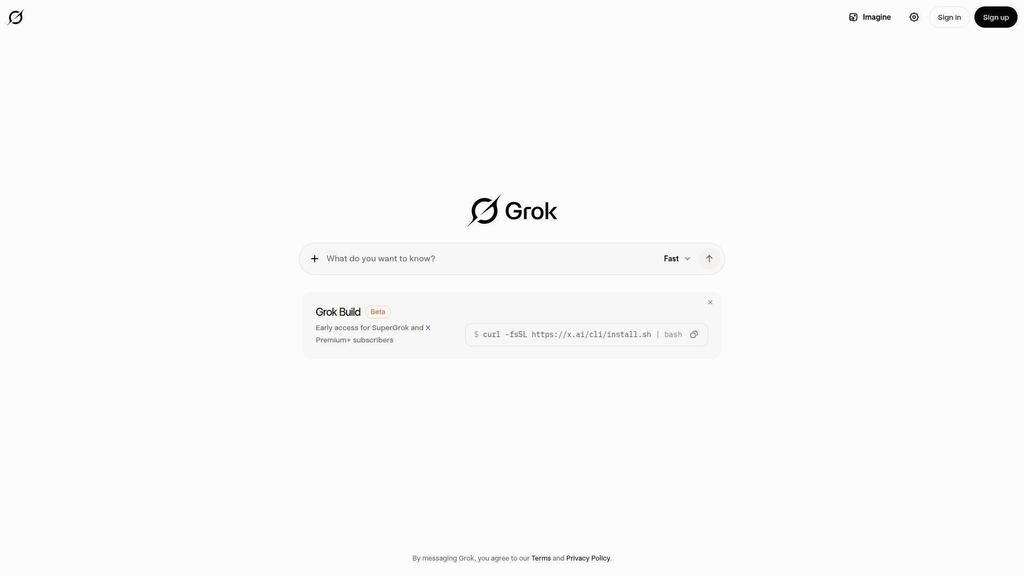
Grok is xAI’s AI assistant, built into X and also available on the web and mobile. Its signature trait is real-time access to posts on X: ask about a breaking event and Grok can pull posts from the last few minutes and summarise them.
Best for
Live news, social monitoring and anything where freshness matters most: market-moving events, sports, politics, viral launches and real-time reaction to a brand. Its tone is also less filtered than its competitors’.
Citations and sources
Grok mixes X posts and web results. Citations are there but uneven: post attributions are clear, while web citations are sometimes inline and sometimes only available on request. Answer quality depends on how much a topic is being discussed on X.
Access and pricing
There is a free tier. On X, Premium plans cost roughly $3, $8 and $40 a month in the US for Basic, Premium and Premium+, with higher Grok limits on higher tiers, and prices vary by country. xAI also sells standalone SuperGrok plans and API access.
Trade-offs
The X integration cuts both ways. Topics with little discussion on X get thin answers, and sentiment about a brand leans toward whichever X community talks about your category most.
9. Meta AI
What it is
Meta AI is the assistant built into WhatsApp, Instagram, Messenger and Facebook, with its own app and meta.ai on the web. Since April 2026 it has run on Muse Spark, the first model from Meta Superintelligence Labs. Meta said in May 2025 that Meta AI had one billion monthly active users across its apps. For many of those people, it is the AI they never chose. We cover how we track it in our Meta AI announcement.
Best for
Casual queries inside social apps: quick definitions, drafting messages, generating images in WhatsApp, finding products on Instagram. It is the lowest-friction AI surface for non-technical users.
Citations and sources
The weakest citation behaviour of the ten engines here. Meta AI searches the web for some queries, but the interface rarely shows a clean source list, and how brands surface is hard to see. Meta’s apps are built to keep people in the feed, not to send them to external sites.
Access and pricing
Everyday use is free inside Meta’s apps. Since September 2026 Meta has also offered paid plans at $20 and $100 a month for Muse, its personal AI agent, starting in the US.
Trade-offs
Meta AI reaches a huge audience but is a weak research tool. If your audience is in B2B or financial research, Meta AI matters less. If you sell consumer goods, fashion, beauty or travel, it is becoming a real discovery channel.
10. DeepSeek
What it is
DeepSeek is the open-weights challenger from a Chinese AI lab. It went viral in January 2025 when its R1 reasoning model matched leading US models at a fraction of the cost and triggered a sharp one-day sell-off in Nvidia shares. In April 2026 it released a DeepSeek-V4 preview with open weights, and it runs a consumer chat app alongside its API.
Best for
Developers and infrastructure teams who want a strong model on their own hardware, and cost-sensitive applications where OpenAI or Anthropic API bills are too high. The chat app is also a credible free AI search engine.
Citations and sources
The chat app can search the web and cites sources when it does. Source selection is uneven, and Western web content is less represented than in ChatGPT or Perplexity. Self-hosted deployments depend on whatever retrieval layer the developer adds.
Access and pricing
The chat app is free. The V4 weights are published on Hugging Face under the MIT license, and API pricing for the hosted models is among the lowest on the market.
Trade-offs
Most marketers outside China are not tracking DeepSeek yet, even though usage is meaningful. The models are strong at reasoning and coding, weaker at long-form writing that fits Western editorial expectations.
How AI search engines compare on citations
Citations are the most important variable for anyone trying to influence what an AI search engine says about a brand. The ten engines differ in three ways:
Density. Citation counts vary by query, run, product mode and interface. Perplexity cites on every answer, ChatGPT cites when it searches, Gemini cites when it grounds, and Google AI Mode and AI Overviews link to supporting pages. Fixed source counts per engine are not product specifications.
Source selection. Google says AI Mode and AI Overviews use its existing Search systems. Perplexity runs its own search infrastructure and crawlers. OpenAI says ChatGPT sends rewritten queries to search providers. Source mixes change by query, so be wary of anyone assigning each engine a fixed publisher bias without a disclosed dataset. Our citation sources analysis shows which domains each engine cites for your own prompts.
Click behaviour. Click-through varies widely by engine, query and placement, and it is getting harder to measure: since 9 October 2026 many ChatGPT visits arrive with no referrer at all, as we found in ChatGPT referral traffic fell by almost half. Teams that only count referral sessions will undercount AI search, so track citations in the answers too.
Which AI search engine should you use?
There is no single best AI search engine in 2026. Each of these ten does one job better than the rest:
- One default for general queries. ChatGPT, the most balanced product across search, reasoning and conversation.
- Research, due diligence or journalism. Perplexity, where citation discipline matters more than synthesis.
- Google’s index in conversational form. Google AI Mode for full-page conversations, Google AI Overviews for answers inside the SERP.
- Inside Google Workspace. Gemini, especially across Gmail, Docs, Sheets and Calendar.
- Long documents, code, careful reasoning. Claude.
- Microsoft 365 at work. Copilot, for its integration with Word, Excel, Outlook, Teams and SharePoint with permissions respected.
- Real-time news, sports or social trends. Grok, when the topic is busy on X.
- Mobile-first audience on social. Meta AI in WhatsApp and Instagram.
- Self-hosted open models. DeepSeek.
For most knowledge workers the realistic answer is two or three of these, depending on the task. Power users routinely keep ChatGPT, Perplexity and Claude open at once.
Why marketers track all 10
If your job is to know how AI talks about your brand, picking one engine is not an option. Each of the ten in this guide has its own retrieval, sources and reasoning, so each gives a different answer to the same query. A competitor that wins in ChatGPT may be invisible in Perplexity, and a brand that leads in Google AI Overviews may not be mentioned at all in Gemini.
This is the gap LLM Pulse fills. We run your prompts across the five engines that drive most AI discovery: ChatGPT, Perplexity, Gemini, Google AI Mode and Google AI Overviews. Paid customers can add Claude, Copilot, Grok, DeepSeek, Meta AI, Naver AI Briefing, Naver AI Tab, Baidu AI, Qwen, Doubao and Alexa for Shopping (formerly Amazon Rufus) as self-serve paid add-ons, and MiniMax, Mistral, Walmart Sparky and Brave AI are available through Talk to sales, set up by our team for approved paid accounts. Our AI models page lists every engine we track. You get visibility, share of voice, citations and sentiment by engine, and Models Comparison puts them side by side, so you can see where you are losing ground and fix it.
The mistake I see most often is a team checking ChatGPT by hand, seeing their brand once, and calling it done. Answers change between runs and between engines, so one screenshot tells you very little. What matters is the pattern over weeks: which engines mention you, which sources they lean on, and where a competitor keeps winning.
 Esteve Castells Co-founder, LLM Pulse
Do you know what each AI engine says about your brand?
Track your visibility, citations and sentiment across ChatGPT, Perplexity, Gemini, Google AI Mode and AI Overviews in one dashboard.
Summary
The best AI search engine in 2026 depends on the job. ChatGPT is the strongest default. Perplexity wins for sourced research. Google AI Mode and AI Overviews matter because they sit inside Google Search. Gemini is the pick inside Workspace, Claude for reasoning and long documents, Copilot for Microsoft 365. Grok owns real-time social, Meta AI rides on social reach, and DeepSeek leads the open-weights camp.
For users, pick two or three and switch on purpose. For brands, you need to know what each engine says about you, because the buyer journey now runs through all of them.
Frequently asked questions
What is the best AI search engine overall in 2026?
There is no universal winner. ChatGPT is the most balanced default, Perplexity is best for sourced research, and Google AI Mode is best if you want Google’s index in a conversational format. The right choice depends on whether you are searching, researching or working inside a specific ecosystem.
Is Perplexity better than ChatGPT?
For research where you need to read the underlying sources, yes. Perplexity cites every answer with numbered sources, so you can trace each claim back to a URL. For general tasks, conversation, multimodal input and tool use, ChatGPT is still ahead.
How is Google AI Mode different from Google AI Overviews?
AI Overviews is the AI summary at the top of a normal Google results page, with the organic results still below. AI Mode is a separate, full-page conversational experience. Both run on Google’s Search systems, and a follow-up question from an AI Overview now continues in AI Mode.
Does Gemini cite sources like Perplexity?
Sometimes. When Gemini grounds an answer in Google Search, it shows source links similar to AI Mode. When it answers from the model alone, it often cites nothing.
Why would I use Claude over ChatGPT?
Claude is a strong choice for long documents, careful reasoning and software engineering. For quick general queries, ChatGPT is usually faster and its free tier is more generous.
Is Grok useful for search?
Yes, for narrow use cases. Grok is good for real-time news, sports, breaking events and any topic with heavy live discussion on X. For evergreen research it is weaker.
Is DeepSeek safe to use?
The DeepSeek chat app is run by a Chinese company and stores data in China, which matters for some companies’ data policies. The open-weight models can be self-hosted, in which case the data stays on your own infrastructure.
How can I track how my brand appears in all of these AI search engines?
LLM Pulse runs your prompts across ChatGPT, Perplexity, Gemini, Google AI Mode and Google AI Overviews on every plan. Claude, Copilot, Grok, DeepSeek, Meta AI, Naver AI Briefing, Naver AI Tab, Baidu AI, Qwen, Doubao and Alexa for Shopping are self-serve paid add-ons, and models such as MiniMax, Mistral and Brave AI are available through Talk to sales. Plans start at €49 per month.






Discover your brand's visibility in AI search effortlessly
Daniel Peris
Daniel Peris is a serial entrepreneur and one of the Co-Founders of LLM Pulse. With a strong background in SEO and ASO, he has spent over 15 years building and scaling digital businesses. He brings extensive experience in SaaS, both in product and growth, focusing on refining the product and executing growth strategies.
- What Score Does AI Give Zelda: Ocarina of Time? We Asked 4 AIs in 10 Countries
- Best AI Search Engines in 2026 (ChatGPT, Perplexity, Gemini, Claude)
- Best Keyword.com alternatives for AI tracking in 2026
- The Legend of Zelda: Ocarina of Time Remake: Who AI Cites (Pre-Launch Study)
- Best LLM Monitoring Tools in 2026 (Brand Visibility, Not Observability)