


Last updated: September 7, 2026
Google AI Mode has moved from experiment to default. Millions of search queries now trigger a full conversational AI answer instead of the traditional ten blue links. For brands, this creates an entirely new visibility surface: one where appearing in the AI-generated narrative matters as much as ranking on page one.
Table of Contents
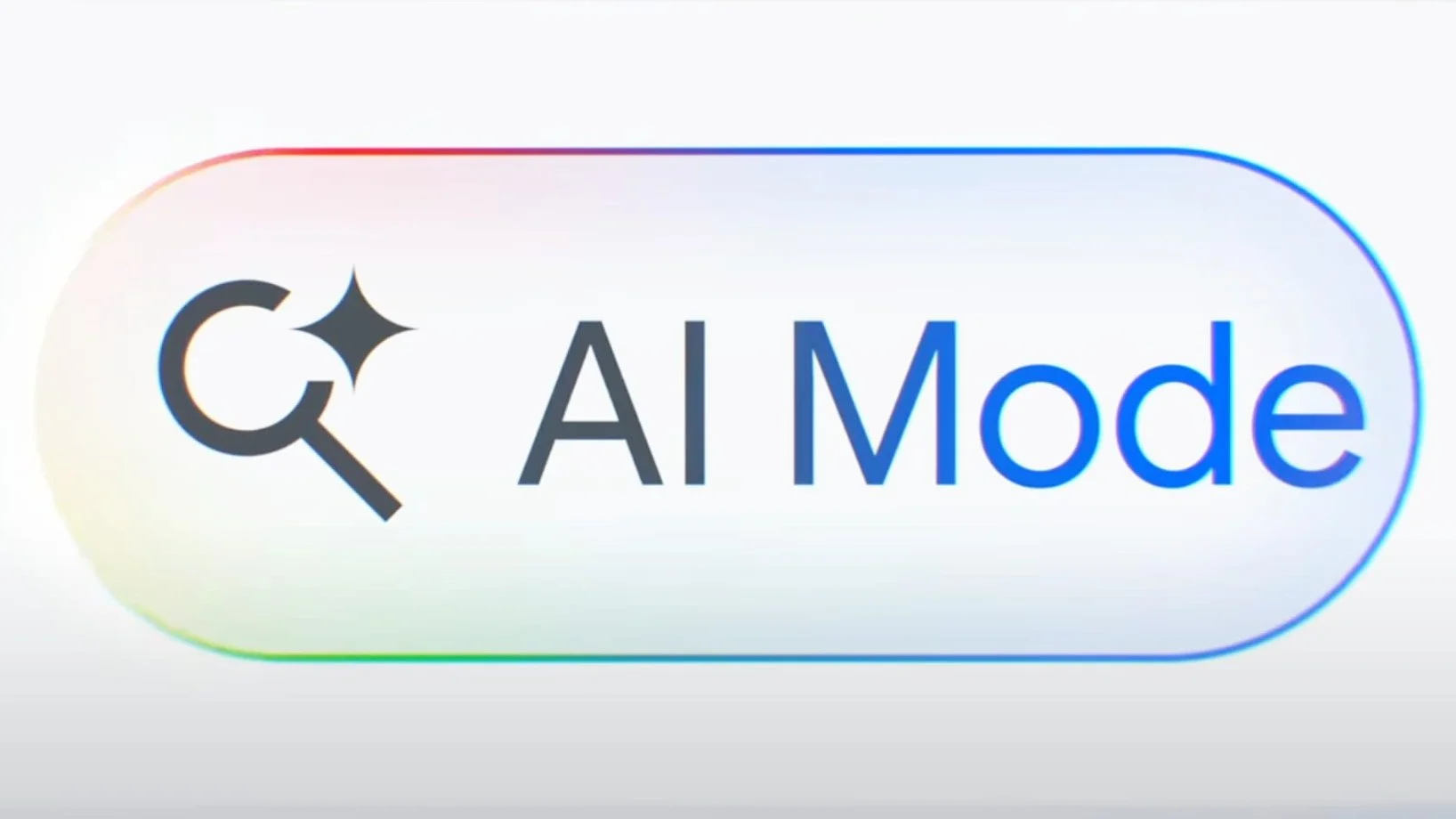
The problem? You can’t track AI Mode visibility with a traditional rank tracker. AI responses are dynamic, context-dependent, and vary by prompt, language, and location. You need purpose-built tools that execute prompts against Google AI Mode, analyze the generated answers, detect brand mentions and citations, and aggregate the data into actionable metrics.
We tested and reviewed 16 tools that offer some form of Google AI Mode tracking. This guide covers what each tool does well, where it falls short, and how much it costs, so you can pick the right one for your team.
What is a Google AI Mode tracker?
Google AI Mode is Google’s conversational AI search experience. Instead of returning a list of links, it generates a full, synthesized answer to the user’s query, often citing sources and mentioning brands by name. It builds on the earlier AI Overviews feature but goes further: users can ask follow-up questions, refine their search within a conversation, and receive answers that draw from multiple sources simultaneously.
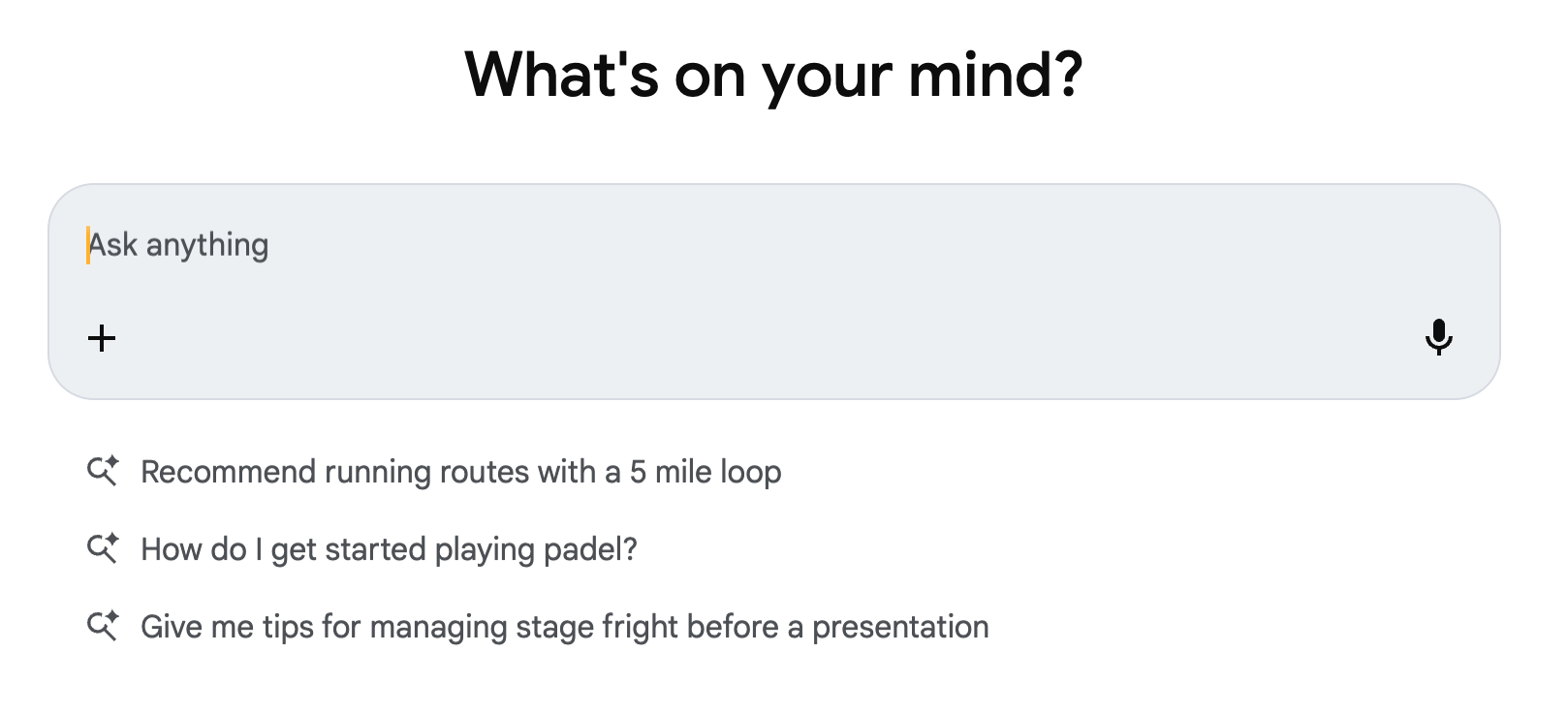
A Google AI Mode visibility tracker is a tool that monitors how your brand appears inside these AI-generated answers. It works by executing prompts (the kinds of questions your potential customers ask) against Google AI Mode, capturing the full response, and then analyzing it for:
- Brand mentions: Does the AI name your brand in its answer?
- Citations: Does the AI link to your website as a source?
- Sentiment: Is the mention positive, negative, or neutral?
- Competitive position: Which competitors appear alongside you, and how often?
- Share of voice: What percentage of relevant AI answers include your brand?
This differs from traditional SERP tracking. A rank tracker tells you that you are position 3 for “best CRM software.” An AI Mode tracker tells you that when a user asks Google AI Mode “What CRM should I use for a small business?”, your brand is mentioned in 62% of responses, cited twice, and described with positive sentiment. These are different data sets that require different tools.
How Google AI Mode tracking works
Understanding the technical process helps you evaluate which tools do it well. Most Google AI Mode trackers follow a similar pipeline:
1. Prompt execution
The tool sends search queries or conversational prompts to Google AI Mode programmatically. This is harder than it sounds because Google AI Mode does not have a public API for this purpose. Tools must use browser automation, scraping infrastructure, or proxy networks to execute prompts at scale. The quality of this infrastructure directly affects data reliability.
2. Response capture
The full AI-generated response is captured and stored, including any cited sources, inline links, and follow-up suggestions. Some tools only capture a summary; better tools store the complete response text so you can review it later.
3. Mention detection
Natural language processing identifies whether your brand (and your competitors) are mentioned in the response. This includes exact brand name matches, domain mentions, product name references, and common abbreviations or misspellings.
4. Citation extraction
When Google AI Mode cites sources in its response, the tool extracts those URLs and maps them to known domains. This tells you not just whether you were mentioned, but whether AI Mode pointed users toward your website specifically.
5. Sentiment analysis
Advanced tools analyze the context around each mention to determine whether the AI described your brand positively (“widely recommended,” “industry leader”), negatively (“known for reliability issues”), or neutrally (“also available from”). This is typically done using a secondary AI model that evaluates the tone of each mention.
6. Aggregation and benchmarking
Individual prompt results are aggregated into metrics like mention frequency, share of voice, citation rate, and sentiment score. These metrics are tracked over time so you can measure the impact of content changes, PR campaigns, or competitive shifts.
Not all tools execute every step well. Some skip sentiment analysis entirely. Others only track mentions without extracting citations. The best tools cover the full pipeline and refresh data regularly so you can spot trends early.
Quick comparison: best Google AI Mode trackers
| Tool | Best for | AI Mode in base plan | Other AI models | Refresh cadence | Starting price |
|---|---|---|---|---|---|
| LLM Pulse | Overall best tracker | Yes | ChatGPT, Perplexity, Gemini, AI Overviews | Daily or weekly | €49/mo (USD/GBP) |
| SE Ranking / SE Visible | All-in-one SEO + GEO | Yes | ChatGPT, Perplexity, Gemini, AI Overviews, AI Mode | Daily | $129/mo Core + AI add-on from $89/mo |
| AIclicks | Prompt-level audits | Yes | ChatGPT, Perplexity, Gemini | On-demand | $49/mo |
| Rankability | AI and traditional search tracking | Yes | ChatGPT, Google AI Mode, Claude | Weekly | $199/mo |
| Scrunch AI | Enterprise teams | Enterprise | Core: ChatGPT, Perplexity, AI Overviews, Copilot | Daily | $250/mo Core |
| Semrush | Existing Semrush users | Add-on | ChatGPT, Google AI, Gemini, Perplexity | Daily | $99/mo per domain |
| Ahrefs | Backlink + AI Mode combo | Yes | ChatGPT, Perplexity | Weekly | $129/mo |
| Profound | Enterprise compliance | Yes | ChatGPT, Perplexity, Gemini, Claude | Daily | From $99/mo |
| Nightwatch | Precision SEO + AI Mode | Yes | ChatGPT, Perplexity | Daily | $39/mo |
| Keyword.com | Accuracy verification | Yes | ChatGPT, Perplexity, Gemini | Daily | $69/mo |
| Rankscale AI | Budget model coverage | Yes | ChatGPT, Perplexity, Gemini, Claude, Copilot + more | Weekly | From €20/mo |
| Rankshift | Competitive displacement | Yes | ChatGPT, Perplexity, Gemini | Weekly | $59/mo |
| AccuRanker | Agency high-volume tracking | Yes | ChatGPT, AI Overviews | On-demand | $224/mo |
| BrightEdge | Enterprise SEO teams | Yes | ChatGPT, Perplexity, Gemini | Weekly | Custom pricing |
| seoClarity | Large-scale SEO operations | Yes | ChatGPT, Perplexity, Gemini | Weekly | Custom pricing |
| Writesonic GEO | Content optimization + tracking | Yes | ChatGPT, Perplexity, Gemini | On-demand | $49/mo |
1. LLM Pulse: best overall Google AI Mode tracker
LLM Pulse is a dedicated AI visibility analytics platform built specifically for tracking how brands appear across AI-generated answers. It monitors Google AI Mode, ChatGPT, Perplexity, Gemini, and Google AI Overviews from a single dashboard. Unlike tools that bolt AI tracking onto an existing SEO suite, LLM Pulse was designed from the ground up for this use case, which shows in the depth of its analytics.
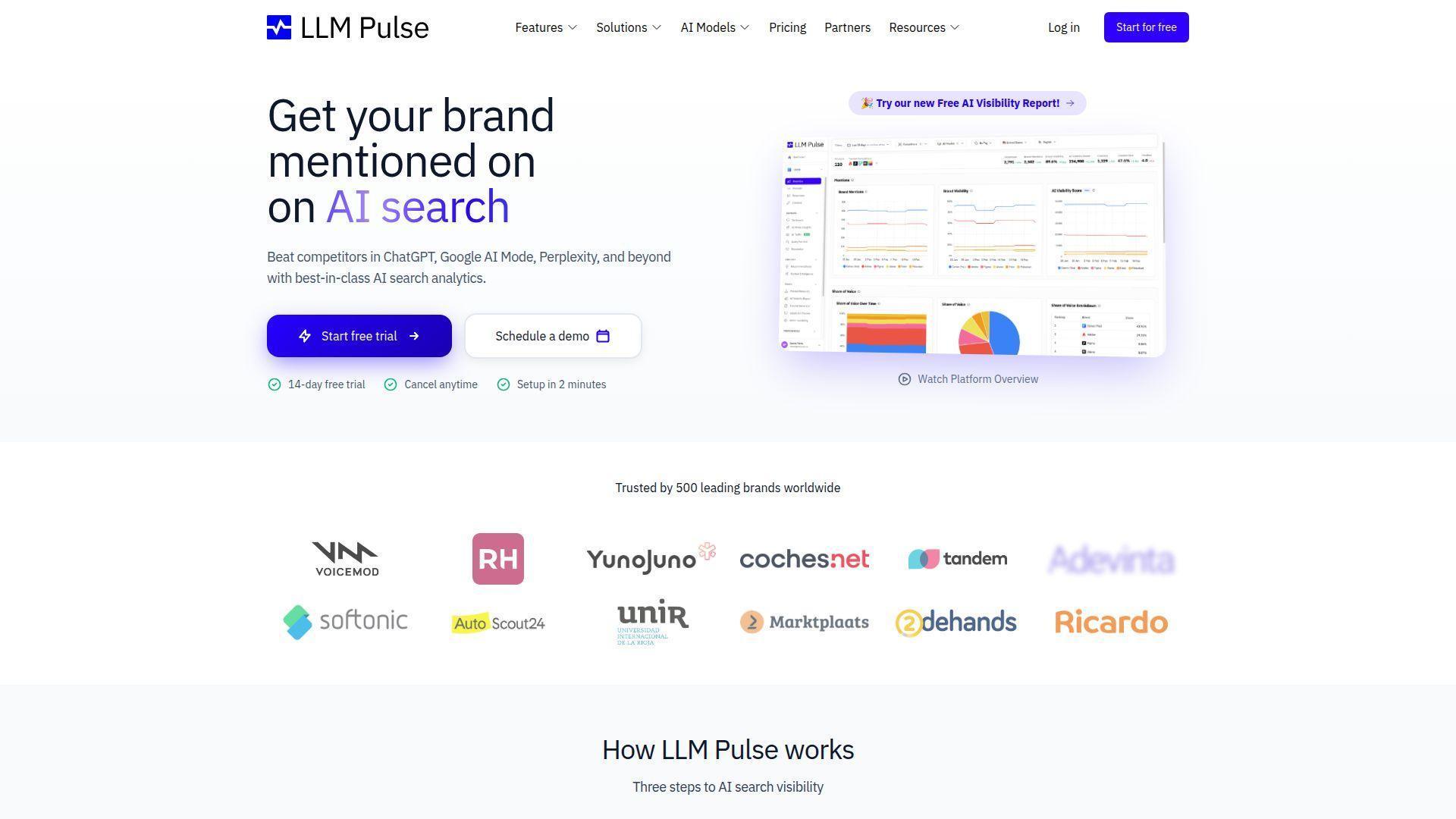
The platform works by executing your prompts across all supported AI models on your selected cadence, then parsing every response for brand mentions, website citations, and sentiment. Results are aggregated into share-of-voice metrics, competitive benchmarks, and trend lines that let you see exactly how your AI visibility is evolving over time.
Why LLM Pulse stands out
LLM Pulse covers five standard AI models including Google AI Mode, with self-serve pricing starting at €49/month. Most competitors either charge significantly more for comparable coverage or require expensive add-ons to unlock AI Mode tracking. The platform also includes unlimited team seats, which makes it practical for agencies and larger marketing teams without per-user pricing surprises.
Sentiment analysis is available in LLM Pulse. Rather than just detecting whether your brand is mentioned, LLM Pulse evaluates the context around each mention to classify it as positive, negative, or neutral. This lets you catch reputation issues in AI responses before they become widespread.
For agencies, LLM Pulse offers white-label reporting and a Looker Studio connector, making it straightforward to embed AI visibility data into client dashboards without manual exports. The REST API and MCP server integration also make it easy to pipe data into custom workflows.
Key features
- Tracks Google AI Mode, ChatGPT, Perplexity, Gemini, and AI Overviews as the five standard models
- Brand mention detection with positive/negative/neutral sentiment analysis
- Citation tracking with domain-level aggregation across all AI models
- Competitive share-of-voice benchmarking (top competitors + “Others” breakdown)
- Automated prompt execution with full response archiving
- Unlimited team seats
- White-label dashboards and Looker Studio integration for agencies
- REST API and MCP access through OAuth
- Multi-language and multi-locale prompt tracking
- ChatGPT Shopping & ChatGPT Entities: track shopping visibility and entity-level brand framing
- GEO Testing: test content changes and measure AI-visibility lift before rolling them out
- Reputation monitoring: track how AI models describe your brand over time
- GEO Writer & Recommendations: actionable guidance on which pages AI models cite and what to change
- Models Comparison: side-by-side view of how your brand is framed across ChatGPT, Gemini, Perplexity, and Google AI
- Web Analytics integration: connect GA4 or Plausible to link AI visibility to traffic and conversions
- Chrome Extension (Query Detector): captures web-search queries exposed in ChatGPT responses
- MCP & CLI: connect LLM Pulse to compatible AI clients and command-line workflows
- Annotations & tags: mark launches/campaigns on the timeline and keep prompt sets organised
Watch-outs
- Daily or weekly tracking
- No built-in traditional SERP rank tracking (it is a dedicated AI search platform covering tracking, analysis and GEO optimization, not a classic SEO suite, so you may still need a separate rank tracker)
- Prompt limits vary by plan, so high-volume users should evaluate the Scale or Enterprise tiers
Pricing
LLM Pulse starts at €49/month for the Starter plan, which includes Google AI Mode and the other four standard AI models. The Growth plan at €99/month adds more prompts, competitors, and projects. The Scale plan at €299/month adds higher limits and more projects, while white-label reporting is arranged separately for agencies and enterprises. LLM Pulse includes unlimited seats.
Best for: Marketing teams, SEO professionals, and agencies that want comprehensive AI visibility tracking across all major AI models at an accessible price. If you are looking for a single platform to monitor Google AI Mode alongside ChatGPT, Perplexity, and Gemini without enterprise-level pricing, LLM Pulse is the strongest option available.
2. SE Ranking / SE Visible, best all-in-one SEO + GEO stack
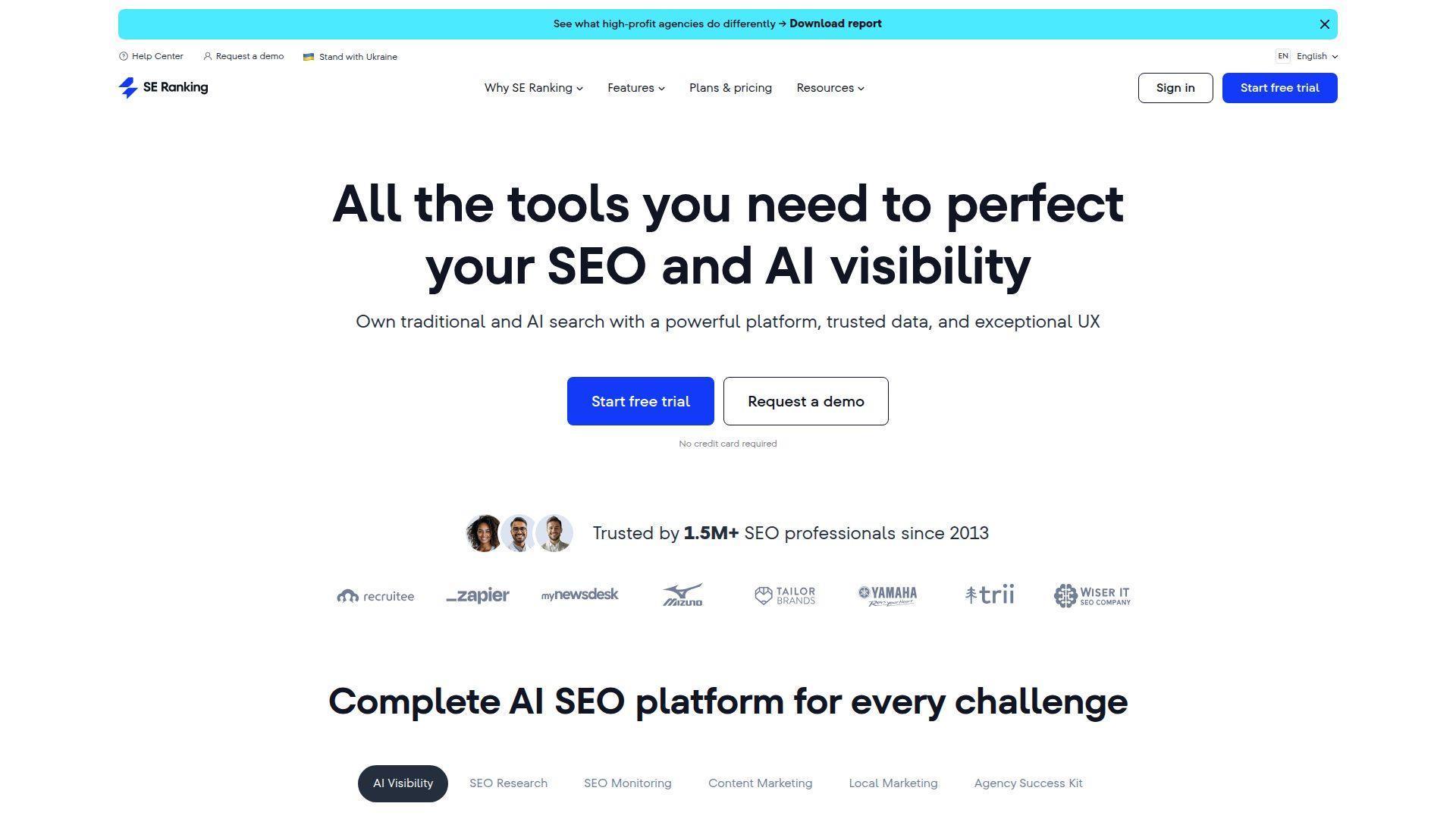
SE Ranking has been a well-regarded SEO platform for years, and its SE Visible module adds AI visibility tracking to an already comprehensive toolkit. The appeal is consolidation: you get traditional rank tracking, site audit, backlink monitoring, and AI Mode tracking under one subscription.
Why SE Ranking stands out
If you already use SE Ranking for SEO, adding AI Mode tracking means no new vendor, no new login, and data that lives alongside your existing keyword and ranking data. The SE Visible module tracks mentions across multiple AI models and maps them back to your keyword strategy.
Key features
- Combined traditional SERP tracking + AI visibility monitoring
- Tracks Google AI Mode, ChatGPT, Perplexity, Gemini, and Google AI Overviews through the AI Search add-on
- AI mention and citation tracking integrated with keyword clusters
- Competitive analysis with share-of-voice across both traditional and AI search
- Site audit and backlink monitoring in the same platform
- White-label reporting available on higher plans
Watch-outs
- AI Search is priced as a separate add-on; SE Visible is also available as a standalone product
- The AI tracking features are newer and less mature than the core SEO tools
- Pricing can escalate quickly when you add modules and increase keyword limits
Pricing
SE Ranking Core starts at $129/month. The AI Search add-on costs $89/month for 200 checks, $179 for 450, or $345 for 1,000 on monthly billing. SE Visible is also sold separately.
Best for: Teams that want one platform for both traditional SEO and AI visibility tracking without managing multiple subscriptions.
3. AIclicks, best for prompt-level visibility audits
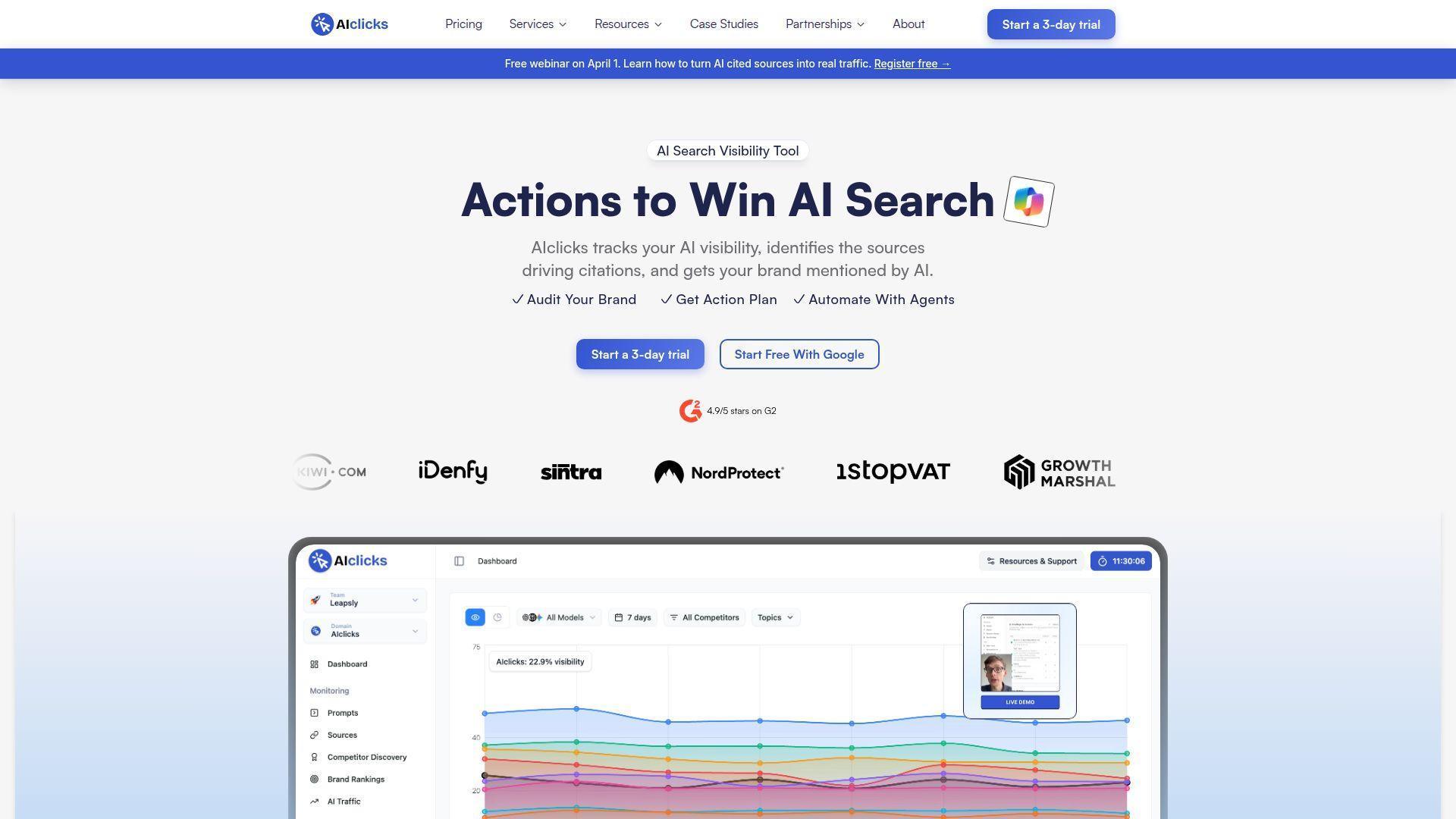
AIclicks focuses on giving marketers granular, prompt-by-prompt insights into how AI models respond to specific queries. Rather than just tracking aggregate metrics, it excels at showing you exactly what each AI model says in response to each prompt, making it ideal for deep-dive audits.
Why AIclicks stands out
The prompt-level detail in AIclicks is exceptional. You can see the full AI response for every prompt, compare how different models answer the same question, and track how responses change over time. This makes it particularly useful for content strategists who need to understand the specific language and framing AI models use when discussing their industry.
Key features
- Detailed prompt-level response analysis across Google AI Mode, ChatGPT, Perplexity, and Gemini
- Side-by-side model comparison for identical prompts
- On-demand prompt execution for real-time audits
- Brand mention and citation tracking at the individual response level
- Response change tracking over time
- Export capabilities for sharing audit results
Watch-outs
- Less focus on aggregate metrics and dashboards compared to competitors
- On-demand execution model means you manage the tracking schedule manually
- Smaller model coverage compared to other platforms
Pricing
Plans start at $49/month. Higher tiers increase the number of prompts and concurrent audits available.
Best for: Content strategists and SEO consultants who need detailed, prompt-level audits of how AI models represent specific topics and brands.
4. Rankability, for AI and traditional search tracking
Rankability combines AI brand mentions, citations, recommendations, and sentiment with traditional search rankings, local results, and video visibility.
Why Rankability stands out
Its Search Performance Index summarizes visibility across AI platforms and traditional search. Teams can use the underlying mentions, citations, sentiment, and ranking data to understand changes in that score.
Key features
- AI mentions, citations, recommendations, and sentiment tracking
- Tracks Google AI Mode, ChatGPT, Perplexity, Gemini, and Claude
- Traditional rankings, local results, and video visibility alongside AI tracking
- Brand mention and citation tracking
- Daily tracking with one-time benchmark scans available
- Competitor benchmarking by Search Performance Index and platform coverage
Watch-outs
- Model coverage varies by plan, so check the engines your clients need
- Review the underlying metrics as well as the combined Search Performance Index
- Confirm workspace and prompt allowances for your client portfolio
Pricing
Core is $199/month with 125 daily prompts across ChatGPT, Google AI Mode, Claude, Google AI Overviews, and Perplexity, plus 3 projects, unlimited seats, API access, and hosted MCP.
Best for: Teams that want AI visibility, traditional rankings, local results, and video search data in the same reporting workflow.
5. Scrunch AI, best enterprise alternative
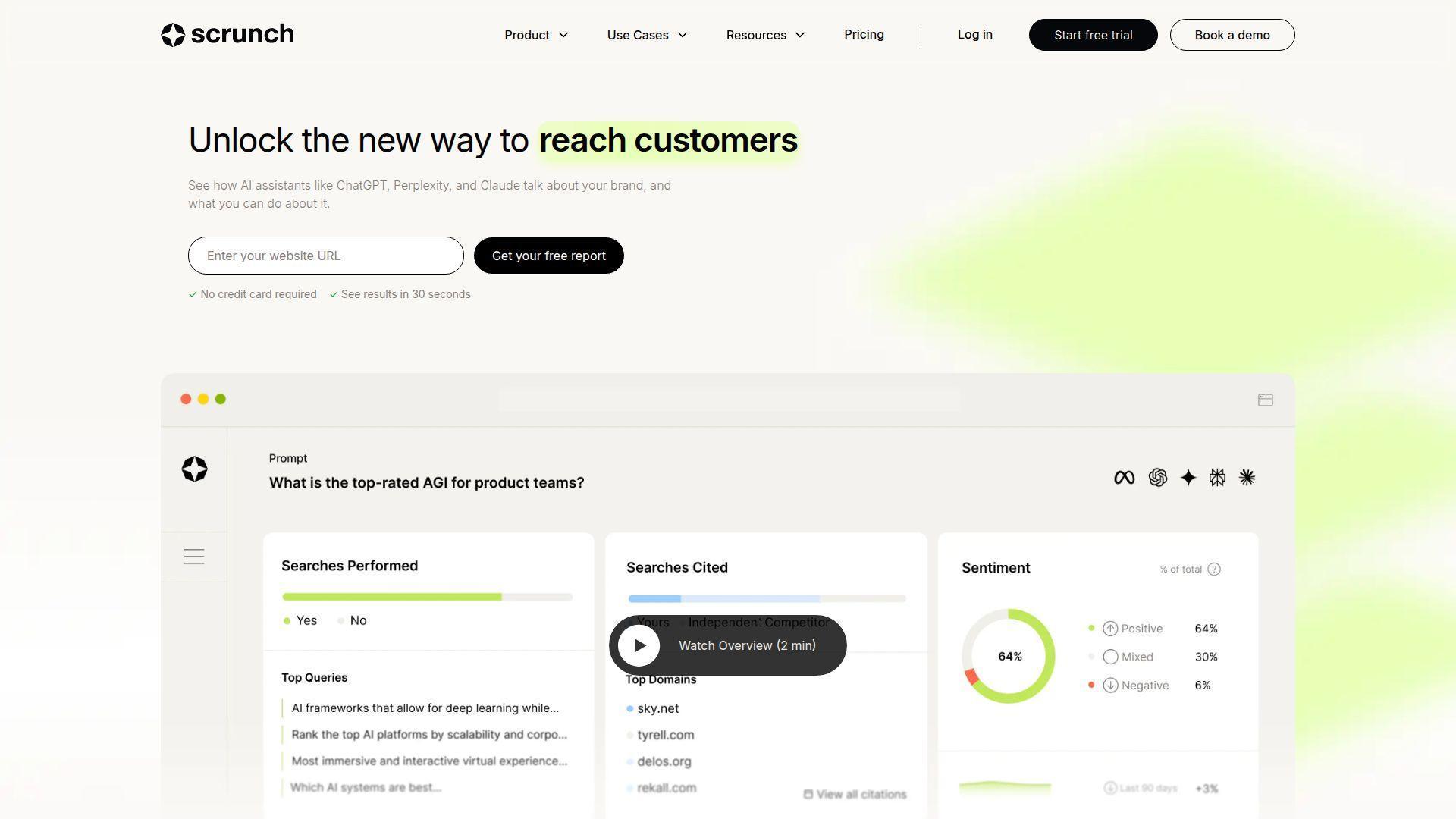
Scrunch AI positions itself as an “Agent Experience Platform” for enterprises that need reliable AI visibility tracking with enterprise-grade security and compliance. It is SOC 2 certified and designed for organizations that require strict data handling protocols alongside their AI monitoring.
Why Scrunch AI stands out
The enterprise focus is genuine. Scrunch AI offers dedicated account management, custom integrations, SSO support, and compliance documentation that larger organizations need. Its AI Mode tracking is embedded within a broader framework for managing how AI agents interact with and represent your brand.
Key features
- SOC 2 certified with enterprise security controls
- Core tracks ChatGPT, Perplexity, Google AI Overviews, and Copilot
- Enterprise expands coverage to up to nine LLMs, including Google AI Mode, Gemini, Claude, Meta AI, and Grok
- Full query fan-out is available on Enterprise
- Daily refresh cadence for time-sensitive monitoring
- Agent Experience Platform framework for managing AI brand interactions
- API access and integrations on Enterprise
- Dedicated account management and onboarding on Enterprise
- SAML and OIDC SSO on Enterprise
Watch-outs
- Core costs $250/month for 125 prompts, four LLMs, and five seats
- The “Agent Experience” framing adds complexity that smaller teams may not need
- Overkill for companies that just want straightforward AI visibility tracking
Pricing
Core costs $250/month for 125 prompts, four LLMs, and five seats, with a seven-day trial. Enterprise pricing is custom and expands coverage to up to nine LLMs with full query fan-out.
Best for: Enterprise organizations in regulated industries that need SOC 2 compliance, dedicated support, and robust security alongside their AI visibility monitoring.
Would you like to explore some alternatives to Scrunch AI? Take a look at this guide.
6. Semrush, best for existing Semrush users
Semrush needs no introduction in the SEO world. Its AI Toolkit add-on brings AI visibility tracking to the platform’s massive existing user base. If you already run your SEO operations through Semrush, the AI Toolkit keeps your AI Mode data in the same ecosystem.
Why Semrush stands out
The integration with Semrush’s existing keyword research, competitive analysis, and reporting infrastructure is the key advantage. AI visibility data sits alongside organic rankings, backlink profiles, and content gap analysis, giving you a unified view of search visibility across traditional and AI channels.
Key features
- AI Mode tracking integrated with Semrush’s SEO platform
- Tracks Google AI Mode, ChatGPT, Perplexity, and Gemini
- AI mention data linked to keyword research and competitive intelligence
- Share-of-voice metrics across AI models
- Reporting that combines traditional SEO and AI visibility metrics
- Familiar Semrush interface and workflow
Watch-outs
- The AI Visibility Toolkit costs $99/month per domain and is available as a standalone toolkit
- AI tracking features are less deep than purpose-built AI visibility tools
- Sentiment analysis capabilities are more limited compared to dedicated platforms
- AI Toolkit is still evolving and receives updates less frequently than core Semrush features
Pricing
The AI Visibility Toolkit is $99/month per domain. Semrush says it does not include a free trial.
Best for: Teams already invested in the Semrush ecosystem that want to add AI visibility tracking without switching to a separate platform.
7. Ahrefs, best for backlink + AI Mode combo
Ahrefs is renowned for its backlink index, and it has expanded into AI visibility tracking to offer users a combined view of link authority and AI mention data. The logic is compelling: backlinks influence which sources AI models trust, and Ahrefs can now show that connection.
Why Ahrefs stands out
The unique value is seeing how your backlink profile correlates with AI visibility. Ahrefs can show which pages with strong link profiles are being cited by AI Mode, helping you understand the relationship between traditional authority signals and AI source selection.
Key features
- AI Mode tracking alongside the industry-leading backlink index
- Tracks Google AI Mode, ChatGPT, and Perplexity
- Citation tracking mapped to domain authority and backlink data
- Content Explorer integration for finding AI-cited content
- Competitive analysis combining backlink and AI mention data
- Weekly tracking cadence
Watch-outs
- AI tracking features are newer and less comprehensive than the core backlink tools
- Fewer AI models tracked compared to dedicated AI visibility platforms
- No sentiment analysis for AI mentions
- Starting price of $129/month reflects the broader Ahrefs platform, not just AI tracking
Pricing
Plans start at $129/month (Lite plan). AI tracking features are included in Standard plans and above.
Best for: SEO teams that rely on Ahrefs for backlink analysis and want to add AI Mode tracking without leaving the platform.
8. Profound, best for enterprise compliance
Profound targets enterprise organizations in regulated industries (healthcare, finance, legal) that need AI visibility tracking with strict compliance certifications. It holds both SOC 2 and HIPAA certifications, making it one of the few platforms suitable for highly regulated environments.
Why Profound stands out
For organizations where data handling compliance is non-negotiable, Profound offers certifications that most AI visibility tools simply do not have. It combines daily AI Mode tracking with audit trails, data residency options, and compliance documentation that security teams require.
Key features
- SOC 2 and HIPAA certified
- Tracks Google AI Mode, ChatGPT, Perplexity, Gemini, and Claude
- Daily refresh cadence
- Full audit trails for all data access and changes
- Data residency options (US, EU)
- Role-based access controls with SSO integration
- Dedicated compliance documentation and support
Watch-outs
- Starter is $99/month for ChatGPT, with broader coverage on higher tiers
- The compliance overhead adds complexity to setup and onboarding
- Feature set for AI tracking is solid but not cutting-edge compared to more agile competitors
Pricing
Starter is $99/month for ChatGPT, Growth is $399/month for three engines, and Enterprise pricing is custom.
Best for: Enterprises in healthcare, finance, and other regulated industries that need HIPAA and SOC 2 certified AI visibility tracking.
9. Nightwatch, best for precision SEO + AI Mode connection
Nightwatch has built a reputation for highly accurate, granular rank tracking with deep segmentation capabilities. Its AI Mode tracking extends this precision-first approach to AI visibility, offering detailed data with strong filtering and segmentation options.
Why Nightwatch stands out
Nightwatch’s strength is data granularity. You can segment AI visibility data by location, device, language, and custom tags, then drill down into specific prompt categories. This makes it effective for teams that need to understand AI visibility across many market segments.
Key features
- Precise AI Mode tracking with advanced segmentation
- Tracks Google AI Mode, ChatGPT, and Perplexity
- Location-level and language-level AI visibility data
- Daily refresh cadence
- Integration with traditional rank tracking data
- Custom tagging and filtering for prompt organization
- Visual dashboards with trend analysis
Watch-outs
- Fewer AI models tracked compared to broader platforms
- No dedicated sentiment analysis for AI mentions
- Interface has a learning curve for users accustomed to simpler tools
Pricing
Plans start at $39/month. AI Mode tracking is included in Optimize plans and above.
Best for: SEO specialists who value data precision and need granular segmentation of AI visibility data across locations and languages.
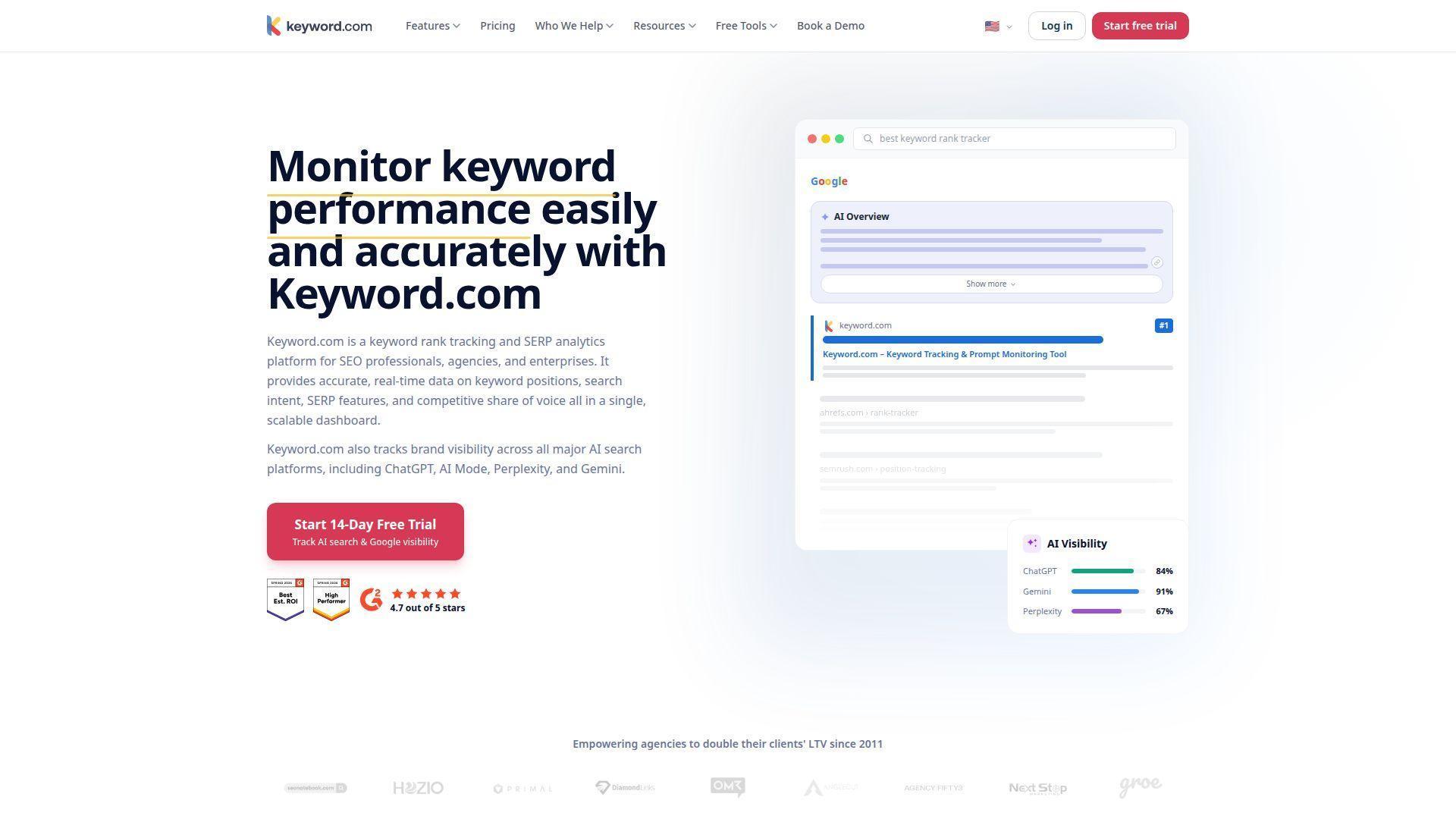
10. Keyword.com, best for accuracy verification
Keyword.com stands out with its proprietary Spyglass Verification system, which claims 96.86% accuracy in AI visibility tracking. In a category where data reliability is a common concern, Keyword.com leans into transparency about its methodology and accuracy rates.
Why Keyword.com stands out
The Spyglass Verification system cross-checks AI visibility data against multiple sources to validate accuracy. This addresses a real pain point: many teams worry about whether their AI tracking data is reliable. Keyword.com publishes its accuracy metrics openly, which builds confidence in the data.
Key features
- 96.86% Spyglass Verification accuracy for AI visibility data
- Tracks Google AI Mode, ChatGPT, Perplexity, and Gemini
- Daily refresh cadence with on-demand checks available
- Transparent accuracy methodology and reporting
- Integration with traditional keyword rank tracking
- API access for custom data pipelines
Watch-outs
- Accuracy verification adds processing time to data delivery
- Feature set beyond tracking is thinner than all-in-one platforms
- Premium pricing for what is primarily a tracking tool
Pricing
Plans start at $69/month. Higher tiers increase keyword and prompt limits.
Best for: Teams that prioritize data accuracy above all else and want verifiable confidence in their AI visibility metrics.
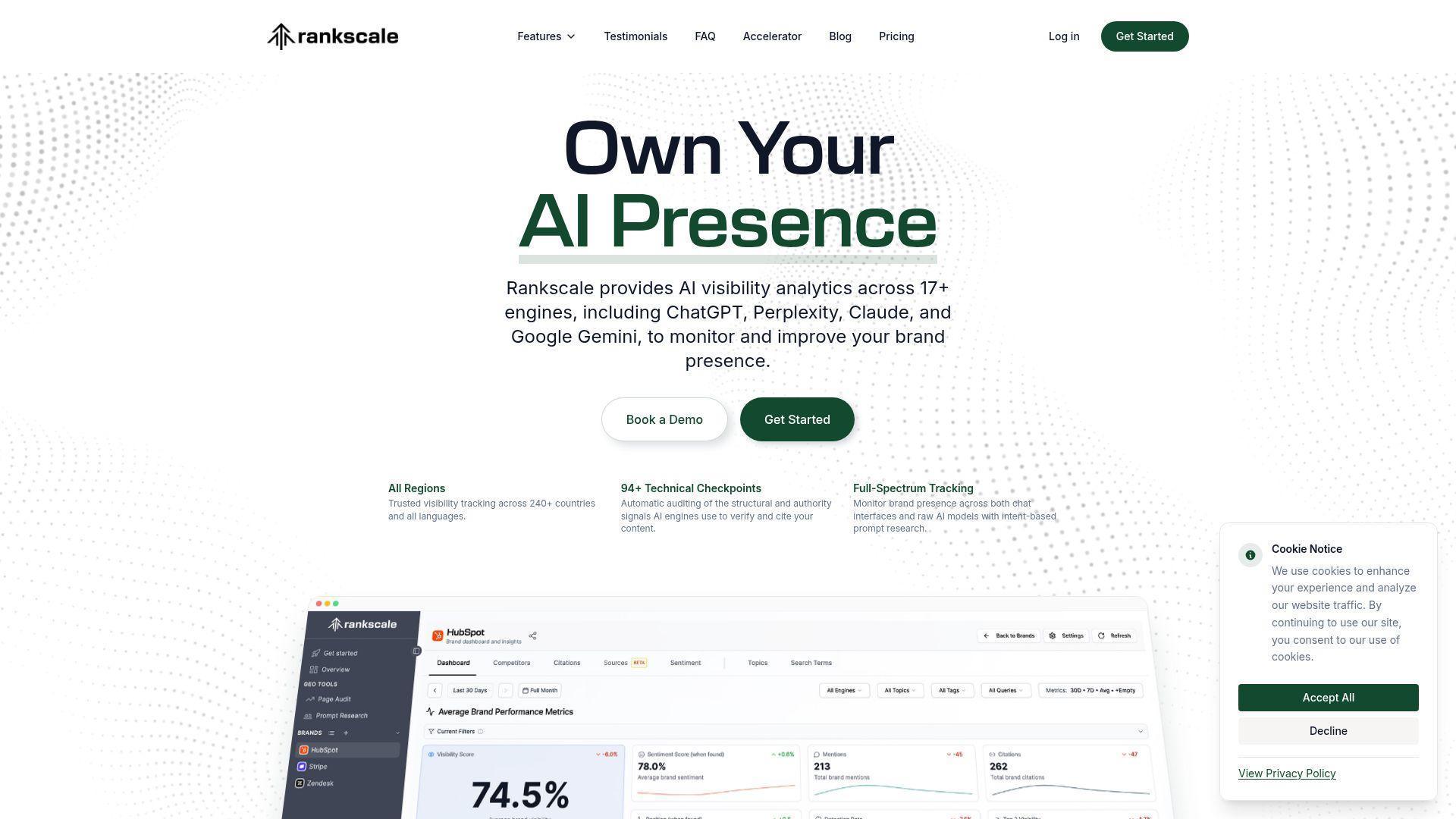
11. Rankscale AI, best for broad model coverage at budget price
Rankscale AI offers tracking across a wide array of AI models at a price point that undercuts most competitors. It aims to be the value leader in the AI visibility space, providing broad model coverage without requiring a large budget.
Why Rankscale AI stands out
At €20/month, Rankscale AI tracks more AI models than many tools that cost three or four times as much. It covers Google AI Mode, ChatGPT, Perplexity, Gemini, Claude, Copilot, and several additional models, making it attractive for teams that want maximum model coverage on a budget.
Key features
- Broad AI model coverage including Google AI Mode, ChatGPT, Perplexity, Gemini, Claude, Copilot, and more
- Budget-friendly starting price
- Brand mention and citation tracking across all supported models
- Competitive benchmarking
- Weekly automated tracking
- Basic sentiment indicators
Watch-outs
- Analytics depth is shallower than more expensive tools
- Reporting and visualization options are limited
- Lower prompt limits on the base plan
- Support response times can be slower on lower tiers
Pricing
Plans start at €20/month, with 17+ engines and configurable schedules.
Best for: Startups and small teams that need broad AI model coverage without a significant monthly investment.
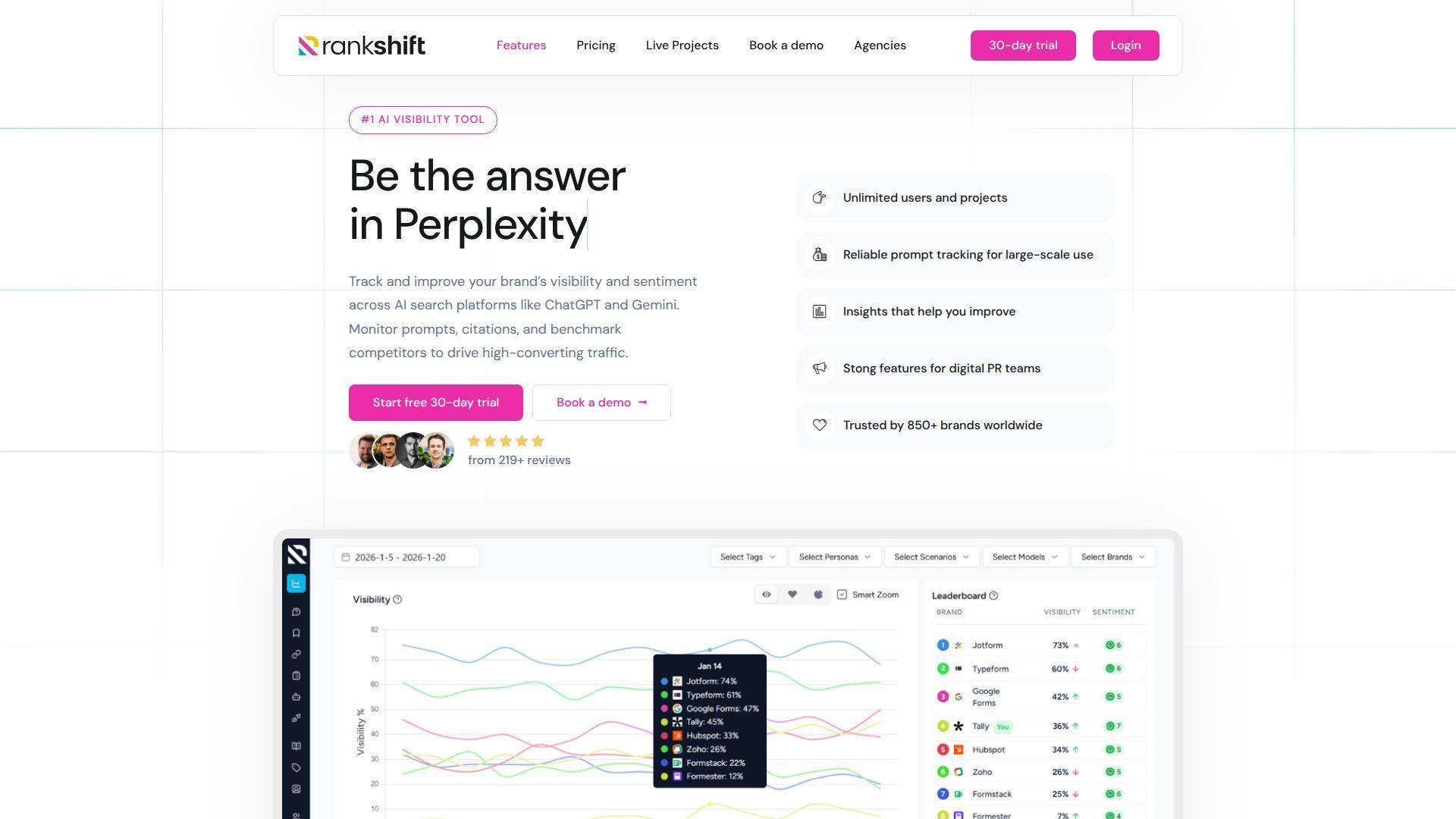
12. Rankshift, best for competitive displacement tracking
Rankshift focuses specifically on tracking how brands displace each other in AI responses over time. While most tools show you where you stand, Rankshift is built to show you the dynamics: who is gaining ground, who is losing it, and which prompts are shifting.
Why Rankshift stands out
The displacement-focused analytics highlight when a competitor starts appearing in responses where you previously held mentions (and vice versa). This “competitive movement” view is valuable for brands in crowded markets where AI visibility is actively being contested.
Key features
- Competitive displacement tracking with gain/loss metrics
- Tracks Google AI Mode, ChatGPT, Perplexity, and Gemini
- Timeline view showing when and where brand positions shifted
- Alert system for significant competitive movements
- Prompt-level displacement analysis
- Weekly tracking cadence
Watch-outs
- Narrower feature set focused primarily on competitive displacement
- Less useful for brands without well-defined competitors to track
- Citation and sentiment analysis are secondary to the displacement features
Pricing
Plans start at $59/month. Higher tiers add more competitors and prompts.
Best for: Brands in competitive markets that need to track how AI visibility shifts between them and their direct competitors over time.
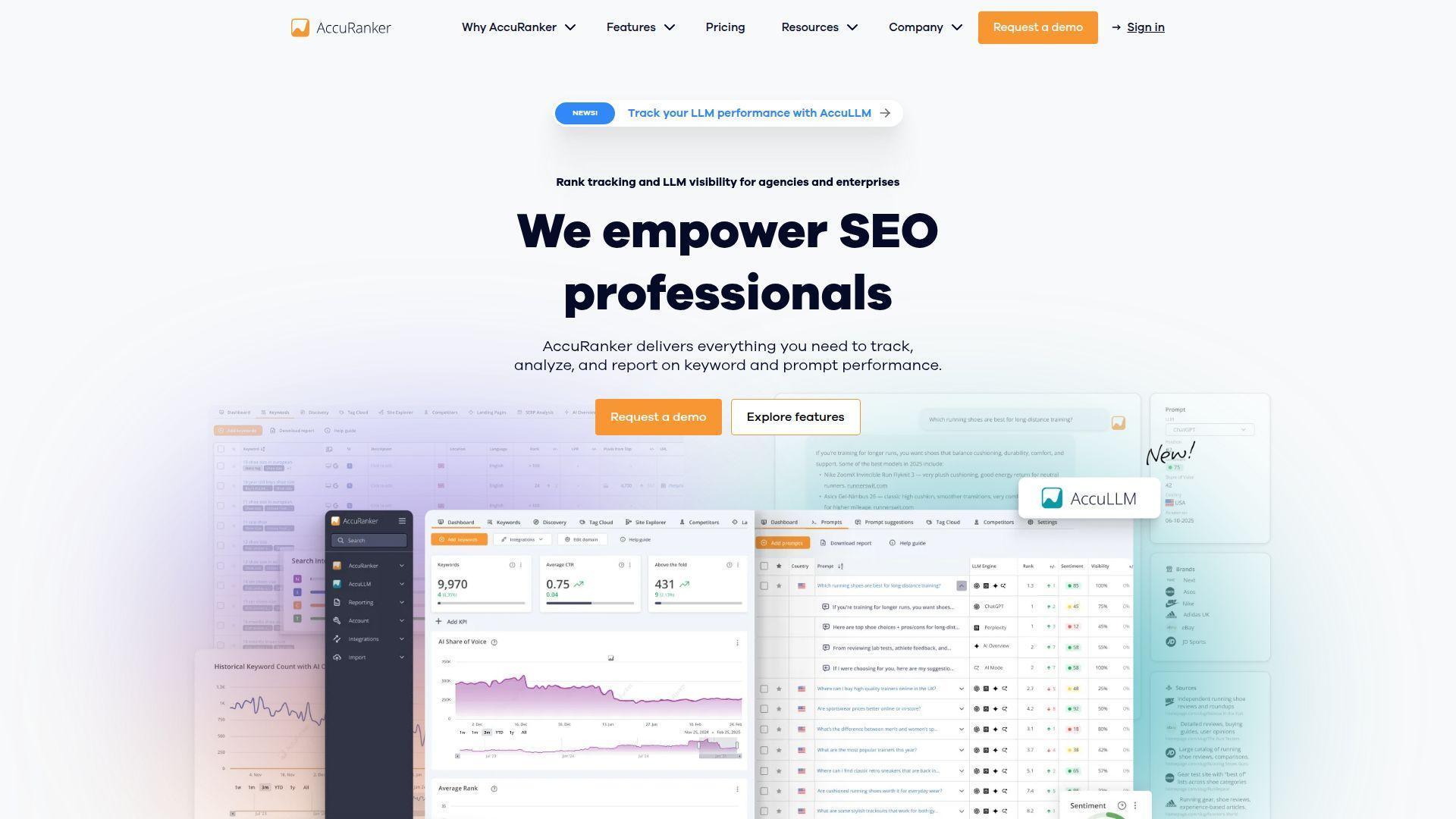
13. AccuRanker, best for agencies with high-volume tracking
AccuRanker is built for speed and scale. It is designed for agencies and in-house teams that manage thousands of keywords and need AI Mode tracking that can keep up with high-volume demands. Its on-demand refresh capability means you do not have to wait for scheduled updates.
Why AccuRanker stands out
The platform handles massive keyword volumes efficiently and its on-demand refresh lets you check AI Mode visibility for any prompt whenever you need it. For agencies managing dozens of clients, this flexibility is critical.
Key features
- High-volume AI Mode tracking optimized for agencies
- Tracks Google AI Mode, ChatGPT, and AI Overviews
- On-demand refresh for any prompt or keyword
- Multi-client management with segregated reporting
- API for automated data extraction
- Integration with Google Analytics and Data Studio
- White-label reporting options
Watch-outs
- Fewer AI models tracked than specialized AI visibility platforms
- Sentiment analysis is not available
- Starting price reflects the high-volume focus; smaller teams may find it expensive for their needs
Pricing
Plans start at $224/month for 2,000 keywords (Professional plan). Pricing scales with keyword volume.
Best for: Agencies and large in-house teams that need to track AI Mode visibility at scale across many clients or brands.
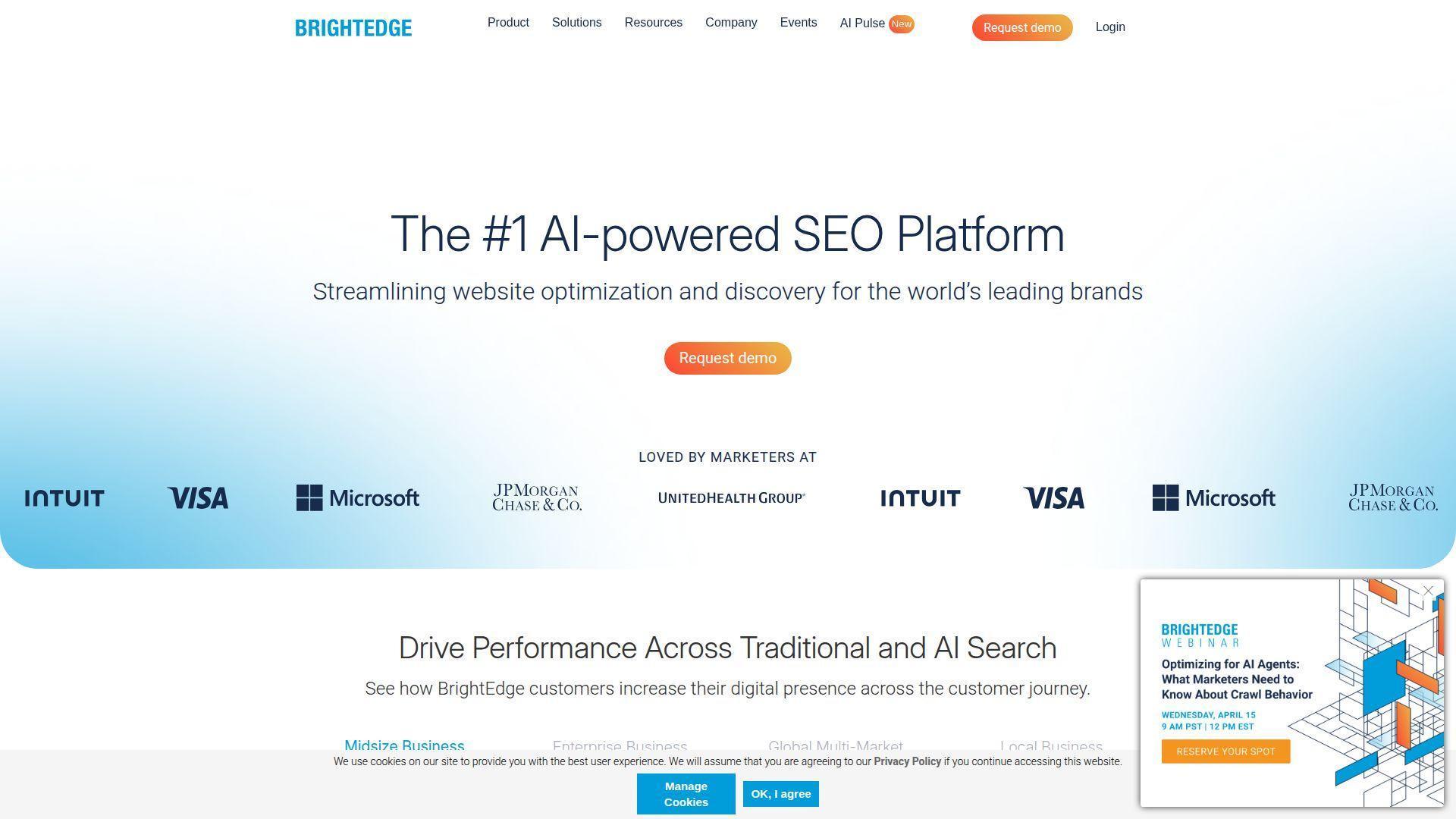
14. BrightEdge, best for enterprise SEO teams
BrightEdge is one of the most established enterprise SEO platforms, and its AI visibility features are integrated into its broader ContentIQ and Data Cube infrastructure. For enterprise SEO teams already using BrightEdge, AI Mode tracking is a natural extension.
Why BrightEdge stands out
BrightEdge integrates AI Mode tracking into enterprise-grade SEO infrastructure with features like automated recommendations, content performance tracking, and executive reporting. The AI data is contextualized within the broader SEO performance picture that enterprise teams rely on.
Key features
- AI Mode tracking integrated with enterprise SEO platform
- Tracks Google AI Mode, ChatGPT, Perplexity, and Gemini
- Automated optimization recommendations based on AI visibility data
- Executive-level reporting and dashboards
- Content performance analysis across traditional and AI search
- Dedicated customer success management
Watch-outs
- Custom pricing means no transparent starting price (typically $3,000+/month for the full platform)
- Long implementation timelines (weeks to months)
- Overkill for small to mid-size teams
- AI tracking features are one module among many, not the core focus
Pricing
Custom pricing based on requirements. Contact BrightEdge for a quote. Annual contracts are standard.
Best for: Large enterprise SEO teams already using or evaluating BrightEdge that want AI Mode tracking within their existing platform.
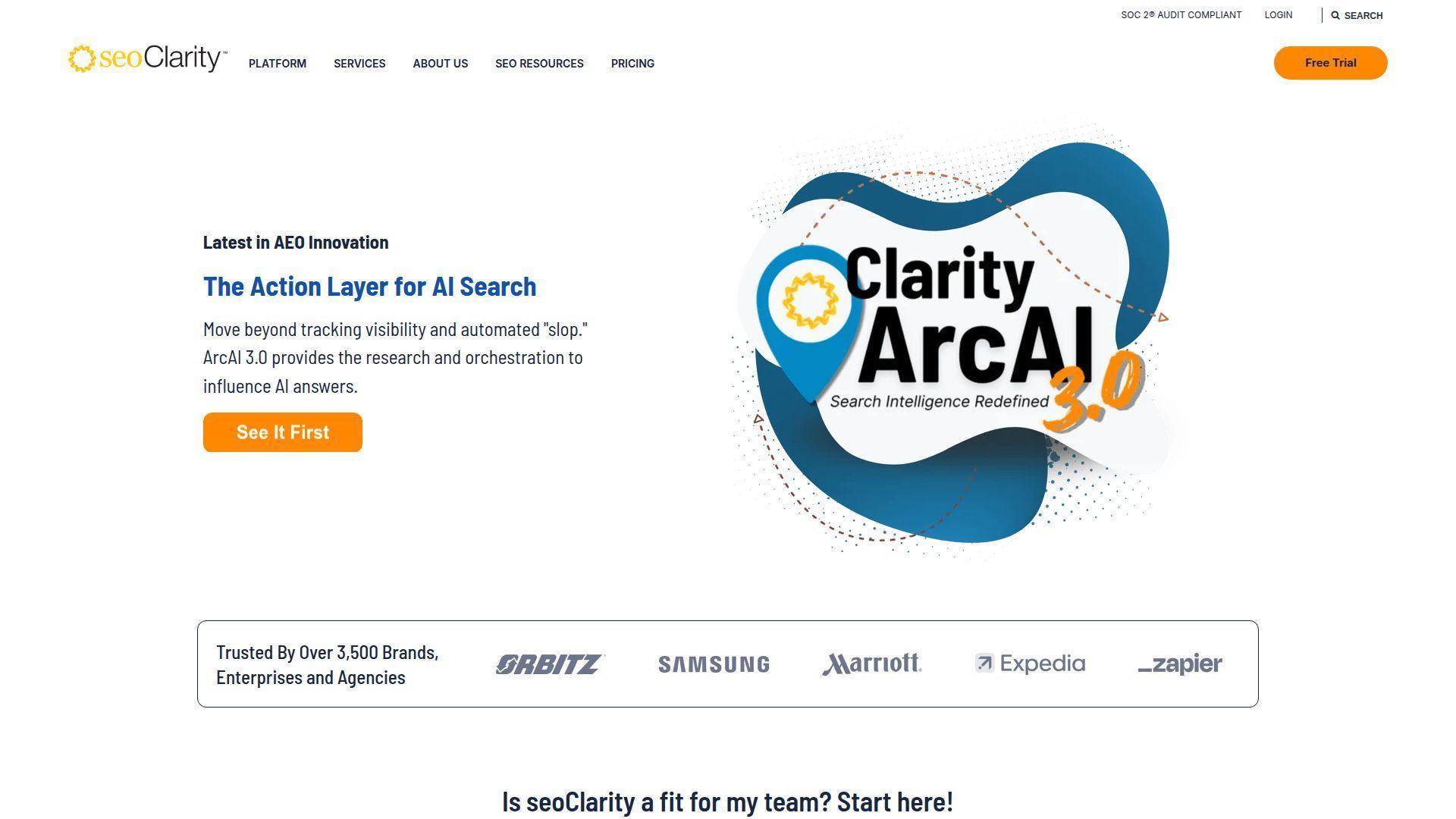
15. seoClarity, best for large-scale SEO operations
seoClarity is another enterprise SEO platform that has added AI visibility tracking to its feature set. Its strengths lie in handling large-scale data sets and providing the infrastructure that big SEO operations need.
Why seoClarity stands out
seoClarity excels at managing massive amounts of SEO data, and its AI Mode tracking benefits from the same infrastructure. If you are tracking tens of thousands of keywords across multiple domains, seoClarity can handle the scale while adding AI visibility data to the mix.
Key features
- Large-scale AI Mode tracking within enterprise SEO infrastructure
- Tracks Google AI Mode, ChatGPT, Perplexity, and Gemini
- Unlimited keyword tracking on enterprise plans
- AI-powered content recommendations (Clarity Grid)
- Custom dashboards and reporting
- API access for data integration
Watch-outs
- Custom pricing with annual contracts (typically $3,000+/month)
- Significant implementation time required
- AI tracking is a secondary feature, not the primary focus
- Not cost-effective for smaller operations
Pricing
Custom pricing based on scale and requirements. Annual contracts are standard.
Best for: Large SEO teams managing substantial keyword portfolios that want AI Mode visibility data within their existing seoClarity infrastructure.
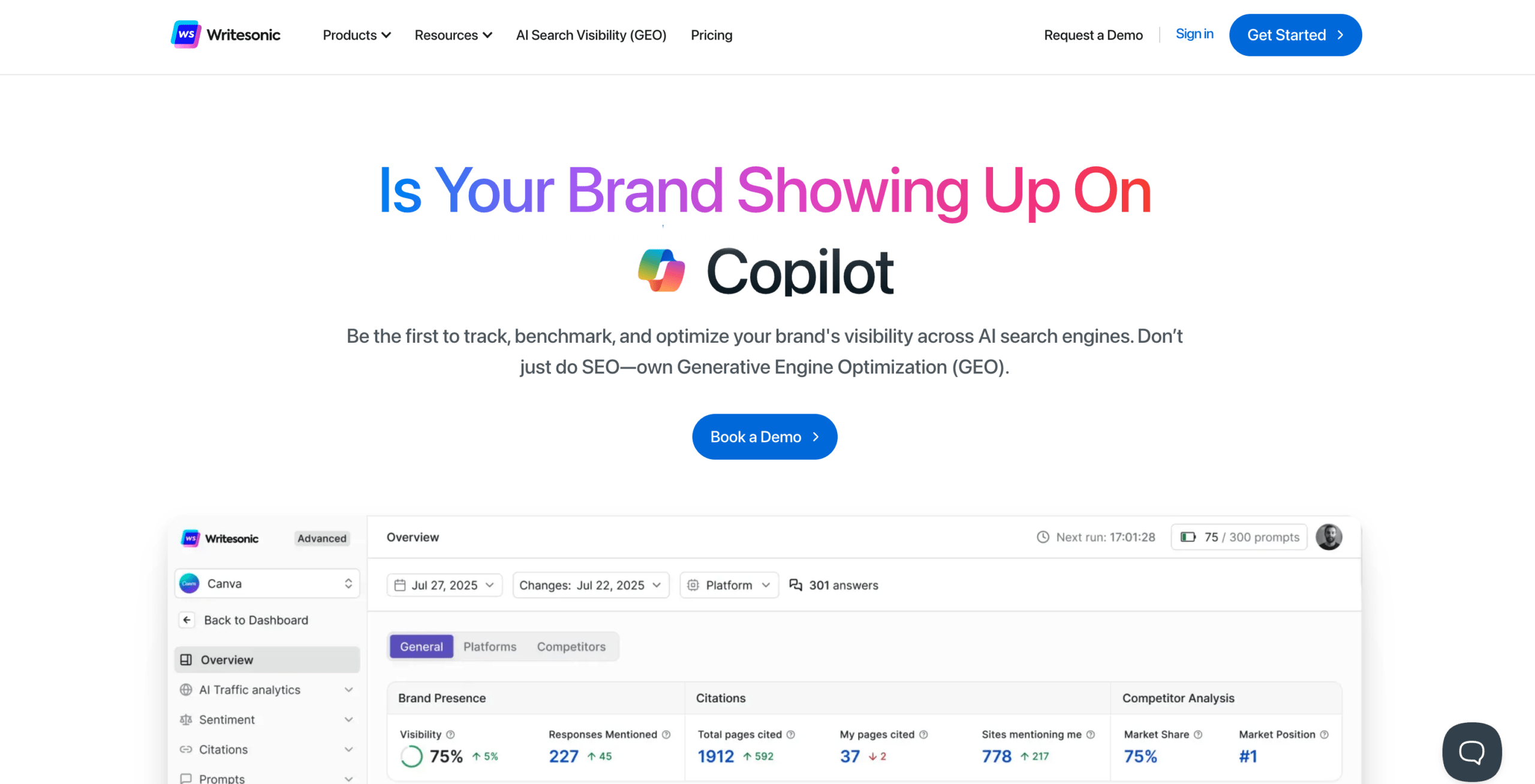
16. Writesonic GEO, best for content optimization + tracking combo
Writesonic GEO takes a different approach by combining AI visibility tracking with AI-powered content optimization. Instead of just showing you where you are not visible, it actively suggests content changes to improve your presence in AI responses.
Why Writesonic GEO stands out
The dual tracking-and-optimization approach is unique. After identifying which prompts lack brand visibility, Writesonic GEO can generate content recommendations and even draft optimized content designed to improve your chances of appearing in AI responses. It closes the gap between “knowing the problem” and “fixing the problem.”
Key features
- Combined AI visibility tracking and content optimization
- Tracks Google AI Mode, ChatGPT, Perplexity, and Gemini
- AI-generated content recommendations for improving visibility
- On-demand prompt testing with optimization suggestions
- Content scoring based on AI visibility potential
- Integration with Writesonic’s content generation tools
Watch-outs
- Content optimization suggestions are AI-generated and require human review
- Tracking depth is shallower than tools focused purely on monitoring
- The dual focus means neither tracking nor optimization is as deep as specialized tools
Pricing
Plans start at $49/month. Higher tiers include more optimization credits and tracking capacity.
Best for: Content teams that want both visibility tracking and actionable content optimization recommendations in one tool.
How to choose the right Google AI Mode tracker
With 16 options on the table, narrowing down to the right tool comes down to a few key decisions:
1. Do you need AI-only tracking or an all-in-one platform?
If you already have a rank tracker and SEO suite, a dedicated AI visibility tool like LLM Pulse, or Scrunch AI gives you deeper AI-specific analytics. If you want to consolidate, SE Ranking, Semrush, or Ahrefs bundle AI tracking with traditional SEO tools.
2. How many AI models do you need to track?
Google AI Mode is the focus of this guide, but most brands also want ChatGPT, Perplexity, and Gemini coverage. LLM Pulse, and Rankscale AI offer the broadest model coverage. Enterprise tools like Scrunch AI and Profound add Copilot and Claude.
3. What is your budget?
The range starts at paid self-serve plans and extends to custom enterprise pricing. For most teams, the sweet spot is between €49 and $99/month, where LLM Pulse and SE Ranking deliver strong value. Enterprise needs push toward Scrunch AI or Profound.
4. Do you need compliance certifications?
Regulated industries should look at Profound (SOC 2 + HIPAA) or Scrunch AI (SOC 2). Most other tools in this category do not carry these certifications.
5. How important is sentiment analysis?
If understanding the tone of AI mentions matters to your brand (and it should for most), LLM Pulse, and Scrunch AI offer the most developed sentiment analysis. Many tools either skip sentiment entirely or offer only basic positive/negative classification.
6. Do you need agency features?
Agencies should look for white-label reporting, multi-client management, and unlimited seats. LLM Pulse, AccuRanker, and SE Ranking all offer strong agency-oriented features.
Implementation checklist
Once you have chosen a tool, follow these steps to set up effective Google AI Mode tracking:
- Define your brand terms. List your brand name, product names, domain, common abbreviations, and misspellings that AI models might use.
- Identify your competitors. Select 5-10 direct competitors whose AI visibility you want to benchmark against.
- Build your prompt library. Create 20-50 prompts that reflect how your potential customers search. Include buying-intent queries (“best X for Y”), comparison queries (“X vs Y”), and informational queries (“how to choose X”).
- Configure language and location settings. If you operate in multiple markets, set up tracking for each relevant language and location combination.
- Set your tracking cadence. Weekly tracking shows longer-term trends, while daily tracking is useful when freshness matters.
- Establish baselines. Run your first tracking cycle and document your starting metrics: mention rate, citation rate, share of voice, and sentiment scores.
- Set up alerts. Configure notifications for significant changes: large drops in mention rate, new competitors appearing, or negative sentiment spikes.
- Connect to your reporting stack. Integrate AI visibility data with your existing analytics dashboards (Google Looker Studio, custom BI tools) for unified reporting.
- Schedule monthly reviews. AI visibility data is most valuable when reviewed regularly alongside content and SEO performance data. Set a monthly cadence for reviewing trends and adjusting strategy.
Summary
Google AI Mode is creating a new visibility layer that traditional SEO tools cannot adequately measure. The 16 tools reviewed here represent the current set of solutions for tracking brand presence in AI-generated search results.
LLM Pulse leads the category with the best combination of multi-model coverage, analytics depth, and accessible pricing at €49/month. It is the right choice for most teams that want comprehensive AI visibility tracking without enterprise-level budgets.
For teams that want all-in-one SEO platforms, SE Ranking and Semrush add AI Mode tracking to established SEO toolkits. For enterprise compliance needs, Profound and Scrunch AI offer the certifications and security that regulated industries require. And for teams just getting started, Rankscale AI provides an accessible entry point.
The key is to start tracking now. AI Mode visibility is becoming a meaningful part of brand discovery, and the brands that build data history early will have a significant advantage in understanding and optimizing their AI presence.
FAQ
What is Google AI Mode and how does it affect brand visibility?
Google AI Mode is Google’s conversational AI search experience that generates full, synthesized answers instead of traditional link-based results. When a user asks a question in AI Mode, Google’s AI compiles information from multiple sources and presents a narrative response. Brands mentioned or cited in these responses gain visibility, while brands absent from them miss out on a growing discovery channel.
Can I track Google AI Mode visibility manually?
You can test individual prompts by using Google AI Mode directly and checking whether your brand appears. However, manual tracking does not scale. AI responses vary by prompt, language, location, and time, which makes it impractical to monitor visibility consistently without automated tools. Tools like LLM Pulse automate this by executing prompts at scale and aggregating the results.
How often should I check my Google AI Mode visibility?
Weekly tracking shows longer-term trends, while daily tracking is useful when freshness matters, such as during product launches, PR crises, or competitive shifts.
What is the difference between AI Mode tracking and AI Overview tracking?
AI Overviews are the AI-generated summaries that appear at the top of standard Google search results. AI Mode is a separate, fully conversational search experience where users can ask follow-up questions and receive detailed AI-generated answers. Both are important to track, but AI Mode provides longer, more detailed responses where brand visibility is more nuanced. Some tools track both; LLM Pulse, for example, covers both AI Mode and AI Overviews.
Do I still need traditional rank tracking alongside AI Mode tracking?
Yes. Traditional search results and AI-generated results coexist. Many users still click through traditional results, and your organic ranking affects whether AI models cite your content as a source. The best approach is to track both traditional rankings and AI visibility to get a complete picture of your search presence.
How does sentiment analysis work in AI Mode tracking?
When an AI Mode tracker detects a brand mention, it analyzes the surrounding context to determine whether the mention is positive (“highly recommended,” “industry-leading”), negative (“known for reliability issues,” “limited features”), or neutral (“also available from”). This is typically done using a secondary AI model that evaluates the tone. Sentiment tracking helps you catch reputation issues in AI responses before they become entrenched.
What should I do if my brand is not appearing in Google AI Mode?
Start by analyzing which brands and sources do appear for your target prompts. Understand what content AI Mode is citing and where your competitors are being mentioned. Common strategies include improving your content’s topical authority, earning mentions on third-party sites that AI models trust, maintaining active presence on review platforms, and ensuring your website is technically accessible to AI crawlers. Consistent monitoring helps you measure whether these efforts translate into improved AI visibility over time.
Can AI Mode tracking tools guarantee improved visibility?
No. AI Mode tracking tools monitor and measure visibility; they do not directly control it. AI responses are generated by Google’s models based on complex factors including content quality, source authority, recency, and relevance. What tracking tools provide is the data you need to understand your current position, identify opportunities, and measure the impact of your optimization efforts.