



Last updated: August 30, 2026
Ten years ago a PR crisis lived on Twitter, in Google reviews, and across news sites. You watched the timeline, replied, got the story corrected, and moved on. In 2026 the timeline has a new layer. When a journalist, procurement team, investor, or candidate wants to know what your brand is really like, a growing share of them open ChatGPT or Perplexity and ask. Whatever those models say, with whatever tone they pick, is now part of your reputation. You do not get a notification when it happens.
Table of Contents
This guide compares the 12 best AI reputation management tools in 2026, honest about which cover AI search reputation, which cover classic social listening, and which pairs you actually need for full coverage. LLM Pulse is first because it is the platform we build, but we have stayed straight about where competitors genuinely earn their place.
What does AI reputation management actually mean in 2026?
Reputation used to be a defensive function. You watched mentions, replied to bad reviews, wrote a holding statement when a crisis broke. The discipline expanded into proactive territory, with sentiment dashboards and share of voice metrics, but the playing field stayed roughly the same: social platforms, review sites, news outlets, forums.
AI search has added a new surface that behaves differently. When a user asks ChatGPT “is [your brand] reliable”, the model does not just retrieve a single review. It composes a paragraph, blending quotes, inferences, training data, and live retrievals into a narrative that reads like a verdict. That verdict gets shipped at scale across millions of conversations a day. The user almost never sees the underlying sources. They see the answer.
AI reputation management in 2026 means three things at once. First, knowing what AI engines actually say about your brand, your CEO, your products, and your category. Second, scoring the tone of those answers so you can tell when sentiment shifts before it spreads. Third, having the data to act on it: which prompts trigger negative answers, which sources the model is leaning on, which competitors are framed more favourably, and which locales swing differently.
A complete reputation programme covers both worlds. The social and news side has not gone away: reviews still drive purchase decisions, news cycles still set the agenda, and crises still spread on social before they reach AI training data. But ignoring the AI layer means flying blind on the surface that is increasingly shaping the first impression buyers form about you.
AI sentiment vs. social media sentiment: why they differ
If you have used a social listening tool, you are familiar with sentiment scoring. The model reads a tweet, a review, a forum post, and classifies it as positive, negative, or neutral. Aggregate enough of those and you have a sentiment trend.
AI sentiment is a different beast. The unit of analysis is not a post, it is a generated response. The same prompt can return different sentiment depending on which model answers, which locale you ask from, which sources the model retrieves on that run, and which way the training data tilts. “Is [brand] worth the price” might come back broadly positive on ChatGPT in the US, mildly negative on Perplexity in the UK, and neutral on Gemini in Germany, all on the same day.
That variability is why classic social sentiment tools, even good ones, cannot stand in for AI sentiment monitoring. They were not built to query AI engines on a schedule, they cannot break down responses by model and locale, and they do not capture the citation graph that drives why a model says what it says. They monitor what humans publish about you. They do not monitor what AI says about you.
The reverse is also true. LLM Pulse and other AI reputation tools are purpose-built for the AI surface, not designed to replace your social listening setup. If a crisis breaks on X, your AI reputation tool will eventually pick up the downstream sentiment shift in AI answers, but it will not be your real-time alerting layer for the initial flare-up. The two systems answer different questions and you need both.
What to look for in an AI reputation tool
The market is young enough that vendors are still defining what “AI reputation management” actually means. Some tools call themselves reputation platforms because they track a few prompts on ChatGPT. Others bolt AI reputation onto their classic social product. A few are genuinely built for the new surface. Here is the checklist that separates them.
- Multi-model coverage. ChatGPT alone is not enough. Buyers also use Perplexity for research, Gemini inside Google products, and they hit Google AI Overviews and AI Mode without realising it. Single-model tools miss sentiment splits across surfaces.
- Sentiment per response, not just per prompt. A monthly average across all responses for a prompt hides the trend. You want the answer for each model, each run.
- Locale and language splits. Reputation often diverges by market. US sentiment can be fine while UK or German sentiment shifts on the back of a regional story. Tools that lump every locale into one number are useless for global brands.
- Citation tracking. When AI engines say something negative, they usually have a source. Citation analysis is the only way to act on the cause rather than the symptom.
- Competitor benchmarking. If your sentiment is 60% positive but the category average is 75%, you have a problem even though your absolute number looks fine. Solo-brand tools miss that context.
- Alerting. You want to know when sentiment drops, when a new negative prompt surfaces, when a citation source changes, the day it happens, not at the end of the month.
- Reporting and exports. Reputation reports usually need to land on a CMO desk or in a board pack. CSV exports, scheduled PDFs, and clean stakeholder dashboards matter more here than in most categories.
- Pricing fit. Enterprise listening platforms can run €30k a year before they touch AI. The new wave of AI-search-specific tools starts at €49 to €200 a month and scales with prompt volume.
Quick comparison table
\n\n\n\n\n
| Tool | Best for | Starting price | AI search coverage | Classic social |
|---|---|---|---|---|
| LLM Pulse | AI answer sentiment and reputation | €49/mo | 5 standard models | Prompt-level analysis, citations, competitor comparison |
| Brand24 | Social + light AI mentions | ~$249/mo | Partial (AI mentions feed) | Yes, mature |
| Meltwater | Enterprise PR/media monitoring | Custom, enterprise | Growing AI add-on | Yes, deep |
| Brandwatch | Enterprise social listening | Custom, enterprise | Add-on | Yes, very deep |
| BrandMentions | Mid-market mention tracking | ~$99/mo | Partial AI features | Yes |
| Mention.com | Enterprise media monitoring | ~$599/mo | Limited | Yes |
| Sprinklr | Enterprise CX + reputation suite | Custom, enterprise | Add-on | Yes, very broad |
| Talkwalker | Enterprise listening + AI add-on | Custom, enterprise | Add-on | Yes |
| Reputation.com | Review-focused reputation | Custom, mid-market+ | Limited | Reviews focus |
| Get-Spotlight | Newer AI-search reputation | Custom (paid) | Yes, AI-search-specific | No |
| BrandArmor.ai | AI brand monitoring | Custom | Yes, AI focus | No |
| Profound | Enterprise AI visibility + reputation | From $99/mo, billed yearly | Yes, but expensive | No |
Enterprise listening platforms do not publish prices. Where we cite a starting figure, treat it as the entry tier and confirm with the vendor.
1. LLM Pulse, best for AI search reputation
LLM Pulse is built specifically to monitor what AI engines say about your brand. We are not a classic social listening tool, do not pretend to be, and do not bolt AI features onto a legacy product. Every part of the system, from data collection to sentiment scoring to dashboards, is designed around the AI search surface.
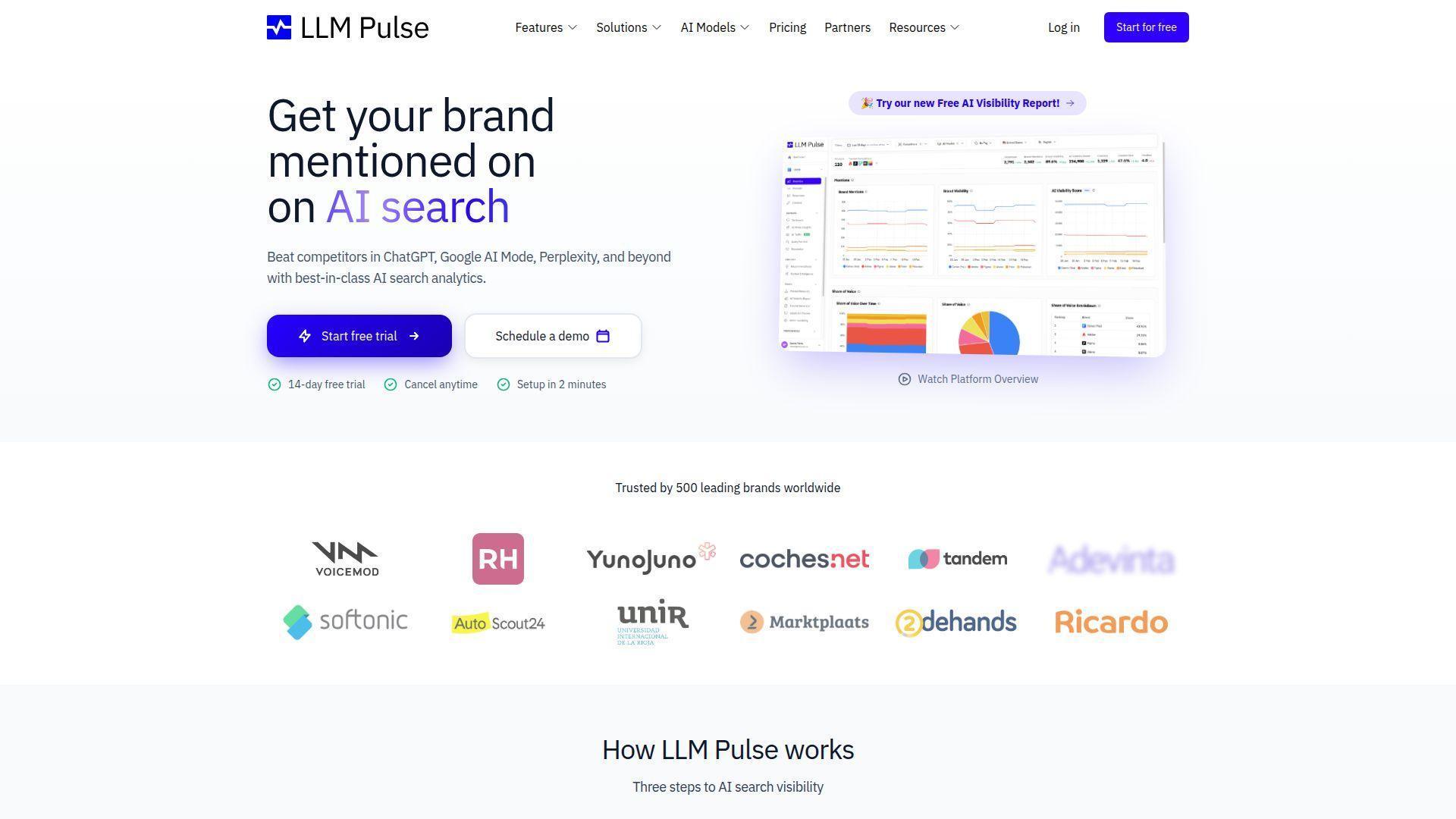
For reputation teams the entry point is usually a set of branded prompts: “is [brand] reliable”, “what do customers say about [brand]”, “[brand] vs [competitor]”, “is [CEO name] a good leader”, “[brand] crisis”, “[brand] alternatives”. You drop those into LLM Pulse and we run them across ChatGPT, Perplexity, Gemini, Google AI Mode, and Google AI Overviews. Every response is captured, scored for sentiment, broken down by model and locale, and tracked over time. You see the actual answer, which sources the model cited, which competitors got named, and where the sentiment trend is going.
Key features
- Sentiment per response, per model, per locale. Brand sentiment scores every individual AI response, not a monthly aggregate, so you can spot the day a model started turning negative and trace it back to the prompt and cited sources.
- 5 standard AI engines. ChatGPT, Perplexity, Gemini, Google AI Mode, and Google AI Overviews. You can add Claude, Copilot, Grok, DeepSeek and Alexa for Shopping (formerly Amazon Rufus).
- Citation tracking. Every AI response comes with the sources the model cited, so your PR team can go after the cause instead of guessing.
- Reputation reports. The dedicated reputation feature packages sentiment, mentions, citations, and competitor framing into a single CMO-ready view.
- Competitor benchmarking. Compare your sentiment to named competitors in the same prompt set. Useful when telling leadership “we are not the worst in the category”, or less comfortably, “we are”.
- Locale support. UK can diverge from US can diverge from Spain. We surface that, you act on it.
- Alerts and weekly summaries. Telegram, email, or webhook notifications when sentiment drops, a new negative prompt surfaces, or a competitor jumps your visibility.
- API and Looker Studio. REST API and a ready-made Looker Studio connector and template for teams building reputation dashboards alongside other marketing data.
- White-label and unlimited seats. Team members are unlimited. White-label dashboards on your own custom domain, plus embeddable iframe dashboards for client portals, are available through an agency or enterprise arrangement.
Watch-outs
LLM Pulse is an AI search reputation tool, not a classic social listening tool. We do not crawl X, Reddit, Instagram, news sites, or review platforms in real time. If you need real-time alerting for a Twitter crisis or daily news clipping, pair LLM Pulse with Brand24, Brandwatch, or Meltwater depending on budget. For the AI search side specifically we are the most complete option, but complete reputation coverage in 2026 means two tools, not one.
Pricing
Self-serve plans start at €49 a month on Starter (50 prompts, ~1,000 AI evaluations across 5 models). Growth is €99 a month (150 prompts), Scale is €299 a month (450 prompts, around €0.66 per prompt), Enterprise is custom. LLM Pulse includes 5 standard models, unlimited team members, citation tracking, competitor benchmarking, exports, and MCP. Sentiment analysis, the dedicated reputation feature, API access, and Looker Studio are also available, and white-label is arranged separately for agencies and enterprises. See pricing for the full breakdown.
2. Brand24
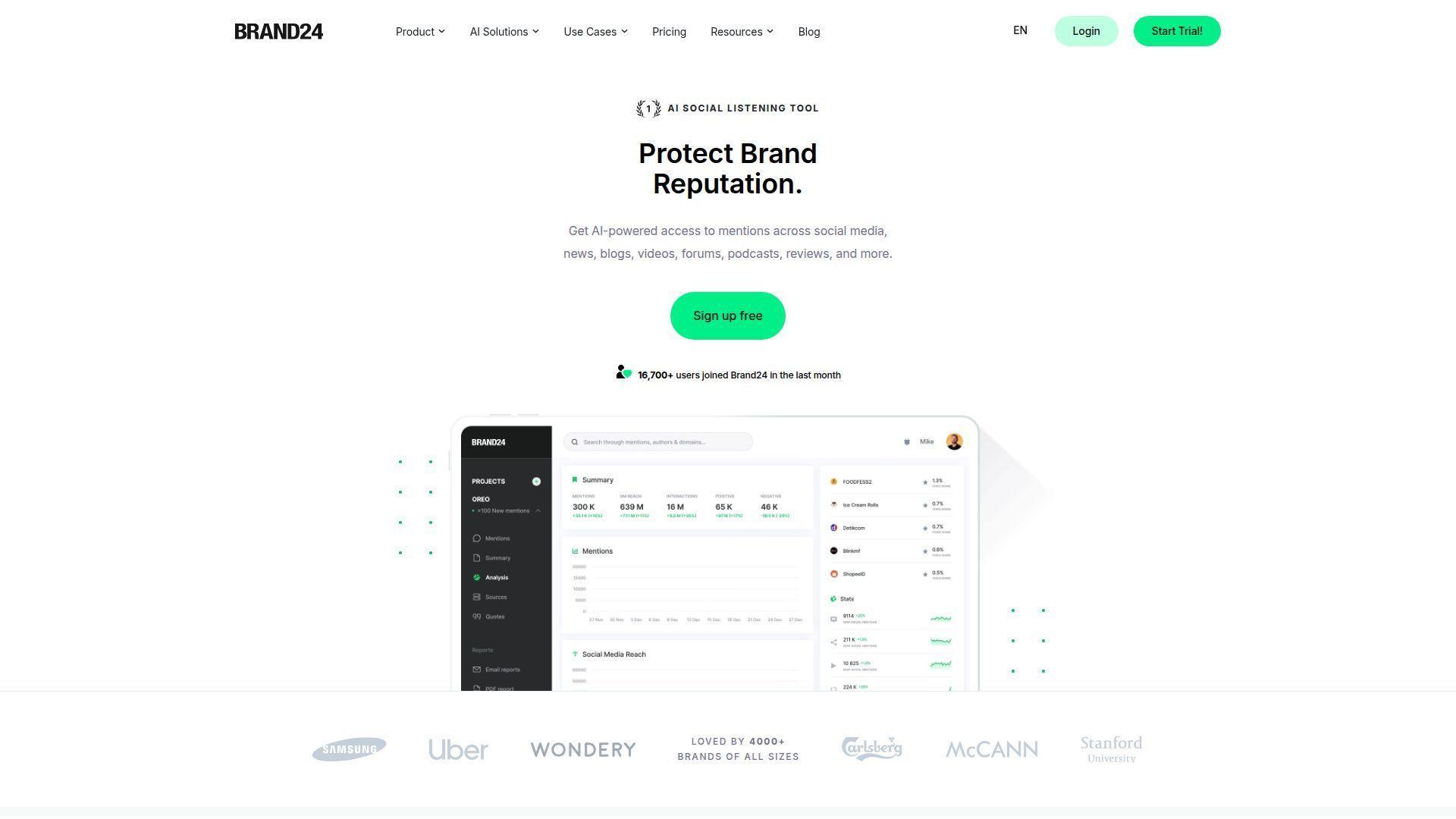
Brand24 is one of the most established mid-market social listening tools and has been building out AI mention coverage. It is a popular pairing partner for AI-search-specific tools because the classic side is mature, well-priced, and friendly to small and mid-sized comms teams.
Key features
- Real-time social, news, blog, and forum monitoring across X, Reddit, Instagram, TikTok, and the web.
- Sentiment scoring on classic mentions, with influence scores and reach estimates.
- Growing AI mentions feed, though less deep than purpose-built AI reputation tools.
- Anomaly detection and Slack/email alerts.
- Discussion volume, share of voice, and topic clouds.
Watch-outs
Brand24’s AI mention tracking is a feature, not the core. It does not run scheduled prompts across multiple AI engines, does not score sentiment per AI response across locales, and does not give you the citation graph. For the AI side you will want a purpose-built tool alongside it.
Pricing
Published plans start at $249 a month (monthly billing) or $199 a month billed annually on the Individual plan, scaling up to $699 a month (or $599 annual) on Business and custom Enterprise pricing above that. Check the vendor site for current figures; discounts are common on annual billing.
3. Meltwater
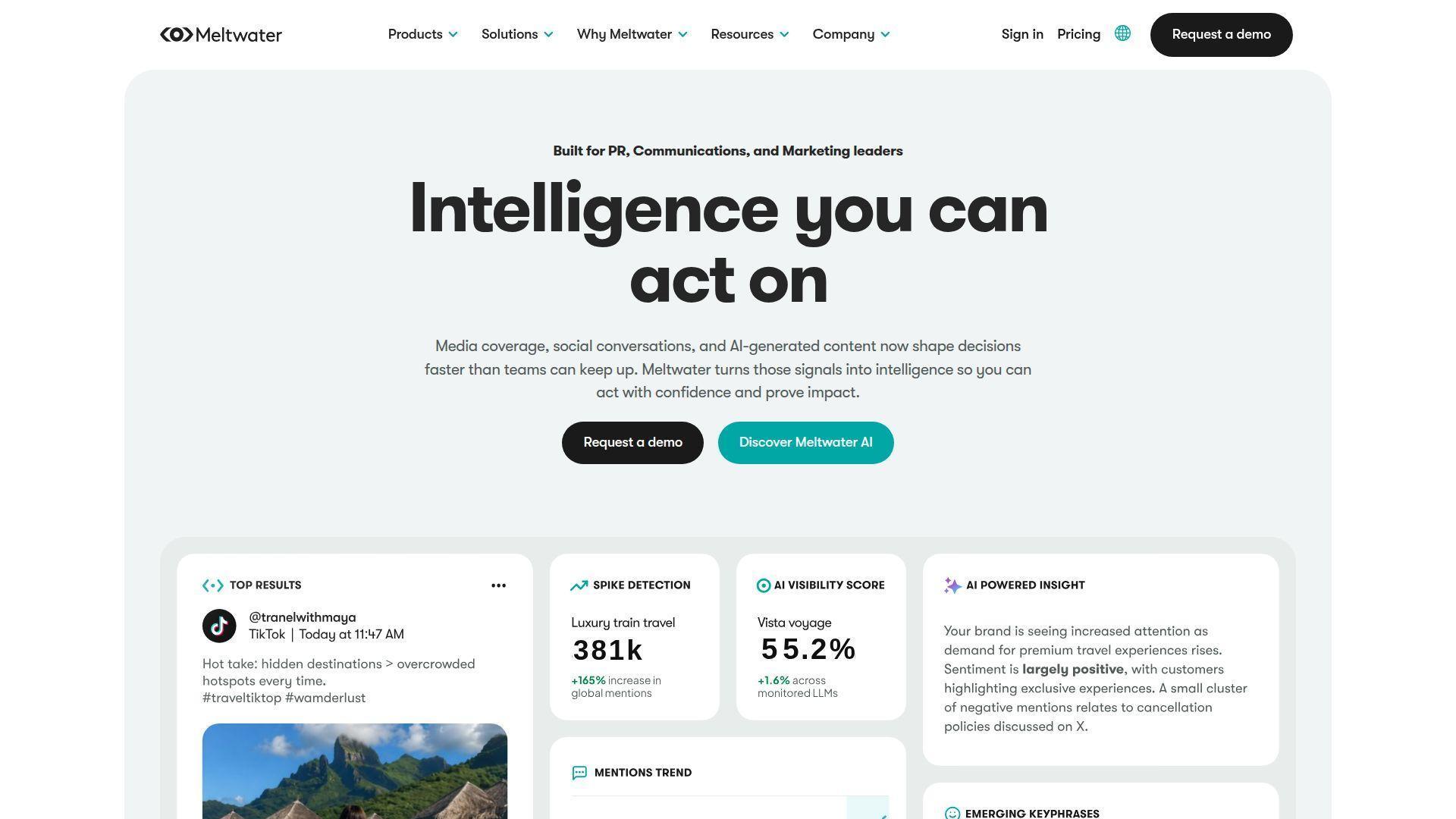
Meltwater is one of the largest PR and media intelligence platforms in the world, the default for many enterprise communications teams, with global news monitoring, social listening, and influencer analytics in one suite. It has been progressively layering AI features on top.
Key features
- Global news, broadcast, podcast, and print monitoring at enterprise scale.
- Deep social listening across major platforms.
- Media database for journalist outreach and PR distribution.
- Sentiment, reach, and AVE-style PR metrics with custom dashboards.
- Growing AI-side coverage focused on content categorisation and some AI search exposure.
Watch-outs
Enterprise-priced and enterprise-paced. Overkill if your reputation programme is one person and a spreadsheet. The AI search slice, while improving, is not as deep as standalone tools. Expect long sales cycles and pricing that needs CFO sign-off.
Pricing
Custom, enterprise-only. Annual contracts typically start in the low tens of thousands and scale from there.
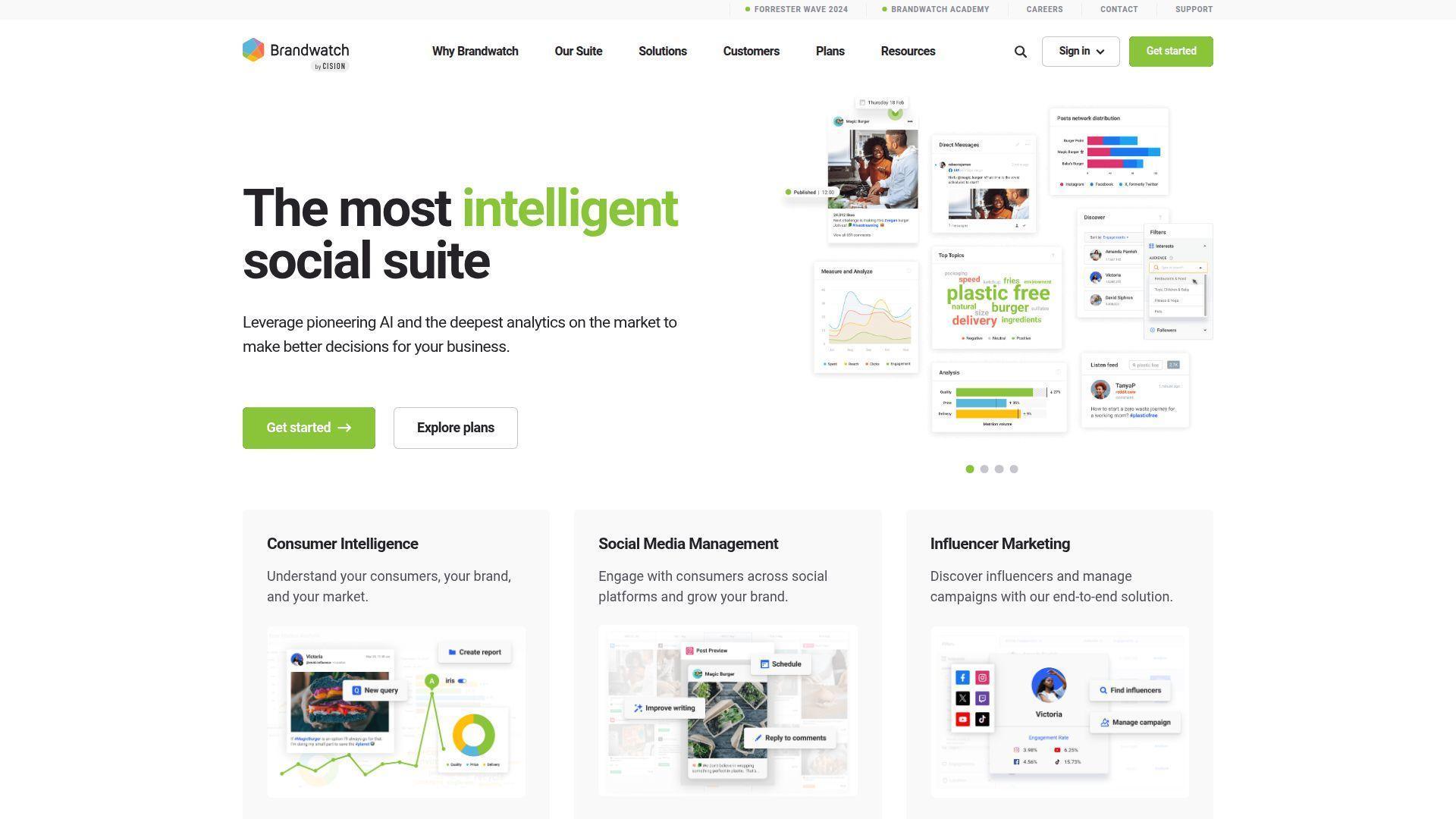
4. Brandwatch
Brandwatch, owned by Cision, is another giant in enterprise social and consumer intelligence. Its depth on social data, audience analytics, and trend detection is unmatched in the classic listening space.
Key features
- Some of the deepest social listening coverage available, with historical data going back years.
- Advanced audience segmentation and consumer panels.
- Visual listening (image recognition in social posts).
- Trend detection and emerging topic analysis.
- AI features being added across the broader Cision portfolio.
Watch-outs
Expensive, complex, and built for teams that can dedicate analysts to it. Not the right primary tool for AI search reputation. A heavyweight pairing partner if you already have it.
Pricing
Custom, enterprise. Multi-year contracts and a six-figure annual commitment for larger configurations.
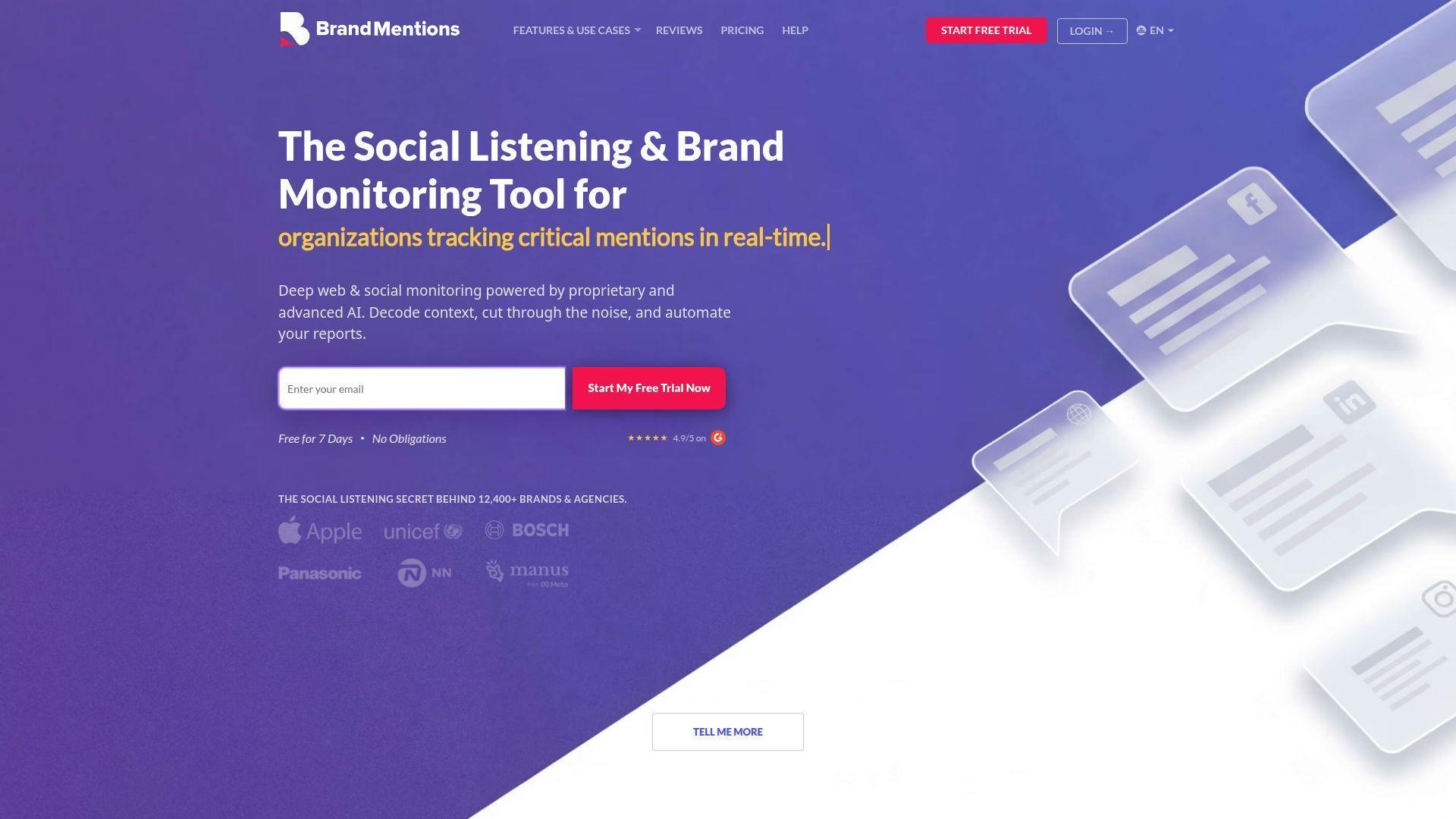
5. BrandMentions
BrandMentions sits between SMB tools and the enterprise giants. It has been adding AI-related features and appeals to teams that want more than basic alerting without a Brandwatch-scale contract.
Key features
- Web, social, and news mention tracking with sentiment scoring.
- Competitor monitoring and side-by-side comparisons.
- Influencer identification and reach estimates.
- Some AI mention coverage as the product evolves.
- Email and Slack alerts on volume and sentiment shifts.
Watch-outs
AI features are a complement, not the core. Like Brand24, a strong pairing partner for an AI-search-specific tool rather than a replacement.
Pricing
Plans typically start around $99 a month, scaling by projects and mention volume.
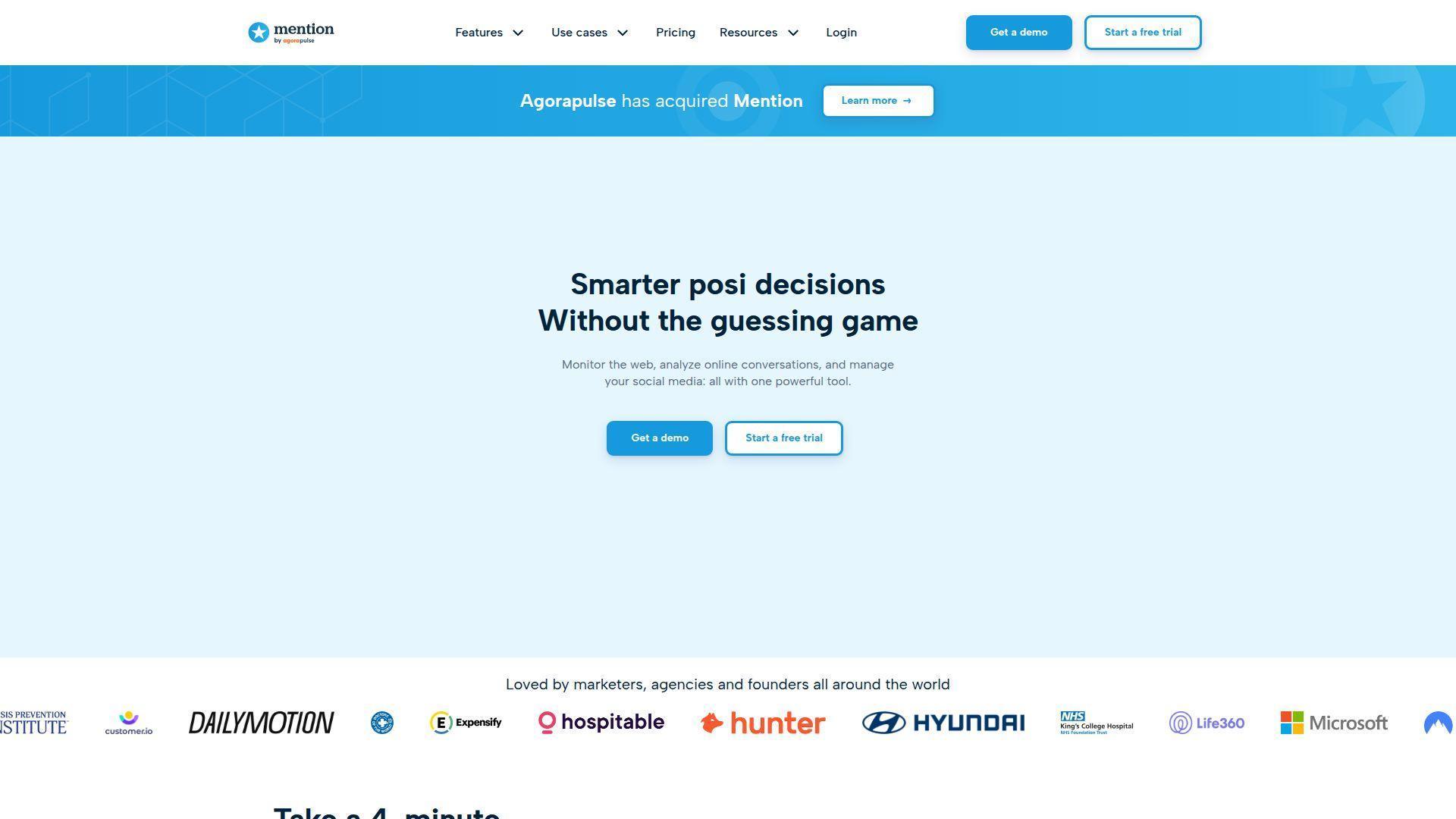
6. Mention.com
Mention has been around since the early days of social listening. As of mid-2025, Mention retired its self-serve tiers and repositioned as an enterprise media monitoring platform. It no longer offers a budget SMB entry point.
Key features
- Real-time mention tracking across social, web, and news.
- Sentiment analysis, competitor benchmarking, and multi-user access.
- Custom alerts via email and Slack.
- API access and dedicated account management on the Company plan.
- Note: Mention retired its social publishing and inbox (Respond/Publish) features in January 2026; social engagement now requires a separate Agorapulse subscription.
Watch-outs
Light on AI search coverage. Now priced at the enterprise tier only, which makes it a mismatch for small and mid-sized teams. The retired self-serve plans (Solo at ~$41/month, Pro) are no longer available to new customers. Verify current plan availability with the vendor before including it in a budget comparison.
Pricing
Enterprise-only as of 2025. The Company plan is priced at around $599 a month (annual billing). The legacy low-cost self-serve tiers were discontinued in mid-2025.
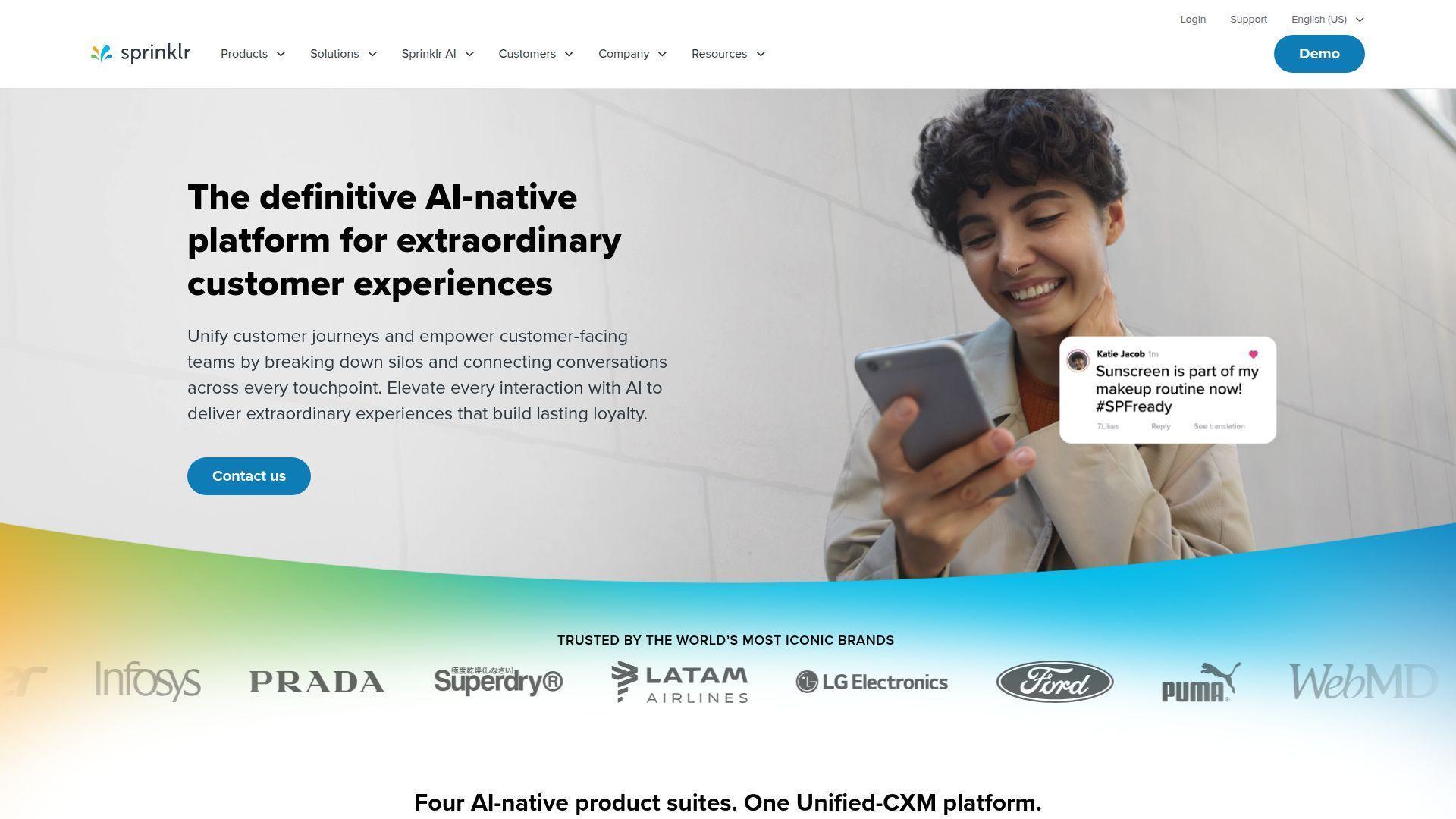
7. Sprinklr
Sprinklr is a unified customer experience platform spanning social listening, publishing, customer service, marketing, and AI-driven reputation. Built for very large enterprises that want one suite covering many functions.
Key features
- Broad CX platform spanning listening, engagement, publishing, advertising, and service.
- Enterprise social listening with global coverage.
- AI-powered classification, summarisation, and trend detection.
- Customisable dashboards for executive reporting.
- Integration with CRM, contact centre, and marketing systems.
Watch-outs
Broad and deep, but slow to deploy and expensive. The AI search reputation slice is not the headline feature. If you are buying it primarily for AI reputation, you are paying for many modules you will not use.
Pricing
Custom, enterprise-only.
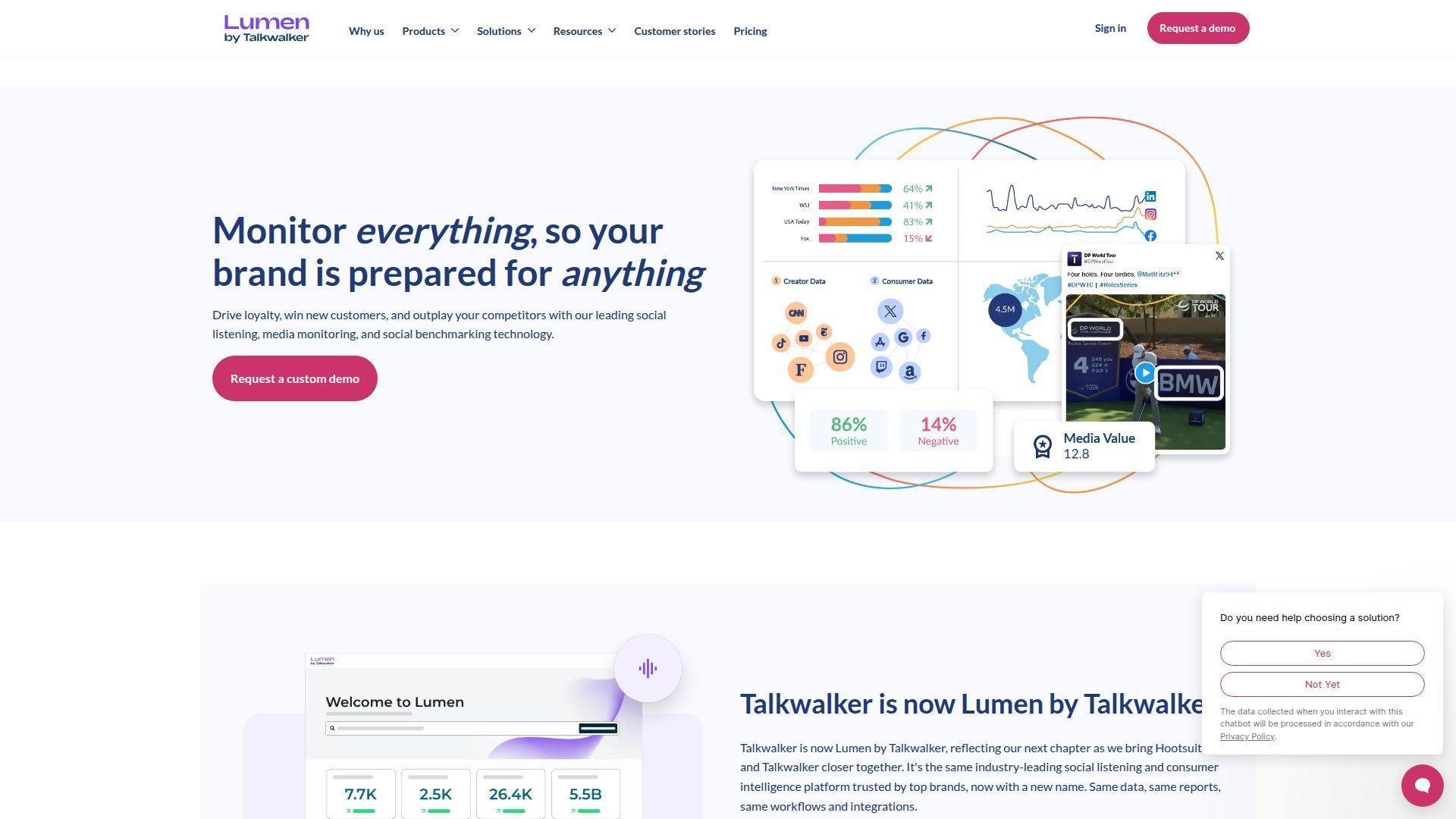
8. Talkwalker
Talkwalker, owned by Hootsuite, is a long-standing enterprise listening platform with strong consumer insight features and a growing AI add-on layer.
Key features
- Global social listening with strong language coverage.
- Image and video recognition for visual listening.
- Consumer panels and audience intelligence.
- AI-powered conversation clustering and trend detection.
- Emerging AI search add-on tracking brand exposure in generative answers.
Watch-outs
Like Brandwatch and Meltwater, built for enterprise budgets and pace. The AI search add-on is improving but not yet as focused as standalone AI reputation tools.
Pricing
Custom, enterprise-only.
9. Reputation.com
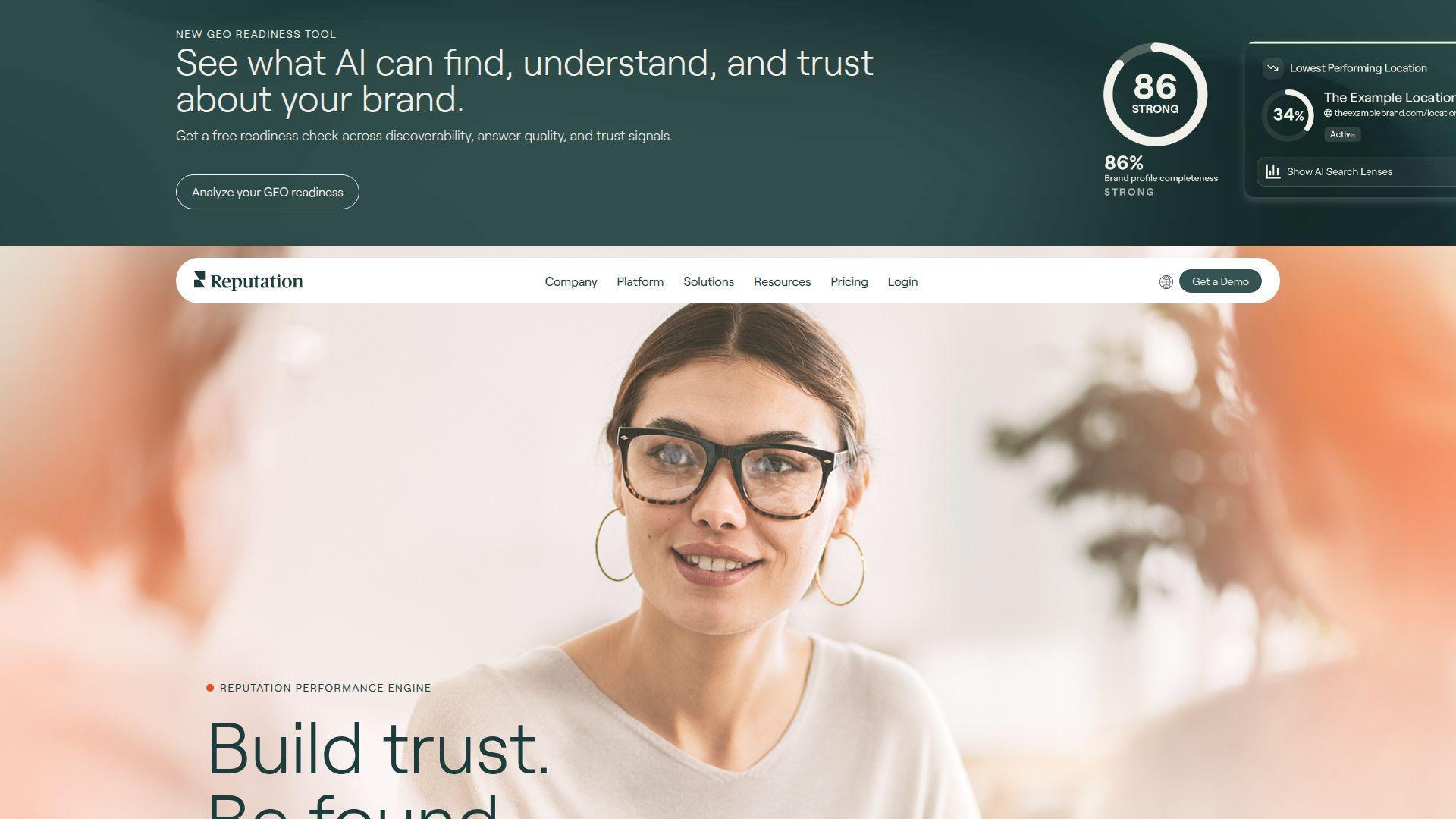
Reputation (formerly Reputation.com) leads in review-driven reputation management, with deep coverage of Google reviews and location-based reputation for franchises, healthcare, automotive, and retail.
Key features
- Review aggregation across Google, Yelp, Facebook, and industry-specific sites.
- Location-level reputation scoring for multi-site brands.
- Customer feedback and survey workflows.
- Local SEO and Google Business Profile management.
- Growing layer of AI-assisted response generation.
Watch-outs
Focused on review-based reputation, not AI search. Excellent for multi-location brands with heavy review exposure, not the right primary tool if your reputation surface is shifting into AI answers.
Pricing
Custom, mid-market and enterprise tiers based on number of locations and modules.
10. Get-Spotlight
Get-Spotlight is one of the newer entrants in the AI-search-specific reputation space, focused on tracking how brands surface in generative answers.
Key features
- AI search visibility and reputation tracking across major engines.
- Sentiment and citation tracking for branded queries.
- Competitor benchmarking inside the AI surface.
- Content recommendations based on observed AI behaviour.
Watch-outs
Younger product with a smaller customer base and an evolving feature set. Worth evaluating alongside established options if you want a focused tool.
Pricing
Paid plans only, custom pricing depending on configuration.
11. BrandArmor.ai
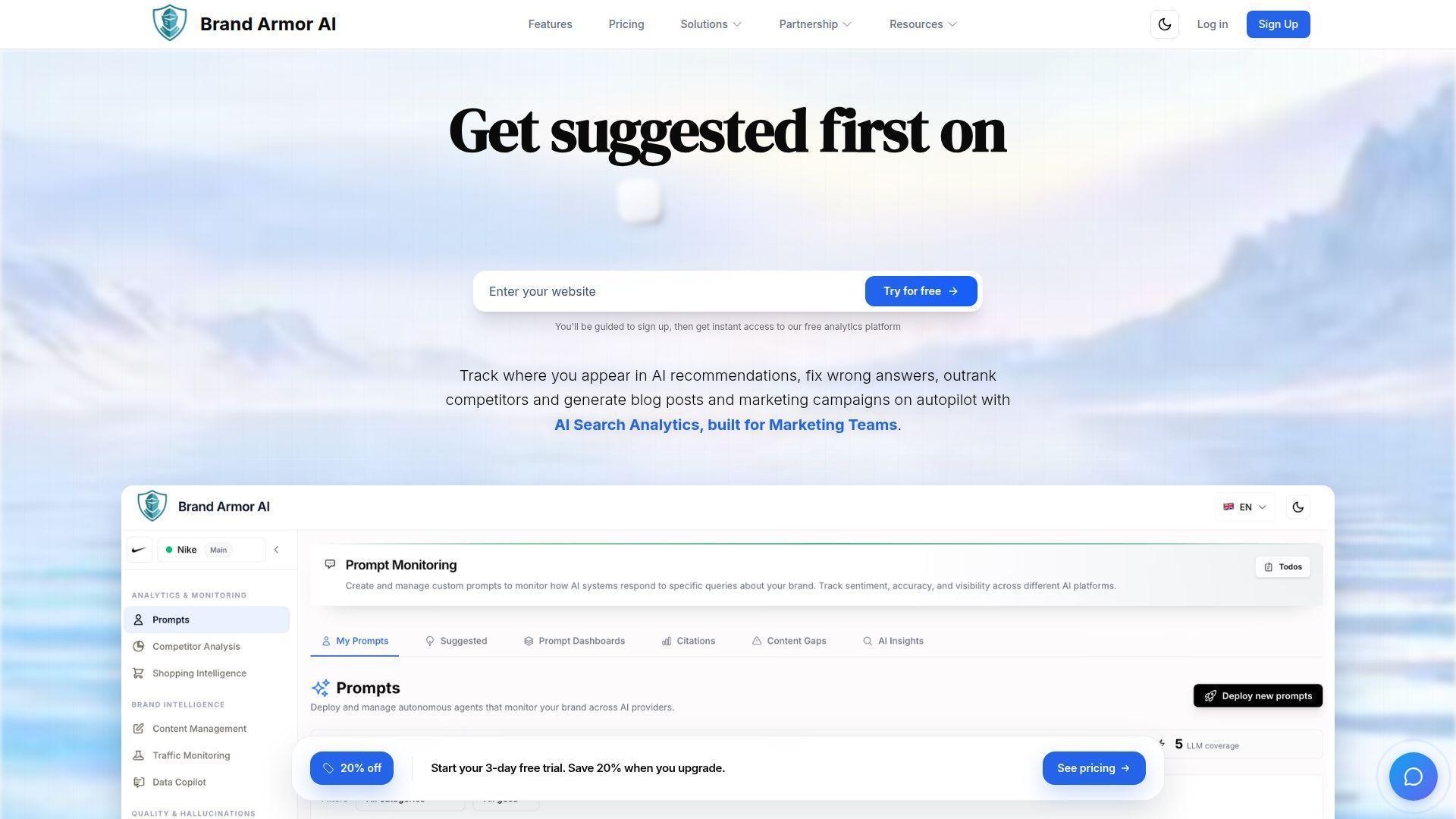
BrandArmor.ai positions itself around AI brand monitoring, targeting teams that want a single-purpose tool for the new surface.
Key features
- AI brand mention monitoring across generative engines.
- Alerts on negative or unexpected AI references.
- Tracking of brand-related prompts and responses.
- Lighter on classic social listening features.
Watch-outs
Smaller and newer than the leaders, so feature depth, locale support, and reporting maturity are still catching up. Evaluate against incumbents before committing.
Pricing
Custom pricing. Confirm with the vendor.
12. Profound
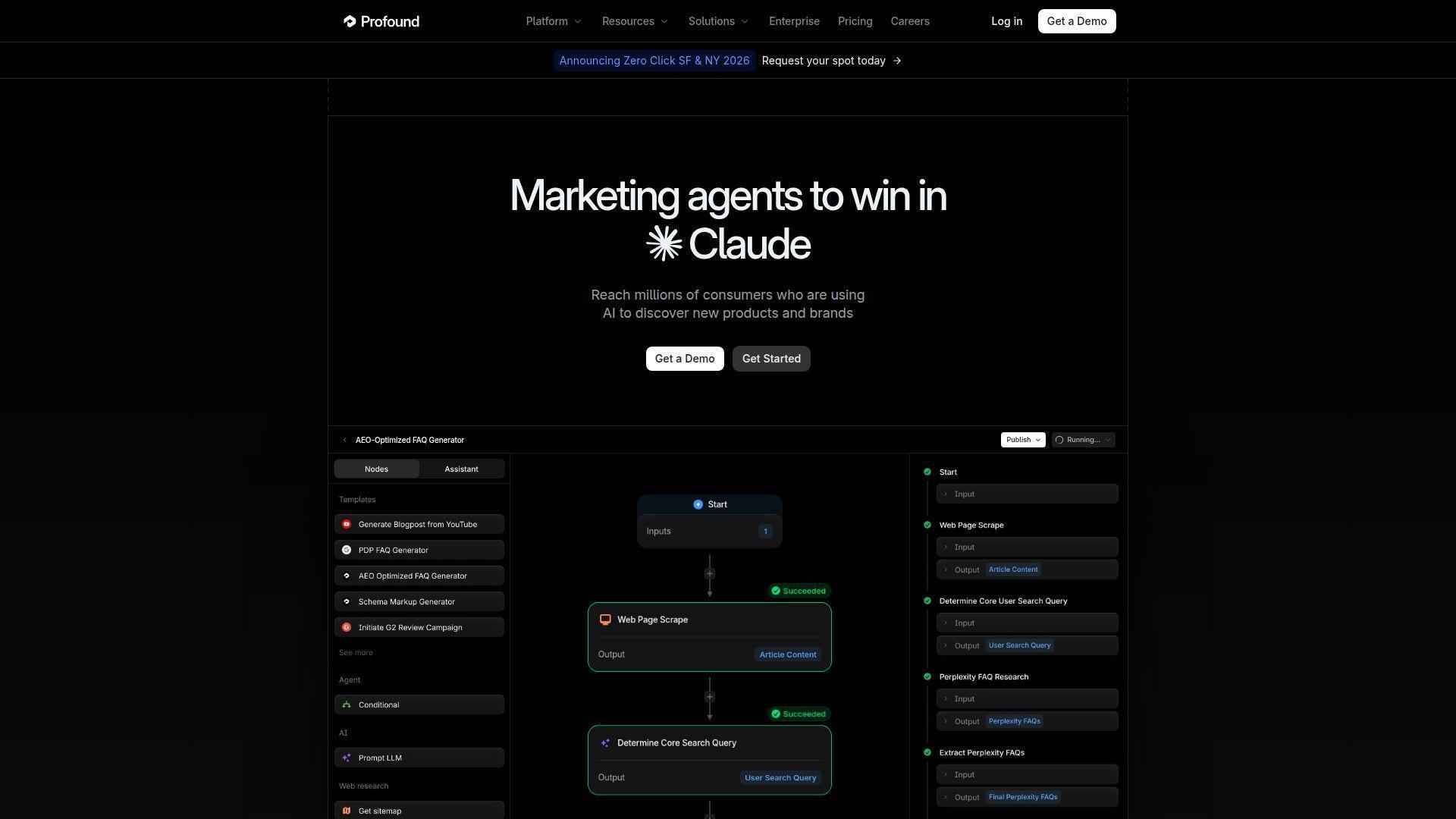
Profound is one of the most prominent enterprise platforms in the AI visibility space, including a reputation slice. It competes with full-suite enterprise tools rather than the new wave of mid-market AI-search tools.
Key features
- Enterprise-grade AI visibility tracking across multiple generative engines.
- Sentiment and citation analysis at scale.
- Custom dashboards, executive reporting, and enterprise integrations.
- Account management for very large customers.
Watch-outs
Self-serve Starter and Growth tiers now exist alongside Enterprise, but for mid-market and SMB reputation teams the price-to-value ratio rarely works compared to LLM Pulse, which offers the same five-engine coverage from €49 a month.
Pricing
Self-serve from $99/month billed yearly, with custom Enterprise quotes.
When you need TWO tools (AI search + classic social listening)
Most serious reputation programmes in 2026 run two tools in parallel.
Use an AI search reputation tool like LLM Pulse for the new surface: sentiment per response across five AI engines, locale breakdowns, citation tracking, and reputation reports purpose-built for the AI layer. Your social listening tool cannot do this, and it is increasingly where buyer impressions form.
Use a classic social listening tool like Brand24, Brandwatch, or Meltwater for the old surface: real-time alerts on X, Reddit, Instagram, news outlets, and review sites. Your AI reputation tool is not built for that, and it is still where most crises break first.
The two layers are connected. A negative news story today becomes a cited source in tomorrow’s AI answer. A flare-up in social sentiment eventually shows up in AI sentiment trends. If you watch only one layer, you see half the story and act on it late. Mid-market teams typically pair LLM Pulse at €49 to €299 a month with Brand24 at around $199 to $249 a month and call that their complete reputation stack. Enterprise teams layer LLM Pulse with Meltwater, Brandwatch, or Talkwalker. The combined cost is typically a fraction of an all-in-one enterprise suite that still lacks purpose-built AI search coverage.
How to respond to negative AI sentiment
Finding negative AI sentiment is the easy part. Doing something about it is where reputation work actually happens. The playbook we see working in 2026:
1. Find the prompt. Negative AI sentiment does not happen in the abstract, it happens on specific prompts. Identify which queries return the negative answers. LLM Pulse surfaces the prompt, model, locale, response, and sentiment score together.
2. Trace the citations. Every AI answer has sources, even when the user does not see them. Look at the citations behind negative responses and patterns emerge: one critical article cited repeatedly, an old forum thread with bad information, a low-rated review profile. The citation graph shows where the narrative comes from.
3. Decide if the source is correctable. Some sources are fixable: an outdated review profile, a wrong fact in a Wikipedia article, a negative product page on a site you influence. Others are not: a critical investigation, a former customer’s blog, a journalist’s opinion. Fix the correctable ones. For the rest, outweigh them with positive sources rather than trying to delete them.
4. Publish better content. AI engines lean on what is publishable, citable, and recent. If the citation graph is dominated by old or critical content, publish more high-quality recent content on the same topic. Case studies, customer stories, technical documentation, FAQ pages, and third-party press all feed the citation pool. GEO Writer identifies which topics are missing from the citation graph for your category.
5. Monitor the change. Reputation work takes weeks to months to move AI sentiment. Weekly tracking, sentiment-over-time charts, and citation diffs are essential. Without them you are guessing.
6. Brief leadership honestly. If you show only the green numbers, you lose credibility the first time something goes wrong. The teams that earn the most authority with their CMO show the drops as well as the wins, with a clear plan attached. LLM Pulse reputation reports are built around that honest narrative.
Summary
AI reputation management in 2026 is not a rebranding of social listening. It is a new layer that runs alongside your existing reputation programme. LLM Pulse is the most complete option for the AI search side specifically, with sentiment per response, citation tracking, and reputation reports across five AI engines starting at €49 a month. For full coverage most teams pair it with a classic social listening tool like Brand24 or, at the top end, Brandwatch or Meltwater.
If you are responsible for a brand’s reputation and you are not yet measuring what AI engines say about you, the gap is widening every week. Start with a short list of branded prompts, run them on a recurring schedule across the major AI engines, score the responses for sentiment, capture the citations, and turn that into a trend. Try LLM Pulse for the AI side, add a social listening tool for the classic side, and you have a 2026-ready reputation stack.
FAQ
Can you remove negative AI mentions from ChatGPT or Perplexity?
Not directly. AI engines do not have a takedown form for negative answers the way Google has a removal process for some URL types. What you can do is change the underlying signal: fix outdated sources, publish stronger and more recent content, correct misinformation in citable places (your own site, Wikipedia, reputable third-party media), and outweigh the negative content over time. AI engines re-train and re-retrieve. Over weeks to months, the answer shifts.
How fast does AI sentiment change?
Faster than you would think for breaking news, slower than you would think for steady-state reputation. A major news story can move AI sentiment within days as live retrieval picks up new sources. A steady reputation campaign typically takes 4 to 12 weeks to materially shift AI answers, because you are competing with the existing weight of the citation graph and waiting for retrievals and re-training to pick up new content.
How is AI sentiment scored?
LLM Pulse scores each individual AI response as positive, neutral, or negative for the brand, and surfaces the underlying signals (which phrases, comparisons, and framings drove the score). Scoring runs at the response level, so you see exactly which prompts and models are negative rather than just an aggregate number.
What’s the cheapest tool for AI reputation?
For the AI search side specifically, LLM Pulse Starter at €49 a month covers 50 prompts across five AI engines with citation tracking and competitor benchmarking. For a complete stack (AI search plus classic social listening), Brand24 is now the more realistic entry option for the social side, starting at around $199 to $249 a month. Mention.com repositioned as an enterprise-only platform in 2025 and is no longer a budget choice.
Do I still need social listening if I have AI reputation tracking?
Yes. AI reputation tools and social listening tools cover different surfaces. AI tools track what ChatGPT, Perplexity, Gemini, and Google AI surfaces say about you. Social listening tools track what humans say in real time on X, Reddit, Instagram, news sites, and review platforms. Crises usually break on the social layer first and then propagate into AI answers. Running both is how mature reputation teams work in 2026.
How many prompts should I track for AI reputation?
50 to 150 reputation-focused prompts cover the core surface for most mid-market brands: branded queries, “is [brand] reliable”, “[brand] vs [competitor]”, category queries, executive name queries, and a few crisis-adjacent prompts. Starter (50 prompts) suits smaller brands, Growth (150) most reputation programmes, Scale (450) global brands with deep coverage.
Can agencies run AI reputation for multiple clients on LLM Pulse?
Yes. LLM Pulse includes unlimited team members and CSV/Excel exports. API, Looker Studio, and webhooks are available, while white-label dashboards are available through an agency or enterprise arrangement.