




Last updated: August 10, 2026
If Google Search was yesterday’s high street, Generative Engines (ChatGPT Search, Google AI Overviews, Perplexity, Microsoft Copilot…) are today’s bustling plazas. Optimizing for these AI surfaces (GEO, Generative Engine Optimization) isn’t some gimmick. It’s where brand discovery, citations, and demand are already happening.
Table of Contents
Specifically, tools like LLM Pulse give you the building blocks for a complete GEO workflow:
- GEO Writer turns visibility gaps into content briefs, drafts, and updates
- Models Comparison shows your visibility side by side across ChatGPT, Gemini, Perplexity, and Google AI, because each model weights sources differently
- Prompt research and AI prompt suggestions help you discover the real questions your audience asks AI, not just the ones you assume
- Query fan-out shows the retrieval subqueries an AI response exposes when it researches a prompt
- Web analytics integration connects AI visibility data to supported analytics platforms, so you can compare visibility with traffic and conversions
- GEO Testing lets you test content changes and measure their AI-visibility lift before rolling them out site-wide
- ChatGPT Shopping & ChatGPT Entities track how ChatGPT frames your brand as an entity and how your products surface in shopping answers
- Reputation monitoring flags shifts in how AI models describe your brand
- MCP & CLI provide automation access
This guide distills the excellent AIO (AI Optimization) framework from me (Esteve Castells) into a GEO-first playbook you can run right now, and shows how to track your GEO rankings with LLM Pulse so you can prove impact, not just hope for it.
What is GEO?
GEO is Generative Engine Optimization, a new branch of digital marketing focused on optimizing how brands, products, and content appear in responses generated by large language models (LLMs). Unlike traditional SEO, which targets rankings in search engines like Google or Bing through links and keywords, GEO aims to increase a brand’s visibility, mentions, and citations within AI-driven answers. Its goal is to ensure that when users interact with generative engines, the brand is accurately represented, frequently referenced, and positioned as a trusted source of information.
GEO does not replace SEO. It builds on top of it. SEO helps your content become discoverable and authoritative, while GEO helps it get cited and recommended inside AI-generated answers. We recently explored the relationship between both disciplines in our new post: GEO vs. SEO.
Why GEO matters now
- Brands (especially B2B SaaS) are already seeing material traffic and sign-ups routed via AI answers and citations, with highly asymmetric visibility vs. Google. If you win the answer, you can win the click.
- AI search products use different combinations of search indexes, live web retrieval, and model knowledge, so strong visibility in one source does not guarantee visibility in another.
The 10-Step GEO Playbook
1.- Make sure AI can crawl you
Don’t accidentally block AI bots at the CDN or in robots.txt. Unify your crawling rules and surface your sitemaps clearly. This is foundational to being cited in AI answers (and for any RAG system to pull your content).
Quick check
# robots.txt
User-agent: *
Allow: /
Sitemap: https://yourdomain.com/sitemap.xml
2.- Ship server-side HTML for critical content
Some AI crawlers do not execute client-side JavaScript fully. Keep critical product, documentation, pricing, and editorial content in the server-rendered HTML when possible.
3.- Proactively push indexation
Beyond sitemaps, IndexNow or Bing URL submission can help Bing discover updated URLs sooner. Whether a downstream AI product uses that update depends on its own retrieval and indexing systems.
4.- Write in “answer-ready” formats
GEO favors content that’s deterministic, scannable, and complete:
- Use question-style H2 / H3 (“How does X work?”) with a crisp, direct answer under each heading.
- Add tables, lists, and FAQs to make relationships explicit.
- Include clear, evidence-backed statements and concrete figures where possible.
- Layer rich synonyms and related terms to widen the semantic net.
5.- Keep investing in real quality
Great UX and useful content still matter. AI search products can draw on web indexes and live retrieval for current information, so classic SEO work remains relevant to GEO.
6.- Prioritize speed for crawl efficiency
Keep key templates fast and reliable. Faster responses reduce crawler timeouts, but no major AI search provider publishes a specific TTFB threshold for inclusion.
7.- Log-level bot monitoring
Track AI bot hits and error patterns in your logs (Botify, ELK / Kibana, or your stack of choice). Watch 404s, blocked resources, and crawl depth per bot family.
8.- Structured data
Schema remains useful for eligible Google Search features, but Google says no special schema is required for AI Overviews or AI Mode. Use structured data when it accurately describes visible page content, not as a guarantee of inclusion in an AI answer.
9.- Consider an LLMs.txt
It is an experimental proposal for pointing models toward important site content. It is not a standard, and major AI search providers have not documented it as a ranking or inclusion signal.
Starter idea
# llms.txt (markdown)
# Canonical sections
- Docs: https://yourdomain.com/docs/
- Pricing: https://yourdomain.com/pricing/
- API: https://yourdomain.com/api/
- Changelog RSS: https://yourdomain.com/changelog.xml

# Extraction tips
- Prefer server-rendered pages.
- If pricing changes, see /pricing.
We offer a free tool that allows you to generate your LLMs.txt files in just one click. Try it now.
10.- Build presence where AIs source truth
Strengthen accurate coverage on sources relevant to your market, such as documentation, industry publications, developer communities, and established reference sites. Different AI products use different retrieval systems, so no single source guarantees inclusion.
AI Search Rank Tracking for GEO with LLM Pulse
You can’t optimize what you don’t measure. And what you’ll find is that your brand appears differently across ChatGPT, Gemini, and Perplexity. Each model has its own biases, sources, and update cadence. LLM Pulse tracks how your brand shows up across AI answers and citations, starting with ChatGPT, Perplexity, Gemini, AI Mode and Google AI Overviews. It monitors key prompts over time, analyzes citations, and lets you compare visibility across models, so you can treat GEO like you’ve always treated SEO.
What to track
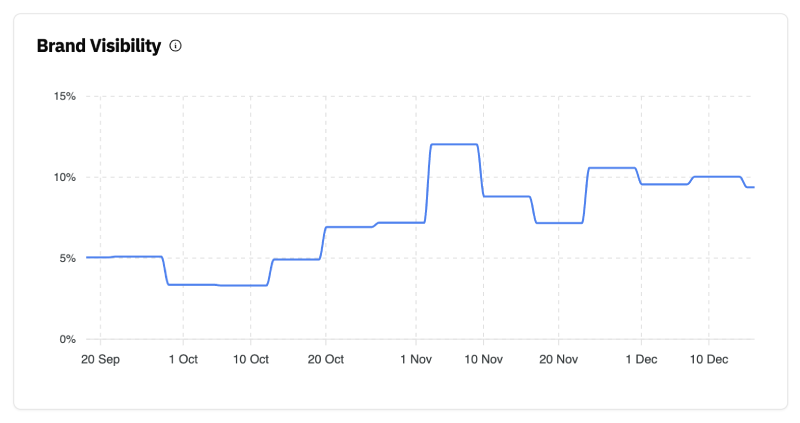
- Brand Visibility: % of tracked prompts where your brand is included in the AI answer.
- Citation Position in Answer: Which position are you put in when it comes to your citations?
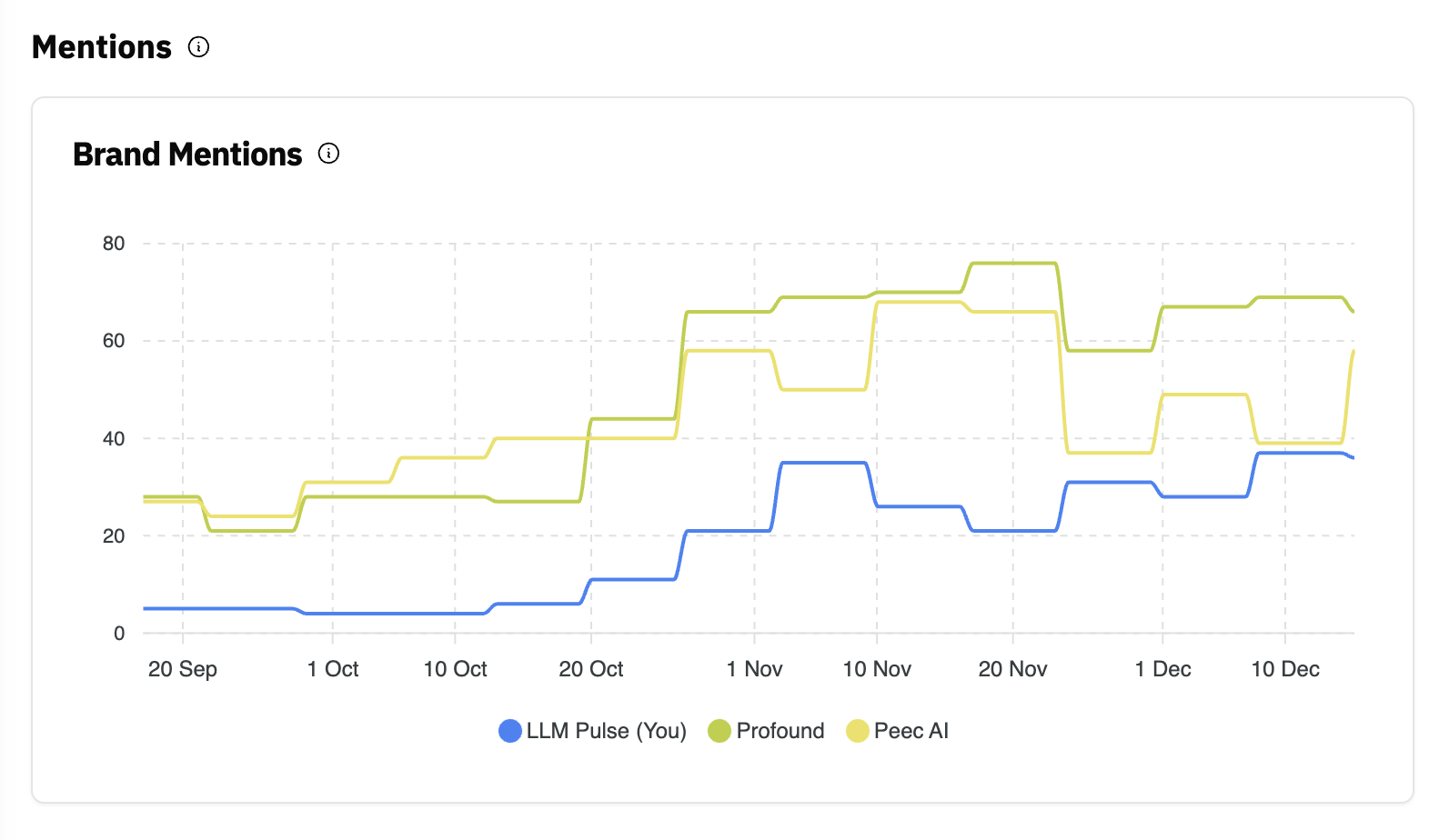
- Share of Voice: Your share of tracked brand mentions compared with monitored competitors.
- Model Coverage: Presence across ChatGPT, Perplexity, Gemini, AI Mode, and AI Overviews.
- Change Over Time: Week-over-week deltas after you ship SSR, fix crawling, or publish new “answer-ready” pages.
How to set it up in LLM Pulse
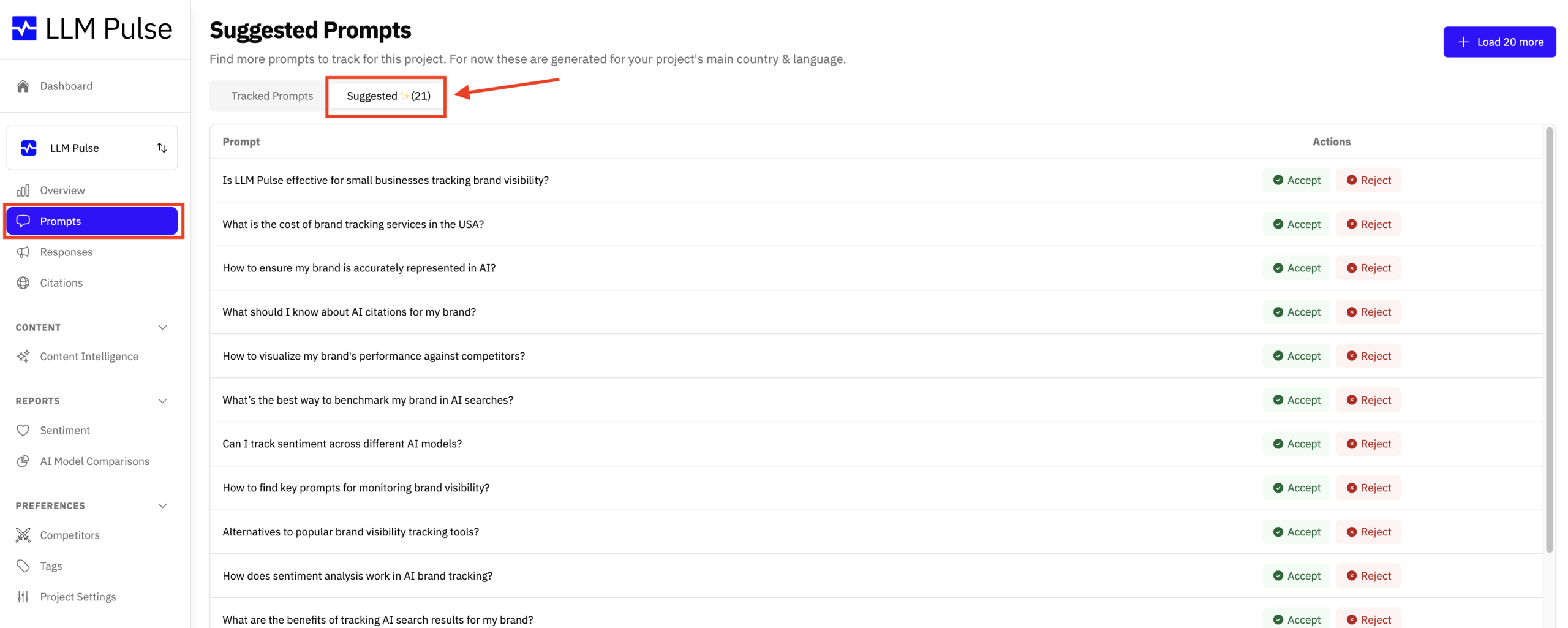
- Define prompt sets: Real questions buyers ask (by segment, product, use case). Tag them (e.g., “Pricing”, “Integrations”, “Security”). If not, don’t worry, we suggest it for you.
- Add competitors: Include their names / domains in your tracking scope for share-of-voice comparisons.
- Run and monitor: LLM Pulse will track answer inclusion and citations for each prompt over time.
- Route insights to roadmap: If ChatGPT cites your old docs or skips pricing, prioritize fixes to those pages / templates first.
Final words
GEO ≠ fully replacing SEO. It’s the layer on top of SEO that decides who gets named inside the answer. Ship crawlable, server-rendered, answer-ready content; push indexation; invest in trusted sources, and track it all with LLM Pulse so you can iterate with confidence.
Click here to try LLM Pulse today!
FAQ
What is Generative Engine Optimization (GEO)?
GEO is a discipline focused on optimizing how brands appear in AI-generated answers across platforms like ChatGPT, Google AI Overviews, and Perplexity, aiming to increase mentions, citations, and visibility.
How is GEO different from traditional SEO?
While SEO focuses on ranking in search engine results, GEO focuses on being included and cited within AI-generated answers, where users often get direct responses without clicking links.
What factors influence visibility in AI-generated answers?
Possible factors include crawlability, extractable content, clear answer formats, content quality, and presence in sources used by each AI product. Providers do not publish a single universal ranking formula.
Why is tracking GEO performance important?
Because AI visibility cannot be improved without measurement. Tracking metrics like mentions, citations, and share of voice helps teams understand impact and prioritize actions.
How does LLM Pulse support GEO strategies?
LLM Pulse tracks how your brand appears across AI platforms, monitors prompts over time, analyzes citations and competitors, and provides data to guide content, PR, and optimization efforts.
What tools do I need to start with GEO?
At minimum, you need an AI visibility tracker like LLM Pulse to measure how your brand appears across ChatGPT, Gemini, Perplexity, and Google AI. Beyond tracking, GEO Writer can turn visibility gaps into briefs, drafts, and updates. Combine this with your existing SEO tools and web analytics for a complete GEO stack.
How often should I track my AI visibility?
LLM Pulse supports daily and weekly tracking across five AI models. Choose the cadence that matches how quickly your team needs new data.