



Last updated: October 13, 2026
Perplexity is a strange beast for marketers. It does not just generate an answer the way ChatGPT does; it builds the answer from a small set of cited web sources and shows those sources to the user. That citation list is the closest thing AI search has to a SERP, and it is the surface you actually need to be on. Tracking your brand mention rate in Perplexity is useful, but tracking which URLs Perplexity cites for the queries your buyers ask is where the money is.
Table of Contents
This guide compares the 15 best Perplexity rank tracker tools in 2026: what each one captures, how often it crawls, which locales it covers, and where its blind spots are. LLM Pulse leads the list because it is the platform we build, and because it treats citations as a first-class data type instead of an afterthought. Everywhere else, we have stayed honest about what other tools do well.
What is a Perplexity rank tracker?
A Perplexity rank tracker is a tool that runs queries against Perplexity on a schedule, captures the generated answer, and records two things: whether your brand was mentioned in the response text, and which URLs Perplexity cited as its sources. Some tools also capture the position of your citation in the source list, the sentiment of the surrounding text, and how the answer changes over time.
This is not the same as a Google rank tracker. Perplexity does not return a list of ten links you can rank for, and there is no position 1 in the traditional sense. Instead, you have two ranked lists: the brands mentioned in the prose answer (with citation-style position), and the source URLs Perplexity quoted from. A serious Perplexity tracker captures both. A weak one just searches the answer text for your brand name and stops there.
Good trackers also handle the messy reality of Perplexity at scale: queries return different answers depending on the locale, the selected model and product settings, and the moment you ask. A consistent schedule, locale, and query phrasing make comparisons more useful over time. Weekly, daily, and monthly cadences can each fit different use cases.
Why tracking Perplexity matters more than ChatGPT for citations
ChatGPT mentions matter, but ChatGPT does not always show the user where its information came from. Perplexity does. Every Perplexity answer renders a numbered list of source URLs above or beside the response, and users click those sources. Perplexity has publicly reported that its referral traffic to publishers grew several-fold year over year, which means a Perplexity citation is not just a vanity metric; it sends humans to your site.
That makes Perplexity the AI engine where the gap between being mentioned and being cited matters most. A brand can be name-dropped in the answer text without a single source link pointing at its domain. That is a half-win. The full win is when Perplexity says “according to [your domain]” and links to your page. The tools in this guide vary wildly in how well they expose that distinction.
Three other reasons Perplexity deserves its own tracker:
- Source attribution is explicit. Unlike ChatGPT with browsing, Perplexity always cites. There is no “the model just knew this” excuse. You can audit exactly which URLs Perplexity is using and chase the gaps.
- Answers are query-driven and stable enough to track. Perplexity tends to be more consistent across runs than ChatGPT, partly because it grounds in retrieved web sources. That makes week-over-week comparisons meaningful.
- Perplexity users are higher intent. The audience self-selects for research, comparison, and decision-making queries. Visibility here disproportionately affects considered purchases.
What to look for in a Perplexity tracking tool
Most tools will claim to “track Perplexity”. The differences are in the details. Use these criteria when you evaluate any of the platforms below.
- Refresh frequency. Weekly is a useful baseline, while daily can suit fast-moving launches or reputation monitoring and monthly can suit slower reporting cycles.
- Citation extraction. Does the tool capture the actual cited URLs, or just search the answer prose for your brand name? You want both.
- Locale and model coverage. Perplexity answers differ by region and model variant (Sonar, Sonar Pro). The tool should let you specify locale and ideally model.
- Citation share of voice. The percentage of relevant queries where you appear in Perplexity’s source list, versus competitors. This is the metric that maps to actual traffic.
- Sentiment per response. Mentioned is not enough. Was the mention positive, neutral, or critical?
- Historical data. Can you compare last month to this month? Some tools reset or aggregate too aggressively.
- Exports and integrations. CSV, API, Looker Studio, or a flat report. If you cannot get the data out, you cannot act on it.
- Honest pricing. Per-prompt cost is the real unit economics. Some tools advertise low monthly prices but cap the prompt volume so tightly that the effective cost per query is much higher.
Quick comparison: best Perplexity tracking tools
| Tool | Best for | Starting price | Models tracked |
|---|---|---|---|
| LLM Pulse | Best overall Perplexity tracker with citation depth | €49/mo | 5 standard models |
| SE Ranking | Combined SEO and Perplexity visibility | ~$129/mo+ | 3 to 4 |
| Keyword.com | Position-style Perplexity rank tracking | $24/mo | 2 to 3 |
| Rankability | Citation-level Perplexity insights | $399/mo Team | 5 on Team |
| Finseo | Perplexity mention monitoring | $49/mo | 3 to 4 |
| Ziptie.dev | Configurable monitoring and API access | Depends on configuration | Up to 7 selected engines |
| Otterly | German-market entry-level tracking | $29/mo | 3 to 4 |
| Profound | Enterprise compliance and SOC 2 | $99/mo Starter; $399/mo Growth, billed yearly | 1 on Starter, 3 on Growth; Enterprise up to 9 |
| Trakkr | Review-style visibility reports | $59/mo | 3 to 4 |
| Siftly Answers | Chat-based Perplexity exploration | Free; paid from $79/mo | 2 to 3 |
| AIClicks | Newer Perplexity-focused tooling | $45/mo | 2 to 3 |
| Friction AI | Guide-based Perplexity audits | $39/mo | 2 to 3 |
| RankPrompt | Prompt-level Perplexity monitoring | $49/mo | 3 to 4 |
| Riff Analytics | Perplexity brand mention reports | $59/mo | 3 |
Competitor prices are approximations based on public pricing pages. Plans change frequently in this category; check the provider before signing up.
1. LLM Pulse, best overall Perplexity tracker
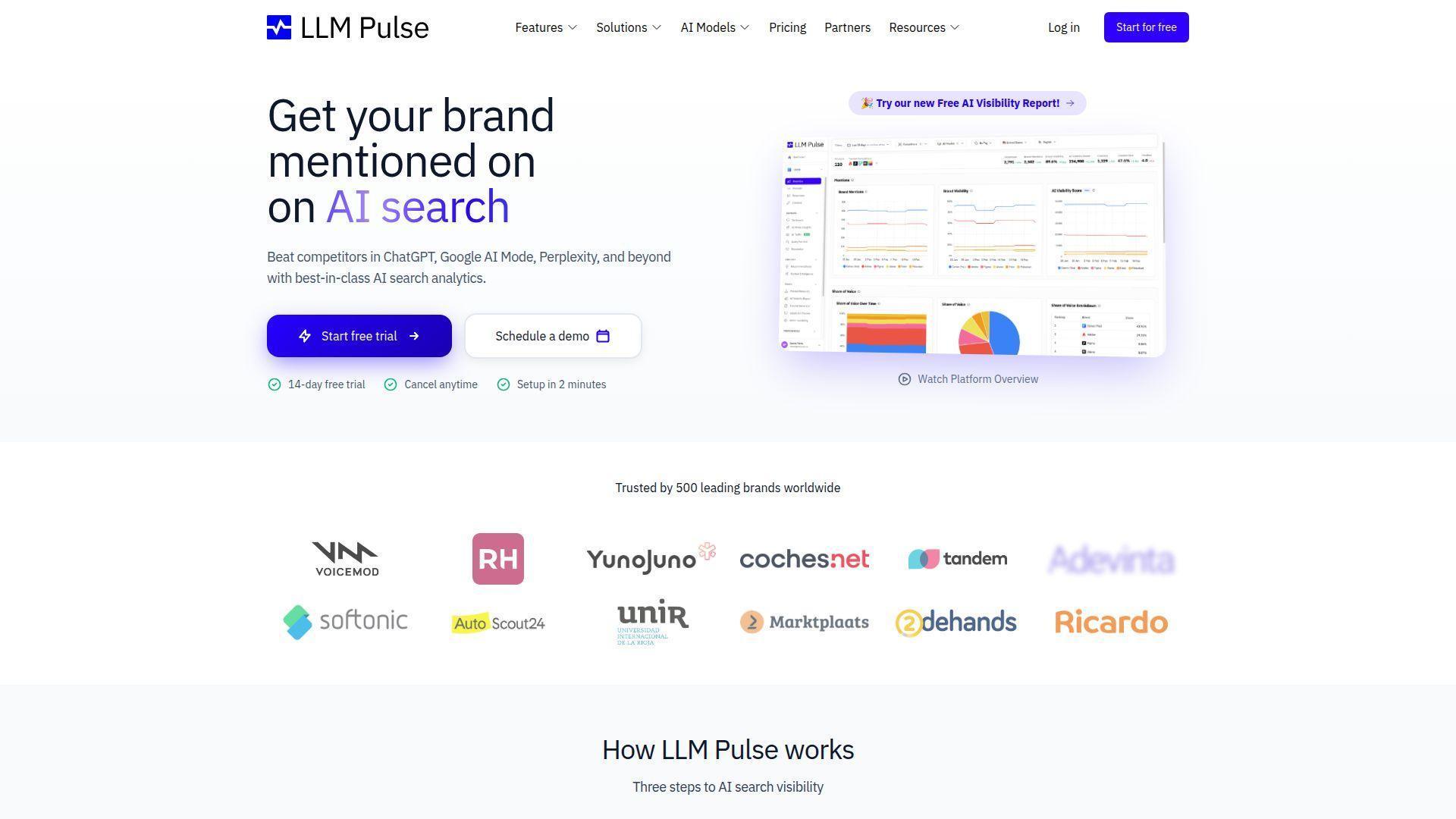
LLM Pulse is an AI visibility analytics platform that treats Perplexity as a first-class engine, not a bolted-on extra. Every prompt in your project runs against five AI models on your selected cadence, and Perplexity is one of them. There is no Perplexity-only upcharge.
Where LLM Pulse stands out is the citation layer. When Perplexity cites a URL, LLM Pulse captures it, normalises the domain, attributes it to the right competitor (or to you), and lets you filter the citation history by query, by week, by domain, and by sentiment. You can answer questions like “which 10 queries are driving the most Perplexity citations to my competitor’s pricing page” or “did Perplexity stop citing our homepage when we relaunched the meta description?”. Those are the kind of operational questions that move pipeline; most Perplexity trackers cannot answer them.
Key features
- Scheduled Perplexity runs. Perplexity is part of the standard model rotation.
- Citation source tracking. Every cited URL is logged, deduplicated by domain, and tied to the originating prompt. See the citation sources analysis feature page for the full data model.
- Share of voice across Perplexity sources. The share of voice view ranks brands by mention rate and citation rate; Perplexity has its own breakdown so you can isolate it from the multi-model average.
- Sentiment per response. Each Perplexity answer is sentiment-scored at the brand level.
- Locale-specific tracking. Run the same prompt in US English, UK English, Spanish, German, and more. Perplexity returns different cited sources by region; you need to track them separately.
- Looker Studio connector. The native connector, with a ready-made template, can bring Perplexity metrics into reporting dashboards.
- REST API and MCP. Pull Perplexity data through the API or query it through the MCP integration.
- Unlimited seats. No per-user upsells. Add the whole client team, the whole agency, the whole partner network.
- Free AI visibility report. Run a no-commitment audit at llmpulse.ai/ai-visibility-report to see how you currently appear in Perplexity before you commit.
- Google Search Console integration. Connect your Search Console property to import your top real search queries into prompt generation, so you track what people actually search, and pull impressions, clicks, CTR, and average position into your view.
- White-label and embed. Run a full white-label portal on your own domain, or embed live Perplexity and multi-model dashboards inside your own app via a secure iframe, built for agencies and client portals.
Watch-outs
LLM Pulse is honest about the trade-offs. The €49 Starter is not the cheapest entry point in the category; a few of the tools below start at €29 or $24. You get more for the €49 (5 models, 50 prompts, full citation extraction, unlimited seats), but if you genuinely only need to track 10 prompts on Perplexity once a month and nothing else, a smaller tool can be cheaper on paper.
LLM Pulse supports daily, weekly, and monthly tracking. Choose a cadence that matches how quickly your team can act on changes. If you need same-day alerting on a specific cited source, you will want to pair LLM Pulse with a manual spot-check workflow.
Pricing
- Starter: €49/month, 50 prompts, all 5 models including Perplexity, unlimited seats, full citation tracking. Works out to roughly €0.98 per prompt.
- Growth: €99/month, 150 prompts. Best fit for in-house teams running a single brand at depth.
- Scale: €299/month, 450 prompts. The agency and multi-brand sweet spot at €0.66 per prompt.
- Scale+: €599/month, 1,200 prompts, for higher-volume teams.
- Scale++: €1,199/month, 2,400 prompts.
- Enterprise: Custom capacity, white-label and dedicated support. Paid model add-ons remain available on this plan.
Full plan details at llmpulse.ai/pricing.
2. SE Ranking, best for SEO and Perplexity in one view
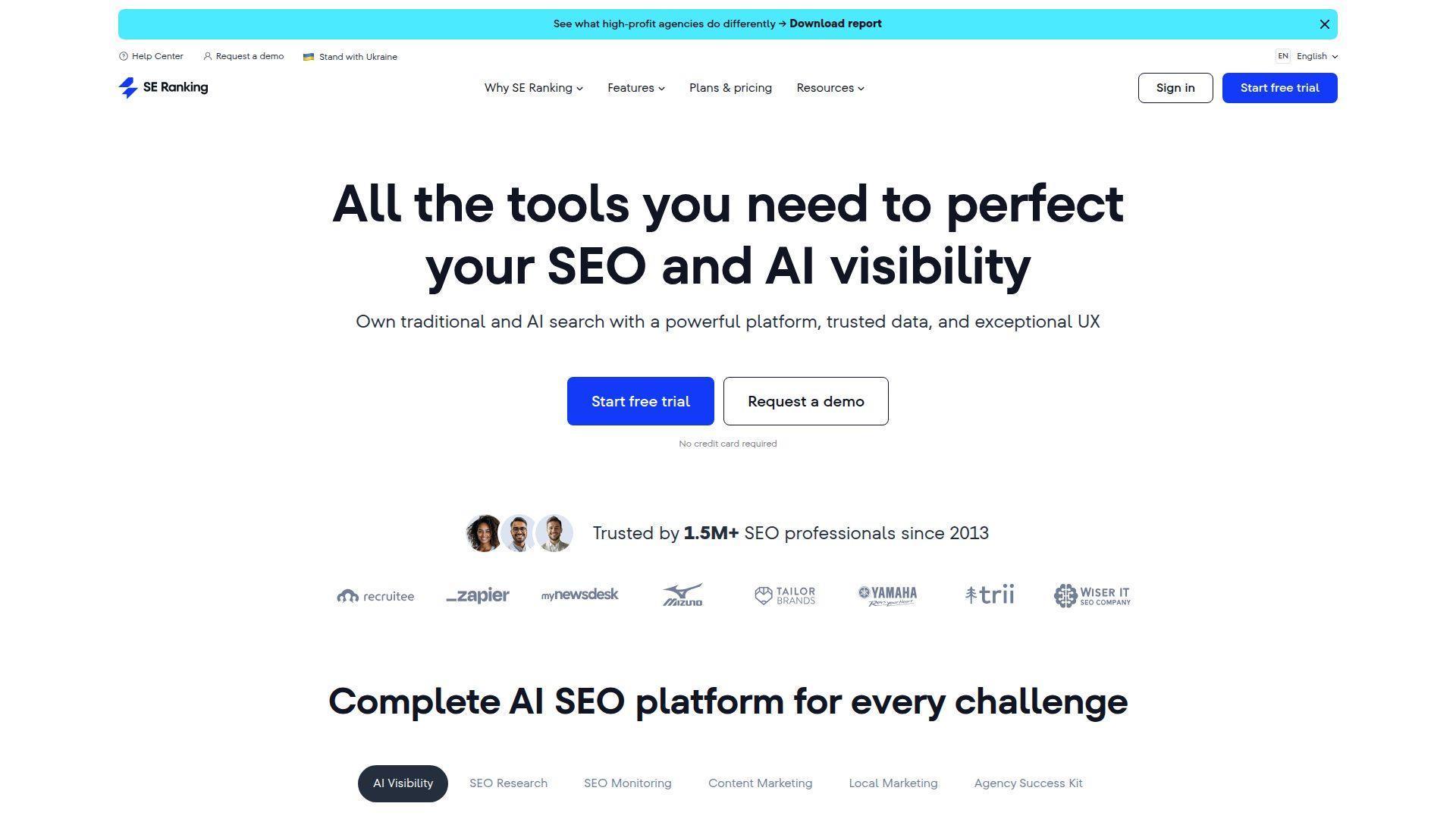
SE Ranking is a long-established SEO platform that added an AI search visibility module and now markets a dedicated Perplexity tracker. The pitch is integration: you keep your Google rank tracking, your backlink audit, and your competitor research in one tool, and Perplexity slots in as another data tab.
Key features
- Perplexity visibility tracker with mention rate and basic citation capture.
- Tight integration with Google SERP rank tracking and on-page SEO audits.
- Multi-location tracking for Perplexity.
- White-label client reporting baked into the higher tiers.
Watch-outs
The Perplexity module feels grafted onto an SEO platform rather than designed for AI search from the ground up. Citation depth is shallower than purpose-built trackers, and the share of voice views mix traditional and AI search metrics in ways that can be confusing.
Pricing
SE Ranking base plans start around $129/month on monthly billing, less on annual billing; the AI search visibility module is an add-on that pushes the effective cost higher. Check the provider site for current plan structure, as pricing in this category changes frequently.
3. Keyword.com, Perplexity rank tracking by position
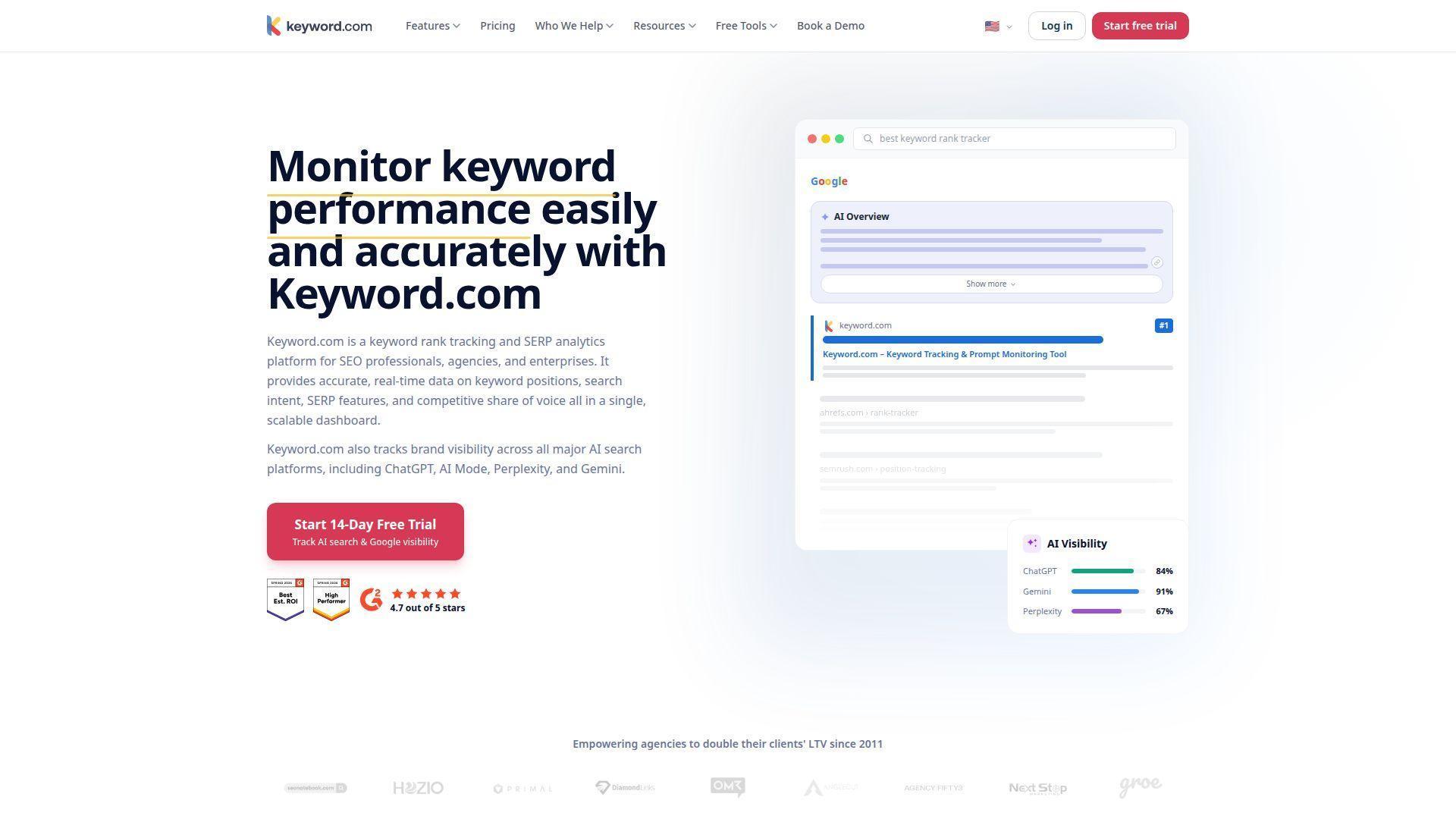
Keyword.com is a pure-play rank tracker that has expanded into AI search. Its Perplexity offering focuses on position-style tracking: which queries surface your brand, and where in the answer or source list.
Key features
- Position tracking for queries across Perplexity and Google.
- Clean dashboards focused on rank movement.
- Affordable entry tier suitable for solo consultants.
Watch-outs
The metaphor of “position” maps awkwardly onto Perplexity, which does not have a numbered list of ten results. The tool’s Perplexity views can feel like they are trying to force an SEO model onto an AI search engine. Citation extraction is basic.
Pricing
Plans start around $24/month for a small keyword footprint. AI search tracking is included on most tiers but with query limits.
4. Rankability, Perplexity citation-level insights
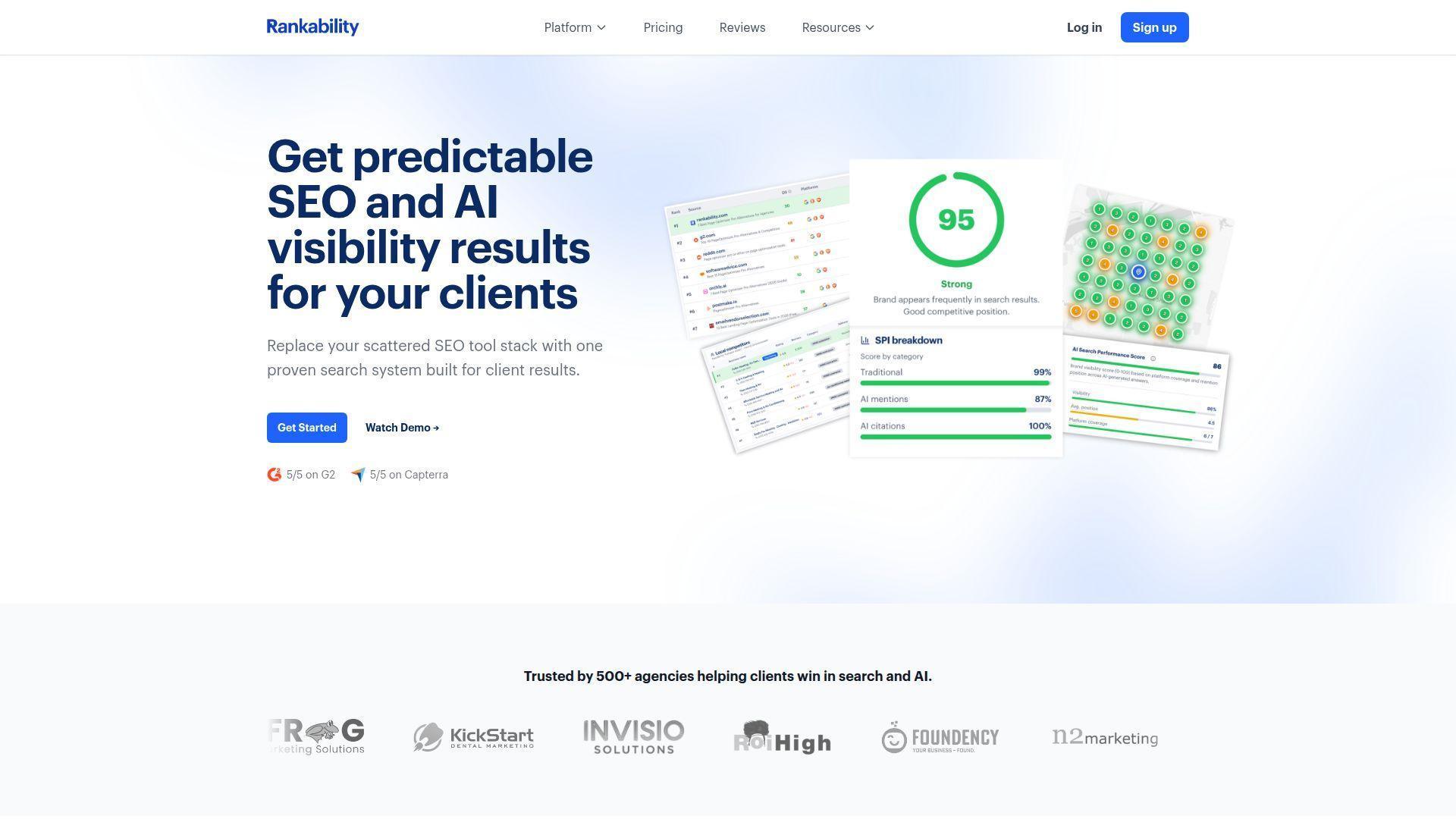
Rankability is a content optimisation platform that added a serious AI search tracking layer. Its Perplexity reporting goes beyond mentions to surface which source URLs are cited and how that changes when you update content.
Key features
- Citation-level reporting tied to specific URLs on your domain.
- Content optimisation suggestions to lift Perplexity citation share.
- Side-by-side comparison of Perplexity and ChatGPT visibility.
Watch-outs
Rankability’s strongest features sit behind the content optimisation workflow, so if you are not using it for content briefs the standalone Perplexity tracker is less compelling. Locale coverage is narrower than European tools.
Pricing
Team is $399/month with 150 daily prompts across ChatGPT, Google AI Mode, Google AI Overviews, Claude, and Perplexity, plus 10 projects and unlimited seats.
5. Finseo, Perplexity-specific visibility tracking
Finseo focuses on AI search specifically and ships a Perplexity visibility tracker as one of its headline products. The interface is designed around mention monitoring, alerting, and answer text capture.
Key features
- Perplexity mention alerts and answer text archives.
- Competitor mention rate comparisons.
- Multi-locale coverage in the higher tiers.
Watch-outs
Citation extraction is improving but not as deep as purpose-built citation-first tools. Reporting exports are functional but lack a polished client-deliverable format.
Pricing
Starts around $49/month for the entry tier with limited prompts; full multi-locale tracking is on higher plans.
6. Ziptie.dev, developer-oriented Perplexity tracking
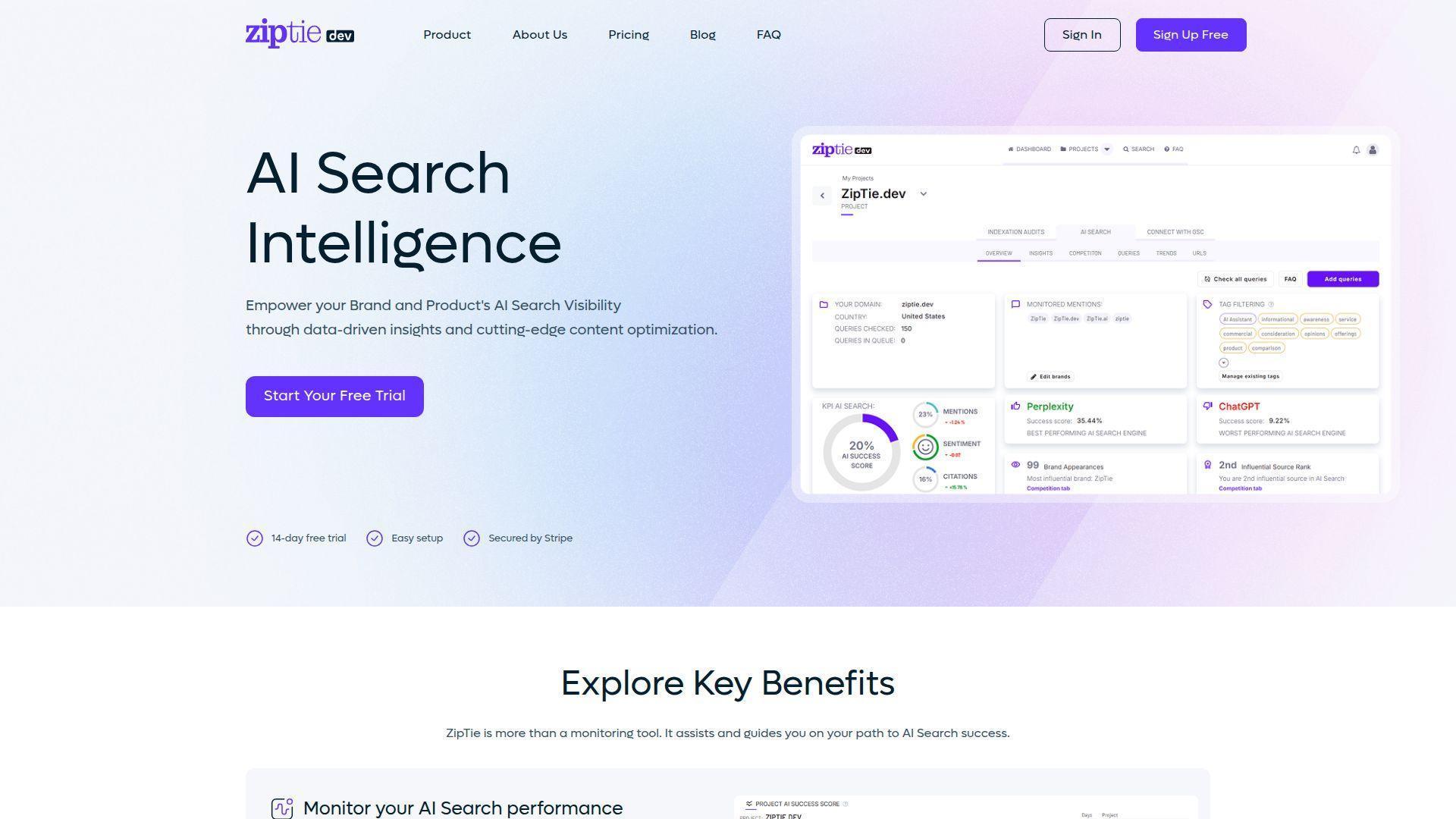
ZipTie combines built-in AI visibility dashboards with optional REST API and MCP access for teams building their own reports.
Key features
- API-first data access with clean JSON output.
- Programmatic prompt scheduling.
- Citation URL capture exposed via API endpoints.
Watch-outs
API and MCP access require a paid add-on and are unavailable during the free trial. Check the built-in reports against your reporting needs before choosing a configuration.
Pricing
Pricing depends on prompts, selected engines, and refresh frequency. The API and MCP add-on costs $10/month.
7. Otterly, German-built AI visibility tracker
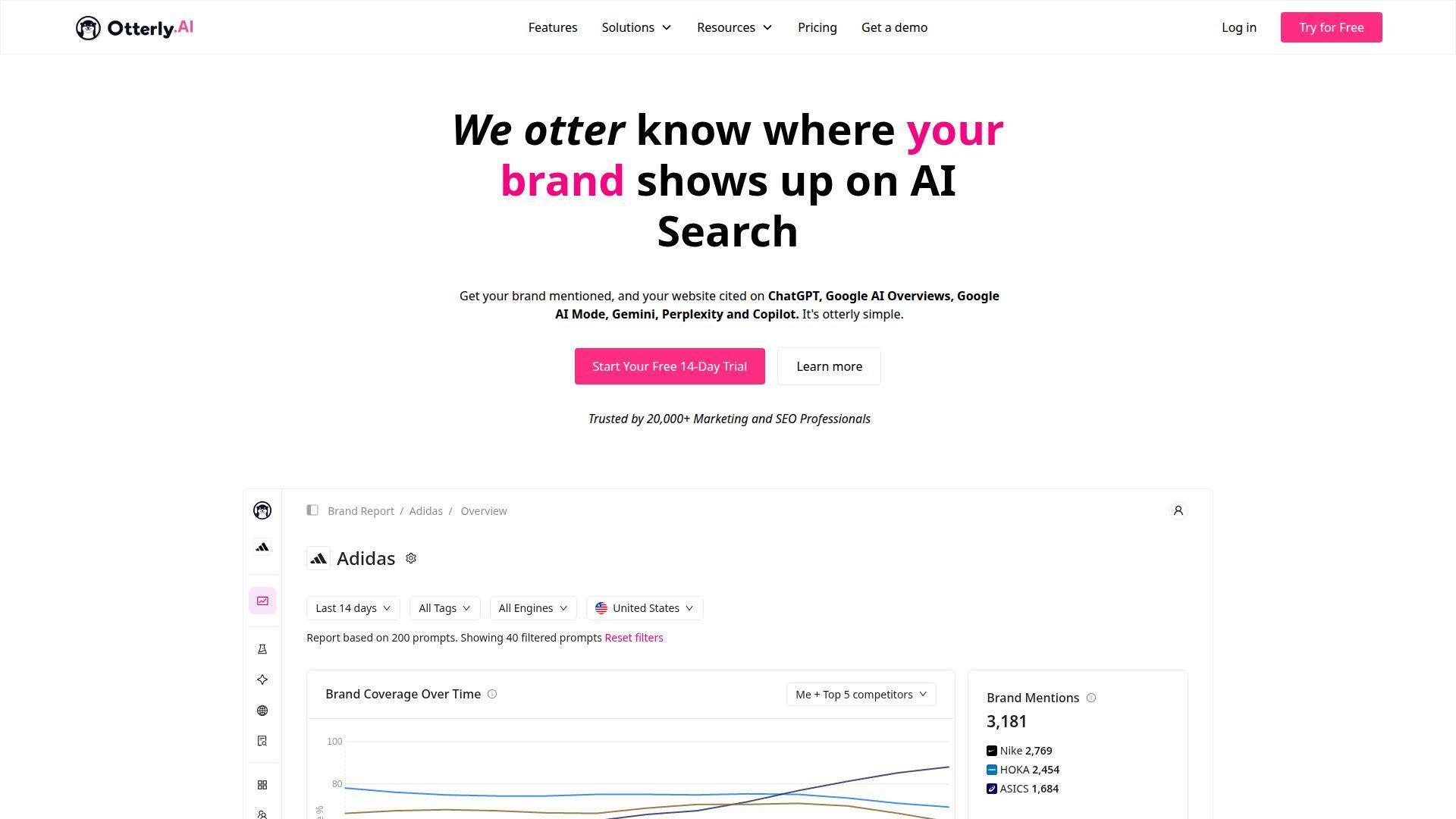
Otterly is a European tool with a focus on the German-speaking market and a low entry price point. It tracks Perplexity, Google AI Overviews, and ChatGPT.
Key features
- Strong DACH-region locale coverage.
- Mention monitoring with weekly summaries.
- Affordable entry tier at $29/month.
Watch-outs
Prompt budgets at the entry tier are tight; you will hit the limit fast if you have more than a handful of brand and competitor queries. Citation depth is moderate rather than deep.
Pricing
Starts at $29/month with a small prompt allowance. Higher tiers unlock more queries and locales.
8. Profound, enterprise-grade Perplexity tracking
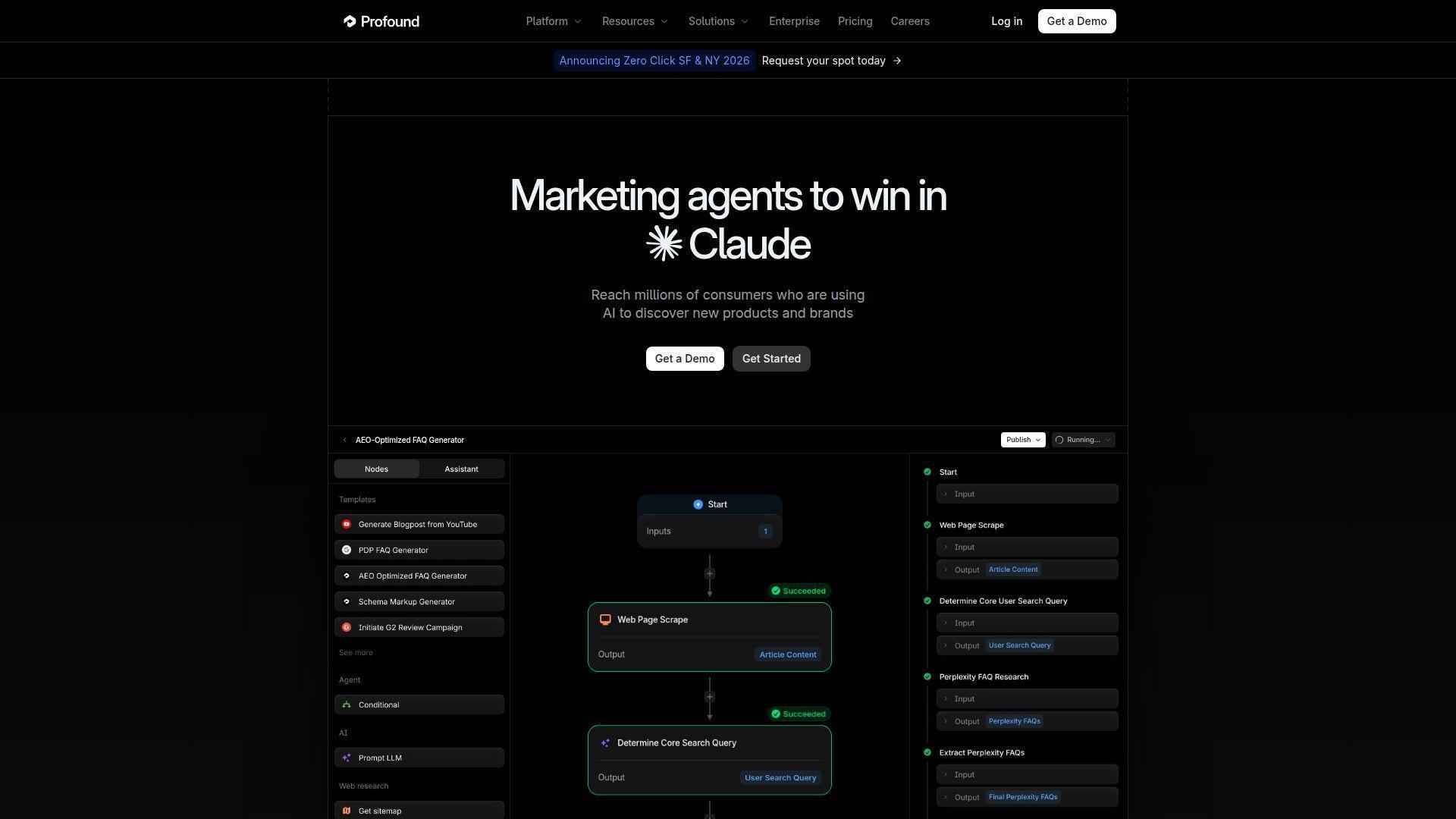
Profound is one of the better-funded entries in the AI visibility space and targets enterprise buyers. SOC 2 compliance, security reviews, and dedicated CSMs are part of the pitch. It tracks Perplexity, ChatGPT, Gemini, and others.
Key features
- Enterprise security and compliance posture.
- Wide model coverage including Perplexity.
- Dedicated customer success and onboarding.
Watch-outs
Starter costs $99/month for ChatGPT only, while Growth costs $399/month for three engines, both billed yearly. Starter is self-serve and Growth offers a trial; Enterprise uses a sales-led process for broader coverage and controls.
Pricing
Starter is $99/month for ChatGPT tracking and Growth is $399/month for three engines, both billed yearly, with custom Enterprise pricing for broader model coverage.
9. Trakkr, review-style Perplexity visibility
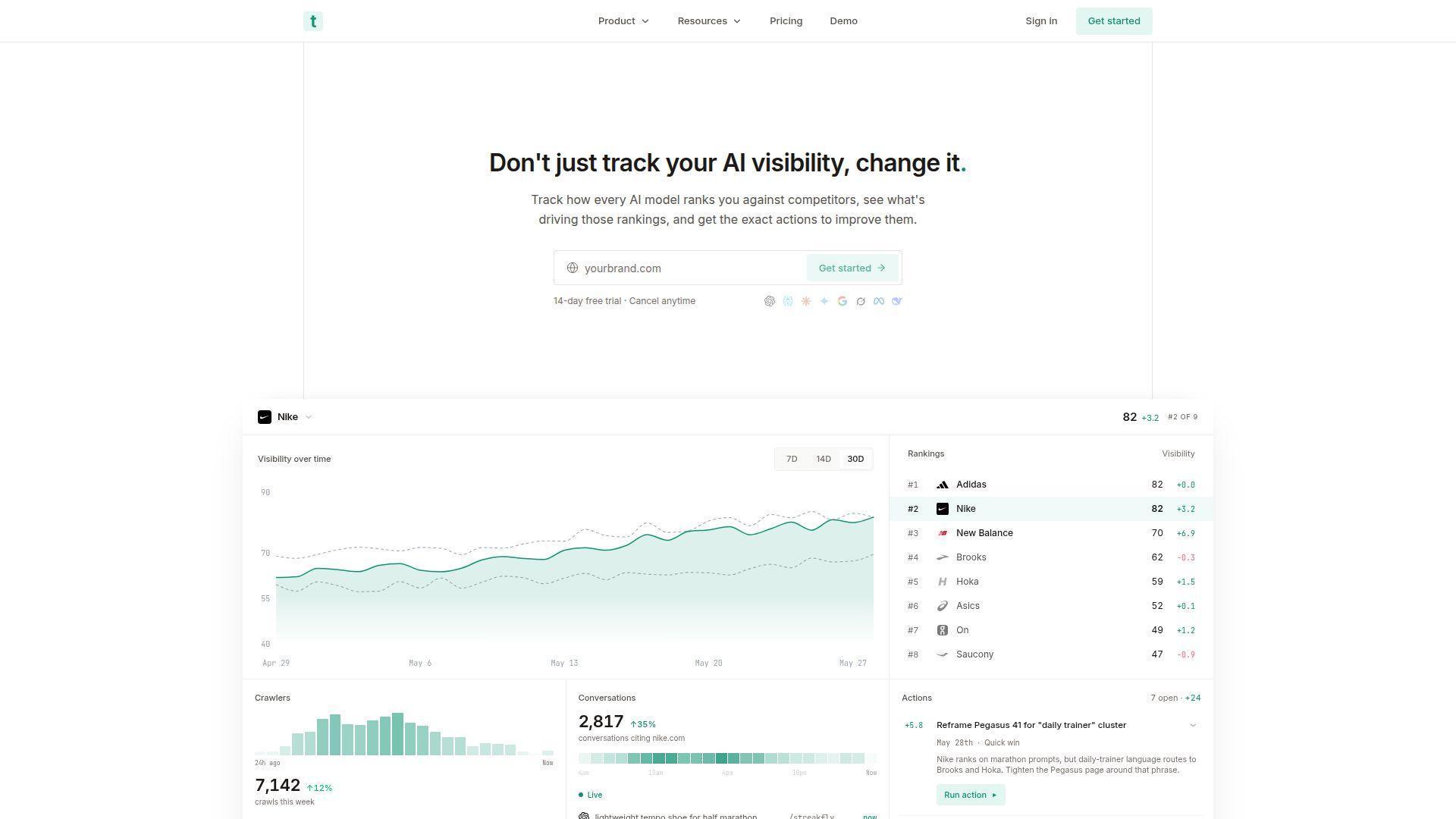
Trakkr packages AI search visibility as a recurring audit and review report. You define your queries, Trakkr runs them across Perplexity and other engines, and you get a periodic report you can share with stakeholders.
Key features
- Scheduled audit reports for Perplexity.
- Stakeholder-friendly report format.
- Competitor benchmarking included.
Watch-outs
The report-first model is great for monthly board updates but less useful if you want to dig into individual queries and citations in real time. Self-serve drill-down is limited compared to dashboard-first tools.
Pricing
Starts around $59/month for the entry plan; team and agency tiers add seats and exports.
10. Siftly, chat-based Perplexity analysis
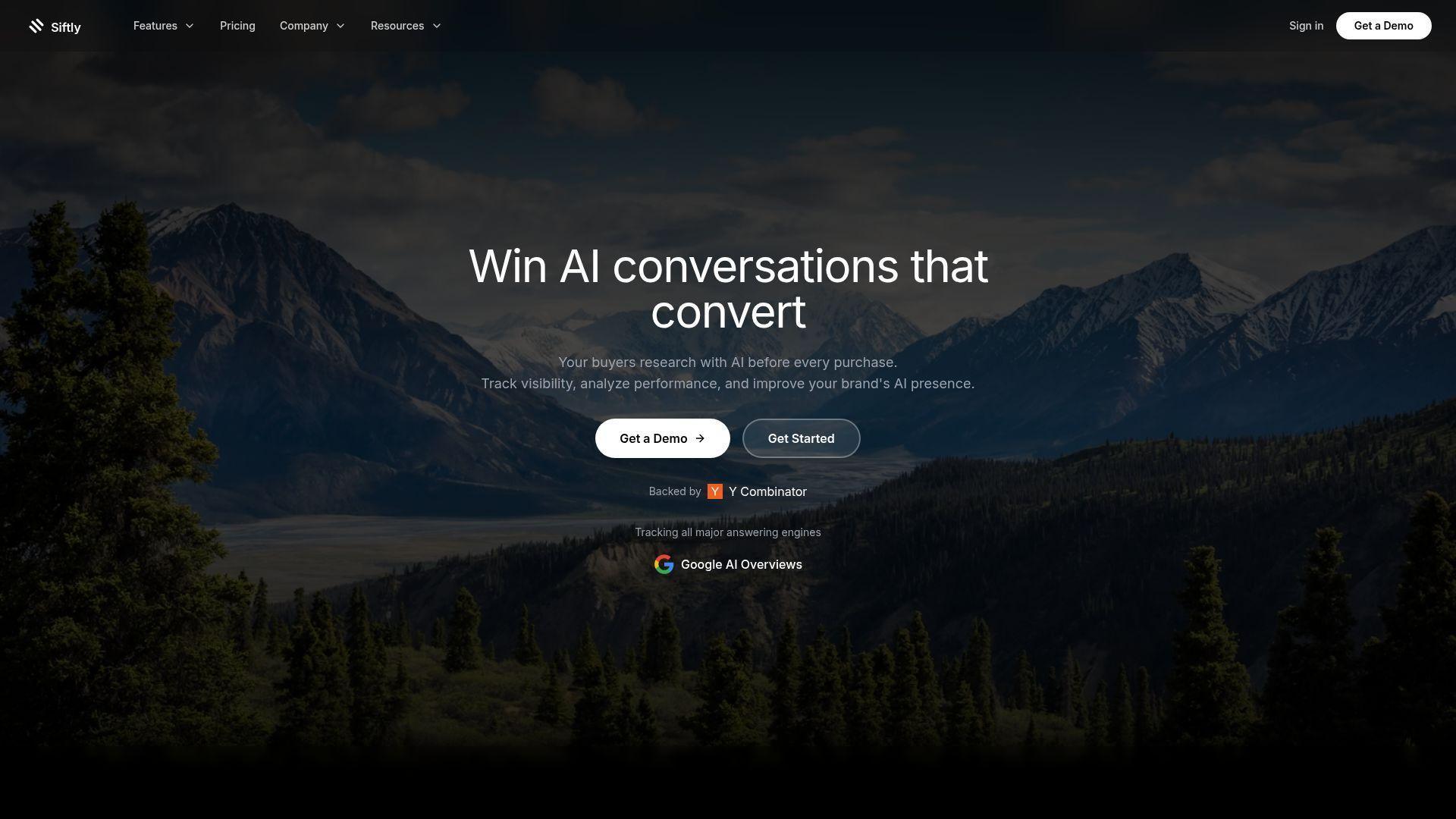
Siftly takes a conversational approach: instead of dashboards, you ask the tool questions about your AI visibility and it answers. Perplexity is one of the engines it monitors.
Key features
- Conversational interface over visibility data.
- Natural-language queries about Perplexity citations and mentions.
- Fast to onboard if you dislike dashboards.
Watch-outs
The chat interface is fun for ad-hoc questions but slower than a dashboard for repeated weekly reviews. Data exports and integration breadth are still maturing.
Pricing
A free tier is available, and paid plans start at $79/month.
11. AIClicks, newer Perplexity-focused tool
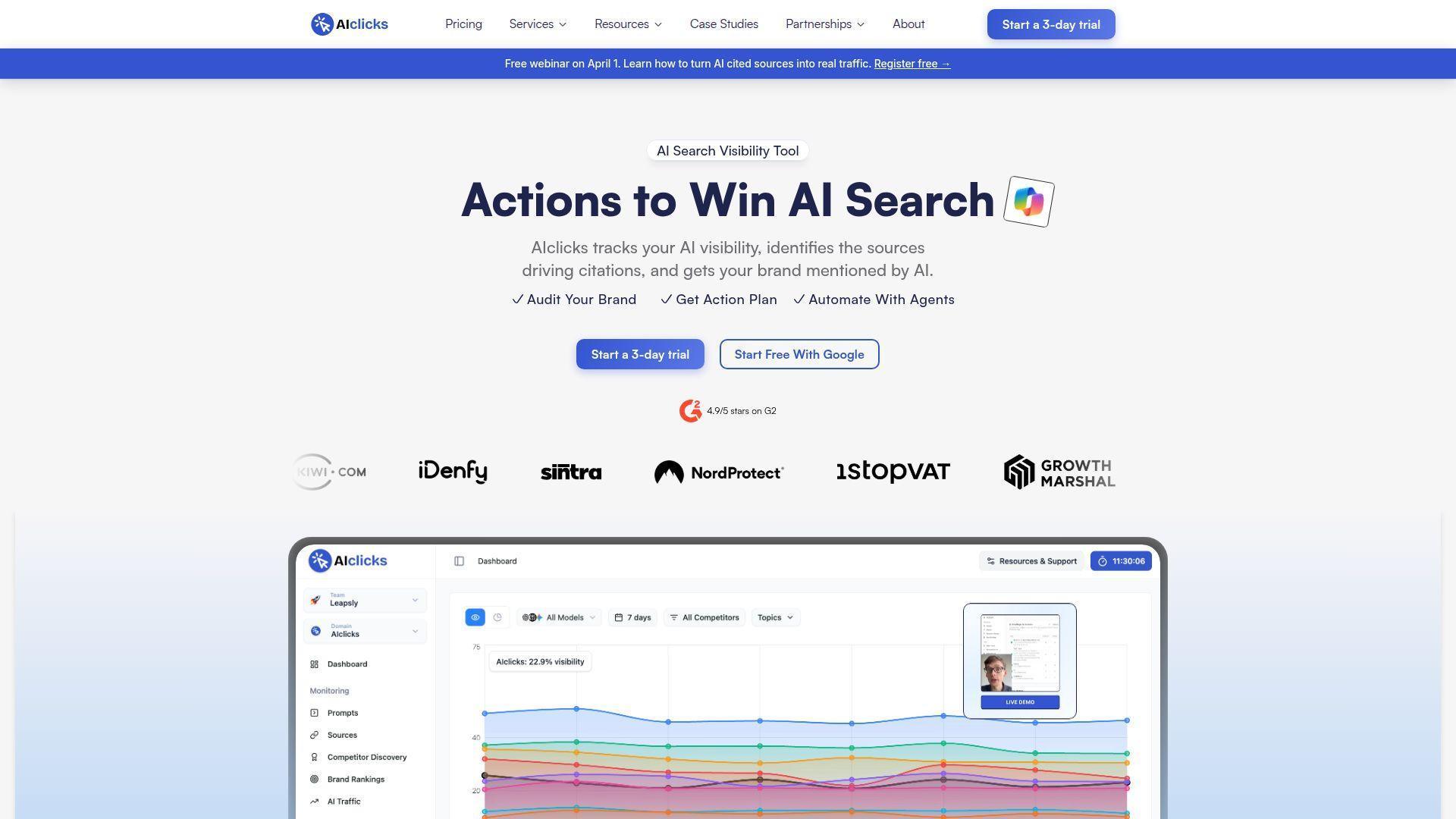
AIClicks is one of the newer entrants and positions itself specifically around Perplexity and ChatGPT visibility. The product is iterating fast.
Key features
- Perplexity-first product roadmap.
- Clean entry-tier pricing.
- Frequent product updates as the category matures.
Watch-outs
Being newer means fewer integrations, smaller historical data sets, and less battle-tested data accuracy than incumbents. Good for early adopters; less appropriate if you need a multi-year data trail.
Pricing
Starts around $45/month. Higher tiers add prompts and locales.
12. Friction AI, guide-based Perplexity tracking
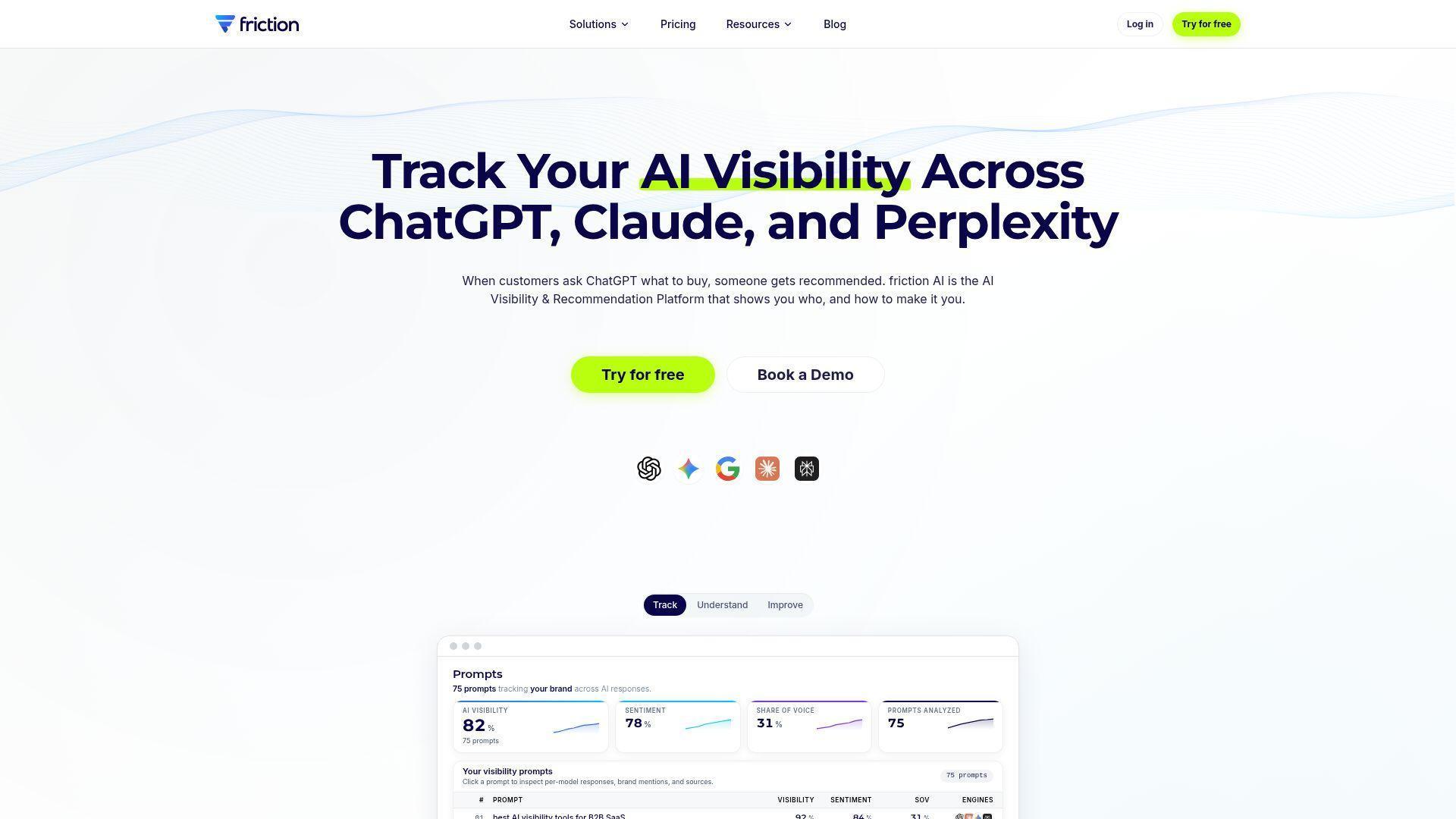
Friction layers AI visibility tracking with editorial guides explaining what to do about the data. Perplexity tracking is included alongside playbooks for improving citation share.
Key features
- Tracker plus actionable guides for Perplexity improvement.
- Suited to teams new to AI search who want guardrails.
- Lightweight UI focused on key metrics.
Watch-outs
The educational layer is helpful at first but adds little once your team is up to speed. Citation extraction is solid but not best-in-class.
Pricing
Starts around $39/month with limited prompt volumes.
13. RankPrompt, prompt-level Perplexity monitoring
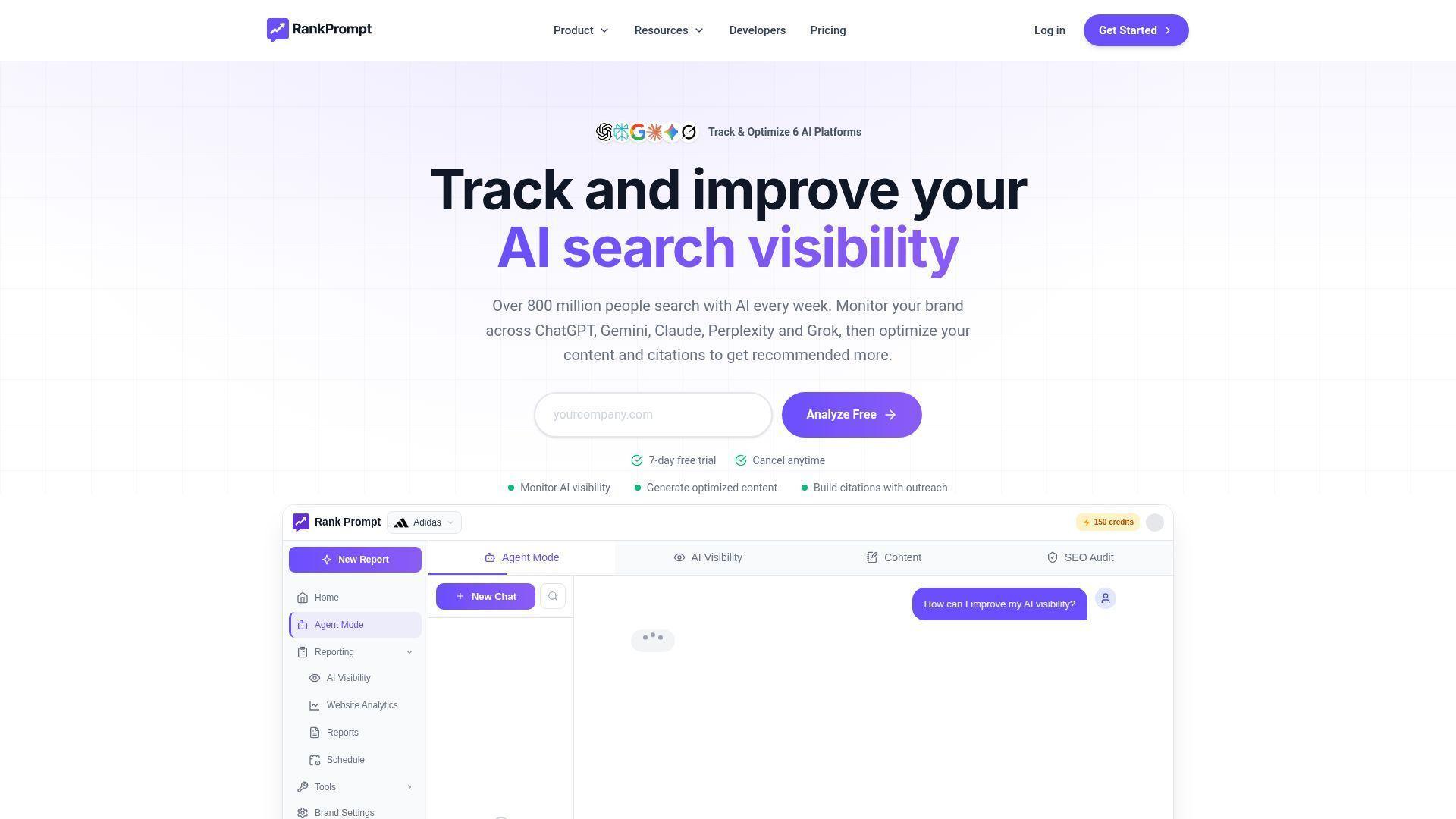
RankPrompt focuses on the prompt as the unit of measurement: you build a library of prompts, RankPrompt runs them against Perplexity and other models, and you get prompt-by-prompt visibility data.
Key features
- Prompt-library-driven workflow.
- Easy to organise queries by buyer journey stage.
- Includes Perplexity alongside ChatGPT.
Watch-outs
The prompt-library framing requires more upfront work than tools that suggest prompts for you. If you do not already have a clear list of queries you care about, this is slower to get value from.
Pricing
Starts around $49/month. Plans scale with prompt count.
14. Riff Analytics, Perplexity brand mention tool
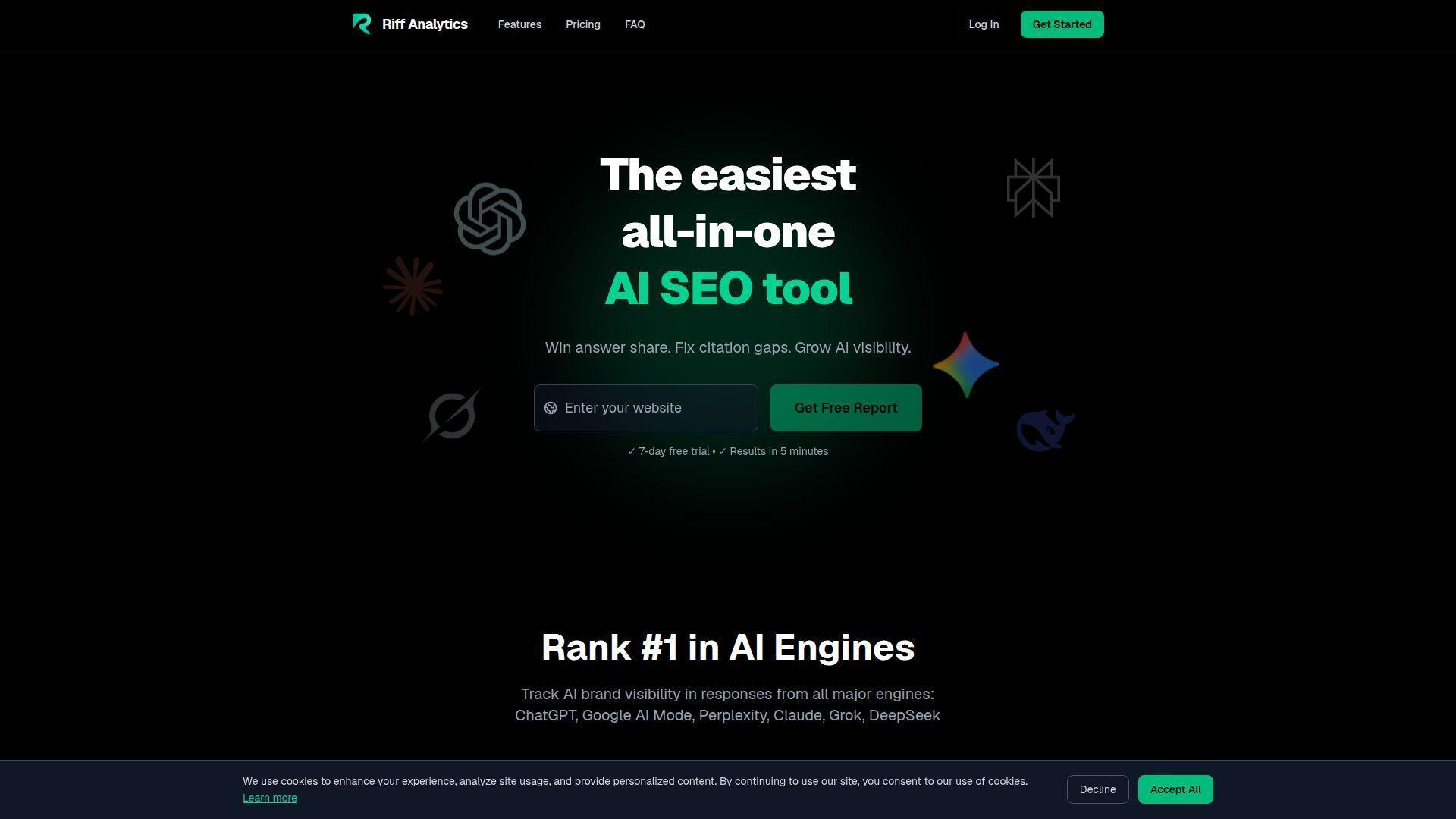
Riff Analytics is focused on brand mention monitoring across AI engines, with Perplexity as a headline surface. Reports lean toward executive summaries.
Key features
- Brand mention tracking across Perplexity, ChatGPT, and Gemini.
- Executive-friendly weekly summaries.
- Sentiment scoring per mention.
Watch-outs
Citation source extraction is shallower than category leaders, and locale support is limited. Best suited if you only need a directional read on brand visibility, not a deep citation audit.
Pricing
Starts around $59/month with weekly reporting included.
Other tools worth mentioning
These do not crack the main 15 but deserve a mention if you are building a shortlist.
- Athena HQ. Content optimisation platform with AI search visibility features. Stronger on AEO content briefs than on raw Perplexity tracking.
- Scrunch AI. Markets itself explicitly around AEO and GEO. Solid mid-market option if you want a single-vendor narrative.
- BrightEdge. Enterprise SEO platform with AI search add-ons. Heavy enterprise procurement; rarely the right pick for self-serve buyers.
- Conductor. Enterprise content platform with AI search modules. Same caveat as BrightEdge: capable but priced and shaped for large customers.
How to choose the right Perplexity tracker
Strip the pitches away and three questions decide the right tool for you.
1. Do you need citation depth, or just mention monitoring? If you only care whether your brand name shows up in the Perplexity answer text, almost any tool here will do, including the cheapest. If you need to know which URLs are being cited, which competitors are stealing those cites, and how that changes when you ship new content, you need a citation-first tool. LLM Pulse, Rankability, and Profound are the strongest picks for citation depth.
2. How many prompts do you actually need to track? Per-prompt economics matter. A $29/month tool that gives you 15 prompts costs roughly $1.93 per prompt, which is more expensive than a €49 plan with 50 prompts (€0.98 per prompt). Map your real prompt list (brand, product, competitor, comparison, problem queries) before signing up. Most serious tracking projects need 30 to 100 prompts as a minimum.
3. Do you need agency or multi-brand features? If you are an agency, you need unlimited seats, multi-project, exports to client deliverables (Looker Studio, CSV), and API access. LLM Pulse ships these on its self-serve tiers, with white-label also available; most competitors gate at least one of these behind enterprise. Profound and BrightEdge cover agency needs but at enterprise prices.
Pricing is rarely the deciding factor at the top of the market. Data quality is. A cheap tracker that misses half your Perplexity citations is more expensive than a slightly pricier tool that catches all of them, because the bad data leads to bad content decisions.
Final recommendation
If you want the most complete Perplexity tracker that also captures the other four AI engines that matter (ChatGPT, Gemini, Google AI Mode, Google AI Overviews), start with LLM Pulse. LLM Pulse provides full citation extraction, share of voice, unlimited seats, and OAuth MCP. It also offers sentiment analysis, a REST API, and a Looker Studio connector. Its €49 Starter plan includes 50 prompts across five models. Run the free AI visibility report first to see your current Perplexity baseline.
If you are buying for a Fortune 500 procurement process and need SOC 2, dedicated CSMs, and contractual SLAs, look at Profound. If you only need a directional read on brand mentions in Perplexity and your budget is under $40/month, Otterly or Friction AI are reasonable starting points; just know you are buying a partial view of the picture.
FAQ
Does Perplexity allow rank tracking?
Perplexity does not publish a ranking API the way Google offers Search Console data, but it does allow programmatic queries through its public interface and its Sonar API. Third-party trackers may use the Sonar API or another documented integration to capture answers and citations. Their methodology should be verified with each provider. There is no official “rank” because Perplexity does not return a list of ten results; you track mention rate and citation share instead.
How often should you check Perplexity rankings?
Weekly is a practical baseline for many buyers, while daily can help with fast-moving launches or reputation monitoring: Use the same prompt, locale, and schedule when comparing results, and choose the cadence your team can review consistently.
Can I track Perplexity for free?
You can manually run a handful of queries in Perplexity and screenshot the answers. That is fine for spot-checks but not for ongoing measurement. All serious trackers cost money because each Perplexity query has a real cost (the API and infrastructure are not free). LLM Pulse publishes self-serve pricing. A free no-commitment audit is available at llmpulse.ai/ai-visibility-report.
What is a citation in Perplexity?
A citation in Perplexity is a source URL that Perplexity quotes or links to as evidence for a claim in its generated answer. Each answer typically has 5 to 8 cited sources, shown as numbered references in the response and as a sidebar list of source domains. Citations are the closest equivalent to a SERP position in AI search; they also drive real click-through traffic to your site.
How does Perplexity decide which sources to cite?
Perplexity uses a mix of real-time web search, indexed content, and ranking signals that are conceptually similar to (but not identical to) Google’s. Authority, freshness, topical match, and content structure all play a role. Pages that answer questions directly, with clear structure, citations of their own, and high topical authority tend to be cited more often. Perplexity does not publish a public ranking formula.
Can I track competitors’ Perplexity visibility?
Yes. Competitor tracking is a standard feature in any serious AI visibility tool, including LLM Pulse. You define competitors at the project level and the tracker records mentions, citations, and share of voice for each one alongside your own brand. LLM Pulse exposes this through the competitor tracking and share of voice views.
Does LLM Pulse track Perplexity Pro?
LLM Pulse tracks Perplexity as one of its standard engines. Perplexity also offers Sonar models through its API, but the consumer product and API are distinct surfaces. Ask each tracker which Perplexity surface and configuration it measures before treating results as representative of a particular Perplexity plan.
Can I get Perplexity data into Looker Studio?
Yes. LLM Pulse ships a native Looker Studio connector with a ready-made template that includes Perplexity-specific dashboards: mention rate, citation share, sentiment, top cited domains, and competitor breakdowns. Most other tools in this list require a CSV export or a custom API integration to get Perplexity data into Looker Studio.