



Last updated: October 5, 2026
Rankability has repositioned its offer in 2026 around an AI visibility content workflow: research, content creation, optimization, and automated routines. It remains a broad content platform, while teams focused on tracking ChatGPT, Perplexity, Gemini, and Google AI Overviews may prefer a dedicated visibility product.
This guide compares the strongest Rankability alternatives for AI search tracking in 2026, with verified pricing where we have it and qualitative descriptions where the vendor pricing is still in flux. LLM Pulse goes first because we build it. The rest of the list is honest about what each tool actually does well, and where it falls short. By the end you should know which alternative matches your buyer, your prompt volume, and your reporting needs.
Table of Contents
Why teams look for Rankability alternatives
Rankability is a credible product. Most teams who shop around are not unhappy with Rankability so much as they want a different shape of tool. Three reasons come up most often.
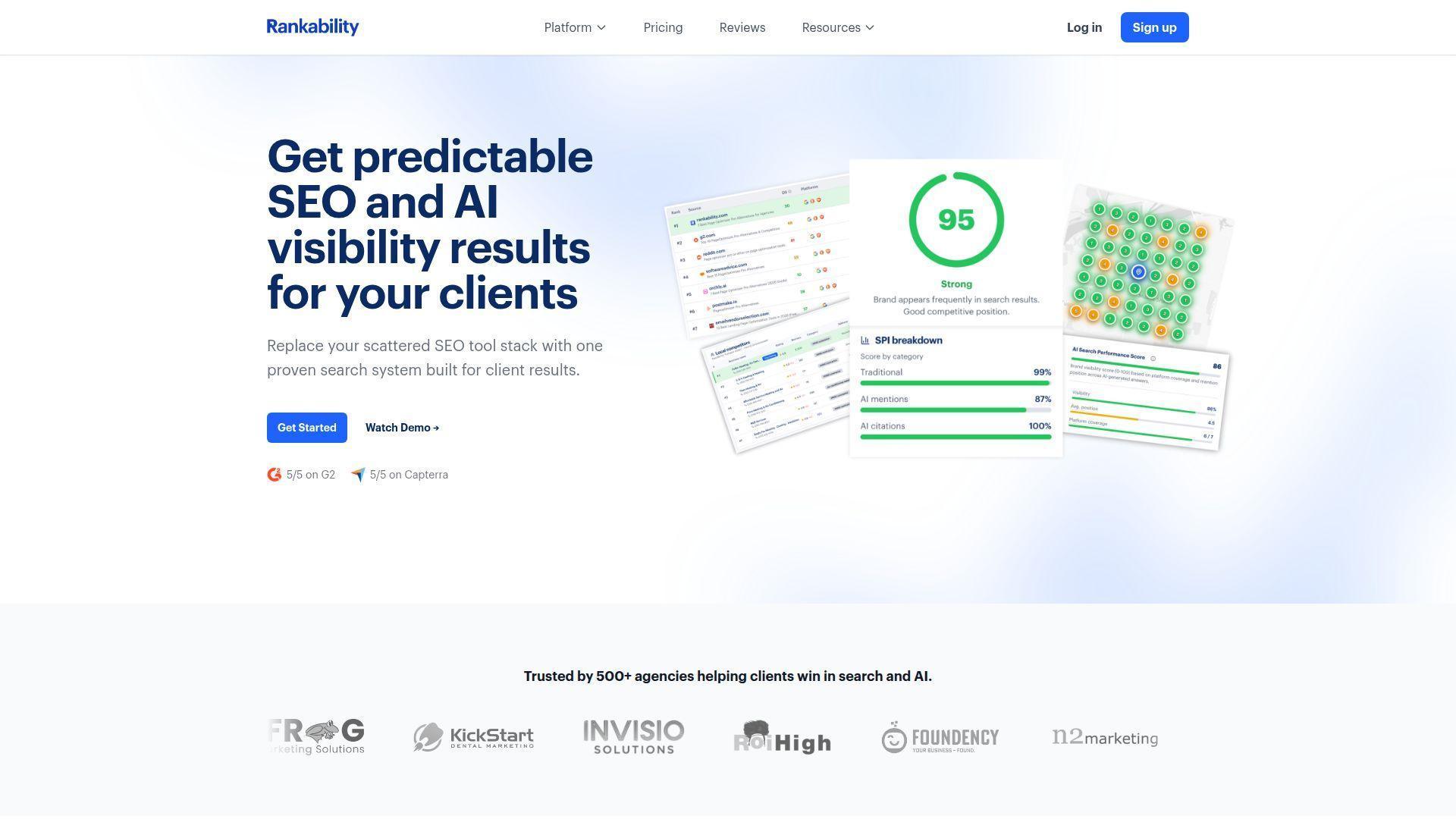
Different workflow focus. Rankability combines AI research, content creation, optimization, and automation. If you already have those production workflows covered, a dedicated visibility tool can focus on the question your buyer is asking: do we show up in ChatGPT and Perplexity?
Different product scope. Rankability’s Starter, Core, and Team plans combine AI visibility with content, audit, reporting, and publishing tools. Current monthly prices are $99, $199, and $399, with annual billing discounted by about 17 percent.
Different measurement model. Rankability’s current public plans use daily prompt and project allowances. Starter includes 60 daily prompts and 1 project, Core includes 125 and 3, and Team includes 250 and 10.
API and hosted MCP access are included on every plan, along with unlimited seats and full access to the product’s tools.
Evaluation criteria for Rankability alternatives
Before the list, the criteria. These are the questions we asked each tool to answer.
- AI engine coverage on default plans. ChatGPT, Perplexity, Gemini, Google AI Mode, and Google AI Overviews are the table stakes in 2026. Bonus points for Claude, Microsoft Copilot, Grok, DeepSeek, and Meta AI. Tools that gate engines behind upgrades are flagged.
- Cost per prompt, all engines included. The honest unit price. Headline plans are misleading when one tool’s prompt is 5 engine evaluations and another’s is a single ChatGPT query.
- Sentiment, citations, share of voice. The three core AI visibility analytics. If a tool charges extra for sentiment or limits citations, it does not really compete with the AI-first specialists.
- White-label, API, Looker Studio, MCP. Agencies need real client-facing branding, not a logo upload. Brand teams need clean exports into the BI stack they already run.
- Multi-language and multi-region. AI answers vary by locale. Tools that only run US English are not enough for a real European or APAC roster.
- Trial and billing flexibility. A monthly billed plan with a real trial beats an annual lock-in for buyers who are still scoping the category.
Quick comparison: top Rankability alternatives
Rankability Starter from $99/month; SE Ranking from $89/month as an add-on or $99/month standalone; Trakkr Growth from $100/month with a 14-day trial
| Tool | Best for | Starting price | AI engines on default plan | Key differentiator |
|---|---|---|---|---|
| LLM Pulse | AI-first teams who want depth, not a bundle | EUR 49/month | 5 (ChatGPT, Perplexity, Gemini, Google AI Mode, AI Overviews) | Lowest entry price with five default models, monthly billing, MCP, and a Looker Studio connector |
| Profound | Large enterprises with compliance needs | 1 to 3 depending on tier | Enterprise governance, SOC 2, large customer logos | |
| SE Ranking | SEO suite plus AI tracking add-on | 5 platforms via the AI tracker | SEO and AI in one suite, similar bundle logic to Rankability | |
| Keyword.com | Traditional rank tracker with AI added | AI Visibility from around $24.50/month for 50 credits | ChatGPT, Perplexity, AI Overviews on AI tiers | Mature rank tracker with white-label heritage |
| Otterly | Entry-level AI tracking | From $29/month (Lite, 15 prompts) | 4 (Google AI Mode, Gemini, and Claude are paid add-ons) | Cheapest entry but small prompt counts and engine gating |
| Trakkr | Comparison-led tracking | 8 (ChatGPT, Claude, Gemini, Perplexity, Grok, Meta AI, DeepSeek, AI Overviews) | Broad engine list with a 14-day trial | |
| AthenaHQ | SaaS brand teams running AI visibility programs | Essential free; Starter $295/month | Credit-based across multiple engines | Credit model, ACE Citation Engine on enterprise |
Pricing for each tool changes regularly. Always confirm the current quote on the vendor’s pricing page before you sign a contract.
1. LLM Pulse, the top Rankability alternative for AI-first tracking
Why it stands out
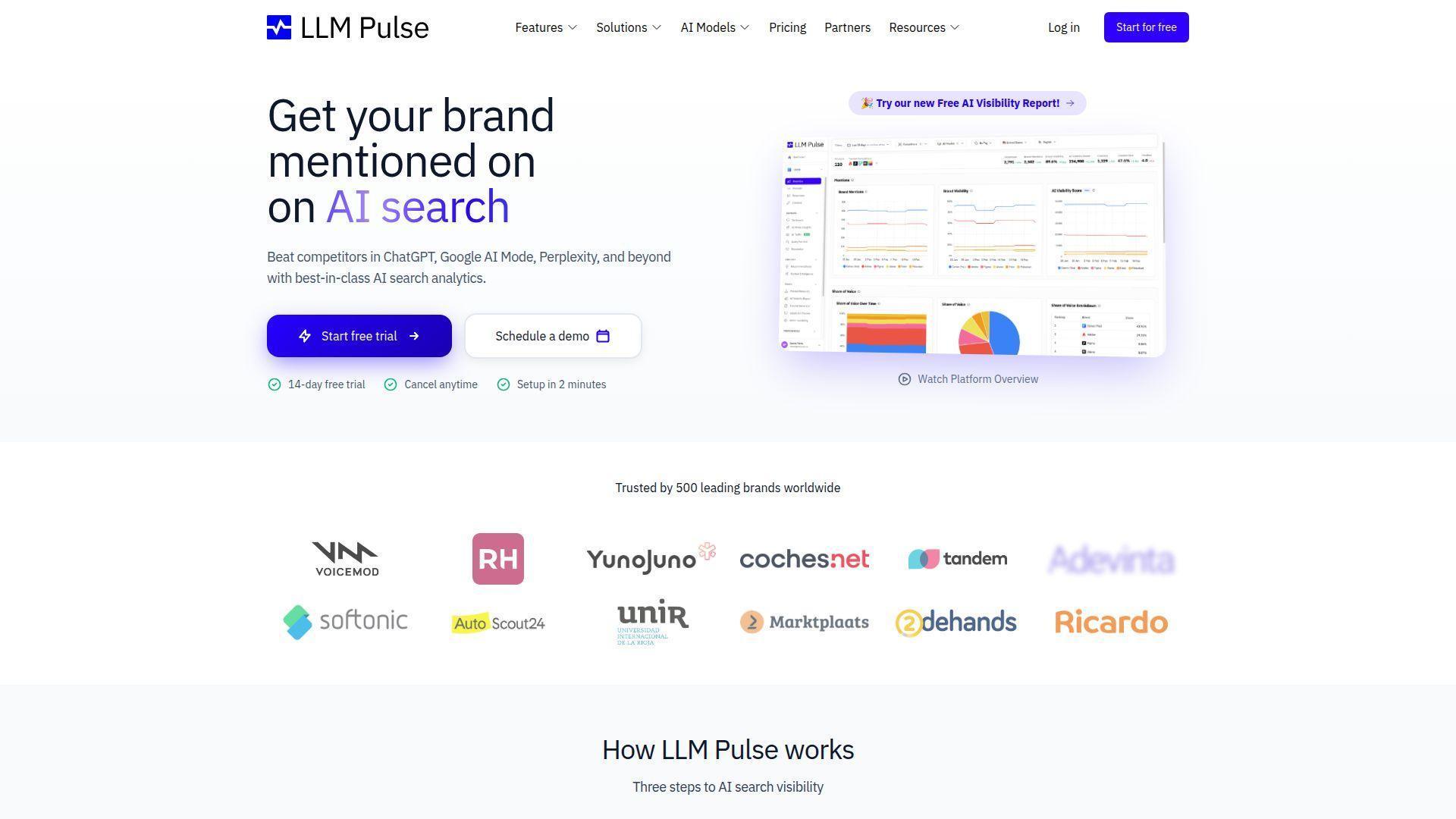
exposes citations, share of voice, and brand sentiment analysis
The pricing maths are clean. EUR 49 per month on Starter (50 prompts) works out to roughly EUR 0.98 per prompt. EUR 299 per month on Scale (450 prompts) drops to EUR 0.66 per prompt. LLM Pulse includes five standard engines and unlimited seats. You can read those numbers off the pricing page. Rankability uses daily prompt allowances that run across the platforms included with each plan, so the two products are not priced in the same unit.
Positioning matters too. LLM Pulse is an all-in-one GEO platform: it covers the full AI search workflow (tracking, analysis, optimization, AI traffic analytics) rather than bolting AI features onto a traditional SEO suite. If you already have an SEO platform you trust, LLM Pulse drops alongside it without making you pay for a duplicate keyword research tool you will never log into.
Key features
- 5 standard AI engines: ChatGPT, Perplexity, Gemini, Google AI Mode, Google AI Overviews. Claude, Copilot, Grok, DeepSeek, Naver AI Briefing, Baidu AI and Meta AI are available as self-serve paid add-ons. Alexa for Shopping is available as a self-serve paid add-on. Further models are available through Talk to sales.
- Flexible tracking across all engines. Every prompt runs on every default engine at the selected cadence. Starter supports 50 prompts across five standard models.
- Brand sentiment analysis. We score the actual answer text, not just the presence of a mention.
- Citation source analysis. See the URLs LLMs use to justify each answer, group them by domain, and find the sites that are punching above their weight in your category.
- Share of voice and competitor benchmarking, with a top 4 plus “others” breakdown.
- White-label and embed with custom domain plus embeddable iframe dashboards. Suitable to badge as your own agency product (see our agency page).
- Looker Studio connector with a ready-made template at llmpulse.ai/features/looker-studio.
- REST API, MCP, CLI, and webhooks. Query and automate LLM Pulse from your own stack, with Zapier, Make and n8n connectors.
- GEO Writer, Models Comparison, Query Fan-out, Prompt Research. The four discovery tools that turn citation data into next actions: what to write, which model is underperforming, which question shapes you have missed.
- Multi-language, multi-region. Run prompts in English, Spanish, German, French, Portuguese, Italian, Dutch, and more, with country-level locale targeting.
- Web analytics integration with GA4, Plausible, Piano, PostHog, Adobe Analytics, and Adobe CJA, so AI citations can be tied to the traffic and conversions they drive.
- Google Search Console integration to import your real top search queries into prompt generation and power the AI Traffic dashboard, plus Agent Analytics to see which AI crawlers hit your site.
- Reputation monitoring, app store tracking, Chrome Extension (Query Detector). The wider surface that matters for AI buyers but rarely appears on a Rankability deliverable.
- Unlimited team members. Add the whole agency or in-house team without seat economics fighting you.
Watch-outs
Claude, Copilot, Grok, DeepSeek, Naver AI Briefing, Baidu AI and Meta AI are self-serve paid add-ons. Alexa for Shopping is available as a self-serve paid add-on. Further models are available through Talk to sales. If your buyer expects a single platform that also does traditional SEO keyword research and link audits, LLM Pulse is not that product. Pair it with Ahrefs, Semrush or a similar tool.
Pricing
Starter is EUR 49 per month for 50 prompts, Growth is EUR 99 for 150 prompts, Scale is EUR 299 for 450 prompts, Scale+ is EUR 599 for 1,200 prompts, Scale++ is EUR 1,199 for 2,400 prompts, and Enterprise is custom. LLM Pulse includes 5 standard engines, citations, share of voice, MCP, CSV and Excel exports, unlimited seats, brand sentiment analysis, a REST API, and a Looker Studio connector. Billed monthly; annual billing is available. Full pricing here.
2. Profound, enterprise AI visibility at enterprise prices
Key features
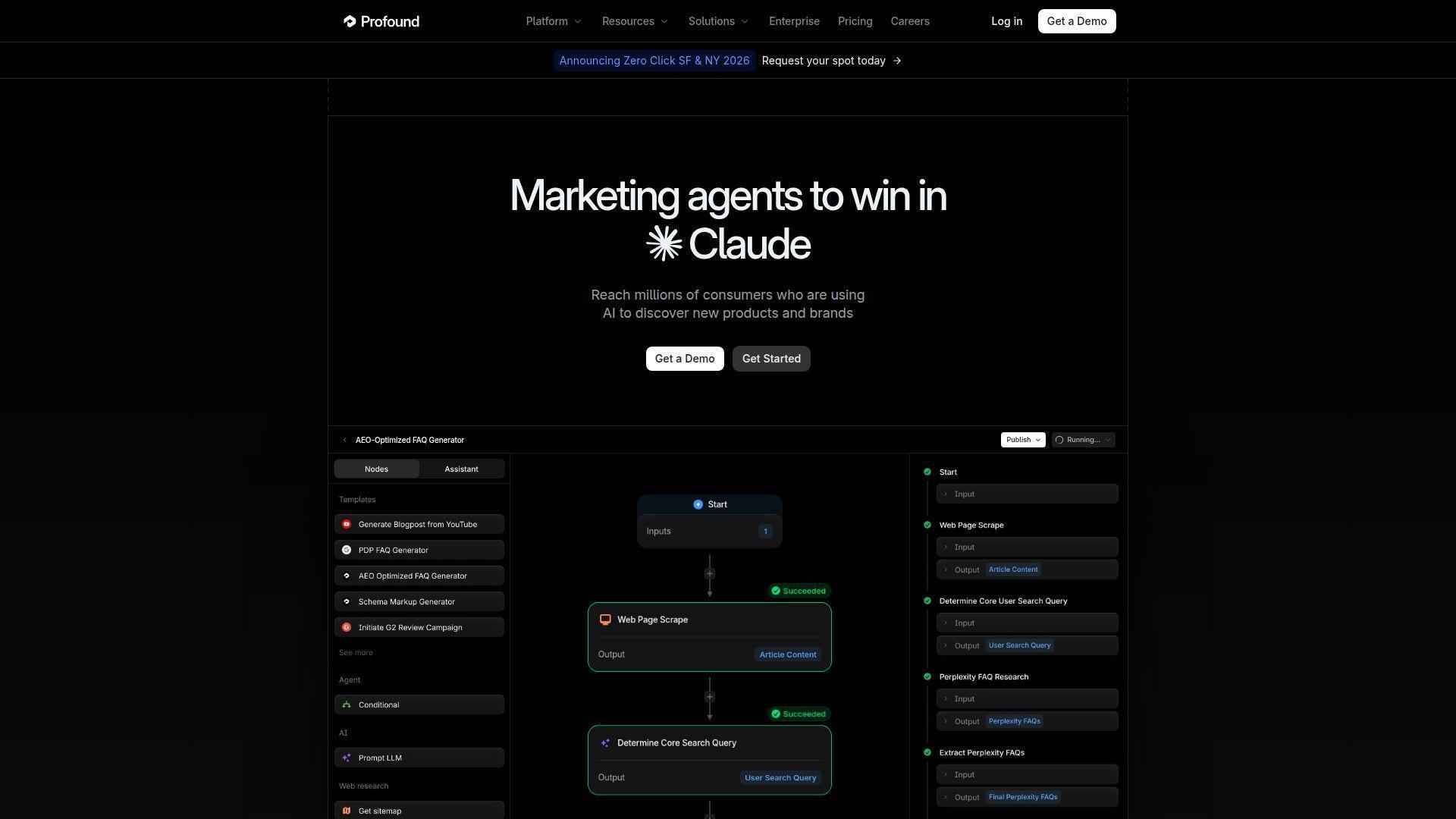
Profound has enterprise positioning but now publishes self-serve Starter and Growth plans. The monthly rates are $99 for Starter and $399 for Growth, both billed yearly. Starter covers ChatGPT, while Growth covers ChatGPT, Perplexity, and Google AI Overviews. Enterprise adds broader coverage and governance features. Customer logos include Ramp, DocuSign, Figma, Target, Walmart, MongoDB, and Charlotte Tilbury.
Watch-outs
Profound publishes self-serve Starter and Growth plans with a try path. Enterprise remains sales-led.
Pricing
Starter $99/month billed yearly (ChatGPT only, 50 prompts). Growth $399/month billed yearly (ChatGPT plus Perplexity plus Google AI Overviews, 100 prompts, 3 seats, 6 articles/month). Enterprise pricing is custom, with broader model coverage, API access, and SOC 2 Type II. Starter is self-serve and Growth has a free trial path. Confirm current pricing on the Profound site before any negotiation.
3. SE Ranking, SEO and AI combo at a lower price than Rankability
Key features
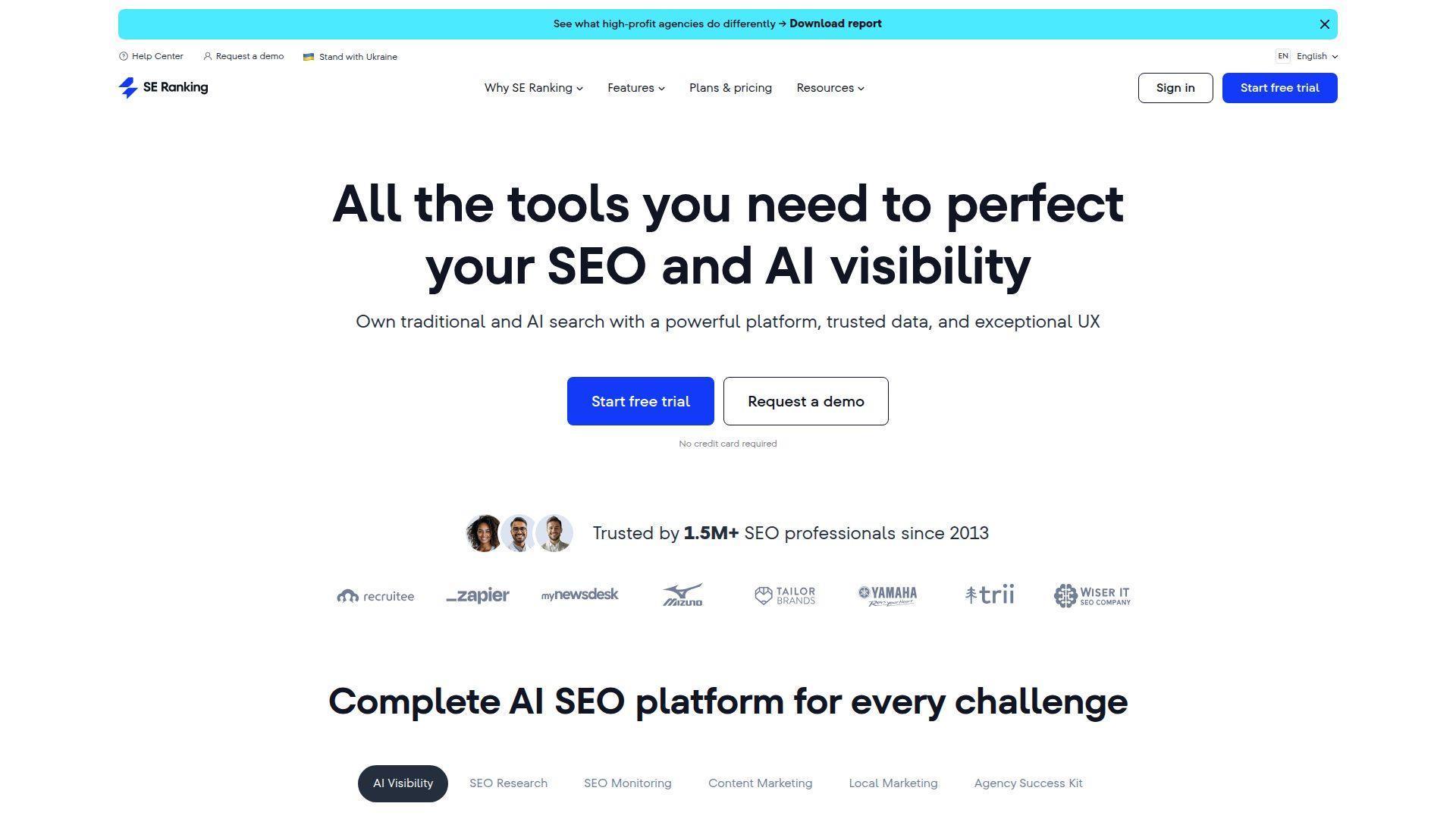
SE Ranking is the closest direct alternative to Rankability in shape: a full SEO suite (keyword research, rank tracking, backlinks, audit, content) with AI search visibility added as a module. For teams who liked the bundle idea of Rankability but want a cheaper entry point, SE Ranking is the obvious shop. The AI Visibility Tracker covers five platforms (ChatGPT, Perplexity, Google AI Overviews, Google AI Mode, and Gemini) and is available either as an add-on to an existing SE Ranking subscription or as a standalone product called SE Visible.
Watch-outs
The SE Ranking AI module is bolted on top of an SEO platform rather than being the headline product, which is the same trade-off you accept with Rankability. The prompt allowances on smaller tiers fill quickly when you track multiple competitors and engines. SE Ranking combines SEO and AI tracking packages, with optional AI Search capacity; compare the current prompt allowance and add-ons with the standalone SE Visible plans. Sentiment and citation depth do not match AI-first specialists.
Pricing
AI Search add-on for existing SE Ranking customers: $89 per month. SE Visible standalone: $99 per month for 200 prompts, $189 per month for 450 prompts, and $355 per month for 1,000 prompts.
4. Keyword.com, mature rank tracker with AI features added
Key features
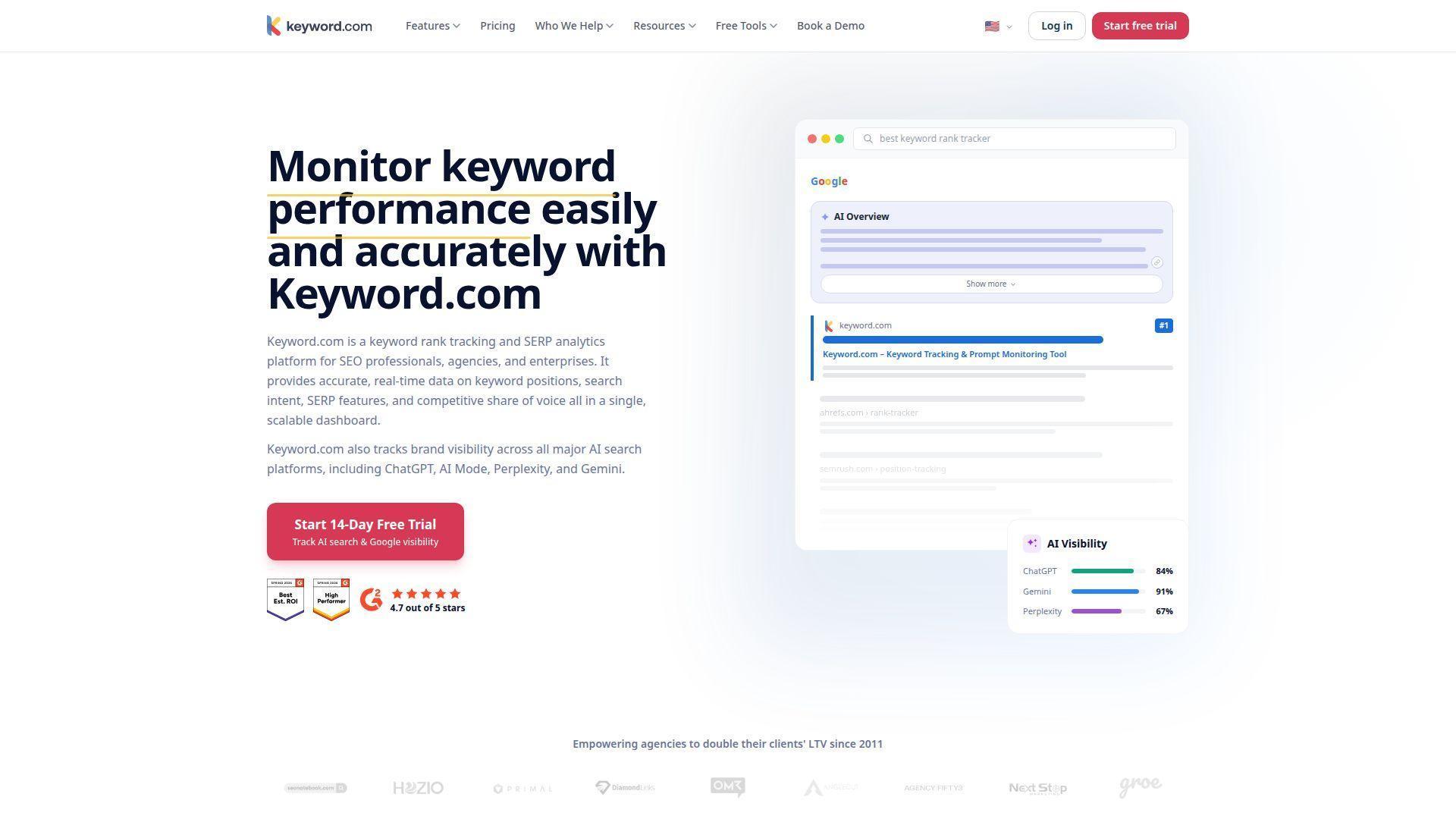
Keyword.com is one of the older names in rank tracking, with strong agency credentials, white-label reporting, and Google Search Console integration. It has added AI visibility as a tier on top of its existing rank-tracker foundation, with AI rank tracking available across ChatGPT, Perplexity, and AI Overviews. For agencies that already use Keyword.com for blue-link rankings, adding AI tracking to the same login is convenient.
Watch-outs
The AI features sit on top of a classic rank tracker, which means the workflow privileges keyword position views rather than citation and sentiment analytics. Pricing is credit-based on AI tiers and can climb fast as competitor coverage grows. If AI visibility is the headline conversation with your buyer, you may outgrow the depth of analytics here.
Pricing
AI Visibility starts at around $24.50 per month for 50 credits. Search Visibility tiers (traditional rank tracking only) start as low as $4 per month. Higher 360 Visibility and AI Visibility tiers add white-label, API, on-demand updates, and richer reporting.
5. Otterly, entry-level AI-only tracking
Key features
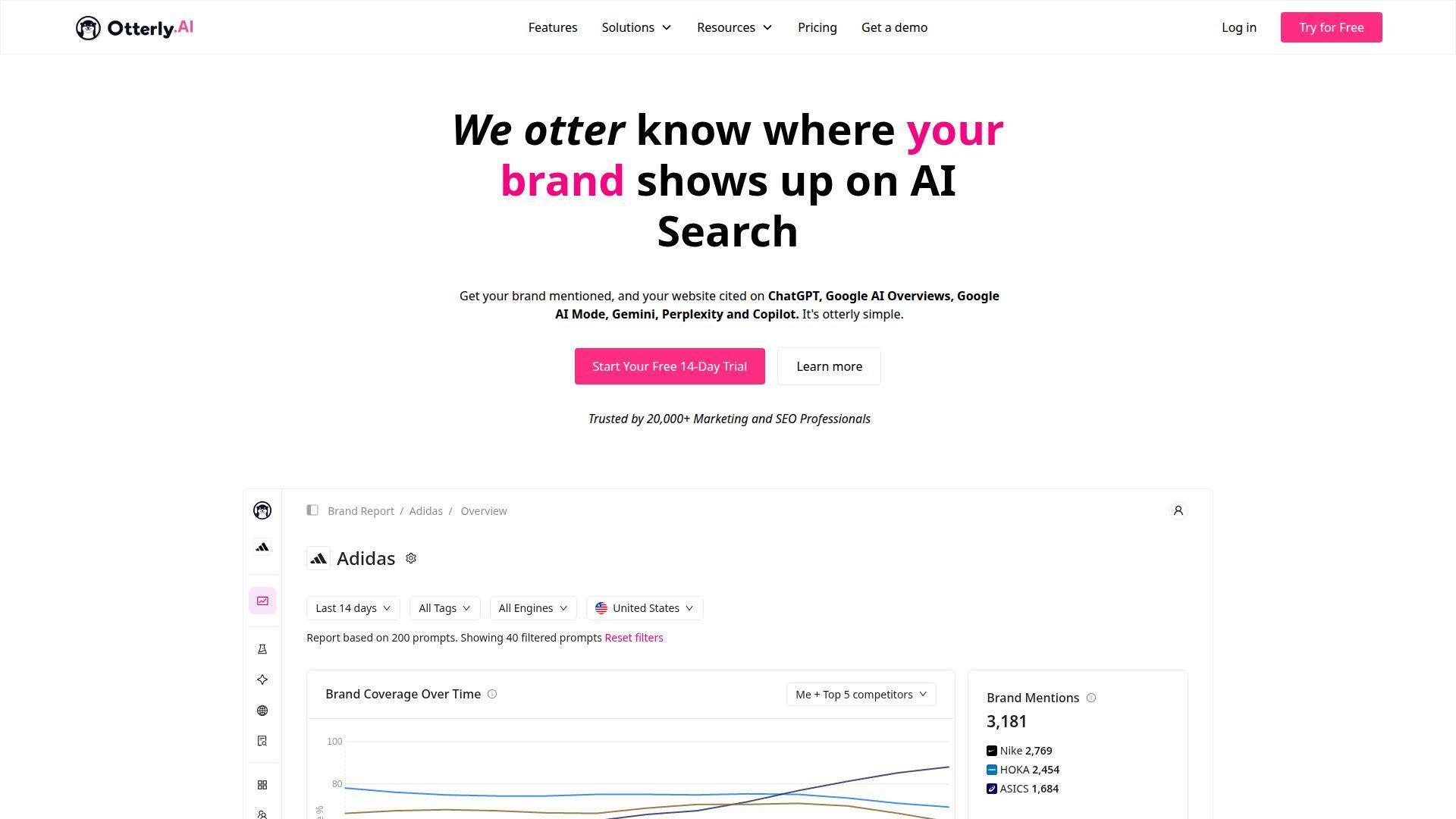
Otterly is one of the early entrants in the AI search visibility category, with a clean, lightweight product aimed at small teams and individual brand owners. The platform monitors AI search visibility across ChatGPT, Google AI Overviews, Perplexity, and Microsoft Copilot, with brand visibility tracking, citation analysis, and GEO audits included on the higher tiers.
Watch-outs
Engine gating is heavy on Otterly. Google AI Mode and Gemini are not in any base tier and are paid add-ons that range roughly from $9 to $149 per month depending on plan. Prompt counts on the cheapest tier are small (15 prompts on Lite at $29 per month), which means you exhaust the allowance the moment you add a real competitor list. The Standard plan jumps to $189 per month for 100 prompts, which puts it behind LLM Pulse Growth (EUR 99 for 150 prompts) on both prompt count and included engine coverage.
Pricing
Lite from $29 per month (15 prompts), Standard $189 per month (100 prompts), Premium $489 per month (400 prompts), Enterprise custom. Google AI Mode and Gemini are paid add-ons ranging $9 to $149 per month. Confirm the current tier breakdown on the Otterly pricing page as it changes periodically.
6. Trakkr, comparison-led tracking with a 14-day trial
Key features
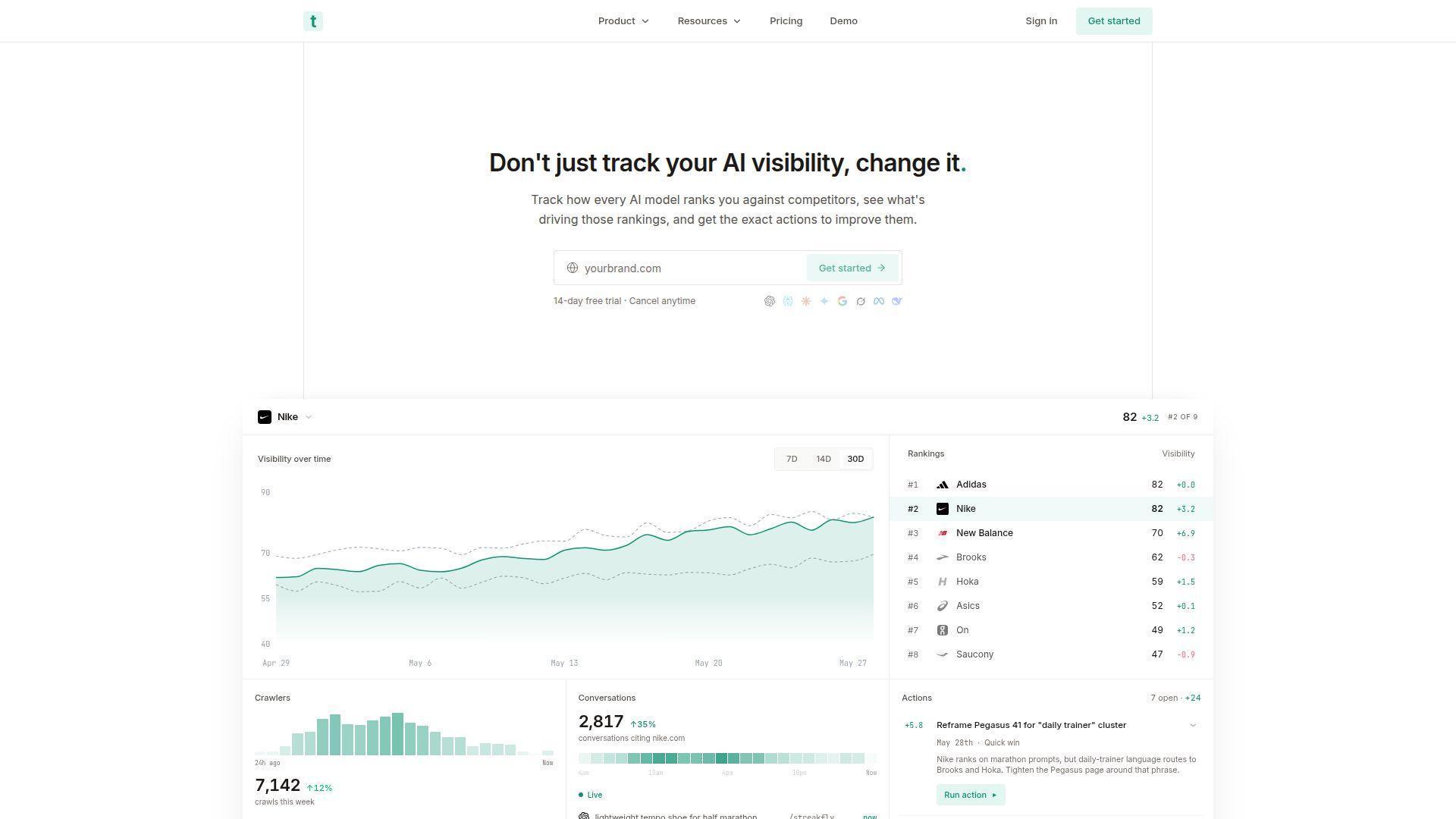
Trakkr is positioned around comparison and perception analysis, with one of the widest engine lists in the category (ChatGPT, Claude, Gemini, Perplexity, Grok, Meta AI, DeepSeek, and AI Overviews) included from the Growth tier upward. A 14-day trial lets you evaluate the product before committing. Citation tracking and competitor perception analysis are the headline features.
Watch-outs
Growth is limited to one brand and 50 prompts, while Scale covers ten brands with 50 prompts per brand. Article credits are part of the pricing structure, with 25 per month on Growth and 100 per month on Scale. Compared to AI-first specialists like LLM Pulse, the analytics layer is younger and less battle-tested at agency scale.
Pricing
Growth is $100/month for one brand and 50 prompts. Scale is $500/month for ten brands and 50 prompts per brand. Both include eight models, and a 14-day trial is available.
7. AthenaHQ, SaaS-focused AI visibility with a credit model
Key features
AthenaHQ is the SaaS-focused player in the category, aimed at brand teams who want a structured AI visibility program with custom workflows, tagging, and a proprietary ACE Citation Engine (Enterprise only). The credit-based pricing means 1 credit equals 1 AI response, which gives you flexibility to allocate spend across high-volume queries or extended monitoring. The Starter tier includes 3,600 credits per month, and the free Essential tier includes 300 credits.
Watch-outs
The credit model can make budgeting harder than a simple prompt allowance because each AI response consumes one credit. Starter lists API access and integrations, while Enterprise adds custom terms and governance.
Pricing
Essential is free with 300 credits and $25 of included credit. Starter is $295 per month with 3,600 credits. Enterprise pricing is custom.
Other alternatives worth considering
Beyond the main eight, the category has a fast-growing tail. A few names worth a brief scan depending on your situation:
- Scrunch AI. Hallucination detection focus, useful when your buyer cares about brand safety in AI answers, not just visibility. Core is $250/month for 125 prompts, five seats, and four LLMs, with a seven-day trial.
- Ahrefs Brand Radar. AI visibility module inside Ahrefs. Convenient if you already pay for Ahrefs and want one fewer login. Pricing skews high because you pay for the whole Ahrefs suite.
- Semrush. Same logic as Brand Radar with Semrush as the host platform. Useful for Semrush-native agencies, expensive as an AI-only buy.
- Mentionable. Younger entrant in the agency segment, worth a look for teams that want a simpler interface than the older suites.
- AEO Engine. Execution-platform framing rather than analytics-only, useful when the buyer wants to push optimisations as well as track.
None of these would be our default recommendation as a primary Rankability alternative, but each can fit a specific brief.
Head-to-head: LLM Pulse vs Rankability
| Feature | LLM Pulse | Rankability |
|---|---|---|
| Product framing | AI-first analytics platform | SEO suite plus AI search tracking module |
| Entry price | EUR 49 per month (Starter), monthly billing | $99 per month (Starter) |
| AI engines on default plan | 5 (ChatGPT, Perplexity, Gemini, Google AI Mode, AI Overviews) | ChatGPT, Google AI Mode, and Claude on Starter; Core adds Google AI Overviews and Perplexity; Team adds Gemini, Grok, and Copilot |
| Pricing model | Per prompt with all engines included | Daily prompt allowance across the platforms included with each plan |
| Sentiment analysis | Included | Part of the AI Analyzer module |
| Citation source analysis | Included, with citation graph and domain rollup | Included in AI Analyzer |
| Share of voice | Included, with competitor breakdowns over time | Available within the SPI framework |
| Team members | Unlimited | Unlimited users on every published plan |
| Client capacity | 1 project on Starter, 2 on Growth, 5 on Scale; higher tiers expand capacity | 1 project on Starter, 3 on Core, 10 on Team |
| White-label | Custom-domain portals plus iframe embed | Included across plans |
| Looker Studio | Native connector with ready-made template | Available through their reporting integrations |
| API access | REST API | Included across plans |
| MCP integration | Yes, Model Context Protocol native | Hosted MCP included on every plan |
| Billing | Monthly or annual | Monthly or annual |
| Free trial | See current pricing | No free trial advertised |
| Best fit | Teams who want AI search visibility as a focused product, not a bundled feature | Agencies who want one platform for SEO and AI search |
The right answer depends on what your buyer asks for. If the conversation is mostly “how do we show up in ChatGPT and Perplexity, where are we losing to competitors, what content is being cited”, LLM Pulse will move faster and answer in more depth. If the conversation is “we want one login for keyword research, on-page audit, rank tracking, and AI visibility”, a bundled platform like Rankability is the structural fit.
Cost savings analysis
The table lists example plan prices and allowances. These plans cover different numbers of brands, prompts, engines, and tracking runs, so they do not represent the same workload. For five client brands with 40 tracked prompts each, compare plans that support five projects and 200 distinct prompts at the same cadence.
| Tool and tier | Monthly cost | Prompts included | Engines | Effective cost per prompt | 12-month spend |
|---|---|---|---|---|---|
| LLM Pulse Growth | EUR 99 | 150, across up to 2 projects | 5 | EUR 0.66 | EUR 1,188 on monthly billing |
| Rankability Core | $199 | 125 daily prompts | 5 (ChatGPT, Google AI Mode, Claude, AI Overviews, Perplexity) | $1.59 per daily prompt | $2,388 |
| Profound Growth | $399, billed yearly | 100 | 3 (ChatGPT, Perplexity, AI Overviews) | $3.99 | $4,788 |
| SE Ranking standalone (SE Visible) | $189 | 450 | 5 | $0.42 | $2,268 |
| Otterly Standard | $189 | 100 | 4 (Gemini, AI Mode, and Claude are paid add-ons) | $1.89 | $2,268 |
| Trakkr Growth | $100 | Limited by credits | 8 | Variable | $1,200 |
| AthenaHQ Starter | $295 | 3,600 credits (1 credit = 1 AI response) | Multiple | Variable | $3,540 on monthly billing |
Compare the total cost for your actual workload, including model coverage, project limits, cadence and any response credits. The table preserves each vendor’s currency and billing terms; it does not calculate exchange-rate-adjusted savings. Monthly billing also gives you a different commitment from an annual contract.
Switching from Rankability to LLM Pulse
A switching plan that has worked for teams who have made this move.
- Export your Rankability data. Pull the prompt list, the competitor list, and any tracked URLs out of Rankability via the platform export. CSV is enough.
- Choose an LLM Pulse plan. Sign up at llmpulse.ai and pick the plan size that matches your current Rankability prompt count.
- Import your prompts. Paste the prompt list into the bulk-import flow. Set up the brand and the competitor list. Pick the locale (US, UK, ES, DE, FR, others). Within minutes the first weekly run begins.
- Enable brand sentiment and citation tracking. Citation tracking and brand sentiment analysis are both available. Confirm the brand entity and any aliases are recognised, then check the first sentiment scores after the initial run completes.
- Connect Looker Studio. Clone the LLM Pulse template at llmpulse.ai/features/looker-studio and point it at the project. White-label access is available through a qualifying agency or enterprise arrangement.
- Set up the API or MCP. MCP and the REST API let you connect an internal dashboard or automation.
- Keep Rankability for traditional SEO or exit. If your team still needs Rankability for keyword research, content optimisation, or audit, you can keep a lower Rankability tier and use LLM Pulse for the AI visibility work. If your SEO stack is already covered by Ahrefs or Semrush, cancel Rankability after the annual term expires.
- Update the client report narrative. The story shifts from “ranking in 20 platforms via SPI score” to “AI citation share, sentiment, and share of voice on the prompts your buyers ask”. Update the next client deck to lead with the AI metrics.
Most teams complete steps 1 to 6 in the first week of the trial. Step 7 happens at the next billing renewal.
Summary and final recommendation
If your reason for shopping is that Rankability’s AI research and content workflow is broader than the visibility analytics you need, the strongest alternative in 2026 is LLM Pulse. It includes five standard engines, citations, share of voice, MCP, unlimited seats, brand sentiment analysis, a REST API, and a Looker Studio connector, with white-label through an agency or enterprise arrangement. Entry pricing is EUR 49 with monthly billing. Read more on the free AI Visibility Report page and pricing at llmpulse.ai/pricing.
If your team needs enterprise compliance with named-account procurement, Profound is the safe pick. If you genuinely want the SEO plus AI bundle but at a lower price than Rankability, SE Ranking is the structural twin. Trakkr’s 14-day trial offers a low-commitment start.
FAQ
Is Rankability worth the price for AI search visibility alone?
Rankability Core is $199 per month and includes 125 daily prompts across ChatGPT, Google AI Mode, Claude, Google AI Overviews, and Perplexity. If you only need AI visibility, an AI-first tool like LLM Pulse provides five standard engines and starts at EUR 49 per month.
What is the cheapest Rankability alternative for AI search tracking?
LLM Pulse at EUR 49 per month is the cheapest plan that ships with all 5 default AI engines (ChatGPT, Perplexity, Gemini, Google AI Mode, Google AI Overviews), citations, and share of voice. Otterly Lite is technically cheaper at $29 per month but ships with only 15 prompts and gates Google AI Mode and Gemini behind paid add-ons.
Does Rankability track Google AI Mode and AI Overviews?
Rankability includes Google AI Mode on every public plan. Core adds Google AI Overviews and Perplexity, while Team also adds Gemini, Grok, and Copilot.
Can I run AI visibility tracking without paying for an SEO suite?
Yes. AI-first tools like LLM Pulse, Otterly, Trakkr, and AthenaHQ all let you track AI search visibility independently of any SEO platform. If you already pay for Ahrefs, Semrush, or another SEO suite, pairing it with an AI-first tracker is usually cheaper and more focused than buying a second bundled platform.
Which Rankability alternative is best for agencies?
LLM Pulse is our recommendation for agencies of any size because it offers unlimited seats, MCP, a Looker Studio connector, a REST API, and white-label through an agency or enterprise arrangement.
What is the difference between AI search tracking and traditional rank tracking?
Traditional rank tracking measures where a URL appears in the blue-link Google SERP for a keyword. AI search tracking measures whether and how a brand is mentioned, cited, and recommended inside the conversational answers that ChatGPT, Perplexity, Gemini, Google AI Mode, and Google AI Overviews generate. The metrics that matter are different: position is replaced by visibility score, citation share, sentiment, and share of voice against named competitors.
Can I switch from Rankability mid-contract?
Rankability offers monthly billing and discounted annual billing, so check the renewal terms on your account. You can run LLM Pulse in parallel to validate the switch. Many teams keep Rankability for the SEO modules (keyword research, audit, content optimisation) and add LLM Pulse for AI search if both tools earn their keep.
How do I get started with LLM Pulse?
See current LLM Pulse pricing for plan details. Five standard AI engines, citations, share of voice, MCP, brand sentiment analysis, a REST API, and a Looker Studio connector are available.