



If you track AI traffic in GA4, you have probably noticed it this week: sessions coming from ChatGPT dropped sharply starting Friday, October 9, 2026. We looked at the AI referral data we sync for the sites we monitor at LLM Pulse, and the pattern is clear and consistent. Here is what the data says, what it does not say yet, and what we recommend doing.
What happened
Across the sites we monitor, daily sessions from ChatGPT fell by around 46% between Friday and Sunday, October 9 to 11, compared with the same days in the two previous weeks. The typical site lost roughly half of its ChatGPT traffic.
Table of Contents
The first signs appeared on Thursday, October 8. The full change landed on Friday the 9th, and each day of the weekend was a bit lower than the one before.
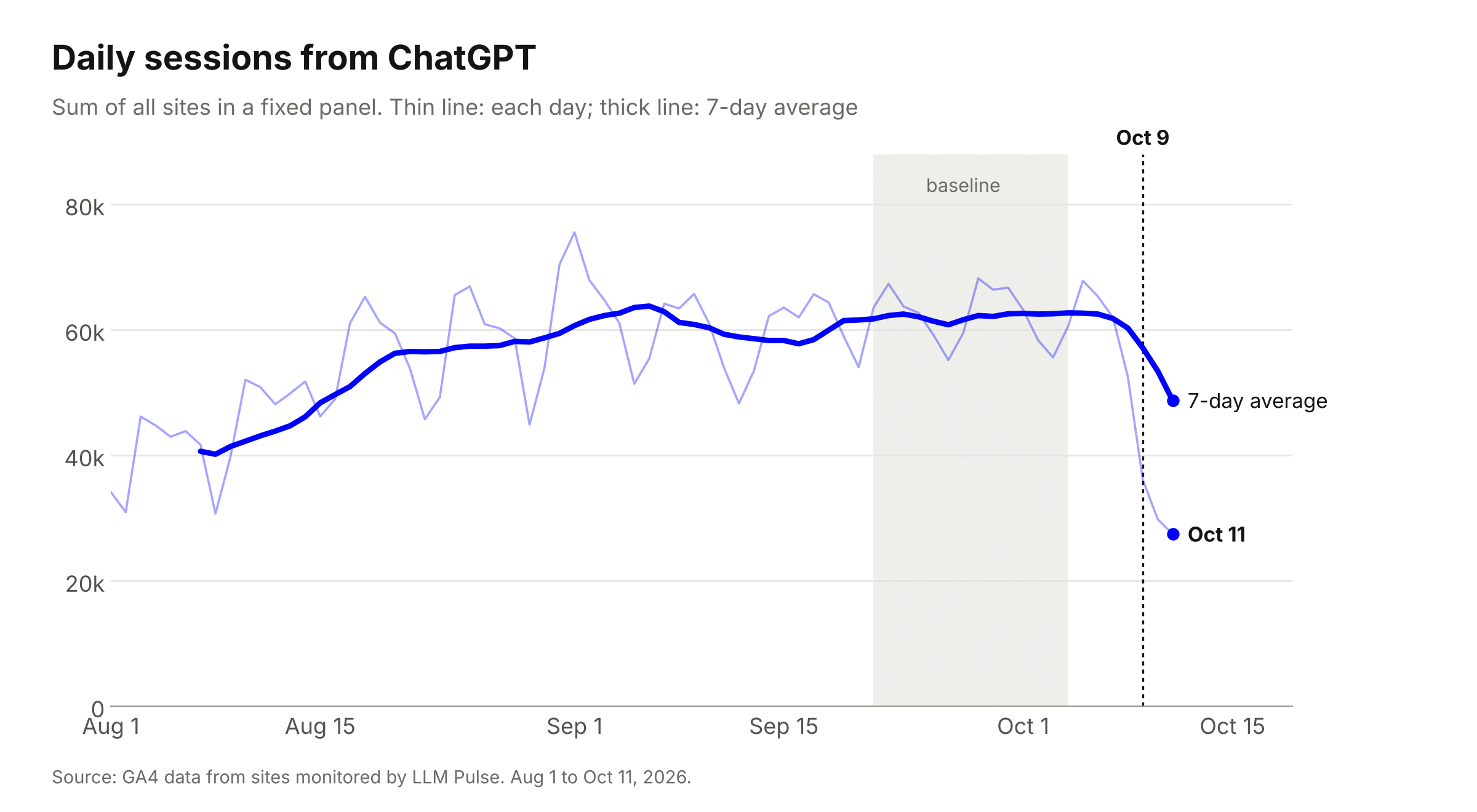
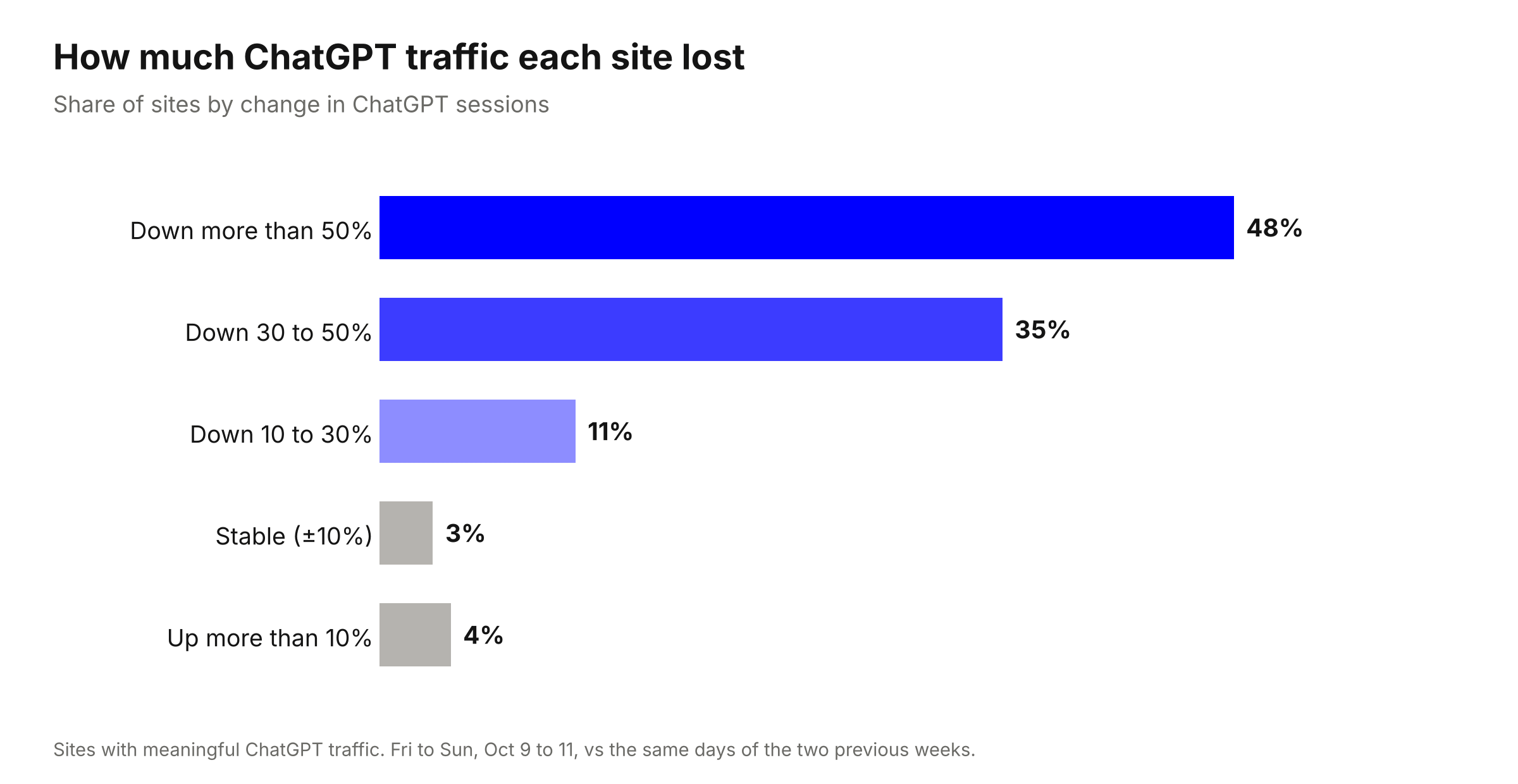
To put it in context, ChatGPT referrals had been growing steadily since the summer. After this change, they sit below where they were in early August. And the drop is not concentrated in a few sites: more than eight in ten sites lost over 30% of their ChatGPT traffic.
It is only ChatGPT
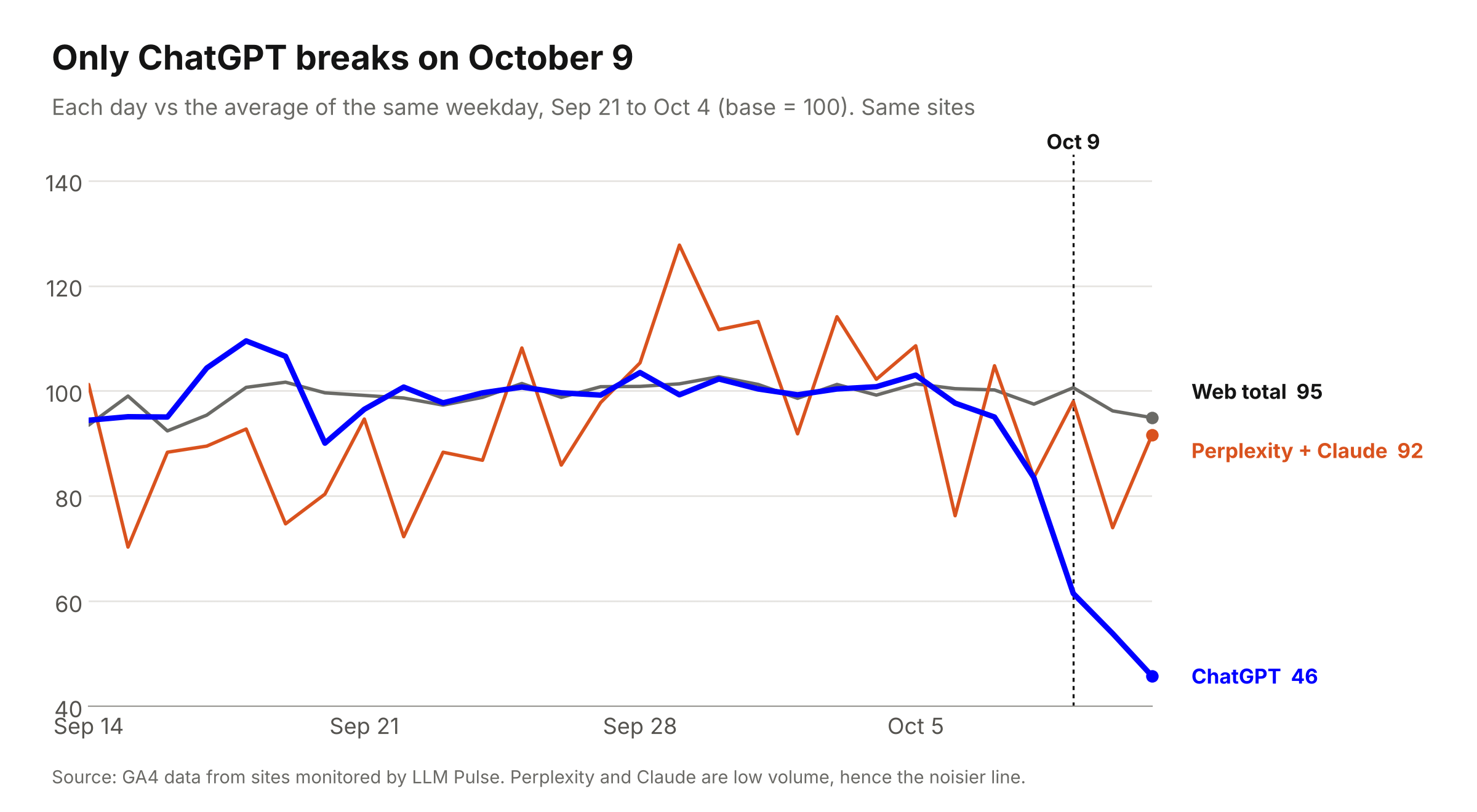
Three things tell us this is a ChatGPT change and not something on the websites’ side:
- Total traffic on the same sites stayed flat (around −2%).
- Perplexity and Claude referrals show no break on October 9.
- The drop looks the same across countries (Spain, the US, Latin America, Portugal and elsewhere) and across site sizes, from small sites to very large ones. So it is not a local holiday, and it is not seasonality.
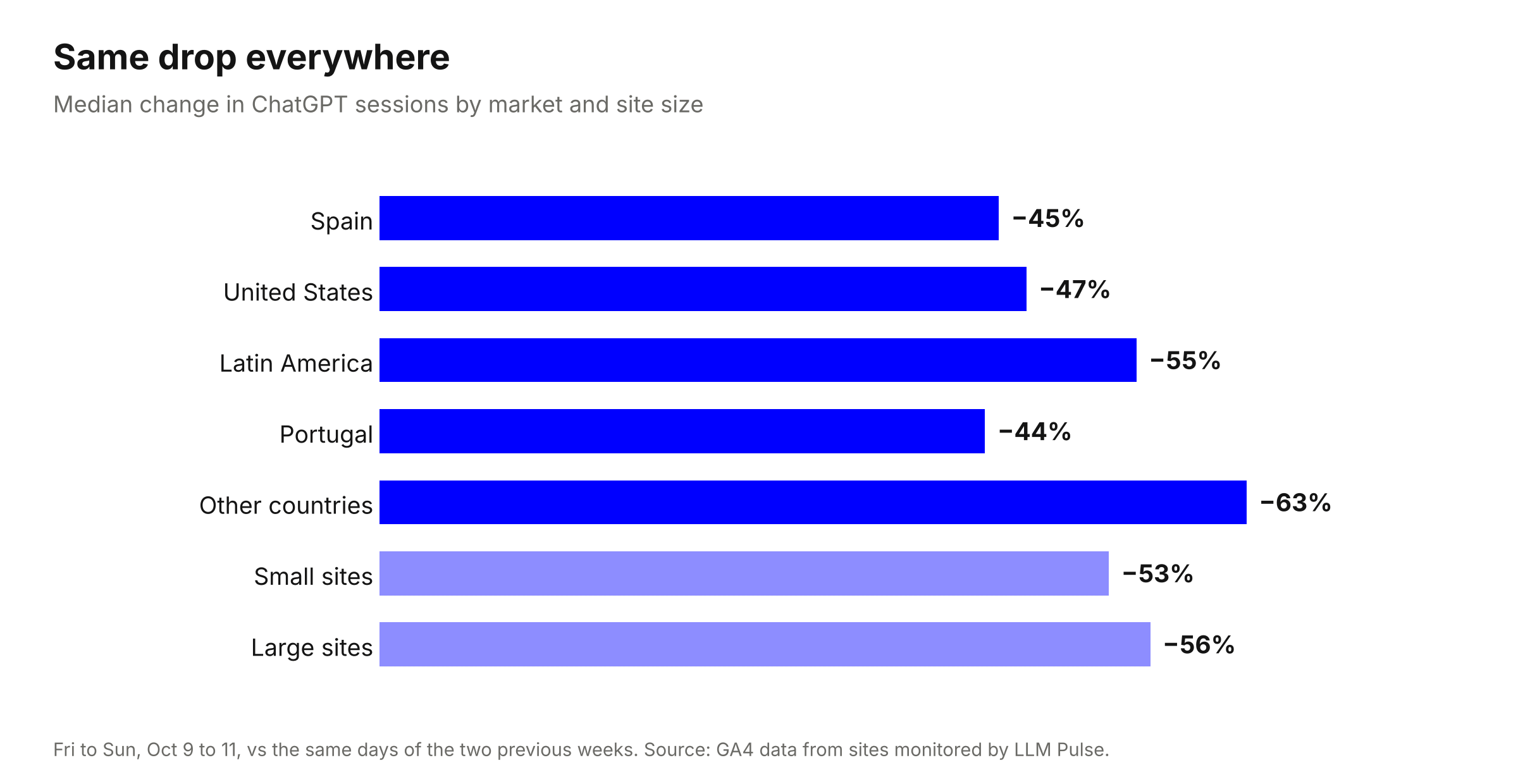
We also checked our own side: no changes in how we classify AI sources, in what we request from GA4, or in when we sync it. The days involved have been downloaded several times and the numbers hold.
What could explain it
The most likely explanation is a change inside ChatGPT that sends fewer clicks to websites, or sends them in a way GA4 can no longer attribute.
The timing matches the GPT-6 rollout in ChatGPT: paid plans on October 7 and free plans on October 8, with more visual answers (widgets, maps, small interactive tools) that can resolve the question inside the chat. That said, matching dates is not proof. OpenAI has not announced any change to how links or sources are shown, and nobody has published traffic data after GPT-6 yet. We did not see any effect on October 7, when only paid plans had it.
There is a precedent in the other direction: back in May, referrals jumped almost overnight when ChatGPT started linking to brand homepages. Small product changes in ChatGPT can move this traffic a lot, and fast.
Lost visits or lost labels?
This is the question that matters most, and we cannot answer it yet.
- Lost visits: users click less on links inside ChatGPT. The traffic is gone.
- Lost labels: users still click, but the visit arrives without any trace of ChatGPT (for example through mobile apps or links that do not pass the source), and GA4 files it as Direct.
From aggregated data, both look the same. The share of labels among the ChatGPT visits that still arrive barely changed, and Direct traffic did not visibly rise, but ChatGPT is small enough next to Direct that the increase would be hard to spot.
What we recommend
- Check your Direct traffic on the landing pages that received the most ChatGPT visits. If Direct rises on those pages from October 8 to 9, you are most likely looking at untagged visits rather than lost ones.
- Wait a few more days before drawing conclusions. So far there is only one full weekday after the change. The first full Monday to Wednesday will tell us whether the drop stabilizes.
- Separate visibility from clicks. Being mentioned and cited in ChatGPT answers and receiving clicks from them are two different metrics. If answers become more self-contained, visibility inside the answer becomes even more important, even when referral traffic shrinks.
A side note on Gemini
Gemini referrals also fell, but earlier (between September 28 and October 2) and for a different reason. Visits tagged with the source “gemini” nearly disappeared, while visits arriving from gemini.google.com held steady or even grew. It looks like a change in how Gemini tags its links, so check how your GA4 groups both.
What comes next
We will repeat the analysis once the days after October 12 are final and update this post with what we find. If you see the same pattern in your own data, or a different one, we would love to hear about it.
FAQ
How much did ChatGPT referral traffic drop in October 2026?
Across the sites monitored by LLM Pulse, daily sessions from ChatGPT fell by around 46% between October 9 and 11, 2026, compared with the same days in the two previous weeks. The typical site lost roughly half of its ChatGPT traffic, and more than eight in ten sites lost over 30%.
Is the drop caused by my website or by ChatGPT?
Everything points to ChatGPT. Total traffic on the same sites stayed flat (around −2%), Perplexity and Claude referrals showed no break, and the drop looks the same across countries and site sizes. That rules out site issues, local holidays and seasonality.
Is GPT-6 responsible for the drop in ChatGPT traffic?
It is the most likely explanation, but it is not confirmed. The drop matches the GPT-6 rollout to free plans on October 8, which brought more visual answers that can resolve questions inside the chat. OpenAI has not announced any change to how links or sources are shown, and no effect was seen on October 7, when only paid plans had GPT-6.
Are the ChatGPT visits lost or just showing up as Direct in GA4?
We cannot tell yet from aggregated data, because both scenarios look the same. If users still click but the visit arrives without a ChatGPT source (for example from mobile apps), GA4 files it as Direct. The best way to check is to look at Direct traffic on the landing pages that used to receive the most ChatGPT visits and see if it rose from October 8 to 9.
What should I do if my ChatGPT traffic dropped?
First, check Direct traffic on your top ChatGPT landing pages, and wait until you have a full Monday to Wednesday of data before drawing conclusions. Then separate visibility from clicks: being mentioned and cited in ChatGPT answers matters even more if answers become self-contained. A tool like LLM Pulse lets you track both your AI visibility and your AI referral traffic side by side.