



Last updated: July 27, 2026
Every time ChatGPT answers a question about news, products, or your industry, it draws on a mix of training data and real-time sources. Increasingly, those sources are publishers that OpenAI pays. Since mid-2023, OpenAI has built the largest content licensing portfolio in the AI industry, spanning the United States, Europe, and Latin America.
Table of Contents
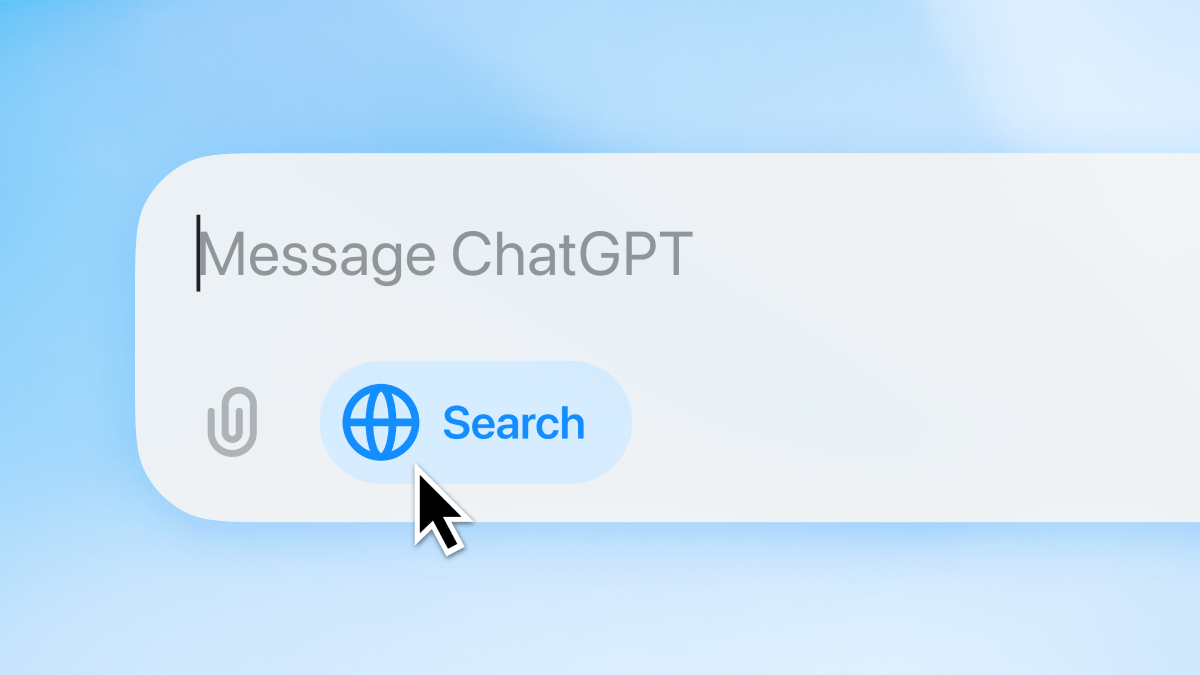
This guide maps every verified OpenAI publisher partnership as of June 2026: who signed, when, what the deal covers, and what was reportedly paid. It also covers the publishers that sued instead, because the split between licensing and litigation is reshaping which sources AI assistants cite, and that has direct consequences for anyone working on AI visibility.
Why OpenAI pays publishers
OpenAI’s publisher deals typically cover one or both of two things:
- Training data: the right to train models on a publisher’s archive, including paywalled content.
- Real-time display: the right to surface summaries, quotes, and links from the publisher inside ChatGPT, especially in ChatGPT search, with attribution.
Many deals add a third element: the publisher gets access to OpenAI technology to build its own products. The motivation is mutual. OpenAI gets high-quality, legally safe content and current news for its answers. Publishers get revenue, attribution, and a seat at the table while courts decide whether AI training on copyrighted work is fair use.
The complete list of OpenAI publisher deals (2023 to 2026)
All deals below were verified against the original announcements and independent press coverage. Financial figures marked “reported” come from journalists’ sources and were never confirmed by the companies.
| Partner | Announced | Key brands | Scope | Reported value |
|---|---|---|---|---|
| Associated Press | Jul 2023 | AP archive back to 1985 | Training | Undisclosed |
| Axel Springer | Dec 2023 | Politico, Business Insider, Bild, Welt | Training + display | Tens of millions of euros (reported) |
| Le Monde | Mar 2024 | Le Monde | Training + display | Undisclosed |
| PRISA Media | Mar 2024 | El Pais, Cinco Dias, AS, El Huffpost | Training + display | Undisclosed |
| Financial Times | Apr 2024 | FT, FT.com archive | Training + display | Undisclosed |
| Dotdash Meredith | May 2024 | People, Investopedia, Food & Wine, 40+ brands | Training + display + ad tech | At least $16M/year fixed (per IAC filings) |
| News Corp | May 2024 | WSJ, NY Post, The Times, The Sun, The Australian | Training + display | $250M+ over 5 years (reported) |
| Vox Media | May 2024 | Vox, The Verge, Eater, New York Magazine | Training + display | Undisclosed |
| The Atlantic | May 2024 | The Atlantic, archive to 1857 | Training + display | Undisclosed |
| TIME | Jun 2024 | TIME, 101 years of archive | Training + display | Undisclosed |
| Conde Nast | Aug 2024 | Vogue, The New Yorker, Wired, GQ, Vanity Fair | Training + display | Undisclosed |
| GEDI | Sep 2024 | La Repubblica, La Stampa | Signed, then paused (see below) | Undisclosed |
| Hearst | Oct 2024 | Cosmopolitan, Esquire, ELLE, SF Chronicle, 60+ titles | Display with attribution | Undisclosed |
| Future plc | Dec 2024 | TechRadar, Tom’s Guide, PC Gamer, Marie Claire, 200+ brands | Display + product | Not financially material (per Future) |
| Axios | Jan 2025 | Axios + 4 new local newsrooms | Display + newsroom funding | Undisclosed |
| Schibsted Media | Feb 2025 | VG, Aftenposten, Aftonbladet, Svenska Dagbladet | Display | Undisclosed |
| The Guardian | Feb 2025 | The Guardian, The Observer | Display + product | Undisclosed |
| The Washington Post | Apr 2025 | The Washington Post | Display in ChatGPT search | Undisclosed |
| Grupo Folha + Grupo UOL | May 2026 | Folha de S.Paulo, UOL | Display + settles lawsuit | Undisclosed |
The partnerships in detail
2023: the templates
Associated Press (July 2023). The first major news deal in the AI era. AP licensed its text archive back to 1985 for training and got access to OpenAI technology in return. The agreement reportedly included a first-mover safeguard allowing AP to renegotiate if a later publisher got better terms, an early sign that publishers expected prices to climb.
Axel Springer (December 2023). The German giant behind Politico, Business Insider, Bild, and Welt signed the first partnership that combined training rights with real-time, attributed news summaries inside ChatGPT, including paywalled content. Bloomberg reported the value at tens of millions of euros over roughly three years. This training-plus-attribution structure became the pattern for nearly every deal that followed.
2024: the land grab
Le Monde and PRISA Media (March 2024). OpenAI’s first non-English push, announced jointly. Le Monde brought France’s paper of record. PRISA brought Spain’s El Pais, the business daily Cinco Dias, sports daily AS, and El Huffpost, giving ChatGPT licensed Spanish-language news for both Spain and Latin America. Le Monde later disclosed that around a quarter of its OpenAI revenue is shared with its journalists’ society, one of the few public glimpses into deal economics.
Financial Times (April 2024). A non-exclusive deal covering training plus attributed quotes and summaries with links back to FT.com. At the time, OpenAI said it had around a dozen deals signed or imminent.
Dotdash Meredith (May 2024). The IAC-owned publisher (renamed People Inc. in 2025) licensed 40+ lifestyle brands including People and Investopedia. This deal matters because it produced one of the only hard public numbers: IAC’s filings revealed OpenAI pays at least $16 million per year in fixed fees plus a variable component. OpenAI models also power the publisher’s ad-targeting product.
News Corp (May 2024). The industry benchmark. The Wall Street Journal, Barron’s, MarketWatch, the New York Post, The Times of London, The Sun, and News Corp’s Australian titles, with the deal reportedly worth more than $250 million over five years in cash and OpenAI credits, per the WSJ’s own reporting. HarperCollins, also owned by News Corp, was not included.
Vox Media and The Atlantic (May 2024). Announced the same day. Vox Media brought The Verge, Eater, and New York Magazine; The Atlantic licensed an archive stretching to 1857. Both deals triggered public objections from newsroom unions, a recurring theme across the licensing wave.
TIME (June 2024). A multi-year deal covering 101 years of archive, with attribution and links in ChatGPT plus OpenAI technology for TIME’s own products.
Conde Nast (August 2024). Vogue, The New Yorker, Wired, GQ, and Vanity Fair joined ChatGPT and the SearchGPT prototype. Notable because CEO Roger Lynch had been one of the loudest voices in Congress demanding AI compensation before signing.
GEDI (September 2024): signed, then paused. The Italian publisher of La Repubblica and La Stampa signed, but Italy’s data protection authority issued a formal GDPR warning in November 2024. GEDI stated the project had not launched and no content had been shared. It remains the clearest example of European regulation slowing an AI licensing deal.
Hearst (October 2024). More than 20 magazines and 40 newspapers, including Cosmopolitan, ELLE, Esquire, the Houston Chronicle, and the San Francisco Chronicle, surfaced in ChatGPT with citations and links.
Future plc (December 2024). Over 200 specialist brands including TechRadar, Tom’s Guide, and PC Gamer. Interestingly, Future told investors the partnership was not financially material, suggesting the value was strategic visibility rather than cash. Future has since leaned into its high visibility inside ChatGPT as a commercial asset.
2025 to 2026: funding newsrooms and settling lawsuits
Axios (January 2025). A first: OpenAI directly funds journalism, bankrolling four new Axios Local newsrooms (Pittsburgh, Kansas City, Boulder, Huntsville) for three years alongside content licensing.
Schibsted Media (February 2025). The first Nordic deal: Norway’s VG and Aftenposten plus Sweden’s Aftonbladet and Svenska Dagbladet provide attributed news summaries in ChatGPT.
The Guardian (February 2025). A notable U-turn from one of the most publicly skeptical publishers. The deal covers attributed summaries and extracts plus a Guardian rollout of ChatGPT Enterprise internally.
The Washington Post (April 2025). A display-focused partnership putting summaries, quotes, and links into ChatGPT search. At this announcement, OpenAI claimed more than 20 publisher partners covering over 160 outlets in more than 20 languages.
Grupo Folha and Grupo UOL (May 2026). OpenAI’s first Brazilian deals, and the first clear conversion of a lawsuit into a license: the agreement settled Folha de S.Paulo’s 2025 copyright suit against OpenAI. Brazil is one of ChatGPT’s largest markets, with over 50 million monthly active users. The publishers also receive Codex, ChatGPT Enterprise, and API access.
One pattern worth noting: between the Washington Post deal in April 2025 and the Brazil deals in May 2026, no new OpenAI publisher partnership was verified. The second half of 2025 belonged to Microsoft, Amazon, and Meta deals instead. Be skeptical of any list claiming OpenAI signings in that window.
Platform and data deals: Reddit, Stack Overflow, Shutterstock
Beyond news publishers, OpenAI signed three significant platform data deals:
- Shutterstock (expanded July 2023): a six-year license covering images, video, music, and metadata for training, building on a relationship dating to 2021.
- Stack Overflow (May 2024): OverflowAPI access brings validated developer Q&A into ChatGPT with attribution, and improves OpenAI models on coding.
- Reddit (May 2024): real-time access to Reddit content via its data API, with a reported value of around $70 million per year (never officially confirmed). Reddit content is now among the most cited sources across AI assistants.
The publishers that sued instead
For every publisher that licensed, others went to court. The two tracks are deeply connected: every ruling shifts negotiating leverage for the next partnership.
| Plaintiff | Filed | Status (June 2026) |
|---|---|---|
| The New York Times | Dec 2023 | Proceeding in SDNY; core copyright claims survived dismissal; OpenAI ordered to produce 20M ChatGPT conversation logs; summary judgment briefing in 2026 |
| The Intercept | Feb 2024 | DMCA claim survived dismissal; ongoing |
| Raw Story and AlterNet | Feb 2024 | Dismissed Nov 2024 for lack of standing |
| 8 Alden Global newspapers (NY Daily News, Chicago Tribune, others) | Apr 2024 | Proceeding, consolidated with NYT case for pretrial |
| Center for Investigative Reporting | Jun 2024 | Proceeding |
| ANI (India) | Nov 2024 | Ongoing in Delhi High Court; major Indian publishers sought to join |
| Canadian coalition (CBC, Torstar, Globe and Mail, Postmedia) | Nov 2024 | Ontario court confirmed jurisdiction Nov 2025; proceeding |
| GEMA (Germany, music lyrics) | Nov 2024 | Munich court largely ruled for GEMA in Nov 2025: memorized content in model weights can infringe; OpenAI appealing |
| Ziff Davis (CNET, IGN, PCMag) | Apr 2025 | Ongoing |
| Folha de S.Paulo (Brazil) | 2025 | Settled via the May 2026 licensing deal |
| Danish press coalition (DPCMO) | Feb 2026 | Just filed, representing roughly 99% of Danish news media |
| Encyclopedia Britannica and Merriam-Webster | Mar 2026 | Just filed; copyright plus claims over hallucinated misattribution |
The GEMA ruling in Munich deserves special attention for anyone tracking AI regulation in Europe: it was the first European merits decision holding that content memorized in model weights can infringe copyright, with penalties up to 250,000 euros per violation. The Folha settlement shows the opposite path: litigation as a negotiating route to a license.
Talks that never became deals
Several widely reported negotiations never produced an announcement, and you should not cite them as deals:
- CNN and Fox Corp: licensing talks reported in January 2024, including video; nothing announced since.
- Indian publishers: no OpenAI licenses exist in India; India proposed a statutory royalty scheme in late 2025.
- AFP: the French news agency licensed to Mistral, not OpenAI.
- Japanese and Korean publishers: no OpenAI content deals verified; Japanese publishers’ litigation targets Perplexity, and OpenAI’s Kakao partnership in Korea is a product deal, not a content license.
What this means for your brand’s AI visibility
These deals are more than media industry news. They directly shape what ChatGPT says and cites:
- Licensed publisher content is eligible to surface. A licensing deal can make summaries, citations, and links available, but does not guarantee a citation or preferred placement. Coverage in El Pais, the Financial Times, TechRadar, or People is now also distribution into AI answers.
- The citation pool is consolidating. With 160+ licensed outlets on one side and blocked or litigating publishers on the other, the set of sources AI assistants lean on is shifting. Where your brand gets covered increasingly determines whether AI assistants mention it at all.
- Digital PR has a new measurement line. A feature in a licensed publication can become one of the sources an AI assistant retrieves, but citation is not guaranteed. That makes publisher selection a strategic GEO decision, not just a reach decision.
The practical question is measurement: which sources do ChatGPT, Perplexity, Gemini, Google AI Mode, and Google AI Overviews actually cite when they talk about your category, and is your brand in those answers? This is exactly what LLM Pulse is built for. As an all-in-one AI search platform, it tracks your brand’s mentions, citations, and share of voice across all five default models, with sentiment analysis, shows which publishers and domains drive AI answers in your market, and turns that into concrete optimization actions with GEO Writer and recommendations. If a licensed publisher dominates the citations in your category, you will see it, and you can act on it.
Summary
OpenAI has built the broadest publisher licensing portfolio in AI: roughly 20 verified partnerships covering more than 160 outlets in over 20 languages, anchored by the reported $250 million News Corp partnership and the $16 million per year Dotdash Meredith floor. The strategy evolved from archive licensing (AP) to real-time attributed news (Axel Springer onward), to funding newsrooms (Axios), to settling lawsuits with contracts (Folha and UOL). Meanwhile, a dozen-plus publishers chose court, and rulings like GEMA in Munich are redrawing the leverage map. For brands, the takeaway is simple: AI answers now have a licensed supply chain, and visibility inside it can be measured and managed.
FAQ
How many publisher deals does OpenAI have?
As of June 2026, OpenAI has roughly 20 verified news publisher partnerships covering more than 160 outlets in over 20 languages, plus platform data deals with Reddit, Stack Overflow, and Shutterstock.
How much does OpenAI pay publishers?
Most figures are undisclosed. The verified floor comes from IAC filings: at least $16 million per year to Dotdash Meredith. The reported ceiling is News Corp at over $250 million across five years. Axel Springer reportedly receives tens of millions of euros, and early pitches to smaller publishers were reportedly in the $1 to $5 million per year range.
Which Spanish-language publishers work with OpenAI?
PRISA Media signed in March 2024, covering El Pais, Cinco Dias, AS, and El Huffpost in Spain and Latin America. In May 2026, Brazil’s Grupo Folha and Grupo UOL signed Portuguese-language deals that also settled Folha’s lawsuit.
Do these deals cover training, or just showing content in ChatGPT?
It varies. Early deals (AP, Axel Springer, Le Monde, PRISA, FT, News Corp) explicitly covered both training and display. Later deals (Hearst, Future, Schibsted, The Washington Post) emphasized display with attribution in ChatGPT search, with training terms less prominent or unstated.
Why did The New York Times sue instead of signing?
The Times filed a copyright suit in December 2023 after licensing talks failed, arguing OpenAI and Microsoft used millions of its articles without permission. The case is still proceeding in 2026. Notably, the Times later signed its first AI licensing deal with Amazon instead, showing publishers can litigate against one AI company while licensing to another.
Does being published in a licensed outlet improve a brand’s visibility in ChatGPT?
Licensed content is eligible for summaries, citations, and links inside ChatGPT, so coverage in partner outlets gives your brand an additional surface in AI answers. It is not a guarantee of mentions, which is why teams track their actual presence in AI responses with platforms like LLM Pulse.
What was the GEMA ruling against OpenAI?
In November 2025, the Munich Regional Court largely sided with GEMA, the German music rights society, finding that song lyrics memorized in model weights can infringe copyright. OpenAI is appealing. It was the first major European merits ruling on AI training and copyright, and it strengthens rights holders’ negotiating position.
Which OpenAI publisher deal came first?
The Associated Press, announced in July 2023, licensing AP’s text archive back to 1985 for training. Axel Springer followed in December 2023 with the first deal to include real-time attributed news inside ChatGPT.