



Last updated: October 16, 2026
Why enterprise rank tracking needs to evolve
For over two decades, enterprise rank tracking meant one thing: monitoring keyword positions on Google SERPs. That era is over.
Table of Contents
AI search engines, ChatGPT, Perplexity, Gemini, and Google’s own AI Mode, now shape how decision-makers discover, evaluate, and shortlist brands. When a procurement lead asks ChatGPT to recommend enterprise software vendors, or a C-suite executive uses Perplexity to research market leaders, your position in those AI-generated responses matters as much as your position on page one of Google.
Traditional rank tracking tools were not built for this reality. They cannot tell you whether an AI model mentions your brand, recommends a competitor, or cites your content. For enterprise organizations, the stakes are substantial:
- Brand reputation at scale: AI responses reach millions of users daily, and a single negative characterization can propagate across models and conversations.
- Market share shifts: Competitors gaining AI visibility are capturing mindshare before prospects ever reach your website.
- Competitive intelligence gaps: Without AI search monitoring, enterprise teams have a blind spot in their competitive landscape.
- Executive accountability: Leadership teams increasingly ask how the brand performs in AI search, and expect data-backed answers.
Enterprise rank tracking in 2026 means tracking visibility across both traditional and AI search. Anything less leaves your organization flying partially blind.
What is enterprise AI rank tracking?
Enterprise AI rank tracking is the practice of systematically monitoring how AI search platforms represent, recommend, and cite your brand, at the scale and rigor that enterprise organizations require.
Unlike traditional rank tracking, which maps keywords to SERP positions, AI rank tracking analyzes the content of AI-generated responses: whether your brand is mentioned, how it is characterized, whether your URLs are cited, and how you compare to competitors in the AI’s output.
The key differences between enterprise AI rank tracking and SMB-grade tools come down to operational scale and organizational requirements:
- Volume of prompts: Enterprise teams need to track thousands of prompts across product lines, business units, and use cases, not dozens.
- Multi-market and multilingual coverage: Global enterprises operate across dozens of markets and languages simultaneously.
- Compliance requirements: Security evidence and legal obligations depend on the organization, jurisdiction, and data handled.
- Team access and governance: Role-based permissions, unlimited seats, and audit trails are non-negotiable for large organizations.
- API and integration needs: Enterprise teams need programmatic access, custom dashboards, and data pipeline integration.
The core metrics for enterprise AI rank tracking include:
- Mentions: How frequently AI models reference your brand in response to relevant prompts.
- Citations: Whether AI responses link to or reference your content and URLs.
- Sentiment: How positively or negatively AI models characterize your brand.
- Share of voice: Your brand’s mention frequency relative to competitors across AI platforms.
- Competitive displacement: Which competitors are gaining or losing AI visibility relative to your brand.
Key requirements for enterprise AI rank tracking
Not every AI visibility tool is built for enterprise use. Here are the capabilities that separate enterprise-grade platforms from basic monitoring tools.
Scale
Enterprise organizations need to track thousands of prompts, across product lines, geographies, buyer personas, and competitive scenarios. A platform that caps you at a few hundred prompts per month will not meet the needs of a multi-brand, multi-market enterprise. Look for platforms that offer unlimited or high-volume prompt tracking with flexible refresh cadences.
Multi-model coverage
AI search is not a single platform. Enterprise rank tracking must span ChatGPT, Perplexity, Gemini, Google AI Mode, AI Overviews, Claude, Microsoft Copilot, and emerging models. Each platform has different training data, response patterns, and citation behaviors. Tracking only one or two models gives an incomplete picture.
Compliance and security
Enterprise procurement teams review security evidence and contractual safeguards. Depending on the data and industry, this may include a SOC 2 Type II report, HIPAA obligations, data residency controls, SSO/SAML integration, and contractual SLAs. These are different forms of assurance and protection, so evaluate each against your requirements.
Team collaboration
Enterprise rank tracking is not a solo activity. Multiple teams, SEO, content, product marketing, competitive intelligence, and executive leadership, need access to AI visibility data. Look for role-based access controls, unlimited user seats, shared dashboards, and annotation capabilities.
Reporting and integration
Enterprise teams do not live inside a single tool. AI rank tracking data needs to flow into existing business intelligence platforms, executive dashboards, and reporting workflows. Essential integration capabilities include a robust API, Looker Studio connectors, custom dashboard support, white-label reporting, and data export in standard formats.
Historical data and trend analysis
Point-in-time snapshots are insufficient for enterprise decision-making. You need historical trend data to identify shifts in AI visibility over time, correlate changes with content or product launches, and provide meaningful reporting to leadership. Look for platforms that retain historical data and provide trend visualization.
Competitive intelligence at scale
Enterprise competitive intelligence requires monitoring dozens of competitors across thousands of prompts. You need share of voice breakdowns, competitive displacement alerts, and the ability to benchmark your AI visibility against both direct competitors and adjacent market players.
Best enterprise AI rank tracking platforms
The following platforms offer enterprise-grade AI rank tracking capabilities. Each has distinct strengths depending on your organization’s priorities.
1. LLM Pulse Enterprise: best value enterprise solution
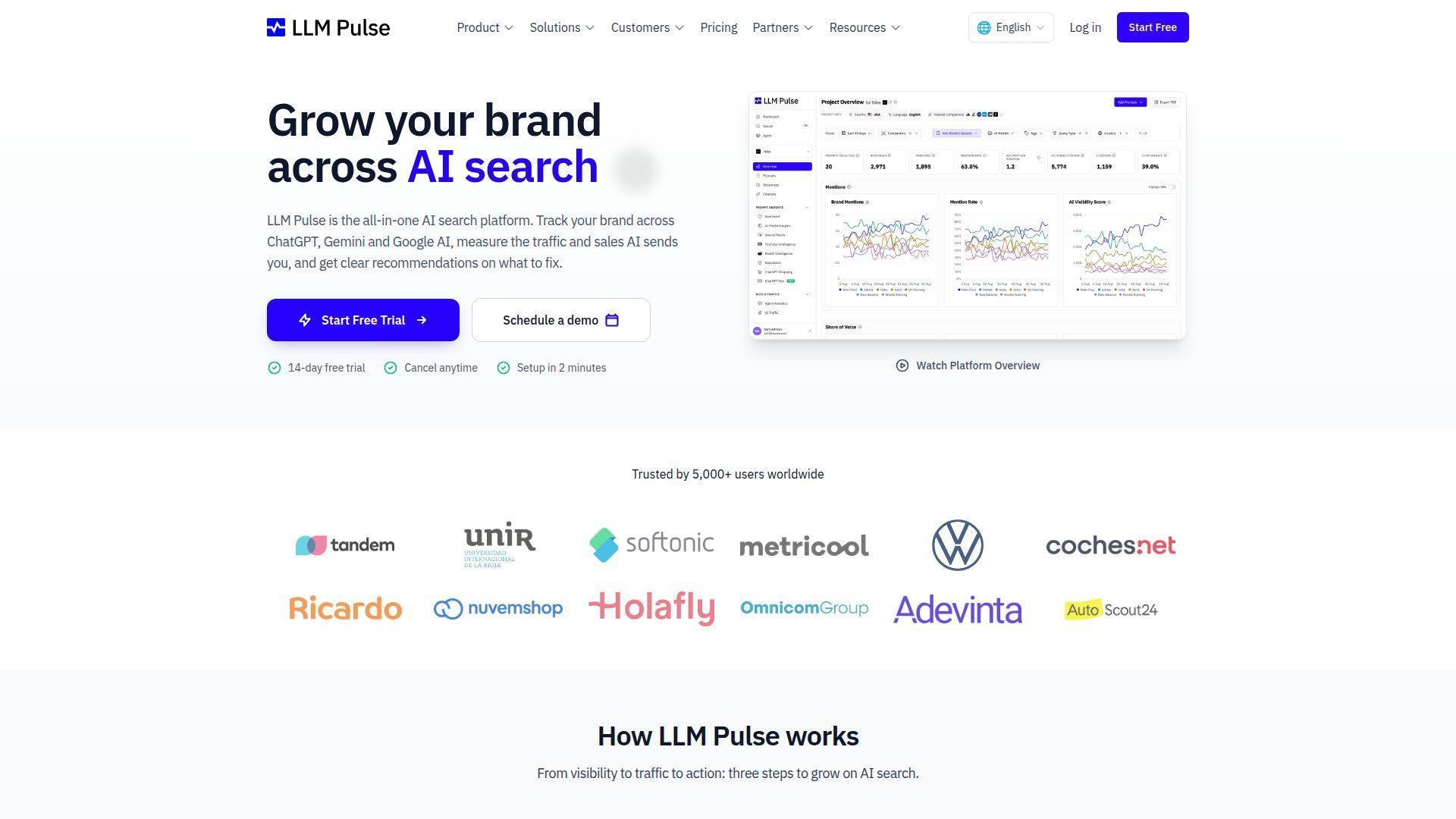
LLM Pulse Enterprise stands out as the most comprehensive enterprise AI rank tracking platform that delivers enterprise-grade capabilities without requiring enterprise-only pricing commitments.
Key enterprise capabilities:
- Five standard models plus optional models: ChatGPT, Perplexity, Gemini, AI Mode, and AI Overviews are standard. Claude, Copilot, Grok, DeepSeek, Naver AI Briefing, Baidu AI and Meta AI are self-serve paid add-ons. Alexa for Shopping is available as a self-serve paid add-on. Further models are available through Talk to sales.
- Custom prompt capacity: Agree prompt and project limits with the team to match your monitoring needs.
- Full API access: RESTful API with comprehensive endpoints for mentions, citations, sentiment, share of voice, and competitive data.
- Looker Studio integration: Native connector for building custom dashboards within Google’s BI ecosystem.
- White-label reporting: Custom-branded reports for agencies and consultancies serving enterprise clients.
- Unlimited seats: No per-user pricing that penalizes large teams.
- Custom refresh cadence: Configure tracking frequency to match your reporting and decision-making cycles.
- Dedicated support: Named account management and priority support for enterprise accounts.
- Custom pricing: Tailored plans that scale with your actual usage rather than rigid tier structures.
- ChatGPT Shopping & ChatGPT Entities: Product-level tracking in ChatGPT’s shopping answers plus entity-level brand framing for ecommerce and PR-heavy enterprise teams.
- GEO Testing: A/B test content changes at enterprise scale and measure AI-visibility lift before rolling them out across thousands of pages.
- Reputation monitoring: Track and defend how AI models describe your enterprise brand over time.
- GEO Writer & Recommendations: Actionable guidance on which pages AI models cite and what to change.
- Models Comparison: Side-by-side view of how your brand is framed across ChatGPT, Gemini, Perplexity, and Google AI.
- Web Analytics integration: Connect GA4/Plausible to link AI visibility to real traffic and pipeline.
- MCP & CLI: Query LLM Pulse from Claude, Cursor, or the command line for teams that automate reporting at scale.
- Annotations & tags: Mark launches, campaigns, and algorithm shifts on the timeline and keep large prompt portfolios organised.
LLM Pulse Enterprise is the top choice for organizations that need full-featured AI rank tracking with the flexibility to scale across markets, teams, and use cases, without the six-figure annual commitments that legacy enterprise platforms demand.
2. Scrunch AI: best for SOC 2 compliance
Scrunch Starter costs $250 per month billed annually or $300 month to month. Scrunch says it has completed an independent SOC 2 Type II audit. Enterprise buyers can request the report and review whether its scope meets their requirements. The platform covers seven AI platforms and includes agent traffic monitoring.
3. Profound: best for regulated industries
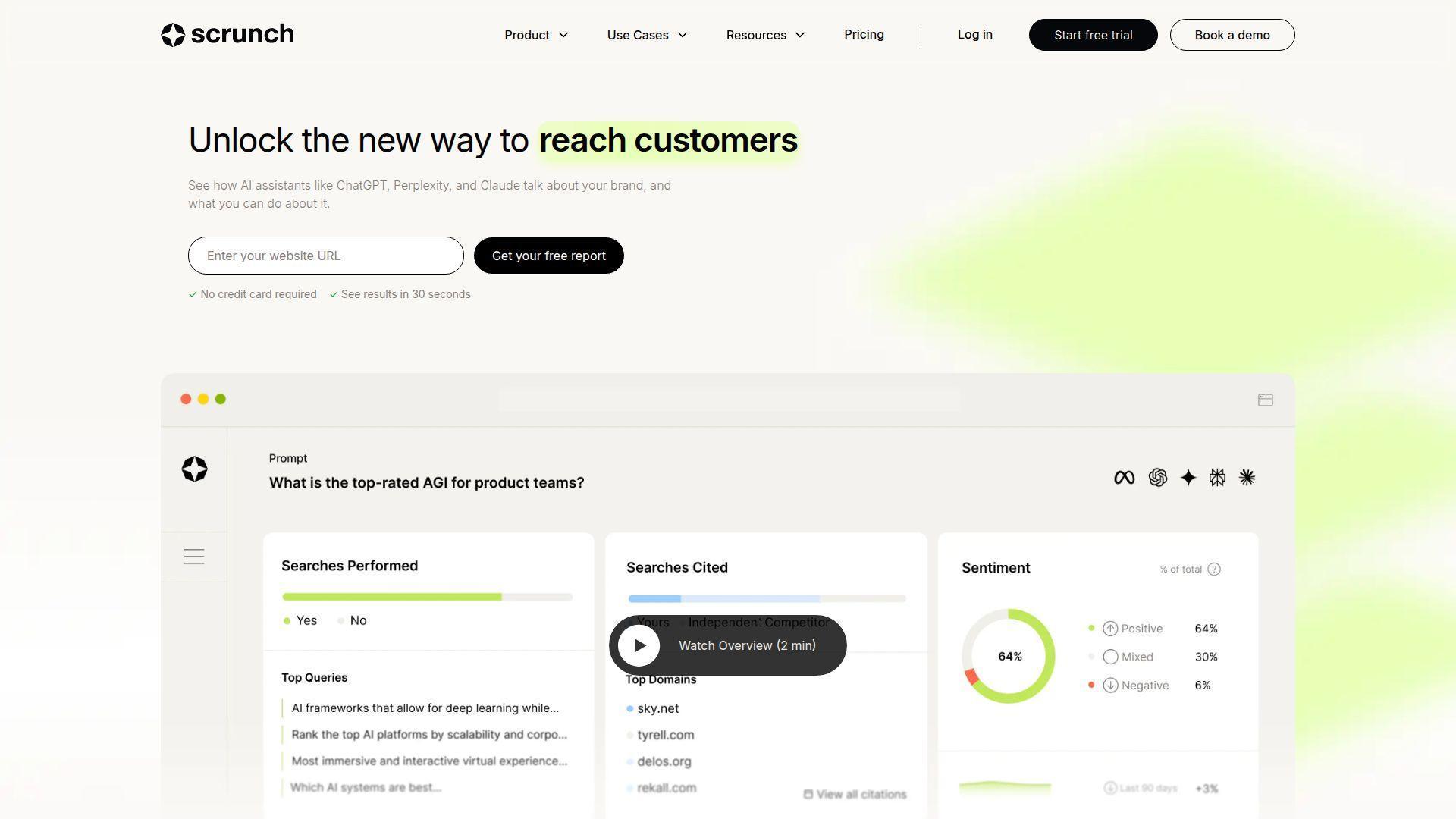
Profound offers a free Trial with 50 unique prompts run daily for seven days across ChatGPT, Gemini, and Google AI Overviews, while ongoing brand tracking uses custom Enterprise pricing. Profound reports SOC 2 Type II audits and offers HIPAA compliance for Enterprise customers. Regulated organizations should review the applicable reports, contracts, and data-handling scope during procurement.
4. SE Ranking: best for combined SEO + AI tracking at enterprise scale
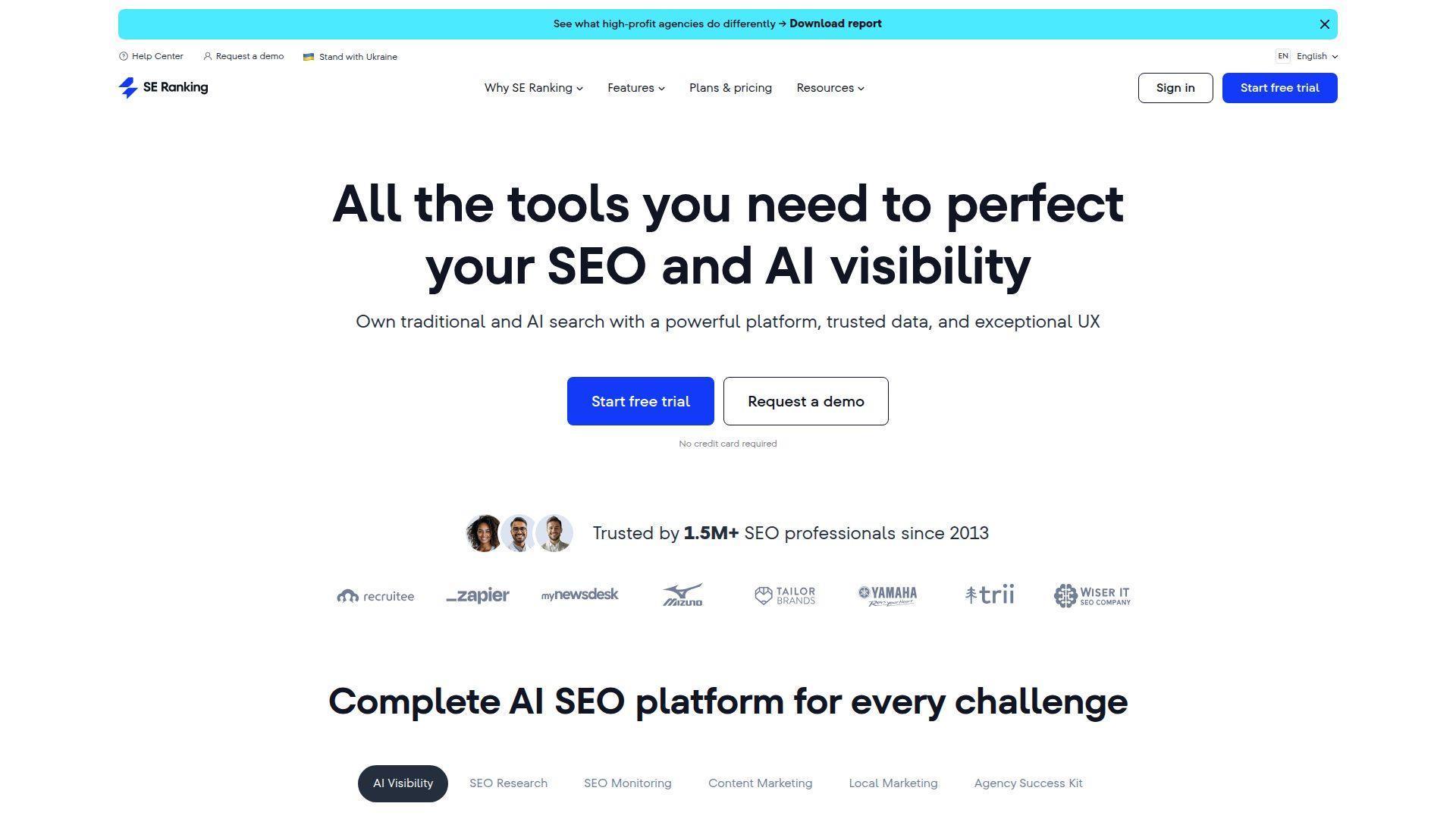
SE Ranking offers enterprise teams a unified platform that combines traditional SEO rank tracking with emerging AI visibility monitoring. For organizations that want to consolidate traditional and AI rank tracking into a single vendor relationship, SE Ranking provides a practical path. Its established SEO infrastructure gives enterprise teams continuity while adding AI search monitoring capabilities to their existing workflows.
5. Similarweb: best for market-level competitive intelligence
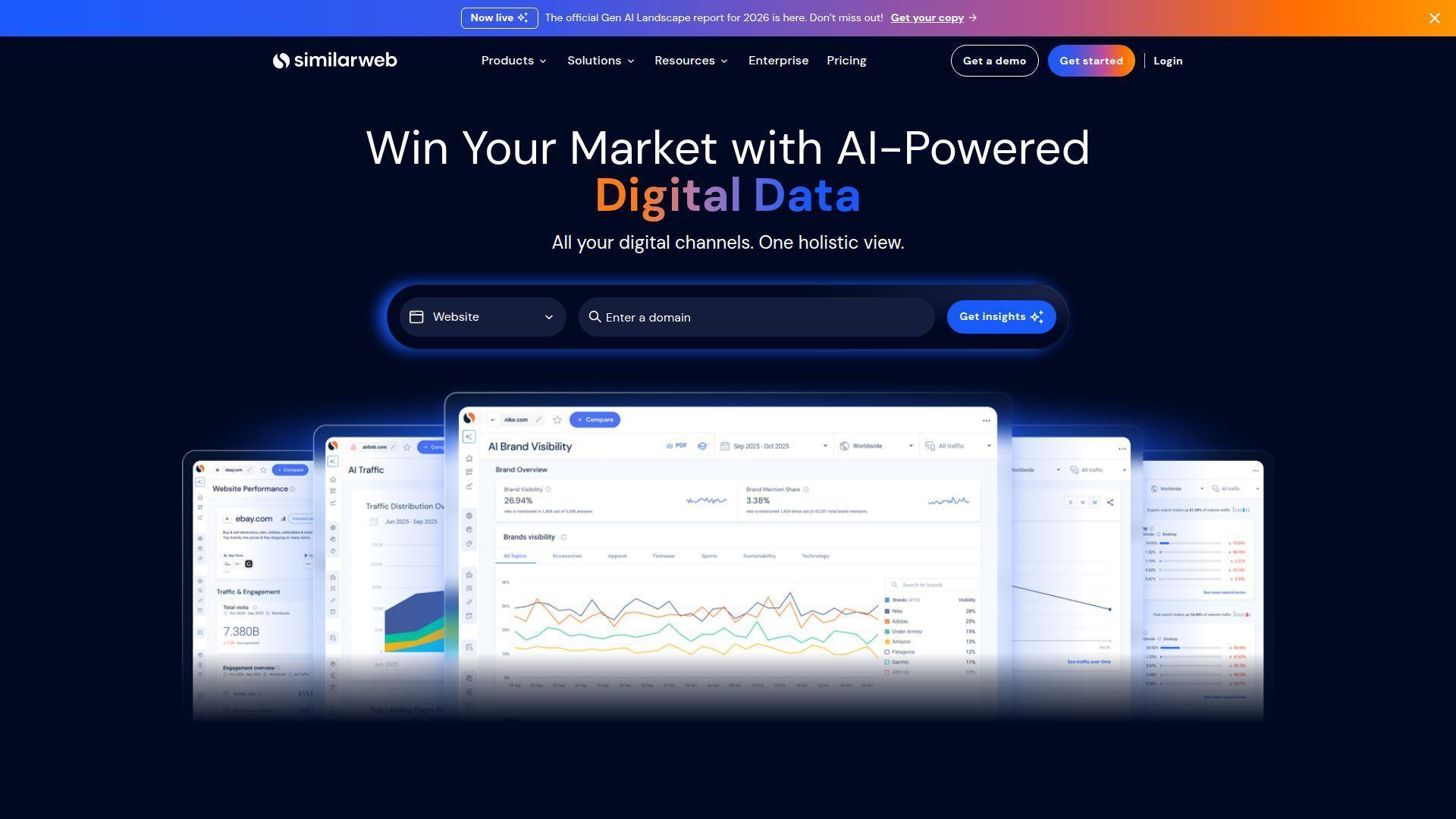
Similarweb brings deep market intelligence capabilities that extend beyond rank tracking into traffic analysis, audience insights, and competitive benchmarking. For enterprise teams whose primary concern is understanding market-level competitive dynamics (including how AI search is shifting traffic patterns), Similarweb’s broader intelligence platform provides context that pure AI rank trackers do not. AI-specific monitoring capabilities are evolving alongside its established competitive intelligence offering.
6. BrightEdge: best for enterprise SEO teams adding AI tracking
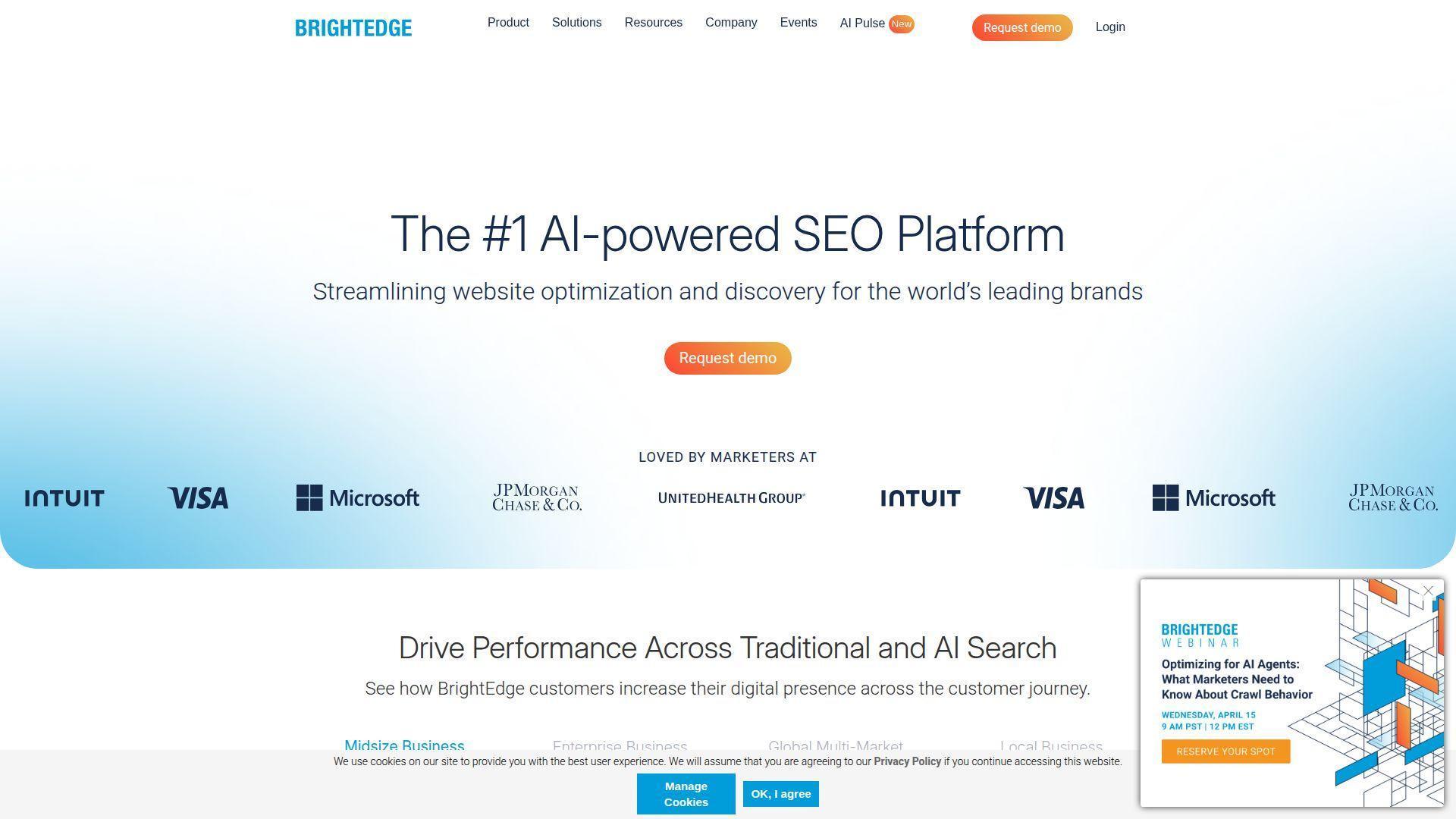
BrightEdge is a long-established enterprise SEO platform that has been expanding into AI search tracking. For enterprise teams already invested in the BrightEdge ecosystem, with existing workflows, integrations, and team training, adding AI rank tracking through BrightEdge offers the path of least operational disruption. Its enterprise SEO foundation is mature, and its AI visibility features are growing to keep pace with how AI search is changing.
7. seoClarity: best for large-scale SEO operations
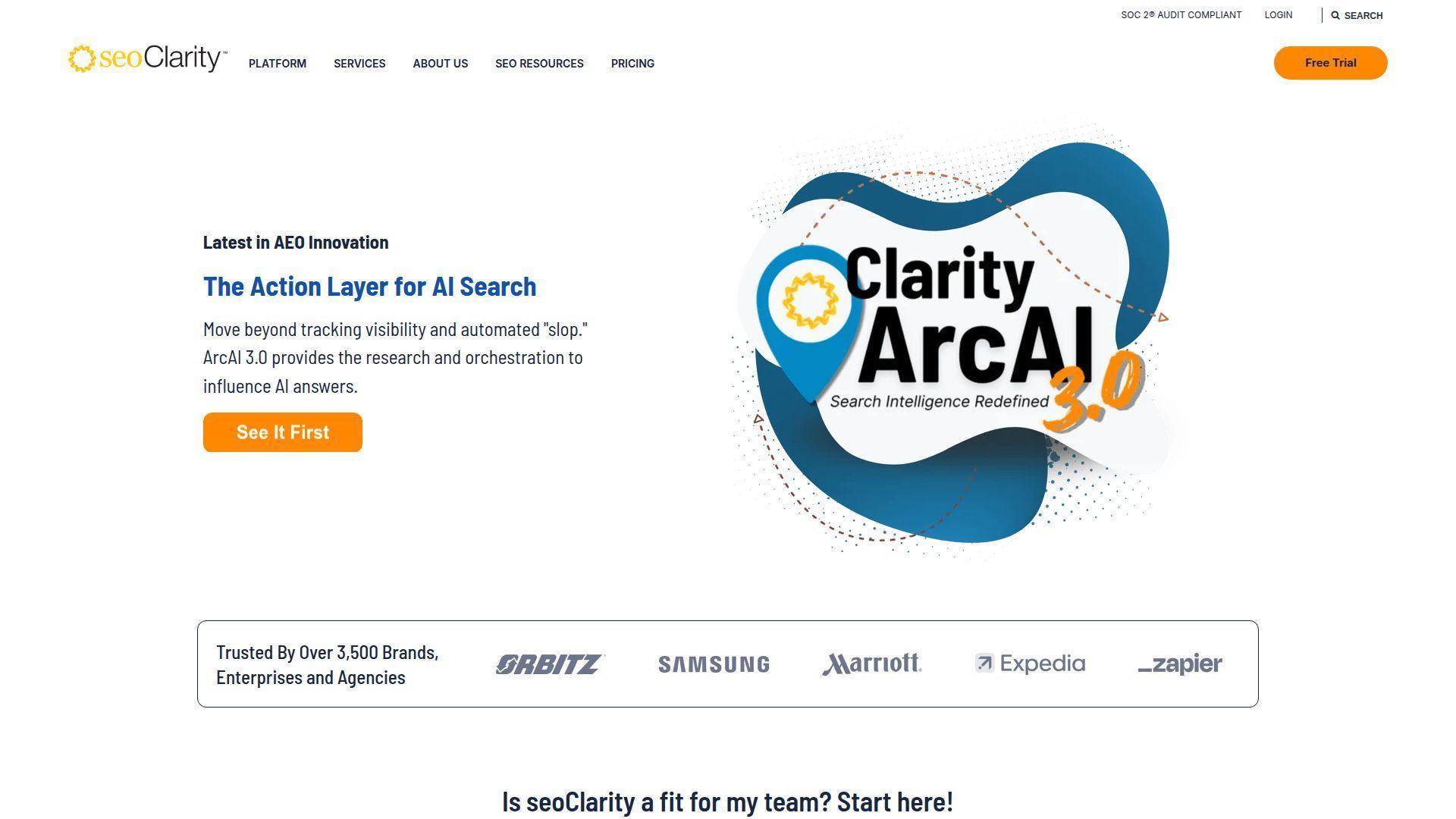
seoClarity serves enterprise organizations running large-scale SEO operations with thousands of keywords across multiple domains. For enterprises where AI rank tracking needs to integrate into an already-sophisticated SEO infrastructure, seoClarity provides the operational scale and data architecture to support that integration. Its enterprise features, including custom reporting, API access, and role-based permissions, extend to its emerging AI search monitoring capabilities.
Enterprise AI rank tracking vs SMB tools
Use this checklist to compare enterprise and smaller self-serve packages. Limits and features vary by vendor; company size alone does not determine access.
| Feature | Enterprise platforms | SMB tools |
|---|---|---|
| Prompt volume | Custom contracted volume | Published plan allowances |
| AI models tracked | Confirm included models and add-ons | Confirm included models and add-ons |
| Multi-market / multilingual | Confirm supported markets and languages | Confirm supported markets and languages |
| API access | Confirm endpoints, webhooks, and limits | Available from some vendors; check limits |
| BI integration (Looker Studio, etc.) | Confirm native and custom connectors | Connectors and exports vary by vendor |
| White-label reporting | Confirm branding and embedding options | May require an agency agreement or add-on |
| User seats | Confirm seat allowances and access controls | Some vendors include unlimited seats |
| Security assurance and compliance | Review audit reports and applicable obligations | Review audit reports and applicable obligations |
| Dedicated support | Named account manager, SLAs | Email/chat support |
| Custom refresh cadence | Confirm supported schedules | Daily and weekly options exist |
| Competitive tracking depth | Confirm contracted competitor allowances | Check the allowance per project |
| Historical data retention | Confirm the retention period and export rights | Confirm the retention period and export rights |
For organizations monitoring many brands, markets, or product lines, compare contracted capacity, security evidence, and integration depth against the self-serve options. An enterprise agreement is useful when those options do not meet your requirements.
How to implement enterprise AI rank tracking
Rolling out enterprise AI rank tracking requires a structured approach. The following steps provide a proven implementation framework.
Step 1: Audit your current rank tracking setup
Document what you currently track, which tools you use, and where the gaps are. Identify which teams consume rank tracking data and what decisions it informs. Map your existing traditional SEO rank tracking against the new requirement for AI search visibility.
Step 2: Define AI search KPIs
Establish the specific metrics your organization will track: mention rate, citation frequency, sentiment scores, share of voice by model, and competitive displacement. Align these KPIs with business objectives, brand protection, lead generation, competitive positioning, so that tracking drives action, not just reporting.
Step 3: Select a platform
Evaluate platforms against your requirements matrix: model coverage, prompt volume, compliance certifications, API capabilities, integration needs, and budget. Involve procurement and security teams early to avoid late-stage disqualifications. Request pilots or proof-of-concept deployments with your actual prompts and competitors.
Step 4: Set up prompt libraries
Build comprehensive prompt libraries that reflect how your target audience actually queries AI search engines. Organize prompts by product line, buyer persona, purchase stage, and geography. Include informational, navigational, and transactional prompt types. Enterprise prompt libraries typically contain 500-5,000+ prompts.
Step 5: Configure competitive tracking
Identify all relevant competitors, direct, indirect, and adjacent, and configure monitoring for each. Enterprise competitive tracking typically covers 15-50+ competitors across different market segments. Set up share of voice benchmarks and competitive displacement alerts.
Step 6: Integrate with existing dashboards
Connect AI rank tracking data to your existing business intelligence stack. Configure API connections, set up Looker Studio dashboards, or build custom integrations with your data warehouse. Ensure that AI visibility data appears alongside traditional SEO metrics for a unified view.
Step 7: Establish reporting cadence
Define who receives what data and how often. Executive summaries might be monthly; operational teams may need weekly or daily monitoring. Set up automated reports, alert thresholds for significant changes, and escalation paths for critical brand visibility issues.
Step 8: Train your team
Ensure that all stakeholders, SEO, content, product marketing, competitive intelligence, and leadership, understand how to interpret AI rank tracking data and translate it into action. AI search visibility is a new discipline for most teams, so invest in enablement to maximize the value of your tracking investment.
ROI of enterprise AI rank tracking
Enterprise AI rank tracking delivers measurable returns across several dimensions.
Brand protection
AI models can mischaracterize brands, surface outdated information, or recommend competitors in response to branded queries. Enterprise AI rank tracking provides early warning when AI responses shift negatively, giving your team the data to respond, whether through content optimization, direct outreach to AI providers, or strategic messaging adjustments. For enterprise brands, a single negative AI characterization can reach millions of users before anyone in your organization notices without monitoring in place.
Competitive early warning
When a competitor gains share of voice in tracked AI answers, it signals a change in visibility within that prompt sample. Compare the change with referral traffic, leads, and revenue to assess its business impact; visibility data alone does not establish a future revenue effect or a fixed warning period. This early warning gives your team time to respond strategically rather than reactively.
Content optimization signals
AI rank tracking data reveals which content assets AI models reference, cite, and recommend, and which they ignore. This intelligence informs content strategy at the enterprise level: which topics to prioritize, which formats AI models prefer, and which competitive gaps to exploit. Teams that optimize content for AI visibility alongside traditional SEO see compounding returns across both channels.
Executive reporting
Leadership teams increasingly expect visibility into how the brand performs across AI search platforms. Enterprise AI rank tracking provides the data infrastructure for board-level reporting: trend lines, competitive benchmarks, and share of voice metrics that translate AI visibility into business language. This reporting capability alone often justifies the investment for organizations where AI search is a board-level topic.
FAQ
What is the difference between traditional rank tracking and enterprise AI rank tracking?
Traditional rank tracking monitors keyword positions on search engine results pages (SERPs). Enterprise AI rank tracking monitors how AI search platforms, ChatGPT, Perplexity, Gemini, and others, mention, recommend, and cite your brand in their generated responses. Enterprise AI rank tracking operates at a larger scale, covers more platforms, and requires different metrics (mentions, citations, sentiment, share of voice) than traditional position tracking.
How many AI models should an enterprise track?
Enterprise organizations should track as many relevant AI models as possible, typically 8 to 15+. At minimum, this includes ChatGPT, Perplexity, Gemini, Google AI Mode, and AI Overviews. Depending on your industry and audience, Claude, Microsoft Copilot, Meta AI, and regional models may also be relevant. Each model has different training data and response patterns, so tracking a single model gives an incomplete picture of your AI visibility.
How often should enterprise AI rank tracking data be refreshed?
Refresh cadence depends on your industry’s pace and your organization’s decision-making cycle. Most enterprise teams track weekly as a baseline, with daily monitoring for critical brand terms or during product launches and PR events. The key is matching refresh frequency to your ability to act on the data. Tracking daily is only valuable if your team reviews and responds to changes at that pace.
What compliance certifications should I look for in an enterprise AI rank tracking platform?
Review the scope and findings of a vendor’s SOC 2 Type II report when your procurement policy requires one. HIPAA obligations depend on whether the organization is a covered entity or business associate and whether the service handles protected health information. HHS does not recognize private Security Rule certifications. Also evaluate data residency options, SSO/SAML support, and contractual SLAs against your own requirements.
Can enterprise AI rank tracking integrate with our existing SEO tools and dashboards?
Yes, enterprise-grade platforms provide API access, native BI connectors (such as Looker Studio), and data export capabilities specifically for integration with existing analytics infrastructure. Look for REST APIs with comprehensive documentation, webhook support for real-time alerts, and pre-built connectors for the BI tools your organization already uses. The best platforms function as a data source within your existing analytics ecosystem rather than requiring teams to adopt yet another standalone dashboard.
How do we measure the ROI of enterprise AI rank tracking?
ROI measurement should align with your organization’s specific objectives. Common ROI indicators include: early detection of negative AI brand mentions (brand protection value), identification of competitive visibility shifts before they affect pipeline (competitive intelligence value), content optimization insights that improve AI citation rates (content marketing value), and executive-ready reporting that informs strategic decisions (leadership enablement value). Track baseline metrics before implementation and measure changes over 3-6 months to quantify impact.